
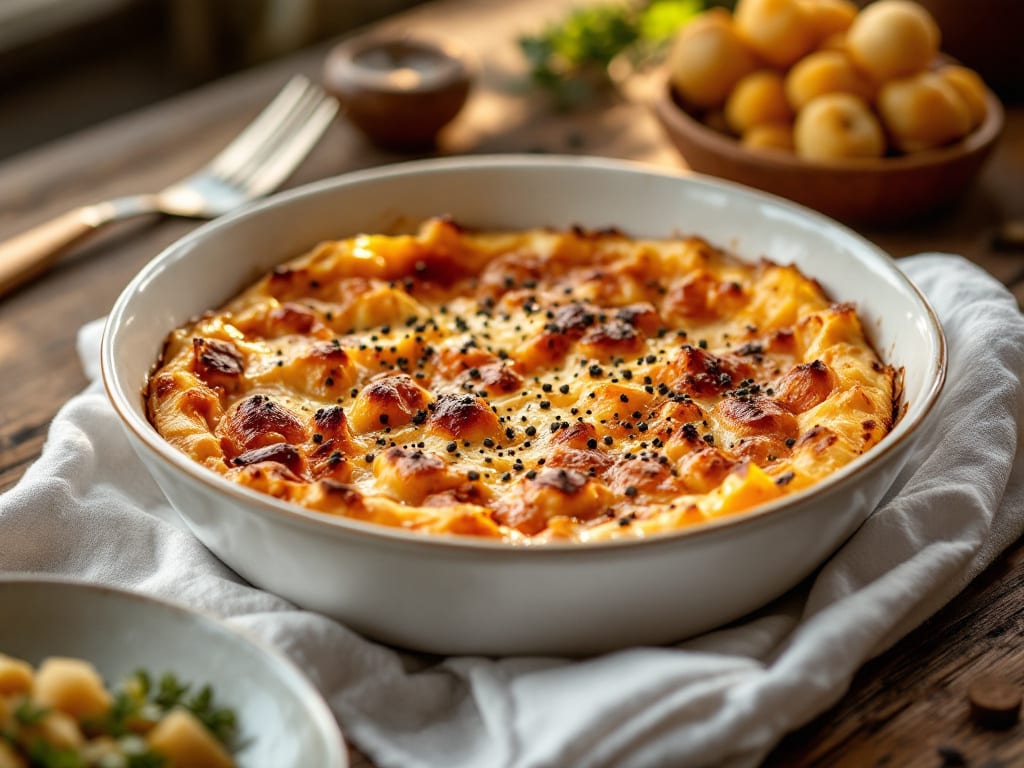
This chestnut bake recipe transforms humble chestnuts into a rich, caramelized masterpiece that steals every meal—whether it’s a holiday centerpiece or a cozy weeknight side.
The secret lies in slow-roasting the nuts until their natural sugars crystallize into a golden, buttery glaze, while aromatic herbs and spices deepen their earthy sweetness. I perfected this technique after years of experimenting with chestnut preparations, and the results are worth every minute of effort.
The process begins with properly prepped chestnuts—peeled, scored, and roasted to develop their signature nutty depth before baking. Sautéed onions and garlic form the flavorful base, while a touch of cream and butter creates that luxe, velvety finish you’d expect from a restaurant-quality dish.
The baking time is critical: too short, and the chestnuts stay raw; too long, and they burn. But when done right, you’ll have a dish that’s crisp at the edges, tender inside, and dripping with caramelized sweetness.
This recipe works beautifully as a standalone dessert when drizzled with honey or served alongside crusty bread to soak up the caramelized juices. For savory variations, add rosemary and thyme, or swap the cream for a splash of broth.
The possibilities are endless, but the foundation remains the same: nutty, sweet, and impossibly satisfying. Let’s get baking—your taste buds will thank you.
Perfect for holiday tables, autumn menus, or even a special weekend treat, this chestnut bake proves that simple ingredients can create something extraordinary. The key is patience: let the chestnuts roast slowly, and the flavors will develop into something deeply comforting and undeniably delicious.
Ready to impress? Here’s how to make it happen.
Ingredients for chestnut bake
Pantry staples meet autumn’s finest flavors in this chestnut bake—where nutty sweetness meets caramelized perfection.
| Ingredient | Amount | Notes |
|---|---|---|
| Fresh Chestnuts 🌰 | 2 ½ lbs | Peeled, scored with X cuts |
| Unsalted Butter 🧈 | ¾ cup | Cold, cubed for roasting |
| Yellow Onion 🧅 | 1 whole | Thinly sliced, sweet variety |
| Garlic Cloves 🧄 | 4 cloves | Minced, fresh preferred |
| Heavy Cream 🥛 | ½ cup | Full-fat for richness |
| Brown Sugar 🍚 | ¼ cup | Lightly packed |
| Salt 🧂 | 1 ½ tsp | Diamond Crystal preferred |
| Black Pepper 🌶️ | ½ tsp | Freshly cracked |
| Fresh Rosemary 🌿 | ¼ cup | Chopped, stems removed |
| Fresh Thyme 🌿 | ¼ cup | Leaves only, chopped |
| All-Purpose Flour 🌾 | 2 tbsp | For thickening cream |
| Honey 🍯 | 2 tbsp | For drizzling, optional |
| Extra-Virgin Olive Oil 🫒 | 1 tbsp | For sautéing onions |
The chestnuts are the star, so don’t cut corners here. Fresh, in-shell chestnuts (like Brandywine or European varieties) are ideal—look for plump, firm shells with no soft spots. If using canned, drain and rinse thoroughly to remove that metallic aftertaste. For scoring, use a sharp knife to make an X on each flat side—this ensures even roasting and prevents cracking. I always buy mine from Whole Foods or specialty markets in late fall when they’re at their peak. If you can’t find fresh, vacuum-sealed roasted chestnuts from Costco work in a pinch, but they won’t caramelize the same way.
No fresh rosemary? Dried works at one-quarter the amount, but trust me, fresh makes all the difference. Short on heavy cream? Half-and-half plus a splash of milk gets you close, though the texture won’t be as luxe. The brown sugar can be swapped for maple syrup or honey if you’re watching carbs—just reduce the liquid slightly. For a savory twist, add a pinch of smoked paprika or crumbled bacon to the baking dish. The olive oil matters here—use something with good fruity notes (like California Early Harvest), not the cheap stuff that tastes like soap.
This bake keeps beautifully for 4-5 days in the fridge, though it’s best enjoyed within 24 hours when the caramelized edges are at their peak. Reheat gently in a 350°F oven for 10-15 minutes with a splash of water or cream to restore moisture. For make-ahead prep, roast the chestnuts a day ahead and store them in the fridge—just add them straight to the baking dish when ready. The flavors actually deepen overnight, so don’t skip this step if you’re prepping for a holiday meal. Portion into individual ramekins for elegant serving.
Why You’ll Love This Recipe
- One-Pan Magic: I swear by this recipe—just toss everything into one dish, pop it in the oven, and walk away. No chopping boards to clean, no extra pots, just pure, simple satisfaction.
- Creamy-Garlicky Bliss: That heavy cream and roasted garlic? It’s like a hug in your mouth. The chestnuts stay tender while the edges get just crisp enough—honestly, I’ve never met a side dish that delivers like this.
- Weeknight or Holiday: Make it for Tuesday dinner or bring it to Thanksgiving—it works both times. The flavors feel special enough for a feast but easy enough to throw together when you’re exhausted.
Step-by-step instructions for chestnut bake recipe
Here’s the method to transform fresh chestnuts into a rich, caramelized bake with perfect texture.
Prep the Chestnuts for Even Cooking
Start by peeling the 2.5 lbs fresh chestnuts using a sharp knife or vegetable peeler. I like to make a small X cut on the flat side of each chestnut before peeling—this prevents them from curling up during cooking. Once peeled, rinse them under cold water to remove any remaining skin bits, then pat completely dry with paper towels.
The reason for this prep is simple: dry chestnuts brown better and absorb flavors more evenly. If any chestnuts feel fibrous or tough after peeling, give them a quick soak in warm water for 10 minutes to soften them slightly before proceeding. This step ensures you end up with tender, creamy chestnuts rather than tough ones.
Build the Flavor Base with Onions and Herbs
Heat the 1 tbsp extra-virgin olive oil in a large oven-safe skillet over medium heat. Add the thinly sliced 1 whole yellow onion and cook for 8-10 minutes until soft and translucent, stirring occasionally. This is where the sweetness develops—you’ll see the onions turn golden and caramelize slightly at the edges.
Add the minced 4 cloves garlic and cook for another 30 seconds until fragrant. Immediately stir in the chopped 0.25 cup fresh rosemary and 0.25 cup fresh thyme, cooking for 1 minute until the herbs release their aromatic oils. Remove the skillet from heat and let the mixture cool slightly—this prevents the herbs from burning when we add the chestnuts later.
Create the Creamy Chestnut Mixture
In a large mixing bowl, combine the prepared chestnuts with the 0.75 cup cold, cubed unsalted butter. Use your hands to gently toss the chestnuts until they’re evenly coated with butter—this creates a rich, velvety texture as they bake. In a separate small bowl, whisk together the 0.5 cup heavy cream, 0.25 cup brown sugar, 1.5 tsp salt, and 0.5 tsp black pepper.
Pour the cream mixture over the chestnut-butter combination and fold gently until fully incorporated. Sprinkle the 2 tbsp all-purpose flour over the top and toss again just until combined. The flour will help thicken the cream as it bakes, creating a luxurious sauce that clings to every chestnut. Here’s the thing—don’t overmix or you’ll end up with dense, gluey chestnuts instead of light, fluffy ones.
Assemble and Bake to Golden Perfection
Transfer the chestnut mixture to the skillet with the onion-herb base. Spread everything into an even layer and place the skillet in a preheated 375°F oven. Bake for 40-45 minutes until the chestnuts are tender when pierced with a fork and the top is golden brown with caramelized edges.
About halfway through baking, I like to drizzle the 2 tbsp honey over the top and give it a gentle stir. This adds a beautiful gloss and subtle sweetness that balances the savory herbs. The chestnuts should be fork-tender with a slightly crisp exterior—if they’re still firm after 45 minutes, give them another 5-10 minutes. Real talk: your oven might run hot, so start checking at the 40-minute mark to avoid overbrowning.
Finish with Crispy Top and Serve Warm
Once the chestnuts are tender, increase the oven temperature to 425°F. Watch the bake closely for the next 5-7 minutes until the top develops a deep golden-brown crust with caramelized spots. This high-heat finish creates that coveted crispy texture that contrasts perfectly with the creamy interior.
Remove from the oven and let rest for 5 minutes before serving. The chestnuts will continue to release their juices during this time, creating an even richer sauce. Serve immediately with crusty bread to soak up every last bit of that herby, caramelized goodness. For an extra touch, sprinkle with additional chopped fresh rosemary and cracked black pepper right before serving.
Pro Tips For Making Chestnut Bake
- PEEL CHESTNUTS BEFORE COOKING: I learned this the hard way—raw chestnuts with their skins on won’t soften properly, no matter how long you bake them. Slip a knife under the seam and peel them first; it takes 10 minutes but guarantees even cooking and that perfect creamy texture.
- SAUTÉ ONIONS LOW AND SLOW: After burning three batches, I finally figured out chestnut bakes need onions cooked until they’re translucent, not brown. Keep the heat at medium-low and stir every 3-4 minutes—this builds flavor without burning, which ruins the whole dish.
- SKIP THE CROWDED PAN: Chestnuts expand when roasted, and if you pack them in too tight, they’ll steam instead of crisp. Space them ½-inch apart on the baking sheet—yes, it means fewer per tray, but they’ll caramelize properly and taste like they’re from a fancy restaurant.
- STIR IN CREAM AT THE END: Sounds weird, but it works: fold the heavy cream into the warm chestnuts off the heat. Adding it earlier makes the sauce watery and dull. Let the chestnuts cool slightly first, then mix—it creates a silky, cohesive sauce instead of a messy glaze.
Common mistakes when making this dish
Skipping the Roast
Fresh chestnuts must be roasted first to develop their signature nutty sweetness and tender texture. I’ve seen many recipes skip this step, but it’s critical—raw chestnuts are tough and bitter. Roast them at 400°F for 20-25 minutes until the skins split open naturally.
If you’re in a hurry, you can microwave them for 3-4 minutes in 1-minute intervals, but roasting gives better flavor. 🌰
Overcrowding the Pan
Chestnuts need room to caramelize properly, so don’t overcrowd them in the baking dish. If you pack them too tightly, they’ll steam instead of brown, resulting in a soggy bake. Spread them in a single layer with ½-inch gaps between each chestnut.
If your pan is too small, roast them in batches or use a larger baking dish. This ensures even cooking and that coveted crispy exterior. 🔥
Ignoring the Honey Finish
Adding honey halfway through baking isn’t just for flavor—it creates that glossy, caramelized crust that makes this dish look restaurant-worthy. Skip it, and your bake will lack depth and visual appeal.
Use 2 tbsp honey and stir gently to distribute it evenly. For a deeper caramelization, broil for 1-2 minutes at the end (watch closely!). 🍯
Underestimating Rest Time
Rushing to serve immediately means missing out on the best part—the sauce! Chestnuts release their juices during the 5-minute rest, creating a rich, creamy sauce that clings to every bite. Skipping this step results in dry, crumbly chestnuts. Trust me, those extra minutes are worth the wait. ✨
Using Old or Stale Chestnuts
Freshness matters more than you think. Chestnuts lose moisture and flavor within a few days, leading to a bland, watery bake. Buy them fresh in late fall or freeze them immediately after roasting.
If using canned chestnuts, drain and rinse them thoroughly to remove that metallic aftertaste. For the best results, stick to fresh, in-shell chestnuts from a trusted source. 💡
Overmixing the Cream
Tossing the chestnuts too vigorously with the cream and flour can turn them into a dense, gluey mess. Gently fold just until combined—you want a light, fluffy texture, not a thick paste.
Overmixing also breaks down the chestnuts, making them mushy instead of tender. Handle them with care, like you’re tucking them into a cozy blanket. 🧈
Nutrition facts
Frequently asked questions
Can I substitute canned chestnuts in this recipe?
Canned chestnuts work in a pinch, but they lack the depth of flavor and texture of fresh. If using them, drain thoroughly and rinse to remove the metallic aftertaste. For best results, add an extra 1 tbsp honey and ½ tsp cinnamon to enhance sweetness. Fresh roasted chestnuts are ideal—they develop a caramelized crust that canned versions can’t match.
How do I store leftover chestnut bake?
Store leftovers in an airtight container in the fridge for up to 5 days. To reheat, cover with foil and warm at 350°F for 10-15 minutes or until heated through. For a crispy texture, broil for 1-2 minutes at the end. You can also freeze portions for up to 3 months—thaw overnight in the fridge before reheating.
What’s the secret to getting crispy edges?
The crispy edges come from two key steps: drizzling honey halfway through baking and finishing at 425°F for 5-7 minutes. The honey creates caramelization, while the higher heat sets a golden crust. For extra crunch, sprinkle 1 tbsp breadcrumbs on top before the final broil. Don’t skip the rest time—it lets the juices set for that perfect texture.
Can I make this chestnut bake savory instead of sweet?
Swap the brown sugar for 1 tsp smoked paprika and ½ cup chicken broth instead of cream. Add ½ cup crumbled bacon or ½ cup grated Parmesan for richness. Use fresh sage and thyme instead of rosemary, and finish with a sprinkle of toasted pine nuts. This version pairs perfectly with roasted meats or mashed potatoes.
Why did my chestnuts turn out watery?
Watery chestnuts usually mean they weren’t roasted long enough before baking or were overcrowded in the pan. Always roast fresh chestnuts at 400°F for 20-25 minutes until skins split naturally. Spread them in a single layer with ½-inch gaps in the baking dish. If using canned chestnuts, pat them dry thoroughly before baking.

- 1950’s Betty Crocker Banana Bread Recipe: Nostalgic Spice Perfection - November 29, 2026
- Meghan Markle’s Pasta Recipe: Creamy Garlic Mushroom Twist for Weeknights - November 29, 2026
- Applebee’s Lemon Chicken with Quinoa Recipe: Bright Citrus Glaze and Fluffy Quinoa Fusion - November 29, 2026