
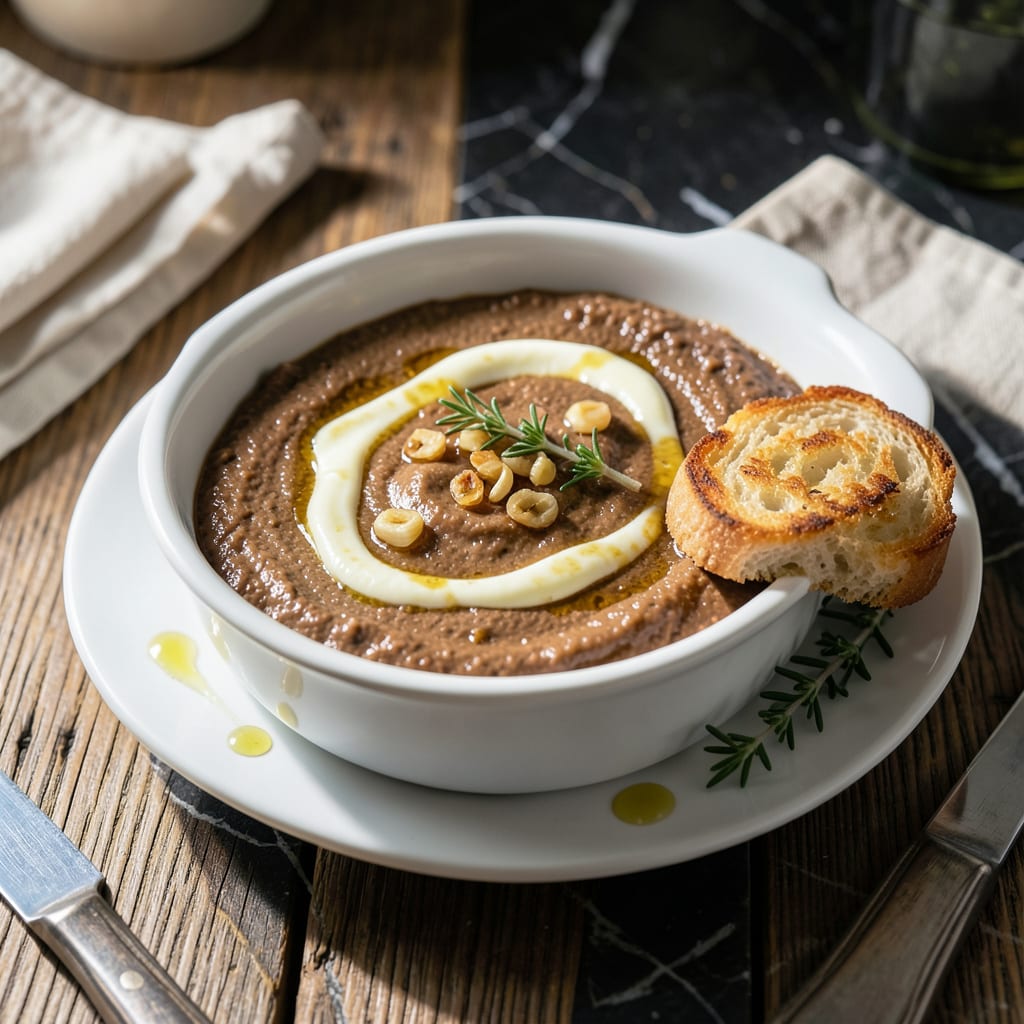
This elegant spread transforms humble chicken livers into a silky smooth appetizer with rich brandy undertones.
Using a proven technique of gentle cooking and careful straining, this version achieves the refined texture and balanced flavors that define classic French pâté.
Ingredients for Chicken Liver Pate Recipe Barefoot Contessa
Transform humble chicken livers into an elegant spread with these refined ingredients and classic French technique.
| Ingredient | Amount | Notes |
|---|---|---|
| Chicken Livers 🍗 | 1 lb | Trimmed of connective tissue |
| Unsalted Butter 🧈 | ½ cup | Divided for cooking and finishing |
| Shallots 🧅 | 2 whole | Finely minced |
| Garlic Cloves 🧄 | 2 cloves | Minced to paste |
| Brandy 🥃 | ¼ cup | Good quality, 80-proof |
| Heavy Cream 🥛 | ¼ cup | Cold, for silky texture |
| Dijon Mustard 🟡 | 1 tbsp | Smooth variety preferred |
| Fresh Thyme Leaves 🌿 | 1 tbsp | Stems discarded |
| Fresh Rosemary 🌿 | 1 tsp | Finely chopped |
| Kosher Salt 🧂 | 1 tsp | Diamond Crystal preferred |
| Ground Black Pepper 🌶️ | ½ tsp | Freshly cracked for best flavor |
| Cognac 🥃 | 1 tbsp | Optional, for depth |
| Baguette Slices 🥖 | 12 slices | Toasted for serving |
The chicken livers must be fresh—look for vibrant color and no off odors. D’Artagnan or La Belle Farm offer premium options, but most butchers carry quality livers. Trim any connective tissue carefully, as it can make the pâté gritty. The brandy is non-negotiable for authentic flavor; Rémy Martin VSOP is a reliable choice. Use European-style butter for superior richness and higher fat content.
No brandy? Dry sherry or white wine can substitute in a pinch, though the depth will differ. For a non-alcoholic version, apple cider with a splash of vinegar mimics the acidity. The cream adds silkiness—do not substitute milk as it lacks the fat. If thyme isn’t available, tarragon at half the amount works well, but avoid dried herbs as they won’t infuse properly.
This pâté keeps beautifully. Store in an airtight container with a thin layer of melted butter on top to prevent oxidation. Refrigerates for up to 5 days or freezes for 3 months. Bring to room temperature before serving for the best texture and flavor release.
Why You’ll Love This Recipe
- One Pan Wonder: I just toss the livers, shallots, and garlic in a skillet with butter—no fancy equipment, and cleanup’s a breeze.
- Rich and Velvety: Honestly, the brandy and butter make it so smooth it melts on toast like a dream.
- Party Starter: I bring this to gatherings, and it disappears faster than I can refill the bowl.
- Budget Luxury: A pound of chicken livers costs pennies, but it tastes like a gourmet spread I’d pay top dollar for.
Step-by-Step Instructions for Chicken Liver Pate
Master the technique for a velvety pate with rich, balanced flavors and professional presentation.
Step 1: Prepare and Sear the Chicken Livers
Begin by patting the 1 lb Chicken Livers dry with paper towels to remove excess moisture. Trim away any visible connective tissue or fat, as these can make the pate bitter. Season the livers with 1 tsp Kosher Salt and 0.5 tsp Ground Black Pepper.
In a large skillet over medium-high heat, melt 2 tablespoons of the 0.5 cup Unsalted Butter. When the butter is foaming but not browned, add the livers in a single layer. Sear for 2-3 minutes per side until the exterior is browned but the interior remains slightly pink. Overcooking will result in a grainy texture, so err on the side of underdone. Transfer the livers to a plate and set aside.
Step 2: Sauté the Aromatics
In the same skillet, reduce the heat to medium and add the remaining 0.5 cup Unsalted Butter. Once melted, add the 2 whole Shallots (finely minced) and cook for 3-4 minutes until they soften and turn translucent, stirring frequently to prevent browning.
Add the 2 cloves Garlic Cloves (minced to a paste) and cook for 30 seconds until fragrant. Stir in the 1 tbsp Fresh Thyme Leaves and 1 tsp Fresh Rosemary, cooking for an additional 30 seconds to bloom their flavors. The aromatics should be tender but not browned, as burnt garlic will impart bitterness to the pate.
Step 3: Deglaze and Simmer
Pour the 0.25 cup Brandy into the skillet, scraping up any browned bits from the bottom with a wooden spoon. Simmer for 2-3 minutes until the liquid reduces by half and the alcohol smell dissipates. This step infuses the pate with depth and complexity.
Return the seared livers to the skillet along with any accumulated juices. Add the 1 tbsp Cognac (if using) and 1 tbsp Dijon Mustard, stirring to coat the livers evenly. Cook for an additional 1 minute, then remove the skillet from heat and let the mixture cool slightly.
Step 4: Blend to Silky Perfection
Transfer the liver mixture to a food processor or blender. Add the 0.25 cup Heavy Cream and pulse until the mixture is completely smooth, scraping down the sides as needed. This may take 1-2 minutes of continuous blending. The pate should be velvety with no visible chunks.
Taste and adjust the seasoning if necessary, though the initial salt and pepper should suffice. For a refined texture, press the mixture through a fine-mesh sieve into a bowl, discarding any solids.
Step 5: Chill and Serve
Transfer the pate to a serving dish or ramekin and smooth the top with the back of a spoon. Cover with plastic wrap, pressing it directly onto the surface to prevent a skin from forming. Chill in the refrigerator for at least 2 hours or until firm.
Serve the pate at room temperature with the 12 slices Baguette Slices, toasted. The chilling step firms up the texture, making it easier to spread. Garnish with a sprinkle of fresh thyme or a drizzle of melted butter for an elegant finish.
Pro Tips For Making Chicken Liver Pate Recipe Barefoot Contessa
- Soak the Livers: Cover chicken livers in milk for 30 minutes before cooking—I learned this the hard way after my first batch tasted metallic. It mellows the flavor and removes any bitterness.
- Deglaze with Brandy: After sautéing shallots and garlic, pour in the brandy while the pan is still hot to scrape up all those browned bits. Sounds weird, but it works: that’s where the deep flavor hides.
- Watch the Heat: Keep the stove at medium-low when cooking the livers—high heat toughens them fast. I used to rush this part and ended up with a grainy texture instead of silky smooth.
- Strain for Silkiness: Push the mixture through a fine-mesh sieve after blending. It’s an extra step, but it guarantees that ultra-smooth texture Ina Garten is known for.
Perfect Pairings for This Dish
Bread Pairings
Toasted baguette slices are my go-to—their crisp texture contrasts beautifully with the creamy pâté. For variety, try water crackers or sourdough crostini for a tangier bite. Warm the bread just before serving to enhance the aroma. 🥖
Cheese Accompaniments
Add a small cheese board alongside your pâté. I love pairing it with Cornichons and brie for a classic French trio. Aged Gouda or blue cheese also complement the rich brandy notes wonderfully.
Sweet Contrasts
A touch of sweetness balances the richness. Serve with fig jam or honeycomb for a sophisticated pairing. I also enjoy thinly sliced green apples or pears for a refreshing contrast.
Wine Selections
For white wine lovers, a crisp Sauvignon Blanc from the Loire Valley cuts through the fat perfectly. If you prefer red, a light Pinot Noir from Burgundy complements the earthy flavors without overpowering them. 🍷
Garnish Ideas
Finish with a sprinkle of fresh thyme or chopped parsley for color. A drizzle of melted butter adds sheen and extra richness. For texture, toasted pine nuts or hazelnuts provide a delightful crunch.
Nutrition Facts
Frequently Asked Questions
Can I use chicken livers that are slightly discolored?
No, always use fresh livers with vibrant color and no off odors. Discolored or dull livers may be spoiled and can ruin the flavor. Look for bright red or pink hues for best results.
What can I substitute for brandy?
Dry sherry or white wine work in a pinch, though the flavor will differ. For a non-alcoholic option, try apple cider with a splash of vinegar to mimic acidity.
Why does my pate turn out grainy?
Overcooking the livers or skipping the straining step causes graininess. Sear just until slightly pink inside and always blend until completely smooth. Pressing through a sieve ensures silky texture.
How long can I store the pate?
It keeps for 5 days refrigerated or 3 months frozen. Store in an airtight container with a thin layer of melted butter on top to prevent oxidation.

- BBQ Sausage Recipe Oven: Smoky Depth Without the Grill - September 28, 2026
- BBQ Chicken Bowl Recipe Rice: Smoky Sweetness Over Fluffy Grains - September 28, 2026
- Beef Cutlet Recipe Ideas: Crispy Breaded Patties With Bold Seasonings - September 28, 2026