
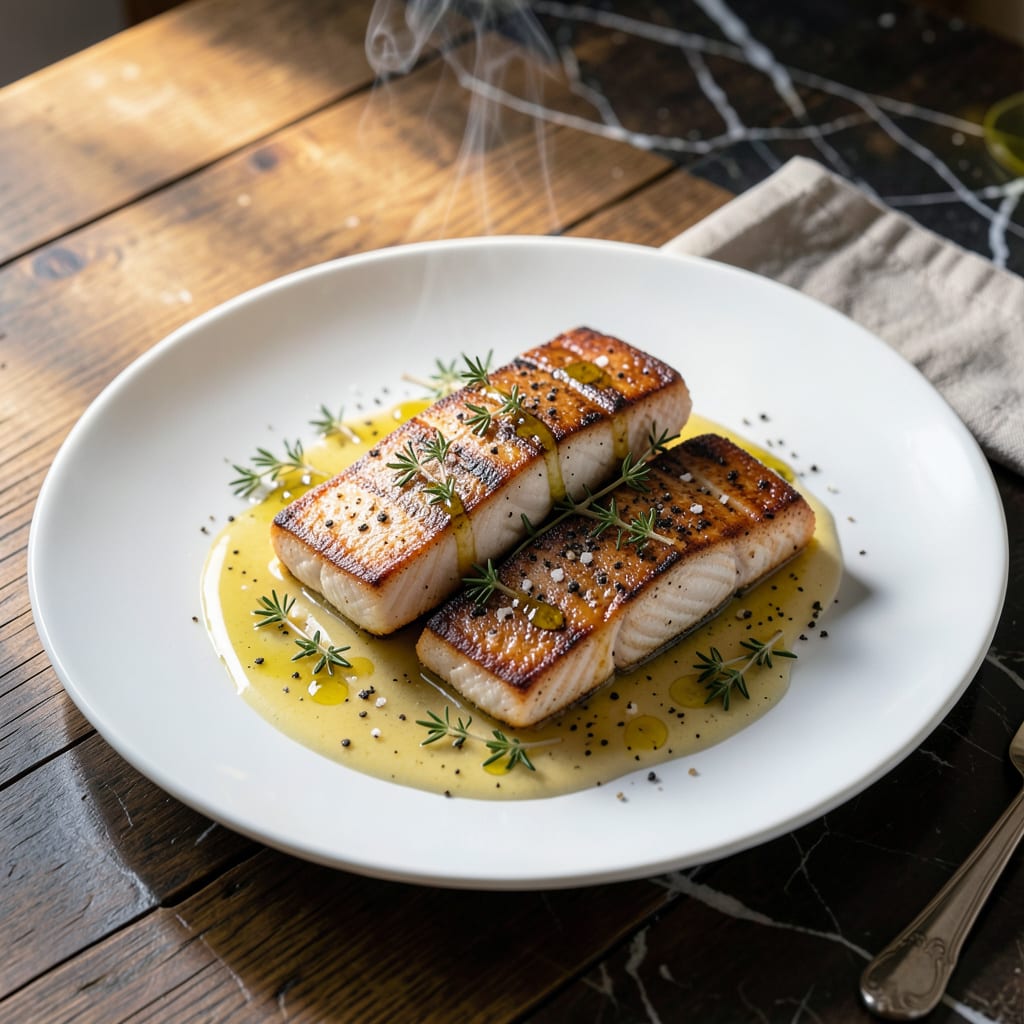
This Chilean sea bass recipe delivers restaurant-quality results with minimal effort. I’ve adapted Gordon Ramsay’s technique to make it foolproof for home cooks.
You’ll get perfectly flaky fish with a buttery, golden crust, ready in under 20 minutes. Simple ingredients, big flavor.
Ingredients for Chilean Sea Bass Recipe Gordon Ramsay
Restaurant-quality sea bass requires just these refined ingredients for buttery, golden perfection.
| Ingredient | Amount | Notes |
|---|---|---|
| Chilean Sea Bass Fillets 🐟 | 4 pieces | Skin-on, 6-8 oz each |
| Unsalted Butter 🧈 | 6 tbsp | Divided for cooking and basting |
| Extra-Virgin Olive Oil 🫒 | 2 tbsp | For initial searing |
| Kosher Salt 🧂 | 1 ½ tsp | Diamond Crystal preferred |
| Freshly Ground Black Pepper 🌶️ | ½ tsp | Coarse grind recommended |
| Fresh Thyme Sprigs 🌿 | 4 sprigs | Leaves stripped, stems discarded |
| Garlic Cloves 🧄 | 3 cloves | Lightly crushed, peeled |
| Lemon 🍋 | 1 whole | Zested and juiced |
| Shallot 🧅 | 1 whole | Finely minced |
| Dry White Wine 🍷 | ¼ cup | Sauvignon Blanc recommended |
| Fresh Flat-Leaf Parsley 🍃 | 2 tbsp | Chopped, for garnish |
The sea bass is non-negotiable—sustainably sourced Chilean sea bass (also called Patagonian toothfish) delivers the buttery texture this dish demands. Whole Foods or high-end seafood markets typically carry it fresh; if frozen, thaw overnight in the fridge. Look for fillets with translucent, pearlescent flesh and no fishy odor. The skin should be intact and glistening. Avoid pre-cut portions if possible—they often dry out faster.
No shallots? Finely diced red onion works in a pinch, though the flavor profile shifts slightly. Fresh thyme is ideal, but dried thyme at one-third the amount can substitute. For the wine, any crisp dry white (Pinot Grigio, Chardonnay) works—avoid anything oaky or sweet. Skip the wine entirely? Replace with low-sodium chicken stock plus a splash of lemon juice for acidity.
Sea bass is best cooked immediately, but if prepping ahead, pat fillets very dry and refrigerate uncovered on a rack. The compound butter (butter + thyme + garlic) can be made 2 days ahead—store airtight in the fridge. Leftovers? Rarely happen, but reheat gently in a 200°F oven for 10 minutes to preserve moisture.
Why You’ll Love This Recipe
- I’ll be real: cold sea bass on a salad the next day is just as good, if not better.
- One Pan Wonder: I love that this comes together with just a skillet, butter, and a few seasonings—no fancy equipment or prep.
- Date Night Ready: Honestly, it feels restaurant-fancy but takes less time than ordering takeout.
- Leftovers? No Problem: I’ll be real: cold sea bass on a salad the next day is just as good, if not better.
Step-by-Step Instructions for Chilean Sea Bass
Master the technique that transforms this dish into a restaurant-quality experience every time.
Step 1: Prepare and Season the Fillets
Pat the four pieces Chilean Sea Bass Fillets completely dry with paper towels—moisture prevents proper searing. I always check for any remaining moisture in the skin folds, as this is critical for achieving a crisp exterior.
Season both sides evenly with the 1.5 tsp Kosher Salt and 0.5 tsp Freshly Ground Black Pepper. The coarse grind of pepper adds texture and visual appeal. Let the seasoned fillets sit at room temperature for 10-15 minutes to ensure even cooking throughout.
Step 2: Sear the Fillets to Golden Perfection
Heat the 2 tbsp Extra-Virgin Olive Oil in a large skillet over medium-high heat until it shimmers but doesn’t smoke. Place the fillets skin-side down and press gently with a fish spatula for the first 30 seconds to prevent curling.
Cook undisturbed for 4-5 minutes until the skin is golden brown and crisp. The fillets should release easily from the pan when ready to flip. Flip and cook for another 2-3 minutes until the flesh is opaque and flakes easily with a fork.
Transfer the fillets to a warm plate, leaving the rendered oil in the pan.
Step 3: Create the Aromatic Butter Sauce
Reduce heat to medium and add the finely minced Shallot to the skillet. Sauté for 1-2 minutes until softened but not browned. Add the 3 cloves Garlic Cloves (lightly crushed) and the 4 sprigs Fresh Thyme Sprigs (leaves stripped) and cook for 30 seconds until fragrant.
Pour in the 0.25 cup Dry White Wine and simmer for 2 minutes to reduce by half. Add 4 tbsp Unsalted Butter and swirl until melted and emulsified. The sauce should coat the back of a spoon with a velvety texture.
Step 4: Finish with Citrus and Herbs
Remove the skillet from heat and stir in the zest and juice of 1 whole Lemon along with the remaining 2 tbsp Unsalted Butter. The acidity brightens the rich sauce while the zest adds aromatic depth.
Return the Chilean Sea Bass Fillets to the skillet, spooning the sauce over them for 30 seconds to reheat and infuse with flavor. The butter should create a glossy, restaurant-quality finish that clings to each fillet.
Step 5: Plate and Garnish Professionally
Transfer each fillet to serving plates, skin-side down. Spoon the sauce generously over the top, ensuring each portion gets an equal share. Garnish with the 2 tbsp Fresh Flat-Leaf Parsley for a pop of color and freshness.
Serve immediately while the skin remains crisp and the sauce is at its creamy peak. The combination of buttery sauce, crisp skin, and tender flesh should offer a perfect bite every time.
Pro Tips For Making Chilean Sea Bass Recipe Gordon Ramsay
- Pat It Dry: Blot the sea bass fillets with paper towels before seasoning—I learned this the hard way after my first batch steamed instead of seared.
- Start Hot, Finish Low: Sear the fillets in a ripping-hot pan for 2 minutes per side, then drop the heat to medium-low to cook through without burning the butter.
- Use Room-Temp Fish: Pull the sea bass out of the fridge 15-20 minutes before cooking; cold fish sticks and cooks unevenly, and nobody wants that.
- Baste Continuously: Spoon that browned butter and olive oil over the fillets every 10 seconds while cooking—it builds flavor fast and keeps the fish moist.
Flavor Customization for This Recipe
Herb-Infused Variations
Swap thyme for rosemary sprigs for a piney, robust flavor that pairs beautifully with the buttery sauce. I love adding 1 tsp chopped tarragon at the end for an anise-like note that feels sophisticated. 🌿
Citrus Twists
Replace lemon with lime zest and juice for a brighter, more tropical flavor. For a floral touch, add 1 tbsp orange zest to the compound butter. The citrus oils in the zest intensify when heated.
Spicy Kick
Add ½ tsp red pepper flakes to the butter sauce for subtle heat. For more depth, include 1 minced jalapeño with the shallots. The heat balances the richness without overpowering the delicate fish.
Wine Swaps
Use Chardonnay instead of Sauvignon Blanc for a creamier sauce. For a nutty depth, try dry sherry—it’s a game-changer. I always keep a bottle of Lustau Fino in my pantry for cooking. 🍷
Skip alcohol entirely? Use apple cider vinegar with a splash of chicken stock for acidity and body.
Umami Boosters
Stir 1 tsp Dijon mustard into the sauce for a tangy depth. For Asian-inspired flair, add 1 tbsp soy sauce and finish with sesame seeds. These small additions elevate the dish significantly.
Nutrition Facts
Frequently Asked Questions
What’s the ideal internal temperature for sea bass?
Cook until it reaches 145°F internally. The flesh should flake easily with a fork and appear opaque throughout. Overcooking at higher temps will make it dry.
Can I use frozen fillets for this recipe?
Yes, but thaw overnight in the fridge first. Pat extremely dry before cooking to ensure crispy skin. Never cook from frozen as it leads to uneven cooking.
Why press the fillets when first cooking?
Pressing for 30 seconds prevents curling and ensures full contact with the pan. This creates an even, golden crust on the skin side.
How do I prevent the butter from separating?
Keep heat at medium and swirl constantly. Adding butter at the end and emulsifying with the sauce helps maintain a smooth, velvety texture.

- BBQ Sausage Recipe Oven: Smoky Depth Without the Grill - September 28, 2026
- BBQ Chicken Bowl Recipe Rice: Smoky Sweetness Over Fluffy Grains - September 28, 2026
- Beef Cutlet Recipe Ideas: Crispy Breaded Patties With Bold Seasonings - September 28, 2026