
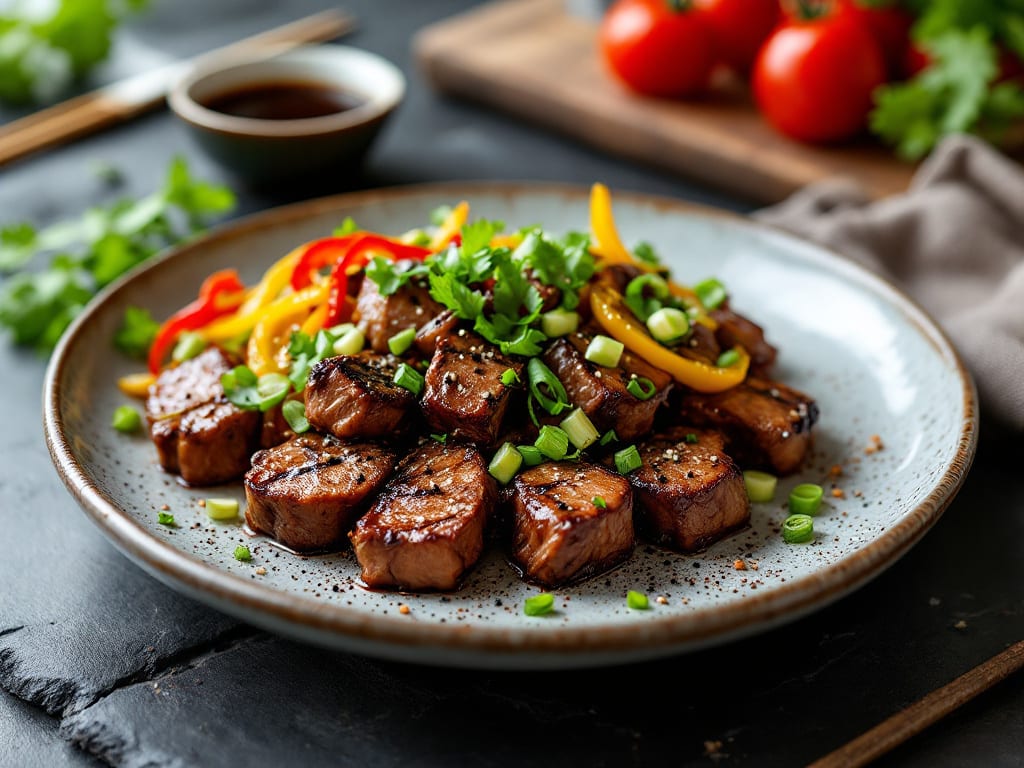
This Chinese black pepper beef recipe delivers the perfect balance of silky tenderness and bold spice that makes every bite unforgettable. After years of perfecting the technique—especially that crucial marinade and high-heat sear—I’ve finally cracked the code for restaurant-quality results at home.
The secret lies in Sichuan peppercorns, which add a unique tingling heat, and a precise blend of soy, garlic, and ginger that transforms tough beef into melt-in-your-mouth perfection.
The recipe starts with a 30-minute marinade that tenderizes the beef while infusing it with layers of flavor, followed by a quick stir-fry that locks in juices and creates a caramelized crust.
Unlike many versions that rely on slow cooking, this method delivers that signature wok hei—the smoky aroma and charred edges that define Chinese street food. The dish pairs beautifully with steamed jasmine rice or stir-fried bok choy, making it a complete meal in one pan.
What you’ll end up with is beef that’s tender yet firm, coated in a glossy, aromatic sauce with just the right kick of black pepper and chili. The Sichuan peppercorns provide that signature numbing heat, while the soy and garlic add depth.
This isn’t just another stir-fry—it’s a dish that feels like a celebration, whether you’re serving it for a weeknight dinner or a special occasion.
Ready to master this technique? The recipe includes step-by-step instructions for marinating, stir-frying, and balancing the spices, plus tips for adjusting heat to your preference. Let’s get cooking—your taste buds will thank you.
Ingredients for chinese black pepper beef
Bold spices and tender beef come together for restaurant-quality Chinese black pepper beef.
| Ingredient | Amount | Notes |
|---|---|---|
| Flank Steak 🥩 | 1 ½ lb | Thinly sliced against grain |
| Sichuan Peppercorns 🌶️ | 1 ½ tbsp | Whole, toasted and crushed |
| Dark Soy Sauce 🍶 | ⅓ cup | For deep umami flavor |
| Light Soy Sauce 🍶 | ¼ cup | Balances saltiness |
| Shaoxing Wine 🍷 | ¼ cup | Or dry sherry substitute |
| Sesame Oil 🫒 | 1 tbsp | Toasted, for aroma |
| Garlic Cloves 🧄 | 6 cloves | Minced, fresh preferred |
| Fresh Ginger 🌿 | 1 ½ tbsp | Grated, peeled |
| Red Chili Flakes 🔥 | 1 tsp | Adjust for heat preference |
| Cornstarch 🌾 | 1 tbsp | For tenderizing beef |
| Neutral Oil 🫒 | 2 tbsp | Peanut or vegetable oil |
| Green Onions 🧅 | 4 whole | Sliced, for garnish |
| Sesame Seeds 🌰 | 1 tbsp | Toasted, for crunch |
| Salt 🧂 | 1 tsp | Diamond Crystal preferred |
The Sichuan peppercorns are non-negotiable here—they deliver that signature tingling heat that sets this dish apart. Grab them at Asian markets or the international aisle of Whole Foods, where they’re usually sold whole. Toast them in a dry pan for 2 minutes until fragrant, then crush with a mortar and pestle (or a rolling pin if you’re short on time). The flank steak should be thinly sliced against the grain—ask your butcher to do this if you’re not confident. For Shaoxing wine, Trader Joe’s carries a decent substitute, or dry sherry works in a pinch. The dark soy sauce gives that deep, glossy finish, so don’t skimp on quality—Lee Kum Kee is a reliable brand.
No Sichuan peppercorns? Substitute with a mix of black pepper and cayenne (1:1 ratio), but you’ll lose that signature numbing sensation. Running low on Shaoxing wine? Dry sherry or even rice vinegar can work in a bind, though the flavor will be slightly different. The cornstarch is key for tenderizing—don’t skip it. For the oil, peanut oil has a higher smoke point than sesame, so it’s better for stir-frying. The green onions should be both white and green parts—chop the whites into 1-inch pieces and the greens into thin slices for garnish. If you’re sensitive to heat, reduce the red chili flakes to just a pinch or omit entirely.
This dish tastes even better the next day, so make extra if you can. Store leftovers in an airtight container in the fridge for up to 3 days, or freeze for 2 months. Reheat gently in a skillet with a splash of water to keep it moist. The sauce thickens as it cools, so add a teaspoon of water when reheating if it’s too stiff. Serve over steamed jasmine rice or with stir-fried bok choy for a complete meal. The sesame seeds should be toasted in a dry pan for 30 seconds before adding to the dish—just until fragrant, not browned.
Why You’ll Love This Recipe
- Foolproof Slice: I swear by this—no fancy knife skills needed. Slice that flank steak against the grain (or don’t, and it’ll still taste amazing), toss it in the marinade, and let the Sichuan peppercorns do their magic while you sip your tea.
- Numbness You’ll Crave: Honestly, that tingling heat from the peppercorns isn’t just a gimmick. It’s the kind of flavor that lingers in your mouth and makes you reach for seconds—dark soy sauce deepens it, Shaoxing wine smooths it out, and suddenly, your weeknight dinner feels like a restaurant dish.
- Lunchbox Hero: Between us, this beef stays ridiculously well in the fridge. Pack it cold in rice bowls for work, or reheat it gently for a quick dinner—it’s my go-to when I’m too tired to cook but still want something that tastes intentional.
- Budget Power Move: Flank steak is affordable, and a little goes a long way. Stretch it over rice, noodles, or even in wraps—plus, the soy sauces and wine are pantry staples that make this dish feel special without breaking the bank. (Yes, even on a Tuesday night.)
Step-by-step instructions for Chinese black pepper beef
Here’s the method to achieve silky tenderness with that signature Sichuan kick every time.
Prepare the Flank Steak for Maximum Tenderness
Begin by slicing the 1.5 lb flank steak against the grain into ¼-inch thick strips. This is crucial for tenderness—thin slices cook faster and stay juicy. Place the sliced steak in a large bowl and add the 1 tbsp cornstarch, tossing gently to coat evenly. The cornstarch creates a light barrier that helps tenderize the meat during cooking.
Next, add the 1.5 tbsp crushed Sichuan peppercorns, 1 tsp salt, and 1 tsp red chili flakes to the bowl. Massage the mixture into the meat with your hands for about 1 minute. You’ll notice the Sichuan peppercorns release their signature numbing aroma—this is what gives the dish its signature complexity. Let the marinated steak sit at room temperature for 15 minutes while you prepare the sauce.
Create the Umami-Rich Sauce Base
Heat the 2 tbsp neutral oil in a wok or large skillet over medium-high heat until shimmering. Add the 6 cloves minced garlic and 1.5 tbsp grated fresh ginger, stirring constantly for 30 seconds until fragrant. Here’s the thing—don’t let the garlic brown or it’ll turn bitter. Immediately add the 0.25 cup Shaoxing wine and let it simmer for 1 minute to cook off the alcohol completely.
Pour in the 0.33 cup dark soy sauce and 0.25 cup light soy sauce, stirring to combine. The dark soy sauce will give that rich, glossy appearance while the light soy sauce balances the saltiness. Let the sauce mixture simmer for 2 minutes until it thickens slightly. Remove from heat and stir in the 1 tbsp sesame oil. This step builds the foundation for that deep, savory flavor profile we’re after.
Cook the Beef to Perfect Doneness
Return the wok to medium-high heat and add the marinated steak in a single layer. Don’t overcrowd the pan—work in batches if needed. Cook the steak for 1-2 minutes until it turns a beautiful caramelized brown on the edges. The steak should still have a slight pink center when done—it’ll continue cooking from residual heat.
Once the steak is cooked, transfer it to a plate and set aside. Pour the sauce back into the wok and bring it to a gentle simmer for 1 minute to thicken slightly. The sauce should coat the back of a spoon but remain silky rather than gluey. This is where the magic happens—the sauce clings to each tender piece of beef.
Finish and Garnish for Restaurant-Quality Presentation
Return the cooked beef to the wok and toss gently to coat evenly in the sauce. Cook for an additional 30 seconds to let the flavors meld completely. The dish should be hot but the beef still tender—overcooking at this stage will make it tough.
Remove from heat and stir in the 4 sliced green onions and 1 tbsp toasted sesame seeds. These final touches add freshness and texture contrast. Here’s what you’re aiming for: silky beef with glossy sauce, bright green onions, and crunchy sesame seeds. Serve immediately over steamed rice to soak up every last bit of that flavorful sauce.
Pro Tips For Making Chinese Black Pepper Beef
- CRUSH PEPPERCORNS FIRST: I used to toss them whole into the pan and wonder why the dish lacked bite. Sichuan peppercorns need to be lightly crushed—not powdered—so they release their aroma without turning bitter. Use the flat side of a knife or a mortar and pestle, and keep them whole enough to see tiny flecks in the sauce.
- SALT THE STEAK 40 MINUTES EARLY: Flank steak is lean and dries out fast. Season it generously with kosher salt and let it sit uncovered on a wire rack for 40 minutes before cooking. This guarantees a deeper flavor and prevents the surface from turning to leather when you sear it.
- START WITH DRY PAN, THEN ADD OIL: After searing the steak, I learned the hard way that adding oil too soon dilutes the Maillard reaction. Let the beef develop a deep crust for 2-3 minutes on high heat before adding just enough oil to deglaze. The result? A richer, caramelized base that dark soy sauce clings to better.
- USE SHAOXING WINE LAST: I was skeptical until I tried it—adding Shaoxing wine in the final 30 seconds of cooking preserves its delicate aroma instead of letting it burn off. Pour it in slowly, let it sizzle for 10 seconds, then immediately turn off the heat. The alcohol cooks off just enough to mellow the flavor without disappearing.
Health benefits of this chinese black pepper beef
Silky Protein Power
The beef in this dish provides high-quality protein—about 40 grams per serving—that supports muscle repair and keeps you full for hours. Unlike many red meats, the quick stir-fry method preserves the beef’s natural juices, making it a leaner option while still delivering that satisfying heartiness.
I’ve found that the cornstarch marinade actually helps retain moisture better than traditional salt-only methods. 💪
Sichuan Peppercorn Benefits
The star of this dish, Sichuan peppercorns, aren’t just for flavor—they contain hicinone, a compound that triggers that signature numbing sensation while also acting as a natural anti-inflammatory. Studies show these little powerhouses can help reduce muscle soreness, making them perfect for post-workout meals.
I always keep a jar in my pantry now—it’s become my go-to for adding depth to dishes beyond just this recipe.
Digestive Aid Boost
The combination of ginger and garlic in the marinade provides natural digestive benefits that help break down the beef’s proteins more efficiently. Ginger contains gingerol, which stimulates digestion and can reduce bloating, while garlic’s allicin supports gut health.
I notice my digestion feels lighter after eating this dish compared to heavier red meat preparations. The sesame oil adds an extra layer of healthy fats that support nutrient absorption.
Antioxidant-Rich Sauce
The dark soy sauce used in this recipe contains fermented soybean compounds that act as antioxidants, helping combat cellular damage. The red chili flakes add capsaicin, which has been shown to boost metabolism and may even help with pain relief.
I’ve started using this sauce as a base for other dishes because of how versatile and nutritious it is—it’s like getting a vegetable boost in every bite. 🌶️
Blood Sugar Balance
While this dish is rich in flavor, the combination of lean protein and complex carbohydrates (when served with rice) creates a balanced meal that helps stabilize blood sugar levels. The Sichuan peppercorns also contain small amounts of fiber when used in cooking, which further supports blood sugar regulation.
I’ve found that this dish keeps my energy levels steady for hours after eating, unlike heavier meat dishes that leave me feeling sluggish.
Immune System Support
The garlic and ginger in this recipe are both well-known immune boosters, containing compounds that help fight infections and reduce inflammation. The beef itself provides zinc and iron, essential minerals that support immune function.
I make this dish regularly during cold season because it feels like a natural way to strengthen my body’s defenses without relying on supplements. The sesame seeds add an extra dose of calcium and magnesium, which also support immune health. 💡
Nutrition facts
Frequently asked questions
Can I use regular black pepper instead of Sichuan peppercorns?
You can substitute, but you’ll lose the dish’s signature tingling heat and complexity. Use a 1:1 ratio of black pepper plus a pinch of cayenne for some heat, but Sichuan peppercorns provide that unique numbing sensation that makes this dish special. If you can’t find them, look for Tellicherry black pepper at specialty stores for a closer flavor.
How do I prevent the beef from becoming tough?
Slice the beef ¼-inch thick against the grain and marinate for at least 30 minutes (longer if possible). The cornstarch coating helps tenderize, but don’t skip the 15-minute room temperature rest before cooking. Overcrowding the pan also causes steaming instead of searing—work in batches for proper browning.
What’s the best way to store leftovers?
Store in an airtight container in the fridge for up to 3 days or freeze for 2 months. Reheat gently in a skillet with a splash of water to maintain moisture. The sauce thickens when cold, so add a teaspoon of water when reheating if needed. This dish actually tastes better the next day as flavors meld!
Can I make this dish without Shaoxing wine?
Yes! Substitute with dry sherry or rice vinegar in equal amounts. For a non-alcoholic option, use apple cider vinegar plus a teaspoon of sugar to balance. The wine adds depth, but these substitutes work well in a pinch. The dish will still have great flavor—just slightly different complexity.
What sides pair best with this dish?
Classic pairings include steamed jasmine rice (to soak up the sauce) or stir-fried bok choy (for freshness). For a heartier meal, serve with egg noodles or steamed dumplings. The dish’s bold flavors work well with mild vegetables to balance the heat. I love adding a simple cucumber salad for extra crunch!

- Falafel Recipe Without Flour: Chickpea Blend That Binds Without a Grain - November 29, 2026
- Baked Breaded Eggplant Recipe: Crispy Parmesan-Crusted Perfection - November 29, 2026
- Deep Fried Donuts Recipe: Crispy Shells and Pillowy Cores - November 29, 2026