
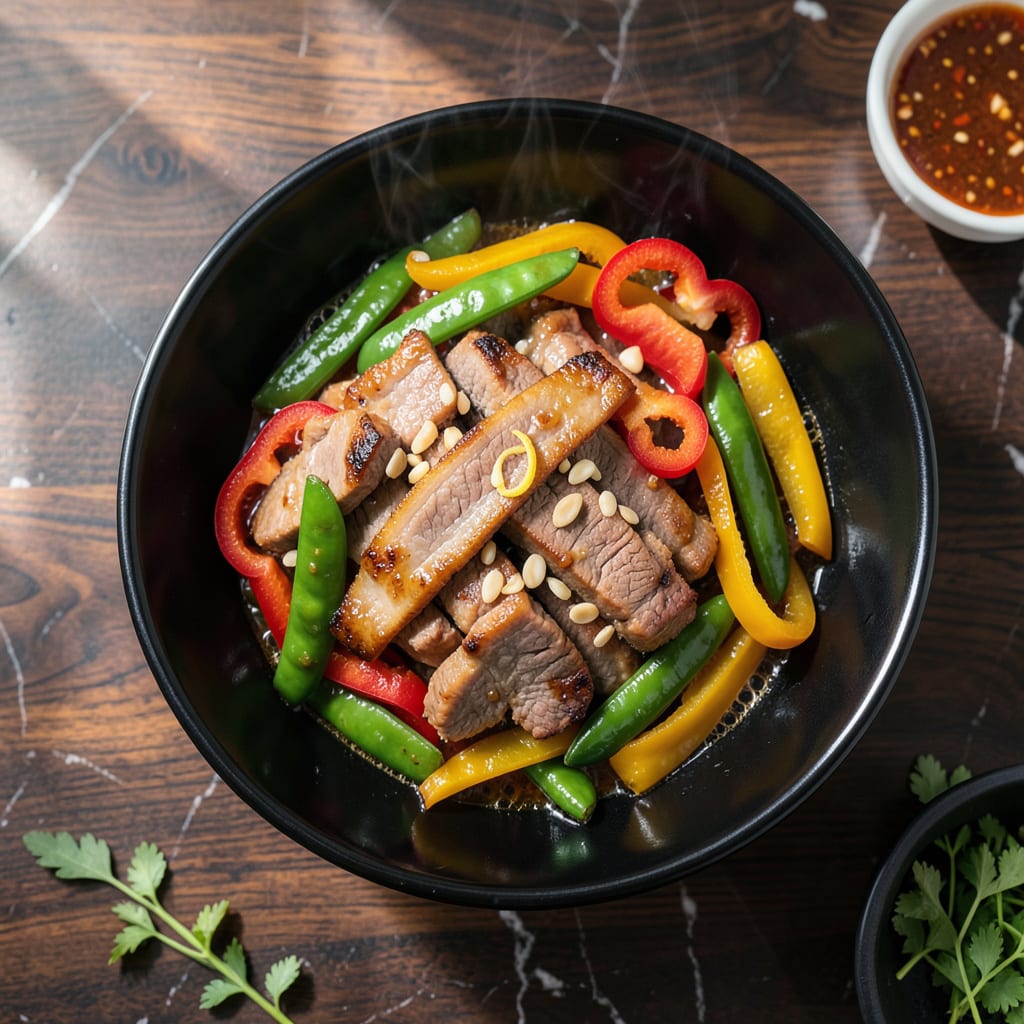
This stir fry delivers restaurant-quality results with simple ingredients and proper wok technique. The key is high heat and quick cooking to lock in flavors while maintaining crisp vegetables.
You’ll achieve tender pork pieces, vibrant bell peppers, and snap peas that retain their crunch. The sauce coats every ingredient perfectly without making the dish soggy.
Ingredients for Chinese Pork Stir Fry
Restaurant-quality results start with these carefully selected ingredients for vibrant, crisp stir fry perfection.
| Ingredient | Amount | Notes |
|---|---|---|
| Pork Shoulder 🍖 | 1 ½ lb | Thinly sliced against grain |
| Red Bell Pepper 🌶️ | 2 whole | Thinly sliced into strips |
| Green Bell Pepper 🌶️ | 1 whole | Thinly sliced into strips |
| Snap Peas 🌱 | 8 oz | Fresh, trimmed of strings |
| Garlic Cloves 🧄 | 4 cloves | Minced finely for sauce |
| Fresh Ginger Root 🌿 | 1 tbsp | Peeled, grated finely |
| Soy Sauce 💧 | ⅓ cup | Low-sodium preferred for control |
| Oyster Sauce 🐚 | 2 tbsp | For depth and umami |
| Rice Vinegar 🍚 | 2 tbsp | Balances sweet and salty |
| Brown Sugar 🍚 | 1 tbsp | Light or dark works |
| Cornstarch 🌾 | 2 tbsp | Divided for marinade and sauce |
| Sesame Oil 🫒 | 1 tbsp | Toasted, for finishing |
| Neutral Oil 💧 | 3 tbsp | High smoke point for stir frying |
| Green Onions 🧅 | 4 whole | Sliced thinly for garnish |
| Salt 🧂 | ½ tsp | Kosher or sea salt preferred |
The pork is critical here. Pork shoulder offers ideal marbling for tenderness, while lean cuts like tenderloin risk drying out. Source from Whole Foods or an Asian market for better quality. For vegetables, fresh snap peas should have firm pods—avoid limp or yellowing ones. Bell peppers retain more crunch when left slightly thicker, about 1/4-inch strips.
No oyster sauce? Vegetarian oyster sauce or hoisin with a splash of soy works. Out of pork? Chicken thighs or extra-firm tofu (pressed) substitute well. The cornstarch can be swapped for arrowroot powder at a 1:1 ratio. Rice vinegar is essential—don’t replace with white vinegar, as its milder flavor is key.
Prep all ingredients before heating the wok—stir frying moves fast. Leftovers keep 3-4 days refrigerated, though vegetables soften slightly. For longer storage, freeze cooked pork separately from veggies to maintain texture for up to 3 months.
Why You’ll Love This Recipe
- One-Pan Wonder: I toss everything in one skillet—pork, peppers, snap peas—and it’s done in 15 minutes flat.
- Garlic-Kissed Flavor: The minced garlic cloves caramelize with the pork, giving every bite that rich, savory depth I crave.
- Meal Prep Hero: I double the batch and pack it for lunch all week—still tastes fresh and vibrant days later.
- Budget Stretch: Pork shoulder is cheap, the veggies are affordable, and it feeds my family of four without breaking the bank.
Step-by-Step Instructions for Chinese Pork Stir Fry
Master the wok with this precise method for tender pork and crisp vegetables every time.
Step 1: Velvet the Pork Shoulder for Tenderness
Slice the 1.5 lb Pork Shoulder thinly against the grain into ¼-inch strips. This shortens the muscle fibers, ensuring tenderness. In a bowl, combine the pork with 1 tbsp Cornstarch, 1 tbsp Soy Sauce, and 0.5 tsp Salt.
Mix gently until each piece is evenly coated. The cornstarch creates a protective layer that locks in juices during high-heat cooking. Let the mixture sit for 10 minutes while you prepare the remaining ingredients—this step is non-negotiable for achieving that signature velvety texture.
Step 2: Stir-Fry Aromatics and Vegetables
Heat 2 tbsp Neutral Oil in a wok or large skillet over high heat until shimmering. Add the 4 cloves Garlic Cloves and 1 tbsp Fresh Ginger Root, stirring constantly for 15-20 seconds until fragrant but not browned.
Immediately add the 2 whole Red Bell Pepper, 1 whole Green Bell Pepper, and 8 oz Snap Peas. Stir-fry for 2-3 minutes until the vegetables are vibrant in color and slightly blistered but still crisp. The peppers should retain a slight bite. Remove the vegetables to a plate and set aside.
Step 3: Cook the Pork to Perfection
In the same wok, add the remaining 1 tbsp Neutral Oil and increase heat to maximum. Spread the marinated pork in a single layer and let it sear undisturbed for 30 seconds to develop a light crust.
Stir-fry vigorously for 3-4 minutes until the pork is no longer pink and the edges are just beginning to caramelize. The cornstarch coating will create a light gloss on the meat. Avoid overcrowding the pan—work in batches if necessary to maintain high heat.
Step 4: Combine and Finish with Sauce
Return the cooked vegetables to the wok with the pork. In a small bowl, whisk together the remaining ⅓ cup Soy Sauce, 2 tbsp Oyster Sauce, 2 tbsp Rice Vinegar, 1 tbsp Brown Sugar, and 1 tbsp Cornstarch.
Pour the sauce over the pork and vegetables. Toss everything together for 1-2 minutes until the sauce thickens and coats every piece evenly. The sauce should be glossy and clinging to the ingredients, not pooling at the bottom of the wok.
Step 5: Garnish and Serve Immediately
Remove from heat and drizzle with 1 tbsp Sesame Oil. Toss once more to distribute the fragrant oil. Garnish with the 4 whole Green Onions, thinly sliced.
Serve immediately while hot—the pork should be tender with a slight caramelized edge, and the vegetables should retain their crispness and bright color. The sauce will thicken slightly as it cools, so don’t delay serving.
Pro Tips For Making Chinese Pork Stir Fry
- Velvet the Pork: Toss pork shoulder slices with 1 tsp cornstarch and 1 tbsp soy sauce before cooking—this keeps them tender and prevents dry, chewy bits in your stir fry.
- Blister the Peppers: Cook the bell peppers first on high heat for 2-3 minutes until slightly charred, then remove and add back later. I learned this the hard way—raw peppers release too much water and steam your pork.
- Skip the Crowding: Stir fry in batches if needed. Overloading the pan drops the temperature and results in soggy, gray pork instead of that golden sear.
- Crush the Garlic: Smash garlic cloves with the side of your knife before mincing—it releases more flavor and saves you from biting into bitter, under-cooked chunks.
Essential Equipment for Perfect Results
Wok Selection
For authentic results, use a carbon steel wok—it heats quickly and distributes heat evenly. I recommend Made In or Joyce Chen brands for durability. A 14-inch diameter provides enough space for tossing ingredients without spilling. 🔥
High Heat Source
A gas stove with at least 12,000 BTU output is ideal for achieving the high heat needed. If using electric, opt for a portable induction burner with wok adapter. The flame should lick up the sides of the wok for proper stir-frying.
Essential Utensils
A wok spatula or long-handled wooden spoon helps toss ingredients without burning your hands. I also keep a ladle nearby for sauces. Avoid metal utensils on nonstick woks to prevent scratching.
Prep Tools
Use a sharp chef’s knife for thin pork slices—I prefer Wüsthof or Shun. A mandoline can help with even vegetable cuts. Keep all ingredients prepped and measured in small bowls before starting.
Safety Gear
High-heat cooking requires protection. Wear a long apron and use heat-resistant gloves when handling the wok. Keep a lid nearby to smother any flare-ups. I always have a fire extinguisher rated for grease fires in my kitchen.
Serving Essentials
Have rice bowls and tongs ready for immediate serving. A rice cooker keeps rice hot while you finish the stir fry. I like Zojirushi models for consistent, fluffy rice every time. ✨
Nutrition Facts
Frequently Asked Questions
What’s the best cut for tender results?
Use pork shoulder for its marbling and tenderness. Slice thinly against the grain for the best texture. Avoid lean cuts like tenderloin, which can dry out quickly in the wok.
Can I make this without a wok?
Yes! A large, heavy skillet works too. Ensure it’s preheated to high heat to mimic wok conditions. Avoid nonstick pans, as they can’t handle the same high temperatures.
How do I keep vegetables crisp?
Stir-fry veggies first, then set aside. Cook pork separately to avoid overcooking the vegetables. Return them to the wok only at the end to warm through.
Can I prep ingredients ahead?
Slice pork and veggies, mix the sauce, and store separately in the fridge for up to 1 day. This makes cooking faster and more efficient.

- BBQ Sausage Recipe Oven: Smoky Depth Without the Grill - September 28, 2026
- BBQ Chicken Bowl Recipe Rice: Smoky Sweetness Over Fluffy Grains - September 28, 2026
- Beef Cutlet Recipe Ideas: Crispy Breaded Patties With Bold Seasonings - September 28, 2026