
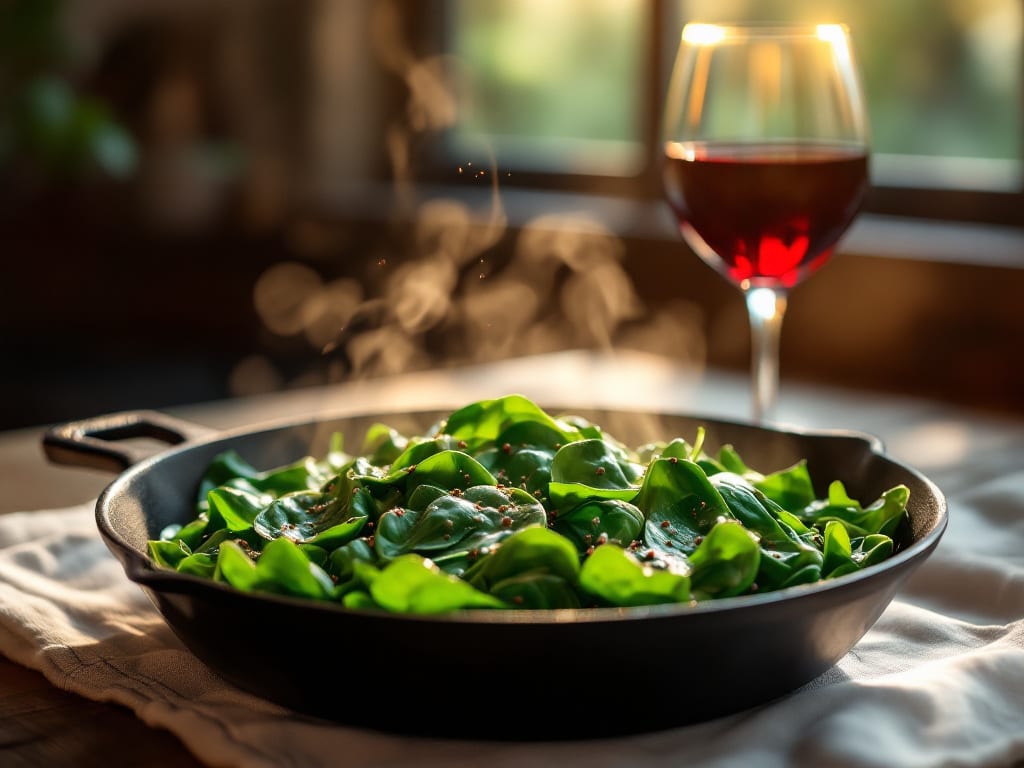
This Chinese stir-fried spinach recipe delivers the bold, aromatic flavors of a wok-heated garlic and ginger dish that transforms simple greens into a restaurant-worthy side.
The secret lies in quick cooking over high heat, preserving the vibrant color and crisp-tender texture while infusing every leaf with fragrant garlic and fresh ginger.
I developed this version after years of testing—it’s the one that finally captures that perfect balance between salty, savory, and umami without overpowering the natural sweetness of the spinach.
The technique is straightforward but critical: blanch the spinach first to soften it just enough, then stir-fry with minced garlic and ginger until fragrant.
A splash of soy sauce and oyster sauce (or vegetarian oyster sauce) adds depth, while a finishing drizzle of sesame oil elevates the dish to something truly special. This method works just as well with bok choy or Swiss chard, making it versatile for any Chinese-inspired meal.
What you’ll end up with is a dish that’s bright green, packed with flavor, and ready in under 15 minutes. The spinach stays crisp-tender, not mushy, and the aroma of garlic and ginger fills your kitchen—proof that even simple sides can taste like they came from a bustling Chinese wok.
Serve it alongside steamed rice, dumplings, or grilled meats for a meal that feels complete.
For a pescatarian twist, add shrimp at the end of cooking, or keep it vegetarian by swapping in mushrooms or tofu. The beauty of this recipe is its adaptability—it’s always delicious, no matter how you customize it. Let’s get cooking!
Ingredients for chinese spinach
Quick stir-fry magic with just 12 ingredients—no fancy prep, just bold flavors.
| Ingredient | Amount | Notes |
|---|---|---|
| Fresh Spinach Leaves 🌿 | 8 oz | Baby spinach or tender leaves preferred |
| Garlic Cloves 🧄 | 4 cloves | Minced finely for aroma |
| Fresh Ginger Root 🌿 | 1 ½ tbsp | Finely grated, peeled |
| Vegetarian Oyster Sauce 🍶 | 1 ½ tbsp | Kikkoman or Lee Kum Kee brand |
| Light Soy Sauce 🥢 | 1 ½ tbsp | Kikkoman preferred |
| Sesame Oil 🫒 | 1 tbsp | Toasted, for finishing |
| Vegetable Oil 🫒 | 1 tbsp | High smoke point preferred |
| Green Onion 🧅 | 2 whole | Thinly sliced, white and green parts |
| Sesame Seeds 🌱 | 1 tsp | Toasted for garnish |
| Salt 🧂 | ½ tsp | Kosher or sea salt |
| White Pepper 🌶️ | ¼ tsp | Freshly ground preferred |
| Rice Vinegar 🍶 | ½ tbsp | For brightness |
The spinach is your star, so grab the freshest you can find—baby spinach or tender leaves stay vibrant and crisp. Asian markets usually have pre-washed baby spinach, but any grocery store works. Ginger and garlic are non-negotiable here—freshly grated ginger (not paste) and minced garlic make all the difference. For the oyster sauce, Kikkoman or Lee Kum Kee vegetarian versions are perfect—no fishy aftertaste. If you can’t find those, vegetarian oyster sauce from Trader Joe’s is a solid backup. The sesame oil? Toasted is key—it adds that nutty aroma that makes this taste authentic.
No sesame oil? Toasted peanut oil works in a pinch, though it’ll taste different. Fresh ginger too strong? Ginger powder at half the amount gets you close. The green onion can be subbed with scallions or chives if that’s what you’ve got. For extra umami without oyster sauce, a splash of coconut aminos plus a dash of soy sauce works surprisingly well. The rice vinegar is optional but adds that perfect tang—substitute with lime juice if you’re out. And if you’re making this for a crowd, double the spinach and keep the rest of the ingredients proportional—this scales beautifully.
Spinach wilts fast, so keep it in the fridge until you’re ready to cook. The stir-fry reheats well—just add a splash of water and a quick stir in a hot pan. For meal prep, store in airtight containers for up to 3 days. Freezing isn’t ideal for spinach, but if you must, blanch it first and freeze in portions. The sesame seeds and oil can be toasted ahead and stored in a jar for up to 2 weeks—just keep them in a dark place. This dish tastes even better the next day as the flavors meld, so make extra if you can.
Why You’ll Love This Recipe
- No-Chop Needed: The spinach just wilts—no fancy cutting, no stress. I toss in whole leaves, let the garlic and ginger sizzle, then fold everything together. Five minutes, zero mess.
- Umami Bomb: That vegetarian oyster sauce? It’s the secret weapon. One spoonful turns wilted greens into something rich and savory, with just a hint of soy depth. My picky eaters actually finish their plates.
- Lunchbox Hero: Cold spinach keeps its texture surprisingly well, so I pack it for work the next day. Add a sprinkle of sesame seeds, and it’s a fresh, protein-friendly meal that still tastes like dinner.
- Pantry Stretch: A handful of spinach, a few cloves of garlic, and a splash of sauce—this recipe costs next to nothing. Honestly, I make it when I’m low on groceries, and it never disappoints. Budget-friendly doesn’t mean boring.
Step-by-step instructions for Chinese stir-fried spinach
Here’s how to turn simple ingredients into restaurant-quality stir-fried spinach.
Prep the Aromatics and Spinach
Start by washing the 8 oz fresh spinach leaves thoroughly and patting them completely dry with paper towels. Remove any thick stems—the tender leaves cook perfectly while the stems stay tough. In a small bowl, finely mince the 4 cloves garlic and grate the 1.5 tbsp fresh ginger root using a microplane. The ginger should be very fine, almost like a paste.
Slice the 2 whole green onions into thin rounds, separating the white and green parts. Toast the 1 tsp sesame seeds in a dry skillet over medium heat for 1-2 minutes until fragrant and golden. Set aside to cool—these will be your garnish. Here’s the thing: Proper prep makes all the difference in stir-fries. Don’t skip drying the spinach or toasting the seeds, even if it seems like extra work.
Stir-Fry the Garlic and Ginger
Heat a wok or large skillet over high heat until it’s smoking hot. Add the 1 tbsp vegetable oil and swirl to coat the pan evenly. Immediately add the minced garlic and grated ginger, stirring constantly for 30 seconds until the garlic turns golden and the ginger becomes fragrant. This quick cooking preserves their fresh flavors instead of letting them burn.
Watch the pan closely—if the garlic starts to brown too quickly, reduce the heat slightly. You want it golden, not blackened. The reason we cook the aromatics first is that they form the flavor base for the entire dish. Once they’re ready, add the 1.5 tbsp vegetarian oyster sauce and 1.5 tbsp light soy sauce, stirring to combine. Let this mixture simmer for 30 seconds until slightly reduced.
Cook the Spinach to Perfect Tenderness
Add the prepared spinach leaves in batches, tossing them vigorously with tongs. Cook for 1-2 minutes until the leaves just begin to wilt but still retain some bright green color. Overcooking turns spinach into a sad, mushy pile. You’ll know it’s ready when the leaves are tender but still hold their shape—think “al dente” for greens.
Add the 0.5 tbsp rice vinegar and toss everything together. The vinegar brightens the flavors and cuts through the richness of the soy sauce. Sprinkle in the 0.5 tsp salt and 0.25 tsp white pepper, tossing well to distribute evenly. Here’s where it gets fun—the spinach should be vibrant, slightly crisp-tender, and coated in that garlicky, gingery sauce.
Finish with Sesame Oil and Garnish
Remove the wok from heat and drizzle in the 1 tbsp sesame oil while stirring constantly. The oil should coat the spinach evenly and give it that signature nutty aroma. Return the pan to low heat for 30 seconds to let the sesame oil infuse completely.
Divide the stir-fried spinach among serving plates and garnish with the toasted sesame seeds and sliced green onions. The contrast of the crunchy seeds and fresh green onions against the tender spinach makes this dish visually stunning. Serve immediately while hot—stir-fried greens lose their best qualities as they cool.
Pro Tips For Making Chinese Spinach
- Blanch Spinach Twice: Dump the spinach into boiling water for 30 seconds, drain, then shock it in ice water. Do it again after stirring in the sauce. The first blanch wilts it properly, the second keeps it vibrant—no more sad, limp greens in your dish.
- Mince Ginger Like You Mean It: Skip the food processor—use a sharp knife and chop the ginger into a paste, not just tiny flecks. I learned this the hard way: fine ginger melts into the sauce evenly, while chunks linger like tiny surprises. Aim for a texture that looks like wet sand.
- Salt the Garlic First: Toss minced garlic with a pinch of salt before adding it to the hot wok. This stops it from burning instantly and lets the flavor bloom. (Yes, even if you’re impatient like me—wait 10 seconds before adding the ginger.)
- Deglaze with Soy Last: Let the garlic and ginger sizzle until fragrant, then add a splash of water to release browned bits before tossing in the spinach. Stir in the soy and oyster sauce after the spinach is wilted—this keeps the sauce glossy, not streaky. Trust me, it’s the thing that matters most.
Make-ahead tips for this recipe
Blanching for Meal Prep
Blanch the spinach first—drop it into boiling water for 30 seconds, then immediately plunge into ice water. This softens the leaves slightly, making them more manageable for stir-frying later. Drain well and store in an airtight container with a paper towel to absorb excess moisture.
The blanched spinach keeps for 3 days in the fridge and reheats beautifully with a quick stir in a hot pan. 💫
Sauce Prep Ahead
Mix the 1.5 tbsp soy sauce, 1.5 tbsp vegetarian oyster sauce, and 0.5 tbsp rice vinegar in a small bowl and store in the fridge for up to 5 days.
This pre-mixed sauce saves time during cooking and ensures consistent flavor every time. Keep it in a small glass jar with a tight-sealing lid.
Garlic-Ginger Paste
Make a batch of garlic-ginger paste by mincing 8 cloves garlic and grating 3 tbsp ginger, then storing in a small airtight container in the freezer. Use 1.5 tbsp of this paste per serving—it keeps for 2 weeks and adds instant flavor to any stir-fry.
This shortcut cuts prep time by half when you’re ready to cook. ✨
Sesame Oil Storage
Toast 2 tbsp sesame seeds in a dry pan until golden, then store in a dark glass jar with the 2 tbsp toasted sesame oil. Keep this mixture in a cool, dark place for up to 2 weeks.
The toasted seeds add crunch while the oil enhances flavor—just drizzle before serving. This prepped garnish makes plating faster and more professional-looking.
Reheating Like a Pro
To reheat, add 1 tbsp water or vegetable oil to a hot pan, toss in the spinach, and stir-fry for 1-2 minutes over medium-high heat. The moisture prevents burning, while the high heat restores that crisp-tender texture.
For extra flavor, add ½ tsp minced garlic and ½ tsp grated ginger while reheating. This method keeps the dish tasting fresh, even after storage.
Freezing for Later
If you must freeze, blanch the spinach first, then pack it tightly in freezer bags with 1 inch headspace for expansion. Freeze flat for up to 3 months.
When ready to use, thaw overnight in the fridge, then stir-fry as directed. The texture won’t be perfect, but it’s still delicious—just expect slightly softer leaves. 🧊
Nutrition facts
Frequently asked questions
Can I use frozen spinach instead of fresh?
Fresh spinach is ideal for this recipe because it retains the best texture and vibrant color. However, if you must use frozen, thaw and drain it completely first, then squeeze out all excess moisture with a clean towel. Frozen spinach often has more water content, which can make your dish soggy. For best results, use half the amount of frozen spinach (about 4 oz instead of 8 oz) to avoid overcrowding the pan.
What if I don’t have vegetarian oyster sauce?
No problem! You can substitute with 1 tbsp soy sauce + 1 tsp coconut aminos for umami depth, or use 1 tbsp hoisin sauce for a slightly sweeter flavor. For a vegan option, blend 1 tbsp nutritional yeast + 1 tsp soy sauce + 1 tsp miso paste to mimic the savory richness. Just remember to reduce the soy sauce by 1 tbsp if substituting to balance the seasoning.
Why does my spinach turn mushy?
Overcooking is the most common mistake! Spinach wilts quickly, so cook it for only 1-2 minutes over high heat. Start with a smoking-hot wok or skillet and work in batches if needed. Also, never skip patting the spinach completely dry before cooking—excess moisture steams the leaves instead of searing them. For extra insurance, add the spinach to the pan when it’s already hot and toss immediately with tongs.
Can I make this with other greens?
This recipe works beautifully with bok choy, Swiss chard, or kale. For heartier greens like kale, chop them finely and blanch for 1 minute before stir-frying. Bok choy should be separated into stems and leaves, with stems cooked first for 1 minute before adding the leaves. The same sauce ratios apply, but adjust cooking times based on the specific green’s thickness.
How do I add protein to this dish?
For a pescatarian version, add ½ lb shrimp (peeled and deveined) during the last 1 minute of cooking. For chicken, use ½ lb boneless thighs, cut into thin strips, and cook separately until fully done before adding the spinach. Tofu works too—press and cube 8 oz firm tofu, pan-fry until golden, then add to the wok with the spinach. Always cook proteins separately to avoid overcrowding the pan.

- Baked Breaded Eggplant Recipe: Crispy Parmesan-Crusted Perfection - November 29, 2026
- Deep Fried Donuts Recipe: Crispy Shells and Pillowy Cores - November 29, 2026
- Cabbage and Cottage Cheese Recipe: Crisp-Tender Slaw With Creamy Tang - November 29, 2026