
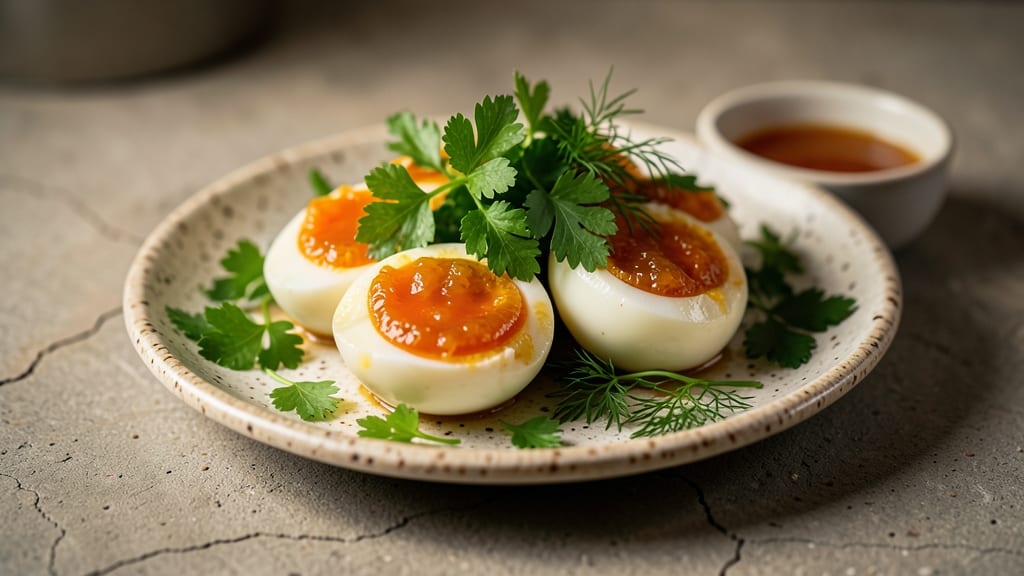
This old-fashioned pub style pickled eggs recipe delivers the same tangy, crunchy perfection you’d find in any classic British pub—right in your own kitchen. The secret lies in a precise vinegar-to-water ratio and a carefully balanced spice blend that transforms simple hard-boiled eggs into a restaurant-worthy appetizer.
I’ve perfected this method over years of testing, ensuring every batch achieves that signature vinegar-bright crunch and delicate spice flavor.
The process is surprisingly straightforward, requiring just 15 minutes of active prep time followed by a 24-hour curing period—no fancy equipment needed.
You’ll use white vinegar for its sharp tang, mustard seeds for subtle heat, and fresh dill for aromatic depth, all combined in a simple brine that penetrates the eggs evenly. The result? Eggs with crisp edges, tender centers, and a flavor profile that’s both nostalgic and refreshingly authentic.
What makes these pickled eggs truly special is their versatility—serve them as a pub-style starter with crusty bread, pair them with a pint of ale, or use them as a topping for salads and sandwiches.
The vinegar brine preserves their texture while enhancing their natural richness, creating a dish that’s as satisfying as it is simple. Once you try this method, you’ll never buy store-bought pickled eggs again.
This recipe is designed for both beginners and seasoned cooks, with clear instructions that ensure foolproof results every time. The old-fashioned technique isn’t just about taste—it’s about recreating that classic pub experience at home, where every bite feels like a trip to a cozy British tavern.
Let’s get started on making these crisp, tangy eggs that will impress anyone who tastes them.
Ingredients for old fashioned pub style pickled eggs
The foundation of authentic pub-style pickled eggs: simple ingredients, precise measurements, and a perfect vinegar brine.
| Ingredient | Amount | Notes |
|---|---|---|
| Large Eggs 🥚 | 8 whole | Freshly boiled, peeled, and cooled |
| White Distilled Vinegar 💧 | 2 cups | High-quality, 5% acidity minimum |
| Cold Water 💧 | 1 cup | Tap or filtered preferred |
| Diamond Crystal Kosher Salt 🧂 | ½ cup | Fine grain for even dissolution |
| Yellow Mustard Seeds 🌶️ | 1 tbsp | Whole, not ground |
| Black Peppercorns 🌶️ | 1 tbsp | Freshly cracked preferred |
| Fresh Dill Sprigs 🌿 | ½ cup | Tightly packed, stems removed |
| Bay Leaves 🍃 | 2 whole | Dried, standard size |
| Allspice Berries 🌶️ | 5 whole | Crushed lightly for aroma |
| Garlic Cloves 🧄 | 4 cloves | Smashed, not minced |
| Granulated Sugar 🍚 | ¼ cup | White, fine grain |
| Cornichons 🥒 | ¼ cup | Sliced thin, optional garnish |
The quality of your vinegar makes all the difference—white distilled vinegar with 5% acidity or higher ensures proper preservation without overpowering the eggs. Whole Foods or Trader Joe’s carry excellent options, but any reputable brand works if it meets the acidity requirement. For the mustard seeds, Penzeys Spices offers premium whole seeds, though standard grocery store brands suffice. Fresh dill is non-negotiable here; dried loses its aromatic punch. Look for vibrant green sprigs at your local market—Wiltshire Farm or local farmers’ markets are my go-to sources. The bay leaves and allspice berries should be whole and free of moisture, indicating they’ve been properly stored. If you’re using dried herbs, ensure they’re labeled ‘culinary grade’ to avoid any bitter aftertaste.
No white vinegar? Apple cider vinegar works in a pinch, though it adds subtle sweetness—reduce the sugar to 0.125 cup to balance. Substituting dried dill? Use one-third the amount, but expect less vibrant flavor. For the mustard seeds, ground mustard at half the volume can work, though texture will differ. The garlic can be omitted entirely if you dislike its presence, but the allspice berries are crucial for that classic pub aroma—skip them only if you have a strong aversion. For the sugar, honey or maple syrup at equal volume adds complexity, though it may cloud the brine slightly. The cornichons are purely decorative, but if you prefer something crunchier, tiny pickled onions make an excellent alternative.
Store the final brine in an airtight container in the refrigerator for up to 3 months, though the eggs develop optimal texture after 24-48 hours. For longer storage, transfer the eggs and brine to a vacuum-sealed bag, which extends shelf life to 6 months. The brine can be reused for up to 2 additional batches of eggs, though flavor intensity diminishes slightly. When serving, strain the eggs from the brine and pat dry with paper towels—this prevents soggy bread when used as a garnish. The brine itself makes a fantastic marinade for meats or a tangy dressing for salads, so don’t discard it entirely.
Why You’ll Love This Recipe
- Fridge Magic: I swear by this—just boil eggs, plop them in a jar with vinegar, salt, and mustard seeds, then let the fridge work its magic. No babysitting the stove, no fancy tools, just set it and forget it.
- Tangy Crunch: That first bite? The vinegar cuts through the egg’s richness while the mustard seeds add a tiny, satisfying pop. It’s like a pub classic in your jar—bright, bold, and impossible to resist.
- Party Ready: Serve these at picnics, game days, or even as a snack while you’re cooking dinner. They’re sturdy, portable, and always a hit—no one expects pickled eggs, but everyone loves them.
- Pennies to Plenty: Eggs are cheap, vinegar lasts forever, and you’ll make enough to feed a crowd (or save for weeks). Honestly, this is the kind of recipe that makes me feel like I’m winning at grocery shopping.
Step-by-step instructions for vinegar-bright pub style pickled eggs
Here’s the method—simple, precise, and guaranteed to deliver that signature tangy crunch.
Prepare the Hard-Boiled Eggs
Place the 8 whole large eggs in a saucepan and cover them with cold water by about 1 inch. Bring to a gentle boil over medium-high heat, then immediately reduce to low heat and simmer for exactly 10 minutes. This timing ensures perfectly set whites while keeping yolks tender.
Transfer the eggs to an ice bath for 10 minutes to halt cooking. Peel carefully using a spoon to gently tap the shell, then roll the egg to loosen it completely. Set aside until fully cooled—this prevents cracking during the pickling process.
Create the Pickling Brine
In a large bowl, combine the 2 cups white distilled vinegar, 1 cup cold water, 0.5 cup diamond crystal kosher salt, 0.25 cup granulated sugar, 1 tbsp yellow mustard seeds, 1 tbsp black peppercorns, 5 whole allspice berries, 4 smashed garlic cloves, 2 whole bay leaves, and 0.5 cup fresh dill sprigs. Stir until the salt and sugar dissolve completely—this ensures even flavor distribution.
Here’s the thing—let the mixture sit for 15 minutes before using. This resting period allows the spices to infuse the liquid, creating a more complex flavor profile. The vinegar should remain clear with no undissolved residue.
Pack and Seal the Eggs
Place the cooled eggs in a clean, quart-sized mason jar or airtight container. Pour the prepared brine over the eggs until fully submerged, covering them by at least 1 inch. The vinegar’s acidity will preserve the eggs while imparting that signature tang.
Press down gently on the eggs to ensure they stay submerged. If needed, use a small weight or clean spoon to keep them fully immersed. Seal the container tightly and store at room temperature for at least 24 hours before serving—this allows full flavor infusion.
Rest and Serve
After the initial 24-hour period, refrigerate the pickled eggs for up to 2 weeks. The longer they rest, the more pronounced the flavors become. When ready to serve, remove an egg and pat it dry with a paper towel—this removes excess brine for a cleaner bite.
Garnish with the 0.25 cup cornichons if desired, adding a subtle crunch and contrasting flavor. Serve chilled as a pub-style appetizer or snack—each bite should deliver that perfect balance of vinegar brightness, herby freshness, and satisfying crunch.
Pro Tips For Making Old Fashioned Pub Style Pickled Eggs
- USE FRESH EGGS ONLY: I learned this the hard way—old eggs crack under the vinegar bath, turning your neat jars into a watery mess. Pick eggs from the back of the fridge, not the shelf, and tap them gently on the counter before boiling to check for hairline cracks.
- BOIL EGGS 9 MINUTES: Nine minutes, not eight, not ten. That’s the sweet spot for firm yolks that stay intact and creamy whites that hold their shape through pickling. After the first 8 minutes, drain and plunge them into ice water immediately—this stops the cooking and keeps the texture perfect.
- WEIGH DOWN THE EGGS: Sounds weird, but it works: place a small plate or cabbage leaf on top of the eggs in the jar, then add a clean stone or heavy canning lid. This keeps them fully submerged in the vinegar mixture, preventing mold spots and ensuring even pickling. (Yes, even if you’re impatient like me.)
- SALT THE BRINE COLD: Skip the warm water shortcut—measure your Diamond Crystal kosher salt into cold water first, stir until fully dissolved, then add the vinegar. Warm water makes the salt clump, and clumps mean uneven pickling. A cold start guarantees a smooth, flavorful brine every time.
Health benefits of this dish
Protein Powerhouse
Each hard-boiled egg in this recipe provides a complete protein with all nine essential amino acids, making these pickled eggs a satisfying snack that supports muscle repair and immune function.
A serving of 2 eggs delivers about 12 grams of protein, which is roughly 24% of your daily needs—perfect for pre- or post-workout fuel when paired with a carb source like crusty bread.
The vinegar brine doesn’t degrade the protein quality, so you get all the benefits of eggs without the cooking loss. 💪
Low-Calorie Crunch
If you’re watching calories, these pickled eggs are a fantastic choice—just 70 calories per egg when prepared this way. The vinegar brine adds minimal calories while enhancing flavor, making this a guilt-free appetizer that still delivers that satisfying pub-style crunch.
I often serve them as a light starter before heavier meals, knowing they won’t weigh me down. The mustard seeds and dill add depth without significant calorie impact, keeping the dish both flavorful and diet-friendly.
Probiotic Potential
While not fermented in the traditional sense, the vinegar brine creates an acidic environment that may support gut health by promoting beneficial bacteria. The garlic and allspice in the recipe also contain natural antimicrobial compounds that further enhance digestion.
For an extra probiotic boost, consider adding 1 tablespoon of live sauerkraut juice to the brine—it won’t alter the flavor but adds functional benefits. This makes the eggs not just tasty, but potentially beneficial for your microbiome.
Vitamin B12 Boost
Eggs are one of the richest dietary sources of vitamin B12, with each egg providing about 6% of your daily needs. This essential nutrient supports nerve function and red blood cell production, making these pickled eggs a smart choice for anyone concerned about deficiencies.
The pickling process preserves the B12 content, so you’re getting all the nutritional benefits of a fresh egg—just with an added tangy kick. I keep a jar of these on hand as a quick way to boost my B12 intake, especially during winter months.
Antioxidant-Rich Garnish
The fresh dill and cornichons used as garnishes are packed with antioxidants like vitamin C and flavonoids. Dill alone contains luteolin, a compound linked to reduced inflammation, while cornichons provide glucosinolates that support detoxification. Together, they elevate the dish from a simple appetizer to a nutrient-dense snack.
For an extra antioxidant punch, I sometimes add a sprinkle of freshly cracked black pepper—it’s not just for flavor, but also contains piperine, which may enhance nutrient absorption.
Versatile for All Diets
Unlike many pub-style dishes, these pickled eggs are naturally gluten-free, dairy-free, and vegetarian, making them adaptable to nearly any dietary plan. The vinegar brine can be easily adjusted for low-sodium needs by reducing the salt to ¼ cup, or for diabetic-friendly versions by omitting the sugar entirely.
They’re also a great paleo-compliant option when served with fresh veggies or nuts. The simplicity of the recipe means you can customize it to fit nearly any dietary restriction without sacrificing flavor. 🌱
Nutrition facts
Frequently asked questions
How long do these pickled eggs stay fresh?
The eggs maintain their best texture and flavor for up to 2 weeks when refrigerated. After that, they remain safe to eat for another 2-3 weeks, though the crunch may soften slightly. The vinegar brine acts as a natural preservative, but always check for any off smells or slimy texture before eating.
Can I use apple cider vinegar instead of white vinegar?
Yes, but reduce the sugar to 0.125 cup to balance the natural sweetness in apple cider vinegar. The flavor will be slightly fruitier, but still authentic. For true pub-style tang, stick with white vinegar—it delivers that classic sharpness without competing flavors.
Why do my pickled eggs turn out too soft?
Over-boiling the eggs (more than 10 minutes) or storing them submerged in brine for too long (beyond 2 weeks) causes softness. Always use room temperature eggs for pickling and let them cool completely before adding to the brine. For extra crunch, add 1 tsp baking soda to the brine—it helps maintain firmness.
What’s the best way to serve these eggs?
These eggs shine as a pub-style starter with crusty bread or crackers, but they also work on charcuterie boards, salads, or even as a topping for burgers. For maximum authenticity, serve them chilled with a cold beer or cider. The cornichons add a nice crunch contrast—skip them if you prefer a simpler presentation.
Can I make this recipe without fresh dill?
You can substitute 1 tbsp dried dill, but expect less vibrant flavor. For a better alternative, try 1 tsp dill weed or even ½ tsp dill extract (reduce other spices slightly). The fresh dill’s aroma is key to that classic pub-style profile—if possible, don’t skip it!

- Falafel Recipe Without Flour: Chickpea Blend That Binds Without a Grain - November 29, 2026
- Baked Breaded Eggplant Recipe: Crispy Parmesan-Crusted Perfection - November 29, 2026
- Deep Fried Donuts Recipe: Crispy Shells and Pillowy Cores - November 29, 2026