
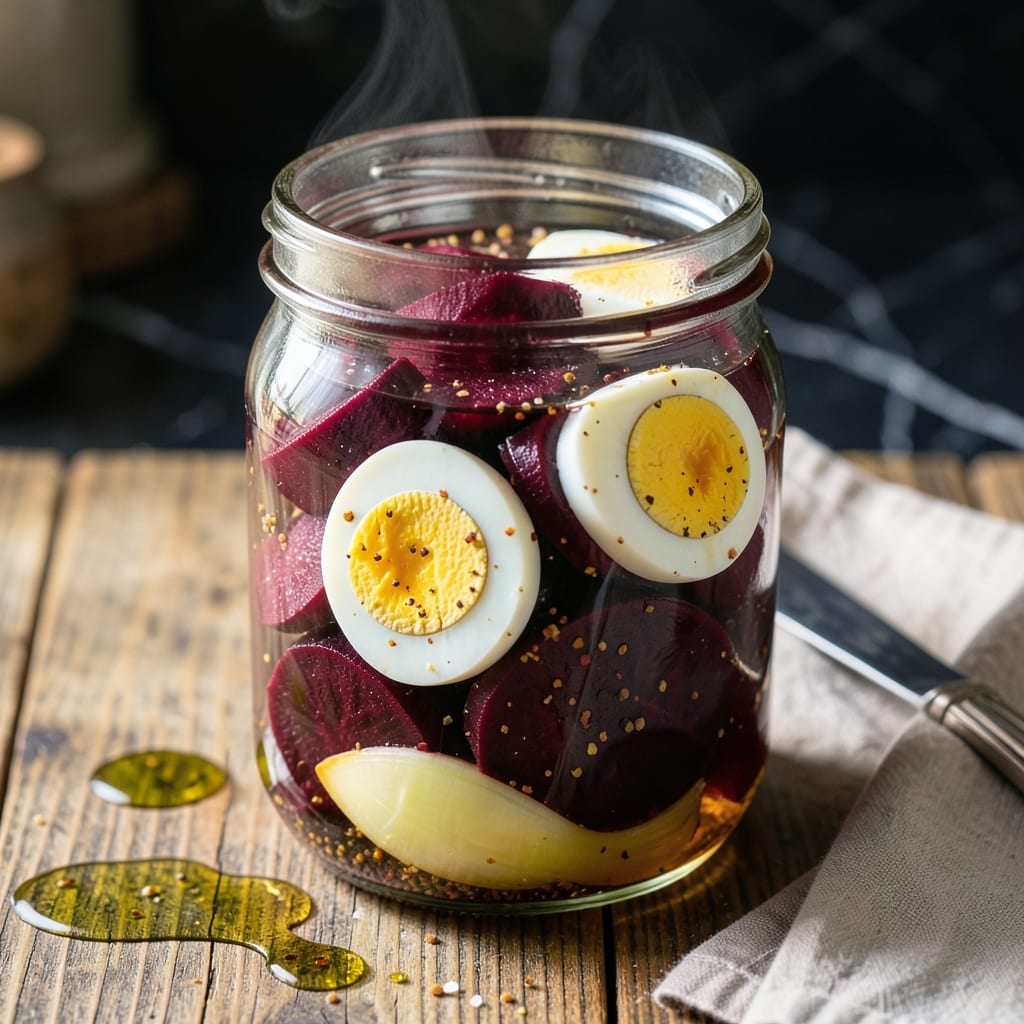
This pickling method transforms everyday ingredients into vibrant, tangy bites that brighten any brunch spread. The combination of hard-boiled eggs, tender beets, and aromatic pickling spice creates a visually stunning dish with layered flavors.
The process is straightforward yet precise: eggs and beets absorb the spiced brine over 24 hours, developing complex sweet-sour notes. The pickling spice blend adds depth with warm, earthy undertones that complement the natural sweetness of beets.
What emerges is a restaurant-quality presentation with deep magenta beets and creamy white eggs, both infused with the same bold pickling liquid. The result is both beautiful and delicious, perfect for entertaining or meal prep.
Serve chilled with crusty bread or as part of an antipasto platter. This technique guarantees consistent, flavorful results every time.
Ingredients for Pickled Eggs Beets Recipe Pickling Spice
Vibrant beets and creamy eggs meet aromatic spices for tangy, restaurant-quality bites every time.
| Ingredient | Amount | Notes |
|---|---|---|
| Hard-Boiled Eggs 🥚 | 8 whole | Peeled, room temperature |
| Medium Beets 🟣 | 4 whole | Roasted, peeled, quartered |
| White Vinegar 🧪 | 2 cups | 5% acidity preferred |
| Water 💧 | 2 cups | Filtered for clarity |
| Granulated Sugar 🍚 | ½ cup | Adjust to taste preference |
| Pickling Salt 🧂 | 2 tbsp | Non-iodized for clarity |
| Pickling Spice 🌿 | 2 tbsp | Whole spices, tied in cheesecloth |
| Yellow Onion 🧅 | 1 whole | Thinly sliced for brine |
| Garlic Cloves 🧄 | 4 cloves | Lightly crushed |
| Bay Leaves 🍃 | 2 pieces | Dried, whole leaves |
| Black Peppercorns 🌶️ | 1 tsp | Whole, lightly crushed |
| Mustard Seeds 🟡 | 1 tsp | Yellow or brown variety |
The beets are the foundation here. Local farmers markets often carry the freshest, sweetest varieties—look for firm, unblemished roots with bright greens still attached. Golden or Chioggia beets work beautifully if you want to deviate from the classic deep magenta. For pickling spice, McCormick offers a reliable pre-mixed blend, but assembling your own (mustard seeds, coriander, allspice) gives superior control over the flavor profile.
No pickling spice blend on hand? Combine 1 tsp each mustard seeds, coriander seeds, and allspice berries with half the amount of cloves and cinnamon for a comparable result. White vinegar is non-negotiable for the clean, sharp acidity, but apple cider vinegar can substitute in a pinch (it will darken the brine). For sugar, turbinado or raw cane adds a subtle molasses note that complements the beets beautifully.
The pickled eggs and beets improve with time—wait at least 24 hours before serving for full flavor development. Store in the refrigerator for up to 1 month in a non-reactive container. The brine can be reused once for a fresh batch, but discard after that for food safety.
Why You’ll Love This Recipe
- Minimal Effort: I boil the eggs and beets ahead, then just mix vinegar, water, and sugar with the spice—no fancy steps.
- Tangy Sweet Bite: The vinegar cuts through the earthy beets and creamy eggs, while the sugar rounds it all out.
- Snack or Side: I pack these in jars for picnics or serve alongside sandwiches—equally great cold from the fridge.
- Stretches Far: One batch lasts a week in my house, and the ingredients cost less than a fancy deli platter. Honestly, it’s my budget-friendly secret.
Step-by-Step Instructions for Pickled Eggs and Beets with Spice
This method ensures vibrant color and balanced flavor in every jar.
Step 1: Prepare the Brine Base
In a medium saucepan, combine the 2 cups White Vinegar, 2 cups Water, 0.5 cup Granulated Sugar, and 2 tbsp Pickling Salt. Set over medium-high heat and stir until the sugar and salt dissolve completely—this usually takes 3-4 minutes.
Bring the mixture to a gentle boil, then reduce heat to medium. The brine should be clear with no visible sugar or salt crystals. This concentrated solution will preserve the vegetables and eggs while infusing them with flavor.
Step 2: Infuse the Brine with Aromatics
Add the 2 tbsp Pickling Spice (tied in cheesecloth), 1 whole Yellow Onion (thinly sliced), 4 cloves Garlic Cloves (lightly crushed), 2 pieces Bay Leaves, 1 tsp Black Peppercorns, and 1 tsp Mustard Seeds to the brine.
Simmer for 10 minutes to allow the spices to release their essential oils and flavors. The kitchen should fill with a warm, aromatic scent. Remove from heat and let the brine steep for an additional 5 minutes before straining out the solids.
Step 3: Pack the Jars with Eggs and Beets
While the brine cools slightly, pack the 8 whole Hard-Boiled Eggs (peeled) and 4 whole Medium Beets (roasted, peeled, and quartered) into clean, sterile quart jars. Alternate layers of beets and eggs to create an even distribution, ensuring the beets’ vibrant color will infuse throughout.
Leave about 1 inch of headspace at the top of each jar. This space allows the brine to fully cover the contents without overflowing. The beets should maintain their shape without being crushed.
Step 4: Fill with Brine and Seal
Carefully ladle the warm strained brine over the eggs and beets, ensuring all contents are completely submerged. Use a clean spoon to press down gently if needed to remove air bubbles—this prevents spoilage and ensures even pickling.
Seal the jars with lids while the brine is still warm. As the mixture cools to room temperature, the lids should form a proper seal. The eggs will begin to take on a slight pink hue from the beets within 24 hours.
Step 5: Refrigerate for Optimal Flavor Development
Allow the jars to cool completely at room temperature before transferring them to the refrigerator. For best results, let them chill for at least 48 hours before eating—this waiting period allows the flavors to meld and intensify.
The pickled eggs and beets will continue to develop more complexity over time, reaching peak flavor after about 1 week. They will keep for up to 1 month in the refrigerator, though they’re often enjoyed long before then.
Pro Tips For Making Pickled Eggs Beets Recipe Pickling Spice
- Peel Eggs Carefully: Crack the hard-boiled eggs all over under cold running water, then peel under the stream—it prevents the whites from sticking and tearing. I learned this the hard way after ruining a batch with messy, pitted eggs.
- Roast the Beets: Skip boiling the beets and roast them at 400°F for 45-60 minutes instead. Sounds like extra work, but it deepens their sweetness and makes peeling a breeze.
- Simmer the Brine: Heat the vinegar, water, sugar, and pickling spice just until the sugar dissolves—no boiling. Boiling the vinegar can dull its sharpness, and you want that tang to cut through the richness of the eggs.
- Wait 48 Hours: Resist the urge to sample the eggs or beets for at least two days. The flavors need time to mingle, and the beets will turn the eggs that perfect pink color only after a full soak.
Common Mistakes When Making Perfect Results
Overpacking Jars
Resist the urge to cram too many eggs and beets into each jar. Leave 1 inch of headspace to ensure the brine fully covers everything. Overpacking can trap air pockets, leading to uneven pickling and potential spoilage. I learned this the hard way with a batch that turned mushy. 💡
Skipping the Sterilization
Always start with clean, sterile jars to prevent bacterial growth. I run mine through the dishwasher’s sanitize cycle or boil them for 10 minutes. This step is non-negotiable for food safety and long-term storage.
Using Iodized Salt
Pickling salt is a must for clarity and flavor. Iodized table salt can turn your brine cloudy and impart a metallic taste. Stick with non-iodized salt—Diamond Crystal or Morton pickling salt work perfectly.
Rushing the Process
Patience is key. While you can eat these after 24 hours, the flavors truly shine after 48-72 hours. I taste-test at 3 days and find the balance of tang and spice ideal. The wait is worth it.
Ignoring Brine Temperature
Pouring boiling brine directly over eggs can cause them to toughen. Let the brine cool for 5-10 minutes after straining before filling jars. Warm brine is ideal—hot enough to sterilize but cool enough to preserve texture.
Reusing Brine Too Often
The brine loses acidity and flavor with each use. I reuse mine once for a fresh batch, but discard it after that. For food safety, never reuse brine more than twice—the risk of contamination increases significantly. ❄️
Nutrition Facts
Frequently Asked Questions
Can I use canned beets instead of fresh?
Yes, but drain and rinse them first to remove excess sodium. Fresh beets offer better texture and flavor, while canned may soften too much during pickling.
How long do they stay good in the fridge?
Properly sealed and refrigerated, they’ll keep for up to 1 month. The flavor improves after 48 hours and peaks at 1 week.
Why did my eggs turn pink?
That’s normal! The beets release natural pigments that tint the eggs. For less color transfer, separate them with onion slices in the jar.
Can I reuse the pickling brine?
You can reuse it once for a fresh batch, but discard after that. The acidity weakens with each use, increasing spoilage risk.

- Potato Candy Recipe 1933: Vintage Peanut Butter Roll Delight - October 30, 2026
- Potato Chip Cookie Recipe With Pecans: Buttery Crunch Meets Nutty Richness - October 30, 2026
- Potato Patty Recipe No Egg: Crispy Edges Without the Binder - October 30, 2026