
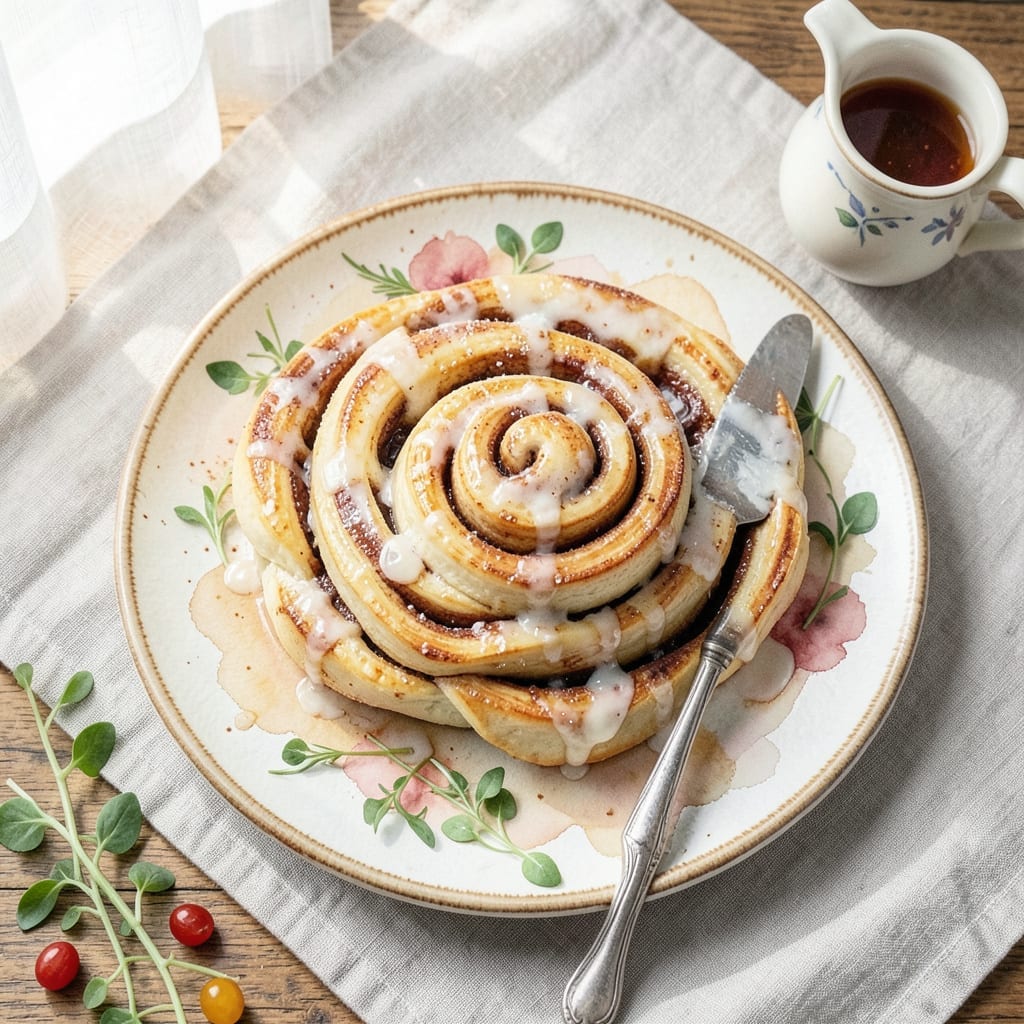
Frozen bread dough transforms into bakery-style cinnamon rolls with this proven method that saves hours of prep time. The technique relies on thawing the dough properly and rolling it thin for maximum swirls in every bite.
What makes this approach special is the balance of convenience and quality. You’ll achieve fluffy layers and perfectly spiced filling without the traditional yeast-dough hassle. The oven does most of the work.
The result is gooey, caramelized rolls with that signature cinnamon-sugar swirl. A simple cream cheese glaze finishes them off for that classic bakery touch.
Ideal for weekend brunches or holiday mornings when you want impressive results with minimal effort.
Ingredients for Cinnamon Roll Recipe with Frozen Bread Dough
Frozen dough plus pantry staples create bakery-style cinnamon rolls with minimal effort on your part.
| Ingredient | Amount | Notes |
|---|---|---|
| Frozen Bread Dough 🍞 | 1 lb | Thawed but still cold |
| Unsalted Butter 🧈 | ½ cup | Melted, for filling |
| Granulated Sugar 🍚 | ¾ cup | Divided for filling and dough |
| Ground Cinnamon 🌿 | 2 tbsp | Freshly opened for potency |
| Brown Sugar 🟤 | ½ cup | Packed, for filling |
| Cream Cheese 🧀 | 4 oz | Full-fat, softened for glaze |
| Powdered Sugar 🍚 | 1 cup | Sifted for smooth glaze |
| Vanilla Extract 💧 | 1 tsp | Pure extract recommended |
| Whole Milk 🥛 | 2 tbsp | For adjusting glaze consistency |
| All-Purpose Flour 🌾 | ¼ cup | For dusting work surface |
| Salt 🧂 | ¼ tsp | Fine sea salt preferred |
The frozen bread dough quality matters more than you think. Rhodes or Bridgeford brands thaw consistently and roll thin without tearing. Look for dough that’s been stored properly at the grocery store (check the expiration date). Thawing overnight in the fridge gives the best texture—avoid the microwave method as it can activate the yeast unevenly.
No cream cheese for the glaze? Mascarpone or full-fat Greek yogurt work in a pinch. Brown sugar can be swapped with coconut sugar for a deeper caramel note. If you’re out of vanilla extract, vanilla bean paste adds speckles and intensity. The butter in the filling must be unsalted—salted can make the filling too salty as it reduces during baking.
Unbaked rolls can be refrigerated overnight for a slow rise—cover tightly with plastic wrap. Baked rolls stay fresh for 2 days at room temperature in an airtight container. The glaze firms up when chilled, so warm slightly before drizzling if making ahead.
Why You’ll Love This Recipe
- No Fuss Morning: I roll out the frozen dough the night before, let it rise overnight, and bake in the morning—no kneading, no mess.
- Buttery Cinnamon Swirl: The melted butter, brown sugar, and cinnamon create that sticky, gooey center I crave with every bite.
- Weekend Brunch Hero: Honestly, these disappear faster than pancakes at my family gatherings, and I don’t even have to stress about timing.
- Pennywise Indulgence: A pack of frozen dough costs less than a fancy bakery roll, and I get a dozen for the price of one.
Step-by-Step Instructions for Cinnamon Rolls With Frozen Bread Dough
This method transforms store-bought dough into bakery-quality rolls with ease and precision.
Step 1: Prepare the Dough and Work Surface
Thaw the 1 lb Frozen Bread Dough overnight in the refrigerator until soft but still cold to the touch. Lightly dust a clean work surface with 0.25 cup All-Purpose Flour and a pinch of 0.25 tsp Salt to prevent sticking.
Roll out the dough into a 12×16-inch rectangle, about ¼-inch thick. If the dough resists, let it rest for 5 minutes before continuing. This even thickness ensures uniform baking and proper swirl formation.
Step 2: Create and Spread the Cinnamon-Sugar Filling
In a small bowl, mix 0.5 cup Brown Sugar, 0.25 cup Granulated Sugar (reserve the remaining 0.5 cup for later), and 2 tbsp Ground Cinnamon until thoroughly combined. The mixture should resemble wet sand with visible spice flecks.
Drizzle 0.5 cup Unsalted Butter (melted) evenly over the rolled dough, leaving a ½-inch border along the edges. Sprinkle the cinnamon-sugar mixture uniformly over the buttered surface, pressing lightly to adhere. This creates the signature gooey filling.
Step 3: Roll, Slice, and Proof the Rolls
Starting from the long side, tightly roll the dough into a cylinder, using the edge of the counter to help create a snug spiral. Pinch the seam to seal. Trim any uneven ends with a sharp knife for consistent rolls.
Using a piece of unflavored dental floss or a sharp knife, slice the cylinder into 12 equal pieces. Place the rolls in a greased baking dish, leaving ½-inch space between each. Cover with a clean towel and let rise in a warm place for 1-1.5 hours until nearly doubled in size.
Step 4: Bake to Golden Perfection
Preheat the oven to 375°F. Bake the risen rolls for 20-25 minutes until the tops are deep golden brown and the internal temperature reaches 190°F. The rolls should spring back lightly when touched.
If the tops brown too quickly, tent the pan with foil for the remaining baking time. Remove from the oven and let cool for 10 minutes before glazing—this prevents the glaze from melting off completely.
Step 5: Prepare and Apply the Cream Cheese Glaze
Beat 4 oz Cream Cheese until smooth, then gradually add 1 cup Powdered Sugar, 1 tsp Vanilla Extract, and 0.25 cup Granulated Sugar. Thin with 2 tbsp Whole Milk as needed to achieve a pourable consistency.
Drizzle the glaze over the warm rolls, allowing it to cascade between the layers. The glaze should be thick enough to coat the rolls but thin enough to seep into the crevices. Serve immediately for optimal gooey texture.
Pro Tips For Making Cinnamon Roll Recipe With Frozen Bread Dough
- Thaw Overnight: Let the frozen bread dough thaw in the fridge for 12-18 hours—rushing it on the counter leads to uneven rising and tough rolls. I learned this the hard way after my first batch came out dense as hockey pucks.
- Soften the Butter: Use room-temperature unsalted butter for the filling, about 30 minutes out of the fridge. Cold butter tears the dough, and melted butter just soaks in instead of creating that perfect cinnamon-sugar paste.
- Skip the Overfill: Resist the urge to pack in too much brown sugar and cinnamon—more than 1/4 cup sugar mix per roll makes a messy, leaking filling. After burning three batches, I finally figured out less is truly more here.
- Warm the Rolls: Proof the shaped rolls in a barely warm oven (90-100°F) for 30-45 minutes until puffy. My grandmother swore by this, and she was right: it guarantees a light, fluffy texture every time.
Pro Cooking Tips for This Dish
Thawing Perfection
Always thaw your 1 lb Frozen Bread Dough overnight in the fridge—never at room temperature. This slow thaw prevents premature yeast activation, ensuring your rolls rise evenly during proofing. I learned this the hard way after a batch failed to rise properly. 🌡️
Rolling Technique
Roll the dough to exactly ¼-inch thickness on a lightly floured surface. Use a ruler for precision. If the dough springs back, let it rest for 5 minutes before continuing. This creates the perfect canvas for maximum cinnamon-sugar swirls.
Filling Distribution
Spread the melted ½ cup Unsalted Butter right to the edges—don’t skimp. Then sprinkle your cinnamon-sugar mix evenly, pressing it into the butter. This ensures every bite has that signature gooey, spiced filling we all love.
Clean Slicing
For perfect rolls, use unflavored dental floss to slice the log. Slide it under the dough, cross the ends at the top, and pull tightly. This method prevents squishing the rolls and creates clean edges. I keep dental floss in my baking drawer just for this purpose.
Proofing Environment
Let your rolls rise in a warm, draft-free spot (80-85°F ideal). My oven with the light on works perfectly. They should nearly double in size in 1-1.5 hours. Don’t rush this step—patience pays off with fluffy layers.
Glaze Timing
Always let the rolls cool for 10 minutes before glazing. This prevents the cream cheese mixture from sliding right off. The residual heat will slightly melt the glaze, letting it seep into those beautiful layers. 💡
Nutrition Facts
Frequently Asked Questions
Can I use thawed dough immediately?
No, use dough that’s soft but still cold to the touch. Warming it too much causes sticky, hard-to-handle dough.
Why did my rolls not rise properly?
Most likely the dough was too warm when rolled or proofed in a cold spot. Keep dough cold until rolling and proof at 80-85°F.
Can I make these the night before?
Yes! Prepare through slicing, then refrigerate overnight. In the morning, let rise at room temperature for 1-1.5 hours before baking.
How do I prevent the filling from leaking?
Seal the rolled log tightly by pinching the seam. Also, leave a ½-inch border without filling at the edges.

- BBQ Sausage Recipe Oven: Smoky Depth Without the Grill - September 28, 2026
- BBQ Chicken Bowl Recipe Rice: Smoky Sweetness Over Fluffy Grains - September 28, 2026
- Beef Cutlet Recipe Ideas: Crispy Breaded Patties With Bold Seasonings - September 28, 2026