
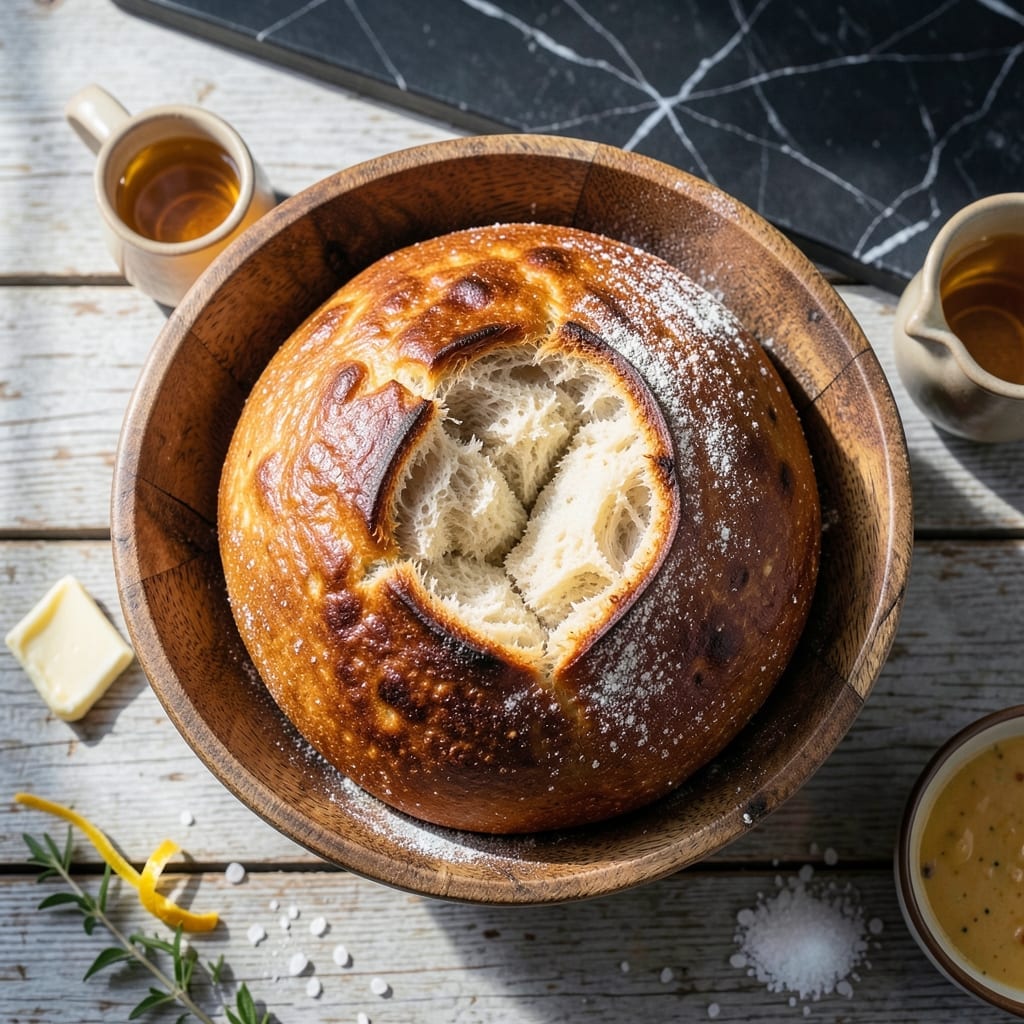
There’s a reason bakers swear by this method for achieving that classic crust and airy crumb at home.
This recipe relies on simple ingredients, precise timing, and a few key techniques to deliver bakery-style results. The dough comes together in minutes, then rests to develop flavor and texture.
With proper kneading and proofing, you’ll create loaves with a shatteringly crisp exterior and a soft, open interior. The oven steam step ensures a golden, professional finish.
Perfect for sandwiches, dipping, or serving warm with butter. Here’s how to master it.
Ingredients for Classic French Bread Recipe King Arthur
Simple ingredients create bakery-style bread with crisp crust and airy crumb at home.
| Ingredient | Amount | Notes |
|---|---|---|
| Bread Flour 🌾 | 5 cups | King Arthur preferred for consistency |
| Active Dry Yeast 🍞 | 2 ¼ tsp | Or one 0.25 oz packet |
| Kosher Salt 🧂 | 2 tsp | Diamond Crystal recommended |
| Granulated Sugar 🍚 | 1 tbsp | Feeds the yeast activation |
| Warm Water 💧 | 2 cups | 110-115°F for yeast proofing |
| Unsalted Butter 🧈 | 1 tbsp | For bowl greasing |
| Cornmeal 🌽 | 2 tbsp | For dusting baking surface |
| Ice Cubes ❄️ | 1 cup | For oven steam generation |
| All-Purpose Flour 🌾 | ½ cup | For dusting work surface |
| Egg White 🥚 | 1 whole | Optional for glossy finish |
| Sesame Seeds 🌰 | 1 tbsp | Optional for topping |
The flour is critical here. King Arthur Bread Flour delivers consistent protein content (12.7%) for optimal gluten development. Most supermarkets carry it, but bulk food stores often have fresh stock with better turnover. Avoid pre-sifted flour—it packs down and throws off measurements. The yeast must be fresh; check the expiration date and store unopened packets in the freezer.
No bread flour? All-purpose flour with 1 tbsp vital wheat gluten per cup approximates the protein content. Skip the sugar if using instant yeast. For a sourdough variation, replace commercial yeast with 1 cup active sourdough starter. The warm water temperature is non-negotiable—too hot kills yeast, too cold slows activation. A thermometer ensures precision.
Store flour in airtight containers to prevent moisture absorption. Dough rests best at 75-80°F. Baked loaves keep 2-3 days at room temperature in paper bags, or freeze for 1 month. Slice before freezing for easy toast-to-order portions.
Why You’ll Love This Recipe
- One Bowl Magic: I love that this comes together with just five ingredients—flour, yeast, salt, sugar, and water—mixed in one bowl. No fancy gadgets, no fuss.
- Crust Perfection: The warm water activates the yeast just right, giving that golden, crackly crust with a soft, airy inside. Honestly, it’s bakery-level good.
- Endless Uses: Slice it for sandwiches, tear it for dipping, or toast it for breakfast. Between us, it’s my go-to for impromptu charcuterie nights.
- Budget Friendly: Bread flour and yeast are pantry staples, so a fresh loaf costs pennies. I’ll be real: it’s cheaper than the grocery store and twice as good.
Step-by-Step Instructions for Classic French Bread
Achieve bakery-quality results at home with this precise, traditional method.
Step 1: Activate the Yeast and Mix the Dough
In a large mixing bowl, dissolve the 1 tbsp Granulated Sugar in the 2 cups Warm Water at 110-115°F. Sprinkle the 2.25 tsp Active Dry Yeast over the surface and let it sit for 5-10 minutes until foamy. This proofing step confirms your yeast is alive and active.
Add the 5 cups Bread Flour and 2 tsp Kosher Salt to the yeast mixture. Using a wooden spoon or dough whisk, combine until a shaggy dough forms. The dough will be sticky at this stage—this is normal for French bread.
Step 2: Knead and First Rise
Turn the dough out onto a surface dusted with the 0.5 cup All-Purpose Flour. Knead for 8-10 minutes by hand until smooth and elastic. The dough should pass the windowpane test—stretch a small piece thin enough to see light through without tearing.
Grease a large bowl with the 1 tbsp Unsalted Butter, place the dough inside, and turn to coat. Cover with a damp towel and let rise in a warm place for 1-1.5 hours or until doubled in volume. Look for a domed top and visible air bubbles just beneath the surface.
Step 3: Shape and Second Rise
Punch down the risen dough to release air. Divide into two equal portions and shape each into a long baguette by rolling tightly and tapering the ends. Place the loaves on a baking sheet dusted with the 2 tbsp Cornmeal, which prevents sticking and adds texture.
Cover loosely with a towel and let rise for 30-45 minutes until puffy. The loaves should spring back slowly when pressed gently with a finger. Preheat your oven to 450°F during this final rise.
Step 4: Bake with Steam
Just before baking, make ½-inch deep diagonal slashes on each loaf using a sharp razor or serrated knife. Place the 1 cup Ice Cubes in a metal pan on the lowest oven rack to create steam, which is essential for a crisp, golden crust.
Bake the loaves on the center rack for 20-25 minutes until deep golden brown and hollow-sounding when tapped on the bottom. The steam should be visible through the oven door for the first 10 minutes.
Step 5: Finish and Cool
Remove the loaves from the oven and brush the tops with the 1 whole Egg White if using, then sprinkle with the 1 tbsp Sesame Seeds. This optional step adds shine and visual appeal.
Transfer to a wire rack and cool completely for at least 1 hour before slicing. This resting period allows the interior crumb structure to set properly. The finished loaves should have a crisp, crackly crust and an open, airy interior with irregular holes characteristic of classic French bread.
Pro Tips For Making Classic French Bread Recipe King Arthur
- Check Water Temp: Use a thermometer to ensure your warm water is between 110-115°F—any hotter and you’ll kill the yeast, any cooler and it won’t activate properly. I learned this the hard way after a few loaves that refused to rise.
- Weigh Your Flour: Scooping flour with a cup compacts it, leading to dense bread. Weigh your bread flour—12.75 oz per 3 cups—to guarantee the right texture every time.
- Don’t Rush Proofing: Resist the urge to speed up the first rise by placing the dough in a warm oven. Let it double in size at room temp (about 1-1.5 hours) for better flavor development.
- Steam the Oven: Place a pan of boiling water on the bottom rack when baking, or spray the oven walls with water just before loading the bread. This creates that crisp, golden crust King Arthur’s recipe is known for.
Health Benefits of These Flavors
Rich in B Vitamins
This bread provides essential B vitamins, particularly thiamine and niacin, from enriched bread flour. These nutrients help convert food into energy and support nervous system function. Just 1 slice contributes to your daily needs. 💪
Low in Fat
With only 1 tbsp Unsalted Butter used for greasing, this recipe is naturally low in fat. The majority of calories come from complex carbohydrates, making it a heart-healthy choice when enjoyed as part of a balanced diet.
Dietary Fiber Source
Bread flour contains moderate dietary fiber, about 2-3 grams per slice, which aids digestion and helps maintain steady blood sugar levels. I notice it keeps me feeling full longer than white bread options.
Complex Carbohydrates
The 5 cups Bread Flour provides slow-digesting complex carbs that fuel your body throughout the day. These are the primary energy source that makes bread such a dietary staple across cultures.
Minimal Added Sugar
Only 1 tbsp Granulated Sugar is used to activate the yeast, most of which is consumed during fermentation. The finished loaf contains negligible added sugars, making it suitable for those monitoring sugar intake.
Yeast Benefits
The 2.25 tsp Active Dry Yeast in this recipe provides small amounts of B vitamins and minerals. Plus, the fermentation process may improve nutrient availability in the flour through natural enzymatic activity. ✨
Nutrition Facts
Frequently Asked Questions
Why use bread flour instead of all-purpose?
Bread flour’s higher protein content (12.7%) develops more gluten, creating that chewy texture and better structure. All-purpose works in a pinch but yields a denser loaf.
How can I tell when the dough is properly kneaded?
Perform the windowpane test: stretch a small piece thin enough to see light through. If it holds without tearing, your gluten is well-developed after 8-10 minutes of kneading.
What if my bread doesn’t brown enough?
Ensure your oven is fully preheated to 450°F and the steam pan is on the lowest rack. If needed, bake 2-3 minutes longer, but watch closely to avoid over-browning.
Can I make this dough ahead?
Yes! After the first rise, refrigerate the dough for up to 24 hours. This slow fermentation actually enhances flavor. Let it warm to room temperature before shaping.

- BBQ Sausage Recipe Oven: Smoky Depth Without the Grill - September 28, 2026
- BBQ Chicken Bowl Recipe Rice: Smoky Sweetness Over Fluffy Grains - September 28, 2026
- Beef Cutlet Recipe Ideas: Crispy Breaded Patties With Bold Seasonings - September 28, 2026