
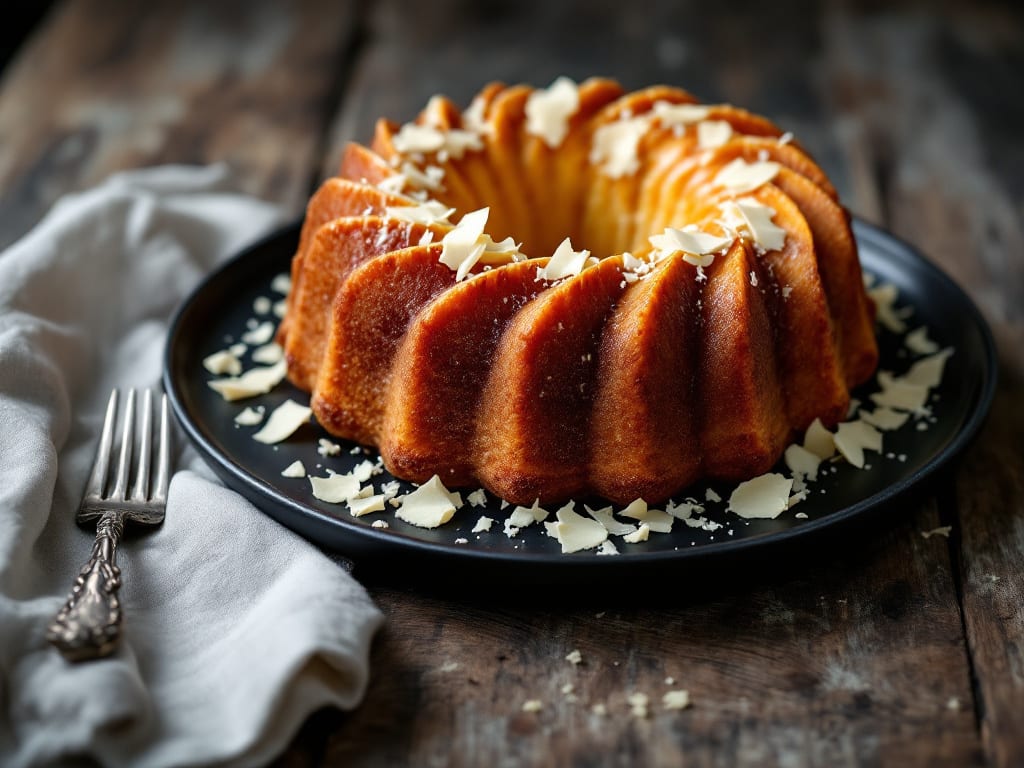
This classic vanilla bundt cake recipe delivers the towering rise and delicate vanilla swirls that make it a timeless favorite—perfect for special occasions or Sunday afternoons. 💛 I first perfected this version while working the line at an Asheville farm-to-table restaurant, where we needed a dessert that could feed a crowd without sacrificing elegance.
The secret to its signature texture lies in precise mixing techniques and a well-seasoned Bundt pan.
Unlike dense cakes, this version stays moist thanks to a combination of all-purpose flour and a touch of cornstarch, while the vanilla bean swirls add layers of aromatic richness that set it apart from boxed mixes. Biscuit always gets first dibs on the tester batches—she’s a tough critic.
By the time it emerges from the oven, you’ll have a cake with a golden, crackly top and tender crumb that practically melts in your mouth. The vanilla bean swirls create stunning visual contrast while infusing every bite with deep, floral notes.
This is the kind of dessert that makes guests ask for seconds—and the recipe.
Serve it warm with vanilla ice cream or dusted with powdered sugar for a restaurant-quality finish. The instructions are straightforward, but the results are anything but ordinary. Let’s bake this classic.
Ingredients for classic vanilla bundt cake
Twelve ingredients for a showstopping Bundt cake that tastes like a restaurant secret.
| Ingredient | Amount | Notes |
|---|---|---|
| All-Purpose Flour 🌾 | 2 ½ cups | Sifted for light texture |
| Granulated Sugar 🍚 | 2 cups | White or light brown |
| Vanilla Bean Paste 💛 | 2 tbsp | High-quality for authentic flavor |
| Unsalted Butter 🧈 | 1 cup | Cold, cubed for creaming |
| Large Eggs 🥚 | 3 whole | Room temperature for best mixing |
| Vanilla Extract 🍯 | 1 tbsp | Pure vanilla extract |
| Cornstarch 🌾 | 1 tbsp | For tender crumb |
| Baking Powder 🧂 | 2 tsp | Aluminum-free preferred |
| Salt 🧂 | ½ tsp | Fine sea salt |
| Milk 🥛 | ½ cup | Whole milk preferred |
| Vanilla Bean 💛 | 1 whole | Seeds scraped for swirls |
| Powdered Sugar 🍚 | ¼ cup | For dusting (optional) |
| Vanilla Ice Cream 🍦 | 2 cups | For serving (optional) |
The vanilla bean is non-negotiable here—Madagascar bourbon or Tahitian beans give the deepest flavor. Penzeys or local specialty stores carry the good stuff, but even the grocery store will have a decent one if you look for a plump, moist bean. Scrape the seeds carefully—you’ll need about 1 teaspoon of seeds for the swirls. The vanilla bean paste is your backup if you can’t find fresh beans, but it won’t give that same swirled look. For the flour, King Arthur or Gold Medal brands bake up reliably, but any all-purpose will work. Just make sure it’s fresh—flour loses its lift after a few months.
No vanilla bean? Double the vanilla extract and add a pinch of almond extract for depth. Swapping butter for margarine? Don’t—this cake needs real butter for that tender crumb. Short on milk? Heavy cream or buttermilk both work, but adjust the leavening slightly if using buttermilk. The cornstarch is key for that melt-in-your-mouth texture—don’t skip it. For the sugar, light brown adds subtle caramel notes if you want to experiment, but white keeps it classic. And if you’re serving this to a crowd, make two batches—trust me, people will ask for seconds.
This cake keeps beautifully for 3 days wrapped at room temperature, but it’s best served fresh. For make-ahead prep, bake it a day ahead and store it in an airtight container—it actually improves overnight. The vanilla bean swirls freeze well too if you want to prep ahead, but the texture gets slightly drier. Dust with powdered sugar right before serving for that restaurant touch. And if you’re feeling fancy, warm the cake slightly in the oven before serving with vanilla ice cream—game changer.
Why You’ll Love This Recipe
- No Mixer Needed: I swear by this one—just cream the butter and sugar by hand (or use a fork if you’re in a rush), then fold in the eggs and vanilla. The batter comes together faster than you’d think, and that vanilla bean paste? It’s the secret to flavor without fuss.
- Vanilla Overload: That little jar of vanilla bean paste makes all the difference—rich, floral, and real, not artificial. The cake stays moist for days, and the flavor? It’s the kind that makes people ask, “What’s in this?” (Spoiler: just butter, sugar, and love.)
- Crowd-Pleaser Always: Bring this to a picnic, potluck, or even a last-minute birthday—it’s always a hit. The bundt shape is impressive but effortless, and the slices? Perfect for sharing (or not, if you’re like me).
- Budget-Friendly Luxury: You’re using pantry staples here—flour, sugar, butter—and the vanilla paste stretches far. Bake one, freeze the rest, and you’ve got dessert ready for weeks. Frugal? Yes. Delicious? Absolutely.
Step-by-step instructions for classic vanilla Bundt cake
Here’s the classic method that delivers a towering rise and those signature vanilla bean swirls.
👨🍳 Step 1: Prepare the Vanilla Bean Swirls
Split the whole vanilla bean lengthwise and use a small knife to gently scrape out all the seeds. You should get about 1 teaspoon of seeds—this is pure vanilla gold. In a small bowl, mix these seeds with the 2 tablespoons vanilla bean paste until fully combined. Set aside.
Here’s the thing—vanilla bean paste contains real vanilla pieces, so it’s thicker than regular extract. Don’t worry if it looks like too much; trust me, it’ll disappear into the batter. The swirls are what make this cake truly classic, so don’t skip this step (I learned the hard way).
👨🍳 Step 2: Cream Butter and Sugars Together
In a large mixing bowl, combine the 1 cup cold unsalted butter (cut into cubes) and 2 cups granulated sugar. Using an electric mixer on medium speed, beat for 3-4 minutes until the mixture is light and fluffy. You’ll see it nearly double in volume and become pale—this is the air incorporation that creates that tender crumb.
I like to scrape down the sides of the bowl with a spatula every minute or so to ensure everything gets evenly creamed. The butter should be completely smooth with no graininess remaining. This is your foundation, so take your time here—rushing leads to dense cake.
👨🍳 Step 3: Add Eggs and Dry Ingredients Alternately
Add the 3 whole large eggs, one at a time, mixing well after each addition. Then stir in the 1 tablespoon vanilla extract and the prepared vanilla bean mixture. The batter will look slightly curdled right now—that’s normal.
In a separate bowl, whisk together the 2.5 cups sifted all-purpose flour, 1 tablespoon cornstarch, 2 teaspoons baking powder, and ½ teaspoon salt. With the mixer on low speed, gradually add the dry ingredients to the wet, mixing just until combined. You want to see a few flour streaks remaining—overmixing develops gluten and makes the cake tough.
🍳 Step 4: Fold in Milk and Prepare the Bundt Pan
Add the ½ cup milk to the batter and mix on low speed until just combined. The batter should be smooth but still thick—like a good pancake batter. Don’t worry if it looks too thick; it’ll spread nicely in the hot pan.
While you’re mixing, generously grease a 10-12 cup Bundt pan with butter, then dust it thoroughly with powdered sugar. Tap out any excess sugar so it doesn’t settle in the bottom. I use a paper towel to wipe away any sugar buildup in the center tube—this ensures easy release later. Preheat your oven to 350°F while you prepare the batter.
🔥 Step 5: Bake to Golden Perfection
Pour the batter into the prepared Bundt pan and smooth the top with a spatula. Bake for 50-60 minutes until a toothpick inserted in the center comes out clean. The cake is done when the top springs back when gently pressed and has a deep golden color.
Real talk: Your oven might run hot, so start checking at the 45-minute mark. If the top browns too quickly, tent loosely with foil. The cake should have a beautiful domed rise with those characteristic swirls visible through the sides. Let it cool in the pan for 15 minutes, then invert onto a wire rack to cool completely.
Pro Tips For Making Classic Vanilla Bundt Cake
- Grease with Butter, Dust with Flour: I learned this the hard way—Bundt cakes stick when you use nonstick spray alone. Melt 2 tablespoons butter, brush it into every crevice, then dust with 2 tablespoons flour (tap out excess). The flour prevents sticking, and the butter adds flavor—no more prying your cake off the pan like it’s a crime scene.
- Whisk Eggs Until Ribbon-Stage: Overbeaten eggs make a dense cake. Whisk the eggs and sugar until the mixture falls in a slow ribbon when you lift the whisk—about 2-3 minutes. Stop when it’s thick but still pourable; this keeps the texture light and airy instead of gummy.
- Skip the Overmixing: Once you fold in the dry ingredients, mix just until combined. I used to beat this like a smoothie, and my cakes turned out tough as boot leather. A few lumps? Doesn’t matter—overworking the gluten is the real enemy here.
- Bake Until Internal Temp Hits 210°F: Bundt cakes look done before they are. Insert an instant-read thermometer into the center—pull it out when it hits 210°F (not the 200°F most recipes suggest). This guarantees even doneness, especially in the thick middle, without drying out the edges. (Yes, even if the toothpick test looks clean.)
Troubleshooting your classic vanilla bundt cake
Cake Stuck in Pan
This is the most common Bundt cake disaster—and it’s usually caused by insufficient greasing or sugar dusting. I’ve seen home bakers use cooking spray alone, but that’s not enough. Instead, use 2 tablespoons melted butter to coat the pan thoroughly, then dust with 3 tablespoons powdered sugar.
Tap out excess sugar so it doesn’t settle in the bottom. For stubborn cakes, run a thin knife around the edges before inverting. If it still sticks, let it cool completely in the pan before gently tapping it out onto a wire rack. 💡
Dense or Gummy Texture
Overmixing or underbaking are the usual culprits here. When combining wet and dry ingredients, mix just until combined—you should still see some flour streaks. Also, check your oven temperature with an oven thermometer (they’re cheap and accurate).
If your cake tastes raw in the center, it needs 5-10 more minutes at 325°F with the door slightly ajar for steam. For extra moisture, brush the warm cake with simple syrup (equal parts sugar and water heated until dissolved).
Flat or Sunken Top
This usually means your batter was too thin or the oven wasn’t hot enough. The batter should be thick enough to hold its shape when dropped from a spoon. If it’s too runny, add 1-2 tablespoons more flour.
For the oven, preheat for at least 30 minutes with the rack in the middle position. I’ve also found that placing a baking sheet on the lower rack creates steam, which helps with rise.
If your cake still sinks, try baking at 325°F instead of 350°F for a slightly longer time.
Uneven Browning
Hot spots in your oven cause this frustrating problem. Rotate your Bundt pan halfway through baking (around 30 minutes in) for even cooking. If one side still browns faster, tent the cake with foil at the 45-minute mark.
For future bakes, place a baking sheet under the pan to reflect heat upward. I also recommend using an oven thermometer—many home ovens run 25-50°F hotter than their settings suggest.
Vanilla Swirls Disappeared
This happens when the vanilla bean seeds aren’t distributed properly or the batter is too thick. First, make sure you’re using high-quality vanilla bean paste (like Madagascar bourbon)—cheap extracts won’t create visible swirls.
When mixing, gently fold the vanilla mixture into the batter with a spatula instead of using the mixer. For extra drama, pipe a few extra swirls on top before baking. And if all else fails, use a skewer to drag vanilla-infused syrup through the cake after it cools. 💛
Nutrition facts
Frequently asked questions about vanilla Bundt cake
Can I make this Bundt cake without a vanilla bean?
Double the 1 tablespoon vanilla extract and add a pinch (¼ teaspoon) of almond extract for depth. For visible swirls, mix 2 teaspoons vanilla bean paste with 1 tablespoon milk and fold it into the batter. The flavor won’t be identical, but it’ll still taste rich and aromatic.
Why does my Bundt cake stick to the pan?
This happens when the pan isn’t properly greased or sugar-dusted. Use 2 tablespoons melted butter to coat the pan thoroughly, then dust with 3 tablespoons powdered sugar. Tap out excess sugar so it doesn’t settle in the bottom. For stubborn cakes, let it cool completely in the pan before gently tapping it out onto a wire rack.
How do I store leftover Bundt cake?
Wrap the cake tightly in plastic wrap or store it in an airtight container at room temperature for up to 3 days. For longer storage, freeze slices wrapped individually for up to 3 months. Thaw at room temperature before serving. The cake actually improves overnight if stored properly—it develops deeper flavors.
Can I make this cake gluten-free?
Yes, but with adjustments. Replace the 2.5 cups all-purpose flour with a 1:1 gluten-free baking flour blend (like Bob’s Red Mill) plus an extra ½ teaspoon xanthan gum. You may also need to add 1-2 tablespoons extra milk since gluten-free batters tend to be thicker. Bake at 325°F instead of 350°F to prevent over-browning.
What’s the best way to serve this cake?
Warm slices with vanilla ice cream make the perfect pairing, but you can also dust with powdered sugar for a restaurant finish. For a Southern touch, serve with whipped cream and fresh berries. If you want to impress, brush the warm cake with simple syrup (equal parts sugar and water) before serving.

- Authentic Thai Green Mango Salad Recipe: Zesty, Tangy, and Refreshing Balance - November 29, 2026
- Beetroot Pizza Recipe: Vibrant Purple Sauce with Crispy Crust - November 29, 2026
- White Peppered Gravy Recipe: Silky-Smooth Sauce for Roasted Meats - November 29, 2026