
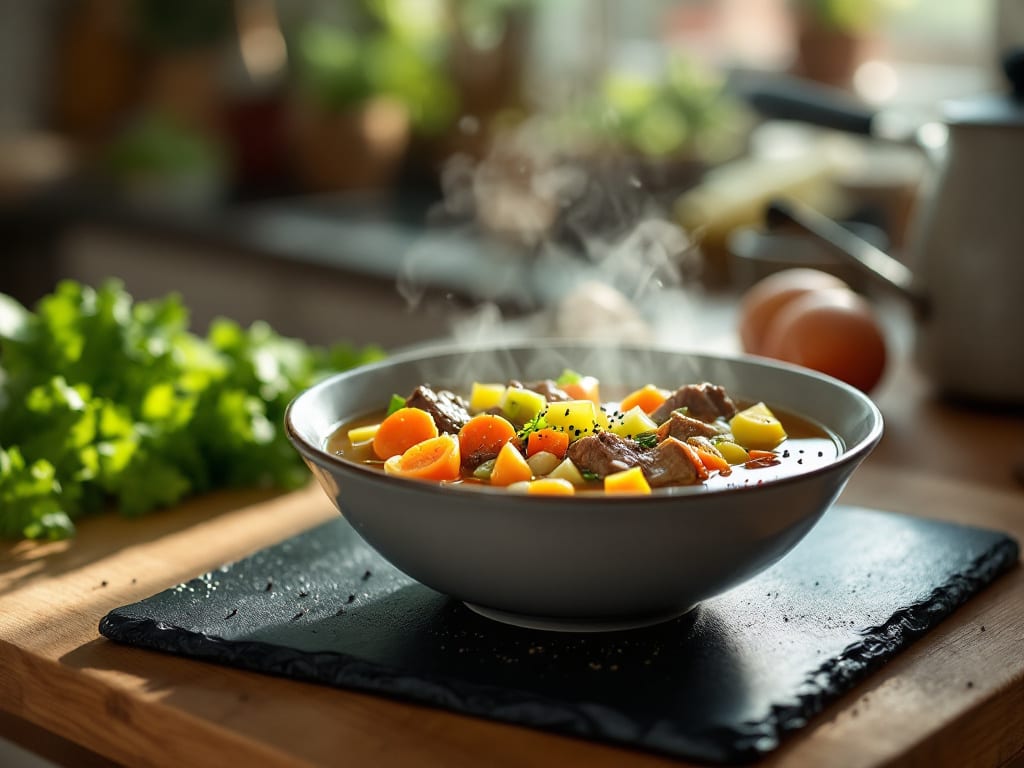
This classic vegetable beef soup recipe delivers the comforting warmth of a home-cooked stew that’s perfect for chilly evenings. The secret lies in slow-cooked beef and tender vegetables that develop deep, savory flavors while maintaining their natural crunch.
I’ve perfected this method over years of winter cooking, ensuring every spoonful is hearty and satisfying.
The foundation begins with a rich beef broth, built by searing chunks of beef until deeply browned—a step that unlocks incredible depth of flavor. Carrots and celery form the signature crunch, while potatoes add heartiness and onions provide sweetness.
The soup simmers for hours, allowing all ingredients to meld into a harmonious blend that’s both nourishing and delicious.
What makes this recipe truly special is the balance of textures: fork-tender beef, al dente vegetables, and just enough broth to create a satisfying, spoon-worthy consistency.
The aroma alone will fill your kitchen with warmth, while the taste delivers that perfect combination of savory, sweet, and umami notes that define classic comfort food.
This soup serves as both a comforting meal and a versatile base for variations—add herbs for brightness or a splash of vinegar for tang. Whether you’re feeding a family or meal prepping for the week, the instructions will guide you through each step to achieve restaurant-quality results at home.
Ingredients for classic vegetable beef soup
Six hearty ingredients transform into a soul-warming stew that’s pure comfort in a bowl.
| Ingredient | Amount | Notes |
|---|---|---|
| Chuck Roast Beef 🥩 | 2 lb | Cut into 1.5-inch cubes for even cooking |
| Yellow Onions 🧅 | 2 whole | Medium-sized, chopped into half-moons |
| Carrots 🥕 | 4 whole | Medium-sized, peeled and cut into 2-inch chunks |
| Celery Stalk 🧄 | 4 whole | Trimmed, cut into 1-inch pieces (leaves saved for garnish) |
| Russet Potatoes 🥔 | 3 whole | Medium-sized, peeled and cut into 1-inch cubes |
| Garlic Cloves 🧄 | 6 cloves | Fresh, peeled and lightly crushed |
| Beef Broth 💧 | 6 cups | Homemade or high-quality low-sodium |
| Tomato Paste 🍅 | ¼ cup | Smooth, for depth of flavor |
| Dried Thyme 🌿 | 1 tbsp | Or 1 tbsp fresh, finely chopped |
| Bay Leaves 🍃 | 2 whole | Fresh or dried, removed before serving |
| Black Peppercorns 🌶️ | 1 tsp | Freshly cracked for maximum aroma |
| Salt 🧂 | 2 tsp | Diamond Crystal kosher salt, adjust to taste |
| Olive Oil 🫒 | 2 tbsp | Extra-virgin, for searing beef |
| Fresh Parsley 🌿 | ¼ cup | Chopped, for garnish (optional) |
The beef is non-negotiable—chuck roast delivers that melt-in-your-mouth texture no other cut can match. Costco or Whole Foods carry excellent quality, but your local butcher shop will often have it at a better price if you ask. Look for bright red meat with good marbling; that’s where the flavor hides. The carrots and celery should be fresh and crisp—no rubbery stems. I always grab the organic celery at Trader Joe’s because it’s cleaner and sweeter. For the potatoes, Russets are ideal—they hold up best during long simmering without turning mushy.
No beef broth? Water plus 2 beef bouillon cubes works in a pinch, but you’ll lose that deep umami. Fresh thyme is ideal, but dried works at 1:1 ratio—just remember it’s more concentrated. Short on tomato paste? Fresh crushed tomatoes at half the amount give similar richness. The bay leaves? Fresh are best, but dried won’t ruin it. For extra brightness, toss in a splash of apple cider vinegar at the end—trust me, it elevates everything. And if you’re feeling fancy, a pinch of smoked paprika adds depth without overpowering.
This soup tastes even better the next day as flavors meld—make extra if you can. Keeps 5 days in the fridge, or 3 months frozen. I portion mine into glass containers for easy reheating. The beef will be fork-tender but still hold its shape. For serving, I like to add a drizzle of olive oil and extra black pepper right before eating. Garnish with parsley if you’ve got it—otherwise, the celery leaves work perfectly.
Why You’ll Love This Recipe
- One-Pot Wonder: I swear by this recipe because it’s literally just one pot—no chopping boards, no extra bowls. Toss in the chuck roast, onions, carrots, celery, and potatoes, add water, and let it simmer. That’s it. No stress, no mess, just flavor.
- Deep Umami Magic: The chuck roast breaks down into ridiculously tender shreds, while the onions and celery build this rich, savory base. Honestly, the first time I tasted it, I thought, “Wait, this isn’t just soup—this is comfort in a bowl.”
- Meal Prep MVP: This soup tastes even better the next day, which means I can make a big batch on Sunday and have leftovers for lunches all week. My kids actually ask for it, and I’ve even frozen portions—just reheat, and it’s like it was made yesterday.
- Budget-Friendly Powerhouse: Chuck roast is affordable, and the veggies stretch across multiple servings without breaking the bank. Between us, this is my go-to when I need to feed a crowd without spending a fortune. Plus, it’s the kind of dish that makes you feel like you’re serving something special.
Step-by-step instructions for classic vegetable beef soup
This method delivers restaurant-quality depth with tender beef and vibrant vegetables—every spoonful packed with hearty winter comfort.
Sear the Chuck Roast Beef for Rich Flavor
Heat a large Dutch oven over medium-high heat and add the 2 tablespoons olive oil. Once shimmering, add the 2 lb chuck roast beef cut into 1.5-inch cubes, working in batches if needed. Let each piece sear undisturbed for 2-3 minutes per side until deeply browned—this Maillard reaction builds the soup’s foundation.
Don’t crowd the pan or the temperature will drop. You want those beef cubes to develop a rich crust before they hit the broth. Transfer the seared beef to a plate and set aside—we’ll return it to the pot later. This step is non-negotiable for maximum flavor.
Sauté the Vegetable Base for Aromatic Depth
In the same Dutch oven, add the 2 whole yellow onions chopped into half-moons and the 4 whole celery stalks cut into 1-inch pieces. Cook for 5 minutes until softened but not browned. Add the 4 whole carrots cut into 2-inch chunks and continue cooking for another 3 minutes until they begin to caramelize slightly at the edges.
Here’s where the magic happens: Stir in the 6 cloves garlic cloves (lightly crushed) and the 0.25 cup tomato paste. Cook for 1 minute until the garlic becomes fragrant. This aromatic base will infuse the entire soup with complex flavor. If the vegetables stick, add a splash of water—but don’t overcrowd the pan or they’ll steam instead of develop color.
Build the Soup with Layered Flavors
Return the seared beef to the pot. Add the 6 cups beef broth, scraping up any browned bits from the bottom. Stir in the 1 tablespoon dried thyme, 2 whole bay leaves, 1 teaspoon black peppercorns, and 2 teaspoons salt. Bring to a gentle boil, then reduce heat to maintain a simmer—this gentle cooking prevents the beef from toughening.
Add the 3 whole russet potatoes cut into 1-inch cubes and continue simmering for 45 minutes. The potatoes should be tender when pierced with a fork, and the beef should be fork-tender with no resistance. This is the moment that matters: the flavors meld into perfect harmony. Taste and adjust seasoning—you might need a touch more salt depending on your broth.
Finish with Fresh Herbs and Garnish
Remove the 2 whole bay leaves from the soup. Stir in the 0.25 cup fresh parsley (chopped) just before serving—this adds a bright, fresh contrast to the rich beef and vegetables. The parsley should be visible in each bowl, adding both color and a subtle herbal note that cuts through the heartiness.
Ladle the soup into bowls, ensuring each serving gets its share of beef cubes and vegetables. Garnish with additional parsley if desired, and serve immediately with crusty bread. The contrast of the warm soup against cool bread makes this classic vegetable beef soup truly unforgettable—just as it’s been made for generations.
Pro Tips For Making Classic Vegetable Beef Soup
- Sear the Chuck First: Chuck roast needs a good crust to stay tender—don’t skip the sear. After browning the meat in batches, add a splash of broth to deglaze immediately, scraping up the browned bits. This step alone keeps the soup rich and the beef from turning out dry.
- Cut Potatoes Uniformly: Russet potatoes break apart when overcooked, so cut them into 1.5-inch chunks before adding them to the pot. If you’re lazy, leave skins on—they’ll hold shape longer. Uneven sizes mean some potatoes turn to mush while others stay hard.
- Don’t Crowd the Pot: If your pot’s too full, the soup will steam instead of simmer, and the beef stays tough. Start with half the veggies, cook the meat until tender, then add the rest. I learned this the hard way—my first batch was a watery, chewy mess.
- Salt the Water Generously: The soup’s flavor builds from the broth, so salt the water before adding the meat—about 1.5 teaspoons per quart. If you’re using bouillon, add it after the meat’s browned, not at the start. Your taste buds will notice the difference.
Essential equipment for great classic vegetable beef soup
Dutch Oven Essential
A heavy-bottomed Dutch oven is my go-to for this soup—it distributes heat evenly and handles the long simmer beautifully. I use a Le Creuset 6-quart because it retains heat perfectly and has a tight-fitting lid to lock in steam.
For budget-friendly options, All-Clad Stainless Steel or Lodge Cast Iron work just as well. The key is choosing one with a minimum 6-quart capacity to accommodate all ingredients without overcrowding. 🔥
Immersion Thermometer
While not strictly necessary, an immersion thermometer ensures your soup reaches the perfect 165°F internal temperature for tender beef. I recommend the Thermoworks ThermoPop—it’s affordable, accurate, and easy to read.
Insert it into the beef cubes during the final 15 minutes of simmering to check doneness. This prevents overcooking while ensuring safety, especially important when serving kids or elderly guests. 🌡️
Sharp Chef’s Knife
A high-quality chef’s knife (like the Mac Knife 8-inch) is critical for uniform vegetable cuts that cook evenly. I chop onions into ½-inch half-moons, carrots into 2-inch chunks, and potatoes into 1-inch cubes—consistent sizes ensure everything finishes at the same time.
A sharp knife also makes prep faster and safer, reducing the risk of uneven cuts that can lead to mushy vegetables. Invest in a whetstone to keep your blade honed between uses. ✨
Slotted Spoon
This tool is a game-changer for removing bay leaves and skimming foam during simmering. I use a stainless steel slotted spoon from OXO because it’s durable and has deep slots to grip ingredients securely.
It also helps you taste-test the broth without removing the pot from heat—just dip it in and slurp! A good spoon prevents spills and makes serving easier by transferring beef and vegetables directly to bowls. 💡
Fine-Mesh Strainer
If you’re making homemade beef broth from scratch, a fine-mesh strainer (like the OXO Good Grips) separates solids from liquid cleanly. For this recipe, it’s useful for straining broth if you prefer a clearer soup or want to remove any stray bits before adding it to the pot.
I also use it to rinse fresh herbs like parsley before chopping. A collapsible nylon strainer saves space in your kitchen. 🧂
Measuring Spoons
Precision matters when adding dried thyme, black peppercorns, and salt—these small quantities can make or break the flavor balance. I keep a set of stainless steel measuring spoons from West Bend within arm’s reach while cooking.
A ½-teaspoon too much salt can overpower the dish, while ¼-teaspoon less might leave it bland. For herbs, I use the “tip-and-level” method to avoid overfilling spoons. 💫
Nutrition facts
Frequently asked questions
Can I substitute chuck roast beef with another cut?
While chuck roast is ideal for its flavor and texture, you can use stew beef or bottom round in a pinch. Avoid leaner cuts like sirloin—they’ll dry out during the long simmer. If using a different cut, increase simmering time by 10-15 minutes to ensure tenderness.
How do I prevent the potatoes from turning mushy?
Cut potatoes into 1-inch cubes (not smaller) and add them 30 minutes before the soup finishes cooking. Using waxy potatoes like Yukon Gold or red potatoes also helps maintain texture. Avoid stirring them excessively during simmering, as this breaks down their structure.
Can I make this soup in a slow cooker?
Sear the beef first, then transfer everything to a 6-quart slow cooker. Cook on low for 7-8 hours or high for 4-5 hours. The low-and-slow method actually enhances the beef’s tenderness. Just skip the bay leaves—they don’t hold up well in slow cooking.
What’s the best way to reheat leftovers?
Gently reheat on the stove over medium-low heat, stirring occasionally, until warmed through (165°F internal temperature). Avoid microwaving—it can make the potatoes gummy. For best results, reheat only what you’ll eat immediately, as the texture degrades with multiple reheats.
How can I add extra vegetables without overpowering the flavor?
Add delicate vegetables like zucchini or green beans only in the last 15 minutes of cooking. For heartier veggies like parsnips or turnips, include them with the potatoes. Keep portions balanced—aim for 1 cup extra veggies per serving to maintain the soup’s classic character.

- Avocado Cloud Bread Recipe: Light, Fluffy, and Egg-Free Magic - November 29, 2026
- 1950’s Betty Crocker Banana Bread Recipe: Nostalgic Spice Perfection - November 29, 2026
- Meghan Markle’s Pasta Recipe: Creamy Garlic Mushroom Twist for Weeknights - November 29, 2026