
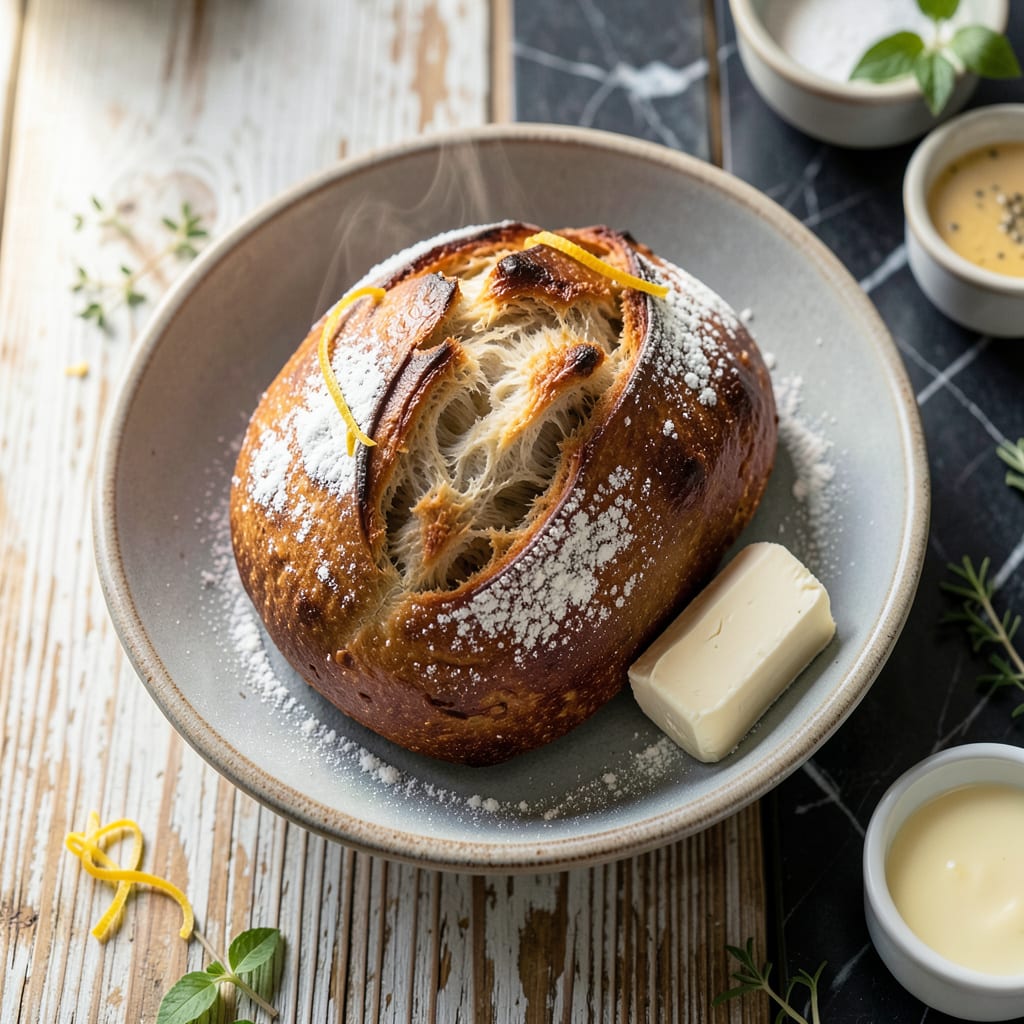
There’s something deeply satisfying about pulling a warm, golden-crusted loaf of homemade bread from the oven. This homestyle recipe delivers that perfect balance of tender crumb and crisp exterior without complicated techniques.
With just a few pantry staples and simple steps, you’ll achieve bakery-quality results. The process is straightforward, yet the aroma and taste make it feel special every time.
Ingredients for Cooking at Pam’s Place Bread
Pantry staples and a few fresh items craft this golden loaf with ease.
| Ingredient | Amount | Notes |
|---|---|---|
| Bread Flour 🌾 | 4 cups | Plus extra for dusting |
| Active Dry Yeast 🍞 | 2 ¼ tsp | One standard packet |
| Granulated Sugar 🫙 | 1 tbsp | Feeds the yeast activation |
| Kosher Salt 🧂 | 2 tsp | Diamond Crystal preferred |
| Whole Milk 🥛 | 1 cup | Warm to 110°F |
| Unsalted Butter 🧈 | 3 tbsp | Melted and cooled |
| Large Egg 🥚 | 1 whole | Room temperature |
| Olive Oil 🫒 | 1 tbsp | For greasing bowl |
| Honey 🍯 | 1 tbsp | Optional for glossy crust |
| Cornmeal 🌽 | 2 tbsp | For dusting baking sheet |
The flour foundation is critical here. King Arthur Bread Flour delivers consistent protein content for that perfect rise and crumb structure. Active dry yeast from Fleischmann’s or Red Star ensures reliable proofing—check the expiration date, as old yeast loses potency. For the milk, whole milk adds richness, but 2% works in a pinch (avoid skim). The butter should be unsalted to control sodium levels precisely.
No bread flour? All-purpose flour plus 1 tbsp vital wheat gluten per cup mimics the protein content. Out of yeast? This isn’t a great substitute scenario—yeast is essential. Honey can be swapped for maple syrup in the crust glaze. For dairy-free, oat milk plus 1 tsp vinegar replaces whole milk, though the crumb will be slightly less tender. Egg can be omitted, but expect a denser loaf.
Store flour in airtight containers at room temperature for up to 6 months. Yeast keeps in the freezer for 1 year. The baked loaf stays fresh at room temperature for 3 days, or freeze slices for up to 3 months. Always bring refrigerated ingredients to room temperature before starting.
Why You’ll Love This Recipe
- No-Fuss Mixing: Honestly, just dump the bread flour, yeast, sugar, salt, and warm whole milk in a bowl—no fancy steps, no stress.
- Rich, Milky Sweetness: The whole milk gives it this tender crumb with a subtle sweetness that’s way better than water-based loaves.
- Sandwich to Toast: I bake a double batch on Sunday and we’re set for lunchbox sandwiches, then toast the leftovers all week.
- Budget Baker: A bag of bread flour and a few pantry staples make two loaves for the cost of one store-bought.
Step-by-Step Instructions for Homestyle Loaf With Golden Crust
This method ensures a perfect rise and that signature golden-brown finish every time.
Step 1: Activate the Yeast and Prepare Wet Ingredients
Begin by warming the 1 cup Whole Milk to 110°F—this is the ideal temperature for yeast activation. In a small bowl, combine the 2.25 tsp Active Dry Yeast, 1 tbsp Granulated Sugar, and the warmed milk. Stir gently and let sit for 5-10 minutes until the mixture becomes frothy and slightly domed.
This frothing confirms the yeast is alive and active. Meanwhile, in a large mixing bowl, whisk together the 3 tbsp Unsalted Butter (melted and cooled), 1 whole Large Egg, 1 tbsp Honey, and 2 tsp Kosher Salt. The butter should be cool enough to touch but still liquid.
Step 2: Combine Wet and Dry Ingredients
Once the yeast mixture is frothy, pour it into the bowl with the wet ingredients. Stir to combine. Gradually add the 4 cups Bread Flour, 1 cup at a time, mixing until a shaggy dough forms. The dough will be sticky at this stage, but resist the urge to add more flour.
Switch to a dough hook attachment if using a stand mixer, or turn the dough out onto a lightly floured surface for kneading by hand. Knead for 8-10 minutes until the dough is smooth, elastic, and slightly tacky. You’ll know it’s ready when it springs back slowly after being pressed with a finger.
Step 3: First Rise and Shaping
Lightly grease a large bowl with the 1 tbsp Olive Oil, then place the dough inside, turning to coat it evenly. Cover with a damp kitchen towel and let rise in a warm, draft-free place for 1-2 hours, or until doubled in size.
Once risen, punch down the dough to release the air. Turn it out onto a lightly floured surface and shape into a loaf by folding the edges under and pinching the seams. This creates surface tension for an even rise.
Step 4: Second Rise and Preparation for Baking
Lightly dust a baking sheet with the 2 tbsp Cornmeal, which adds texture and prevents sticking. Place the shaped loaf seam-side down on the baking sheet. Cover loosely with the damp towel and let rise again for 30-45 minutes, or until it has puffed up noticeably.
During this time, preheat your oven to 375°F. The loaf should look pillowy and hold a slight indentation when gently pressed. If it springs back too quickly, give it more time to rise.
Step 5: Bake to Golden Perfection
Once the oven is preheated, bake the loaf on the center rack for 25-30 minutes, or until the crust is deep golden brown and the internal temperature reaches 190-200°F. Rotate the baking sheet halfway through for even browning.
Remove the loaf from the oven and let it cool on the baking sheet for 10 minutes, then transfer to a wire rack to cool completely. The crust should be firm and glossy, with a hollow sound when tapped on the bottom. Cooling completely ensures the crumb sets properly for easy slicing.
Pro Tips For Making Cooking At Pam’S Place Bread
- Warm the Milk: Heat the whole milk to 110°F—no hotter. I learned this the hard way after killing the yeast with milk that was too warm, leaving me with a dense brick instead of fluffy bread.
- Proof the Yeast: Mix yeast, sugar, and warm milk first and let it sit for 5-10 minutes until foamy. Sounds weird, but it works: this guarantees your yeast is alive before committing to the full batch.
- Skip the Rush: Give the dough a full first rise—at least 1 hour, or until doubled in size. After burning three batches by cutting this short, I finally figured out that patience is what makes the crumb light and airy.
- Use Bread Flour: Resist the urge to substitute all-purpose flour. Bread flour’s higher protein content actually changes the outcome, giving you that chewy texture Pam’s recipe is known for.
Health Benefits of These Flavors
Nutrient-Rich Foundation
This homestyle loaf provides complex carbohydrates from bread flour that fuel sustained energy. One 2-ounce slice delivers about 15% of your daily fiber needs, supporting digestive health and keeping you full longer. The whole milk adds calcium and vitamin D for strong bones. 💪
Protein Boost
The combination of whole milk, egg, and bread flour provides 6-8 grams of protein per slice. This helps repair tissues and maintain muscle mass, making it more satisfying than many store-bought breads.
Essential Minerals
You’ll get a good dose of iron and selenium from the enriched flour, while the kosher salt provides necessary sodium for nerve function. The egg contributes choline, important for brain health.
B Vitamin Source
Enriched bread flour means each slice contains thiamine, riboflavin, niacin, and folate. These B vitamins help convert food into energy and support red blood cell production. The milk adds vitamin B12, crucial for nerve function.
Healthy Fats
The unsalted butter and olive oil provide heart-healthy monounsaturated fats, while the egg offers omega-3s. These fats support cell growth and hormone production, making this more nutritious than many commercial options. ✨
Nutrition Facts
Frequently Asked Questions
Can I use all-purpose flour instead of bread flour?
Yes, but add 1 tablespoon vital wheat gluten per cup to match the protein content. Bread flour creates a better rise and chewier texture, but all-purpose works in a pinch.
Why does my dough not rise properly?
Old yeast or liquid that’s too hot (above 110°F) can kill the yeast. Check expiration dates and use a thermometer. A drafty room can also slow rising.
How do I know when the bread is fully baked?
Look for a deep golden crust and an internal temperature of 190-200°F. Tap the bottom—it should sound hollow. Cool completely before slicing.
Can I make this dough ahead of time?
Yes! After kneading, refrigerate the dough overnight for a slow rise. This enhances flavor. Let it sit at room temperature for 30-45 minutes before shaping.

- BBQ Sausage Recipe Oven: Smoky Depth Without the Grill - September 28, 2026
- BBQ Chicken Bowl Recipe Rice: Smoky Sweetness Over Fluffy Grains - September 28, 2026
- Beef Cutlet Recipe Ideas: Crispy Breaded Patties With Bold Seasonings - September 28, 2026