
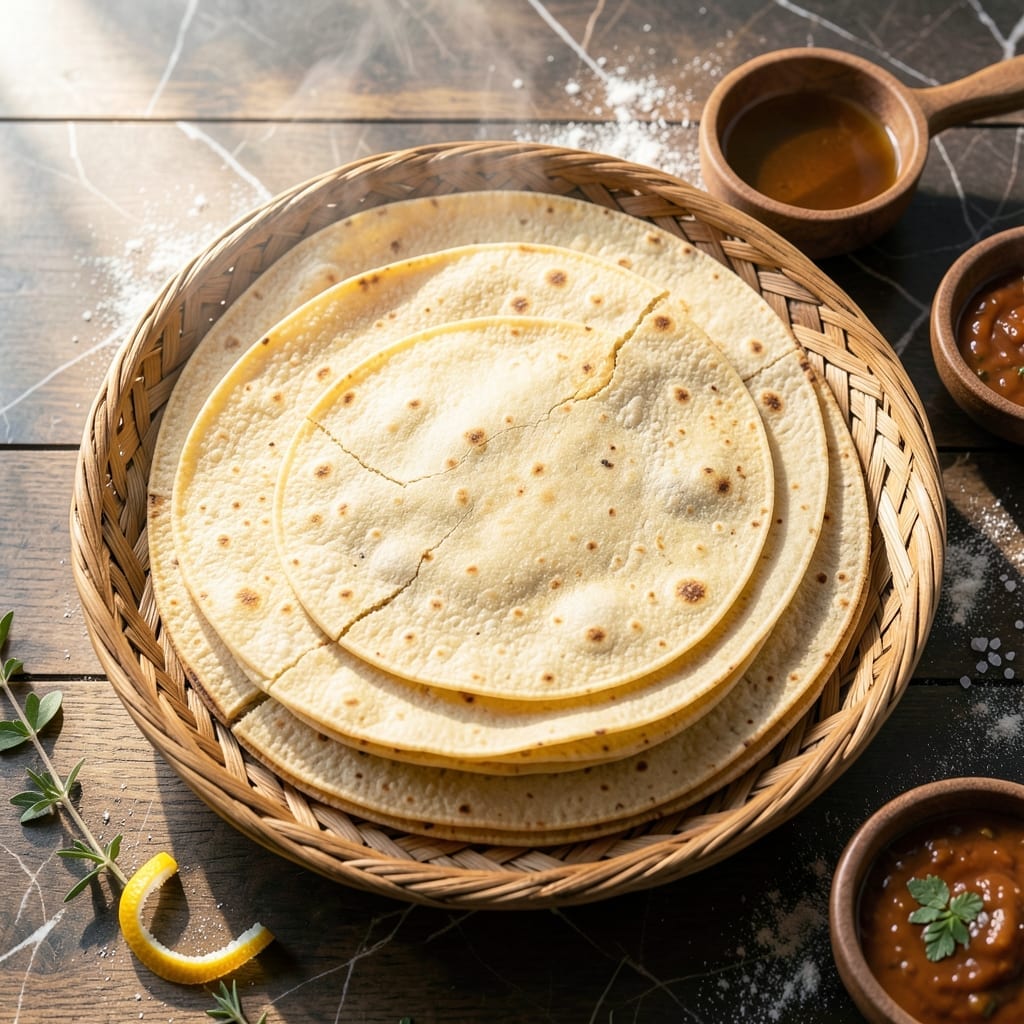
There’s nothing like the earthy aroma of freshly made corn tortillas to transport you to a traditional Mexican kitchen. This authentic method delivers the rustic texture that store-bought versions simply can’t match.
The key lies in using fine cornmeal and giving the dough proper resting time. This allows the masa to hydrate fully and develop the perfect consistency for rolling and cooking. The result is tortillas with just the right balance of chew and tenderness.
Each tortilla develops beautiful golden spots as it cooks, with a slightly crisp edge that gives way to a soft, pliable center. They’re sturdy enough to hold any taco filling yet delicate enough to tear with your hands.
Serve warm for the best flavor and texture. These tortillas elevate any taco night to restaurant quality.
Ingredients for Corn Meal Tortilla
Five simple ingredients for authentic, restaurant-quality tortillas at home.
| Ingredient | Amount | Notes |
|---|---|---|
| Fine Cornmeal 🌽 | 2 cups | Masa harina preferred |
| Warm Water 💧 | 1 ½ cups | Divided for dough adjustment |
| Sea Salt 🧂 | 1 tsp | Fine grain preferred |
| Vegetable Oil 🫒 | 2 tbsp | For cooking tortillas |
| All-Purpose Flour 🌾 | ¼ cup | Optional for elasticity |
The cornmeal is non-negotiable here. Maseca is the gold standard (find it in the Latin foods aisle at Walmart or any Mexican grocery). Fine grind is key—coarse polenta won’t work. I’ve seen Bob’s Red Mill fine cornmeal in a pinch, but Masa harina gives that true taste. Don’t skip the resting time; 30 minutes minimum lets the dough hydrate properly (worth the wait).
No Masa harina? Fine yellow cornmeal plus a splash of lime juice (about 1 tbsp) mimics the nixtamalized flavor. Water amount can vary—start with 1 cup, then add more as needed until the dough feels like Play-Doh. The flour is optional but helps if your cornmeal is extra dry. For oil, avocado oil has a higher smoke point if you’re worried about burning.
Dough keeps 24 hours wrapped in plastic in the fridge. Cooked tortillas? Stack with parchment between each, then seal in a bag. Reheat in a dry skillet or microwave dampened with a towel for 3-4 days. Freeze extras for up to 1 month (they’ll be a bit drier but still tasty).
Why You’ll Love This Recipe
- Five-Minute Mix: I just stir fine cornmeal, warm water, and a pinch of sea salt—no resting, no fuss.
- Warm Corn Goodness: That toasty cornmeal flavor with a hint of oil makes every bite taste like a fresh market tortilla.
- Taco Night Hero: I use these for breakfast tacos, quesadillas, even as a wrap for leftovers.
- Pennywise Staple: A two-pound bag of cornmeal makes dozens, so I always have them ready without breaking the bank.
Step-by-Step Instructions for Corn Meal Tortillas
This method delivers authentic texture with just the right amount of rustic charm.
Step 1: Combine Dry Ingredients for the Dough
In a large bowl, whisk together the 2 cups Fine Cornmeal, 1 tsp Sea Salt, and 0.25 cup All-Purpose Flour until fully integrated. The flour adds a touch of elasticity, which helps prevent cracking when you roll them out.
I always use fine-grain sea salt here—it dissolves evenly into the dough and enhances the corn flavor without overpowering it. The cornmeal should feel slightly gritty between your fingers, which is exactly what gives these tortillas their signature rustic texture.
Step 2: Gradually Incorporate Warm Water
Create a well in the center of your dry mixture and slowly pour in about 1 cup of the 1.5 cups Warm Water. Use your hands to mix, adding more water 1-2 tablespoons at a time until the dough comes together into a shaggy ball.
The dough should feel pliable but not sticky—think Play-Doh consistency. If it’s too dry, add a splash more water; if it’s too wet, sprinkle in a bit more cornmeal. This gradual approach ensures you don’t overshoot the perfect texture.
Let the dough rest for 10 minutes covered with a damp towel. This gives the cornmeal time to absorb the moisture fully, making it easier to roll out.
Step 3: Divide and Roll the Dough
Divide the dough into 8 equal portions (about golf-ball size) and roll each into a smooth ball between your palms. Place the balls on a clean surface and cover them again to prevent drying out.
Using a rolling pin, flatten each ball into a thin round, about ⅛-inch thick. If the dough cracks at the edges, don’t worry—just pinch it back together. For authenticity, I aim for a slightly irregular shape rather than perfect circles. This rustic look is part of the charm.
Step 4: Cook Tortillas in a Hot Skillet
Heat a dry skillet or griddle over medium-high heat until it’s very hot—when you flick a drop of water onto it, it should sizzle and evaporate immediately. Add ½ tsp Vegetable Oil to the pan and swirl to coat lightly.
Place a tortilla in the pan and cook for 45-60 seconds per side until light golden brown with small charred spots. Press down gently with a spatula if the tortilla puffs up—this ensures even cooking. You’ll notice the edges starting to curl slightly when it’s ready to flip.
Transfer the cooked tortilla to a clean kitchen towel and cover to keep warm. Repeat with the remaining dough, adding more of the 2 tbsp Vegetable Oil to the pan as needed, about ½ tsp per tortilla.
Pro Tips For Making Corn Meal Tortilla
- Rest the Dough: After mixing, let the dough sit for 10-15 minutes covered with a damp towel—it relaxes the gluten and makes rolling much easier.
- Use Hot Water: I learned this the hard way—warm water (about 110°F) helps the cornmeal hydrate fully and prevents crumbly tortillas.
- Roll Thin: Aim for 1/8-inch thickness or less; any thicker and they won’t cook through before burning in spots.
- Skip the Flour Dust: Dust your surface with cornmeal instead of flour when rolling—it keeps the flavor pure and prevents sticking just as well.
Common Mistakes When Making Perfect Results
Wrong Cornmeal Choice
Using coarse cornmeal or polenta instead of fine cornmeal creates grainy, crumbly tortillas that fall apart. I learned this the hard way—Maseca masa harina is the gold standard for that smooth, pliable texture. 🌽
Skipping Rest Time
Rushing the dough rest means uneven hydration—your tortillas will crack when rolling. That 10-minute covered rest lets the cornmeal absorb moisture fully. Trust me, it’s worth the wait.
Overworking the Dough
Kneading too much develops gluten, making tortillas tough. Mix just until combined, then stop. The dough should feel like Play-Doh—soft but not sticky.
Inconsistent Thickness
Rolling tortillas too thick or thin ruins texture. Aim for ⅛-inch thickness for even cooking. Use a ruler if needed—I did at first! The irregular edges add rustic charm.
Cold Skillet
Starting with a cold pan leads to pale, gummy tortillas. Heat your skillet over medium-high heat until water sizzles on contact. That first sizzle is your signal it’s ready. 🔥
Overcrowding the Pan
Cooking multiple tortillas at once steams them instead of searing. Use ½ tsp Vegetable Oil per tortilla, cooking one at a time for those beautiful golden spots.
Nutrition Facts
Frequently Asked Questions
Can I substitute regular cornmeal for masa harina?
Yes, but add 1 tbsp lime juice to mimic the nixtamalized flavor. Fine grind is essential—coarse polenta won’t work. The texture may differ slightly but remains delicious.
Why does my dough crack when rolling?
Either it’s too dry or didn’t rest long enough. Add 1 tsp water at a time and ensure it rests 10 minutes covered. This prevents cracking.
How do I store leftover tortillas?
Stack with parchment between each, seal in a bag, and refrigerate for 3-4 days. Reheat in a dry skillet or microwave with a damp towel.
Can I make these gluten-free?
Skip the 0.25 cup flour and use 100% fine cornmeal. The texture stays rustic but holds together well.

- Bread Recipe KitchenAid Mixer: Foolproof Loaf With Perfect Rise - September 28, 2026
- BBQ Oysters Recipe Grill: Smoky Garlic Butter Bliss - September 28, 2026
- Crock Pot Mac and Cheese Recipe Paula Deen: Ultra Creamy Southern-Style Comfort - September 28, 2026