
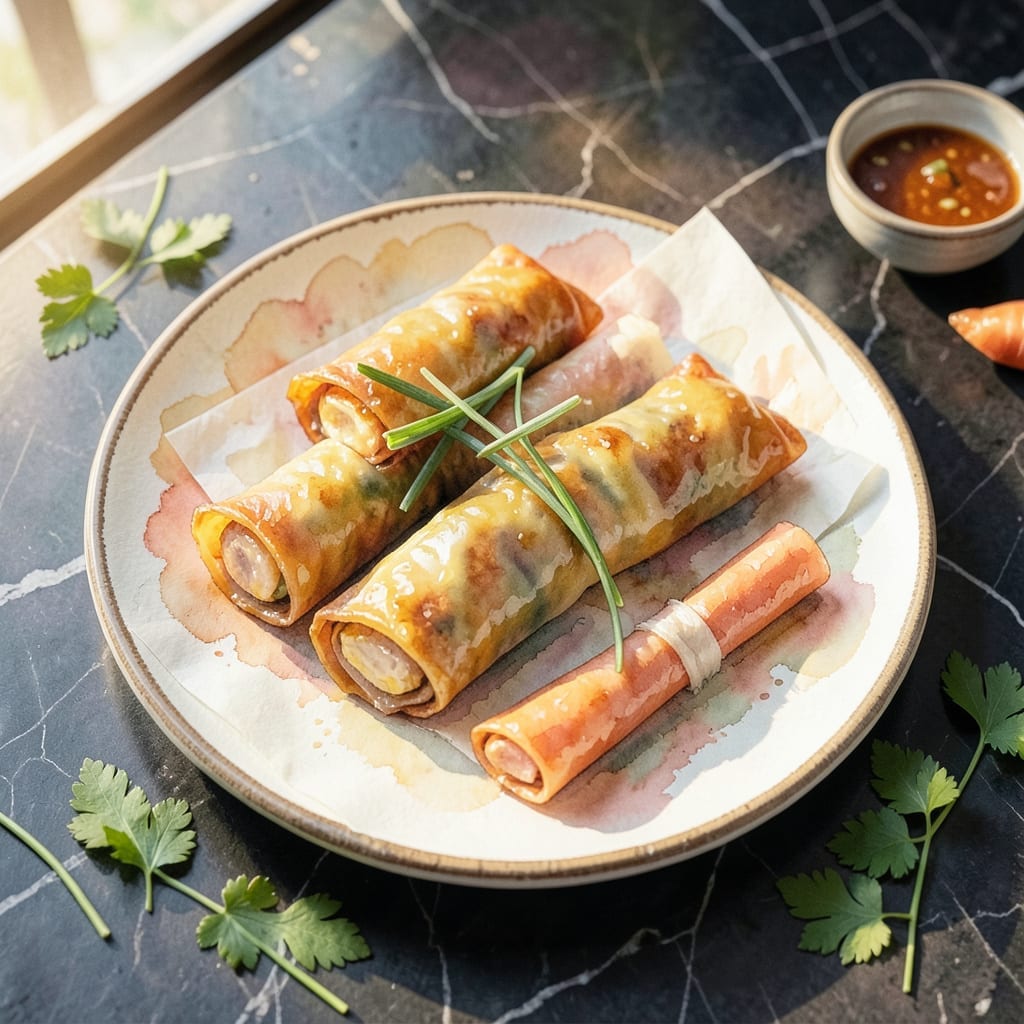
These savory rolls redefine appetizer expectations with their crispy exterior and rich, meaty filling. I developed this version specifically for those who prefer their egg rolls without the traditional cabbage component.
The filling combines tender corned beef with aromatic vegetables and seasonings, creating a perfectly balanced flavor profile. Each bite delivers satisfying crunch followed by a burst of savory goodness.
This recipe proves that omitting cabbage doesn’t mean sacrificing texture or taste. The secret lies in properly preparing the filling and achieving that signature golden-brown finish.
Perfect for game day, parties, or as a unique starter for any meal. The crispy results speak for themselves.
Ingredients for Corned Beef Egg Rolls Recipe No Cabbage
Tender corned beef and aromatic seasonings create a rich filling for these crispy rolls.
| Ingredient | Amount | Notes |
|---|---|---|
| Corned Beef 🥩 | 1 lb | Cooked and finely chopped |
| Egg Roll Wrappers 🥟 | 12 pieces | Thawed if frozen |
| Carrots 🥕 | ½ cup | Finely shredded |
| Green Onions 🧅 | ½ cup | Thinly sliced, green parts only |
| Garlic Cloves 🧄 | 3 cloves | Minced finely |
| Fresh Ginger 🌿 | 1 tbsp | Grated or minced |
| Soy Sauce 🫒 | 2 tbsp | Low-sodium preferred |
| Worcestershire Sauce 🫒 | 1 tbsp | Adds depth of flavor |
| Sesame Oil 🫒 | 1 tsp | Toasted variety for aroma |
| Black Pepper 🌶️ | ½ tsp | Freshly ground preferred |
| Vegetable Oil 🫒 | 2 cups | For deep frying |
| Large Egg 🥚 | 1 whole | Beaten for sealing wrappers |
| Cornstarch 🌾 | 1 tbsp | Mixed with water for slurry |
| Salt 🧂 | ½ tsp | Adjust to taste |
The corned beef is the foundation here. Use deli-sliced or canned—both work well, but deli meat offers better texture. Look for low-sodium options if you’re watching salt intake. The wrappers must be egg roll wrappers, not spring roll wrappers—they’re thicker and hold up better to frying. Nasoya is a reliable brand available at most supermarkets.
No corned beef? Pastrami or shredded brisket are excellent substitutes. Green onions can be replaced with chives in a pinch. If you lack fresh ginger, ground ginger at one-quarter the amount works. For a gluten-free version, use tamari instead of soy sauce and rice paper wrappers—though the texture will differ slightly.
Assembled rolls can be refrigerated for up to 1 day before frying, covered tightly with plastic wrap. Cooked egg rolls keep in the fridge for 3-4 days or freeze for up to 1 month. Reheat in the oven or air fryer to maintain crispness.
Why You’ll Love This Recipe
- No-Fuss Assembly: I just roll, fill, and fry—no chopping mountains of cabbage here. The wrapper does half the work.
- Garlic-Kissed Bites: That sizzle of garlic with the corned beef? Ridiculously good. The green onions add just the right fresh kick.
- Weeknight Hero: I throw these together on busy evenings. They disappear faster than I can make them.
- Budget Stretcher: A little corned beef goes a long way. Leftovers? Even better the next day for lunch.
Step-by-Step Instructions for Corned Beef Egg Rolls
This method ensures golden, shatteringly crisp wrappers encasing a flavorful filling every time.
Step 1: Prepare the Savory Filling
In a large skillet over medium-high heat, add the 1 lb corned beef (already cooked and finely chopped) to warm through. Stir in the 0.5 cup carrots (finely shredded), 0.5 cup green onions (thinly sliced), 3 cloves garlic cloves (minced), and 1 tbsp fresh ginger.
Sauté for 2-3 minutes until the vegetables soften and the aromatics become fragrant. Pour in the 2 tbsp soy sauce, 1 tbsp Worcestershire sauce, 1 tsp sesame oil, 0.5 tsp black pepper, and 0.5 tsp salt. Cook for another 1-2 minutes, stirring constantly, until the mixture is well combined and heated through. Remove from heat and let cool slightly.
Step 2: Assemble the Egg Rolls
Lay out the 12 pieces egg roll wrappers on a clean surface. Place about 2-3 tablespoons of the corned beef filling near the bottom corner of each wrapper, leaving a 1-inch border on the sides.
Beat the 1 whole large egg lightly in a small bowl. Use a pastry brush to coat the edges of each wrapper with the beaten egg. Fold the bottom corner up over the filling, then fold in the sides, and tightly roll up to the top corner. Press the edges to seal securely. This egg wash ensures the wrappers stay closed during frying.
Step 3: Fry to Crispy Perfection
Heat the 2 cups vegetable oil in a deep, heavy-bottomed pot over medium-high heat until it reaches 350°F. To test the temperature, drop a small piece of wrapper into the oil—it should sizzle immediately and float to the surface.
Working in batches to avoid overcrowding, carefully place the egg rolls seam-side down into the hot oil. Fry for 2-3 minutes per side until they are golden brown and crispy. Use tongs to turn them occasionally for even browning. Transfer the fried egg rolls to a paper towel-lined plate to drain excess oil.
Step 4: Drain and Serve Immediately
Allow the egg rolls to drain on the paper towels for 1-2 minutes. This step removes any residual oil, ensuring the wrappers stay crisp without becoming greasy.
Serve the egg rolls while hot, with the filling piping and the wrappers audibly crisp. The contrast between the tender, savory filling and the shatteringly crisp exterior is what makes this dish so satisfying. For added crunch, ensure each batch is fried at the correct temperature—too low and they’ll absorb oil, too high and they’ll brown too quickly.
Pro Tips For Making Corned Beef Egg Rolls Recipe No Cabbage
- Drain the Beef: After cooking the corned beef, drain it well in a colander and press with a spoon to remove excess fat—I learned this the hard way when my first batch turned out greasy.
- Shred the Carrots: Grate the carrots finely instead of dicing them so they cook through quickly and blend seamlessly into the filling.
- Seal Tightly: Use a bit of water or egg wash to moisten the edges of the egg roll wrappers before folding to guarantee they stay closed during frying.
- Fry in Batches: Resist the urge to crowd the pan—fry 2-3 egg rolls at a time in hot oil to make sure they crisp up evenly instead of steaming.
Troubleshooting This Recipe
Wrapper Issues
If your wrappers tear during assembly, they might be too dry. I keep a damp towel over unused wrappers to prevent drying. Also, ensure you’re using egg roll wrappers, not spring roll—spring roll wrappers are thinner and more prone to tearing. 💡
Filling Problems
Soggy filling often results from excess moisture. After cooking, I spread the mixture on a plate and refrigerate for 15-20 minutes to cool and drain. This prevents steam from making the wrappers soggy during frying.
Oil Temperature
If your egg rolls absorb too much oil, your oil isn’t hot enough. Use a candy thermometer to maintain 350°F. If they brown too quickly, lower the heat slightly—325°F works for a slower, more controlled fry.
Sealing Failures
Unrolled egg rolls usually mean the seal wasn’t secure. I double-check by pressing firmly along the entire edge after rolling. A cornstarch slurry (mix 1 tbsp cornstarch with 2 tbsp water) can also help create a stronger bond than egg alone.
Uneven Cooking
Overcrowding the pot lowers oil temperature, causing uneven cooking. I fry in batches of 3-4 rolls at a time in my 5-quart Dutch oven. This gives them space to cook evenly without sticking together.
Storage Solutions
For meal prep, I freeze uncooked rolls on a baking sheet first, then transfer to bags. This prevents sticking. Reheat in 375°F oven for 12-15 minutes straight from frozen—no need to thaw. ✨
Nutrition Facts
Frequently Asked Questions
Can I use pastrami instead of corned beef?
Pastrami has a similar flavor profile and works beautifully. Use the same 1 lb amount and preparation method for identical results.
What’s the best way to keep them crispy after frying?
Place fried rolls on a wire rack or paper towels to drain. Never stack them while hot. Reheat in a 375°F oven for 5-7 minutes to restore crunch if needed.
Can I bake these instead of frying?
Yes, but results differ. Brush with oil and bake at 400°F for 15-18 minutes, turning once. They’ll be less crispy but still delicious.
Why did my egg rolls burst open while cooking?
Overfilling or loose sealing causes bursting. Use 2-3 tbsp filling max and press edges firmly. A cornstarch slurry works better than egg alone for sealing.

- BBQ Sausage Recipe Oven: Smoky Depth Without the Grill - September 28, 2026
- BBQ Chicken Bowl Recipe Rice: Smoky Sweetness Over Fluffy Grains - September 28, 2026
- Beef Cutlet Recipe Ideas: Crispy Breaded Patties With Bold Seasonings - September 28, 2026