
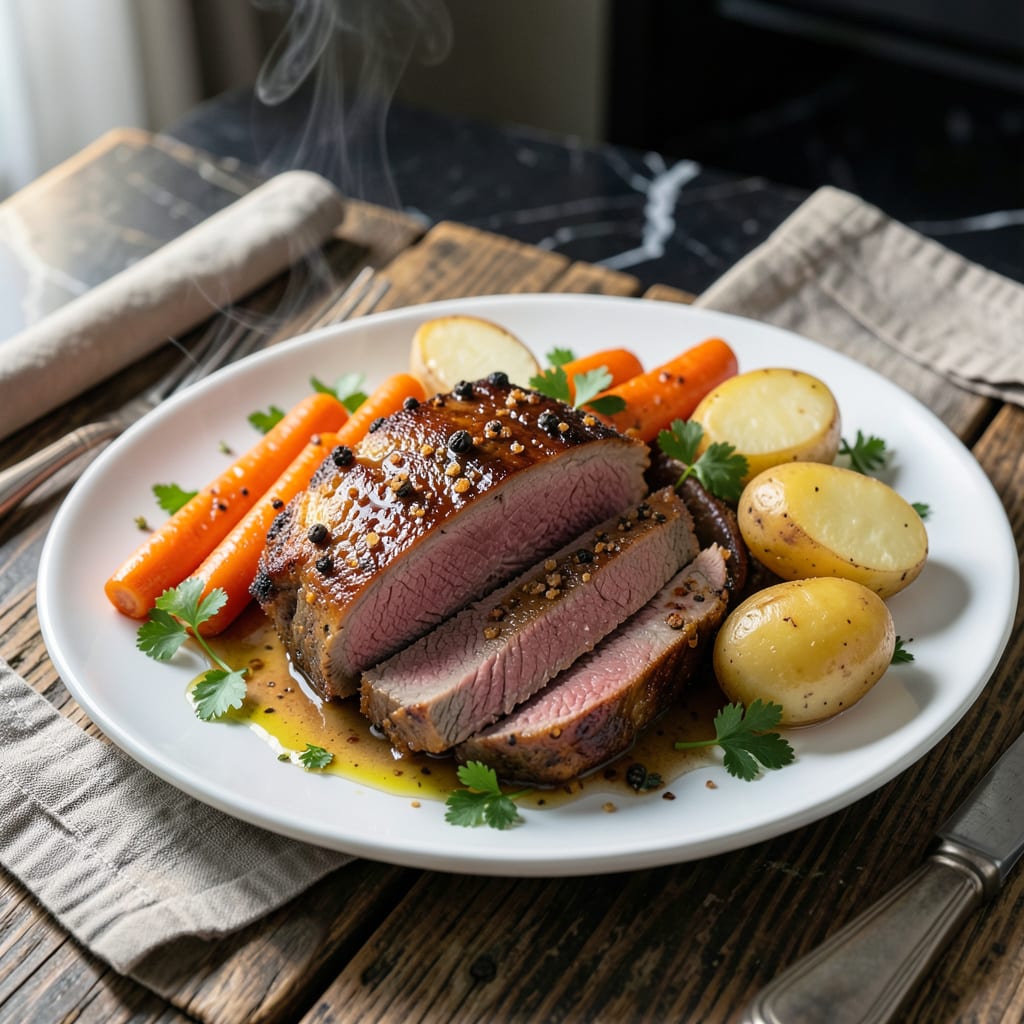
This recipe unlocks the secret to ultra-tender corned beef by using the marbled point cut. The higher fat content ensures juicy, fall-apart results every time.
Slow-cooked with simple spices, this method transforms tough meat into rich, flavorful bites. Perfect for sandwiches or a hearty dinner centerpiece.
Ingredients for Corned Beef Point
Well-marbled point cut plus aromatic spices create tender, flavorful corned beef every time.
| Ingredient | Amount | Notes |
|---|---|---|
| Beef Brisket Point Cut 🥩 | 3 lb | Well-marbled, not trimmed |
| Kosher Salt 🧂 | ½ cup | Diamond Crystal preferred |
| Granulated Sugar 🍚 | 2 tbsp | Balances brine acidity |
| Brown Sugar 🟤 | 2 tbsp | Light or dark variety |
| Pickling Spice 🌿 | 2 tbsp | Store-bought or homemade blend |
| Black Peppercorns 🌶️ | 1 tbsp | Whole, lightly crushed |
| Garlic Cloves 🧄 | 6 cloves | Smashed, peeled |
| Bay Leaves 🍃 | 4 pieces | Dried, whole |
| Yellow Mustard Seeds 🌿 | 1 tsp | Optional for depth |
| Water 💧 | 8 cups | Enough to fully submerge |
| Beef Broth 🍲 | 2 cups | Low-sodium preferred |
| Apple Cider Vinegar 🍏 | ¼ cup | Adds tang to brine |
The point cut is non-negotiable here. Look for heavy marbling—this fat renders down during cooking, creating that signature tenderness. Most butchers can source it, or check Whole Foods or Costco for pre-packaged options. Avoid the flat cut; it’s leaner and won’t deliver the same juicy texture. The meat should have a bright red color with visible fat streaks throughout.
No pickling spice? Combine 1 tbsp mustard seeds, 1 tbsp coriander seeds, 1 tsp allspice berries, 1 tsp cloves, and 1 cinnamon stick for a DIY blend. Short on time? Pre-made brine kits from specialty stores work in a pinch. The vinegar can be swapped for white vinegar, but apple cider adds a subtle fruitiness that complements the beef beautifully.
Brine the beef for 5-7 days in the fridge, turning once daily. Once cooked, it keeps 4-5 days refrigerated or 3 months frozen. Slice against the grain just before serving for maximum tenderness (worth the extra minute).
Why You’ll Love This Recipe
- Set and Forget: It’s just salt, sugar, and pickling spice rub on the point cut—then the oven does all the work while I catch up on laundry.
- Sweet-Spice Harmony: The brown sugar caramelizes with the pickling spices, giving that sticky, aromatic crust I can’t stop sneaking bites of.
- Feeds the Week: One brisket point yields sandwiches, hash, and tacos for days—honestly, my meal prep shortcut.
- Budget Brisket: The point cut costs less than flat, and the cure keeps it juicy without fancy equipment.
Step-by-Step Instructions for Corned Beef Point
This method ensures the point cut achieves its full potential with maximum tenderness and flavor.
Step 1: Prepare the Curing Brine
In a large stockpot, combine the 8 cups water, 0.5 cup kosher salt, 2 tbsp granulated sugar, 2 tbsp brown sugar, 2 tbsp pickling spice, 1 tbsp black peppercorns, 6 cloves garlic, 4 pieces bay leaves, and 1 tsp yellow mustard seeds. Stir until the salt and sugars dissolve completely.
Add the 2 cups beef broth and 0.25 cup apple cider vinegar, then bring to a gentle simmer over medium heat. This ensures all flavors meld together before the meat enters the brine. The liquid should be fragrant and slightly tangy from the vinegar.
Step 2: Cure the Brisket Point
Place the 3 lb beef brisket point cut in a large zip-top bag or food-safe container. Pour the warm brine over the meat, ensuring it is fully submerged. If needed, use a small plate to weigh down the brisket so it stays under the liquid.
Seal and refrigerate for 5 to 7 days, flipping the brisket daily to ensure even curing. The meat will firm up slightly and turn a pinkish-red color as it absorbs the brine. This extended curing time is essential for developing the signature corned beef flavor and breaking down the fibers for tenderness.
Step 3: Rinse and Simmer the Corned Beef
After curing, remove the brisket from the brine and rinse thoroughly under cold water to remove excess salt. Pat it dry with paper towels, but don’t scrub off the spices clinging to the surface—they’ll enhance the flavor during cooking.
Place the brisket in a large pot and cover with fresh water (enough to submerge by 2 inches). Bring to a boil, then reduce heat to low and simmer gently for 3 to 3.5 hours, or until the meat is fork-tender. Skim off any foam that rises to the surface during the first 30 minutes of simmering.
Step 4: Rest and Slice Against the Grain
Once tender, remove the brisket from the pot and transfer it to a cutting board. Let it rest for 15 to 20 minutes to allow the juices to redistribute. This step prevents the meat from drying out when sliced.
Slice the corned beef against the grain into ¼-inch thick pieces. The grain in the point cut runs in a different direction than the flat, so pay attention to the muscle fibers. Serving it this way ensures each bite is as tender as possible, fulfilling the promise of ultra-tender results.
Pro Tips For Making Corned Beef Point
- Brine Overnight: Give the point cut at least 12 hours in the brine—any less and the seasoning won’t penetrate the thicker end. I learned this the hard way when my first attempt tasted like salted beef instead of corned beef.
- Trim the Fat Cap: Leave about 1/4 inch of fat for flavor, but trim the rest or the spices won’t cling properly. Sounds tedious, but it actually changes the outcome.
- Skip the Boil: Start the cooking water at a simmer, not a rolling boil, or the meat will seize up and turn tough. My grandmother swore by this, and she was right.
- Add Brown Sugar Late: Stir in the brown sugar during the last hour of cooking for a deeper glaze without risking burning. I was skeptical until I tried it—now it’s non-negotiable.
Troubleshooting corned beef point
Brine Too Salty
If your brine tastes overwhelmingly salty, dilute it with an additional 2 cups water before adding the meat. I always taste-test the brine first—it should be strongly seasoned but not harsh. Remember, the meat will absorb salt during curing. 💡
Meat Not Submerged
Use a ziplock bag with all air pressed out to ensure full submersion. Alternatively, place a small plate on top of the meat to keep it under the liquid. Check daily and add more brine if needed to cover any exposed areas.
Foam During Simmering
The foam that rises during the first 30 minutes is normal—it’s proteins coagulating. Skim it off with a fine-mesh strainer for clearer broth. Don’t worry if some remains; it won’t affect flavor or tenderness.
Tough Texture
If the meat isn’t fork-tender after 3 hours, continue simmering and check every 30 minutes. The point cut’s marbling means it can handle longer cooking. Avoid high heat, which can make the meat stringy.
Bland Flavor
For deeper flavor, add 1 tbsp mustard or 1 chopped onion to the simmering liquid. I also recommend using low-sodium beef broth to control saltiness while boosting richness. 🔥
Uneven Curing
If the meat cures unevenly, ensure you flip it daily in the fridge. The brine needs to reach all surfaces. For consistent results, use a container just large enough to hold the brisket and brine snugly.
Nutrition Facts
Frequently Asked Questions
Why use point cut instead of flat?
The point cut has more marbling, which renders down during cooking for juicier results. Flat is leaner and can dry out more easily.
How do I know when it’s done?
It’s ready when a fork slides in effortlessly, typically after 3-3.5 hours of simmering. The meat should easily pull apart at the thickest part.
Can I shorten the brining time?
For best flavor and texture, stick to 5-7 days. Less time may result in uneven curing or bland taste. Quick brines won’t fully tenderize the meat.
What if my brine is too salty?
Dilute with 2 cups water before adding meat. Always taste-test the brine first—it should be bold but not harsh.

- BBQ Sausage Recipe Oven: Smoky Depth Without the Grill - September 28, 2026
- BBQ Chicken Bowl Recipe Rice: Smoky Sweetness Over Fluffy Grains - September 28, 2026
- Beef Cutlet Recipe Ideas: Crispy Breaded Patties With Bold Seasonings - September 28, 2026