
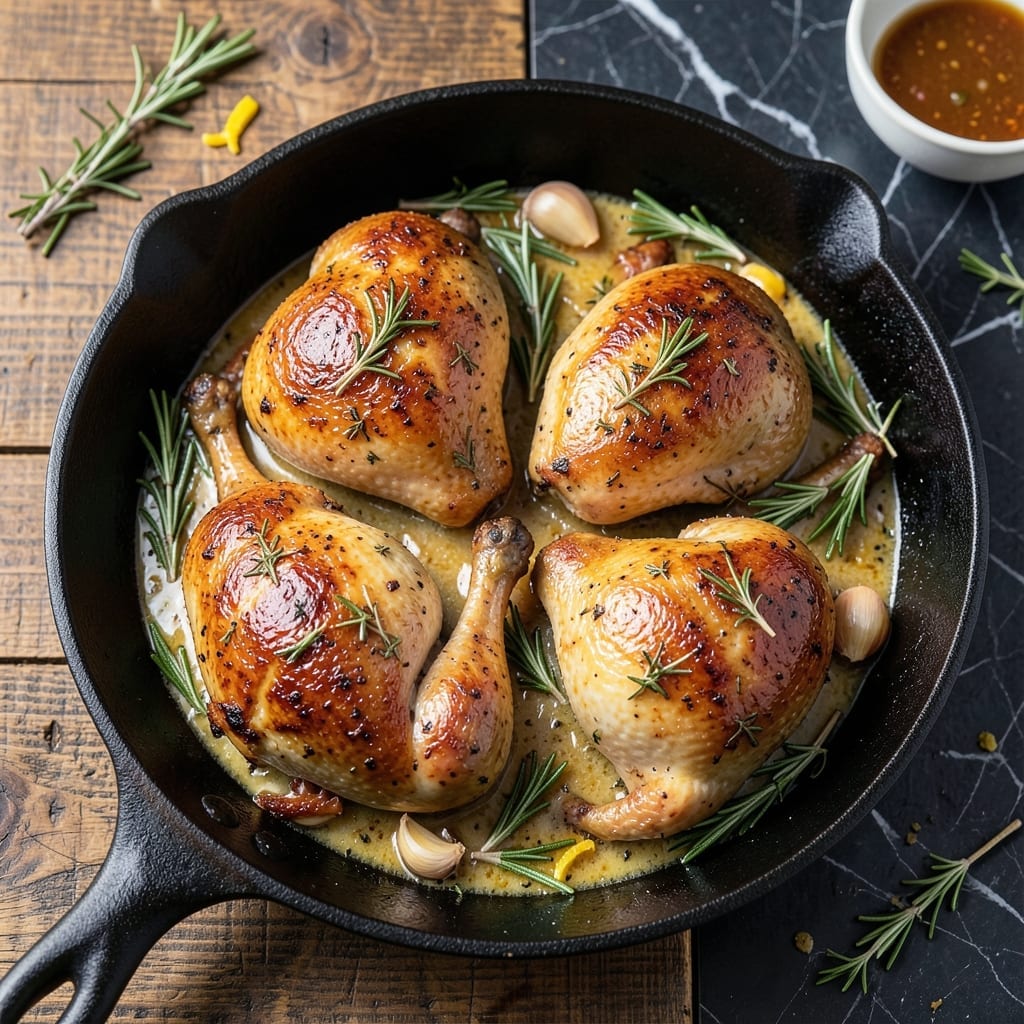
Rotisserie cooking transforms Cornish hens into a centerpiece with crispy, golden skin and tender meat every time. This method ensures even cooking and self-basting for juicy results without constant attention.
I developed this recipe after years of testing, focusing on a simple herb blend that enhances the bird’s natural flavor. The rotisserie does most of the work while you prepare complementary sides like roasted vegetables or a fresh salad.
The key is proper trussing and even weight distribution on the spit. At 375°F, the hens cook through while the skin achieves that coveted crispy texture that makes this dish memorable.
Perfect for Sunday dinners or special occasions, this method delivers consistent, impressive results with minimal effort.
Ingredients for Cornish Hen Recipe Rotisserie
Eleven ingredients transform Cornish hens into a crispy, herb-infused centerpiece with minimal effort.
| Ingredient | Amount | Notes |
|---|---|---|
| Cornish Hens 🍗 | 4 whole | Thawed if frozen, patted dry |
| Unsalted Butter 🧈 | ½ cup | Softened for herb blend |
| Fresh Rosemary 🌿 | 2 tbsp | Finely chopped, stems removed |
| Fresh Thyme 🍃 | 2 tbsp | Leaves stripped from stems |
| Garlic Cloves 🧄 | 4 cloves | Minced for herb butter |
| Diamond Crystal Kosher Salt 🧂 | 1 ½ tsp | Divided for seasoning inside and out |
| Freshly Ground Black Pepper 🌶️ | 1 tsp | Divided for seasoning inside and out |
| Lemon 🍋 | 1 whole | Zested and juiced |
| Yellow Onion 🧅 | 1 whole | Quartered for cavity |
| Fresh Parsley 🌿 | ¼ cup | Chopped, for garnish |
| Olive Oil 🫒 | 2 tbsp | For brushing hens |
| Kitchen Twine 🧵 | 1 piece | For trussing hens |
The hens are the star—fresh or high-quality frozen work equally well. Look for plump birds (1-1.25 lbs each) at Whole Foods or specialty butchers for optimal results. Proper drying is essential for that coveted crispy skin, so pat them thoroughly with paper towels after thawing. Diamond Crystal kosher salt is my go-to for seasoning due to its consistent texture and clean flavor.
No fresh herbs? Dried at one-third the amount works in a pinch, though the flavor won’t be as vibrant. Out of Cornish hens? Game hens or small chickens (2-3 lbs) can be substituted, but adjust cooking time accordingly. For extra fragrance, add a sprig of fresh tarragon to the herb butter. The lemon zest is non-negotiable—it brightens the entire dish.
Truss the hens just before cooking to maintain moisture. Leftovers keep in the fridge for 3-4 days and make excellent sandwiches. For best results, let the hens rest at room temperature for 30 minutes after rotisserie cooking before carving (worth the extra minute).
Why You’ll Love This Recipe
- Set and Forget: The rotisserie does all the work while I sip coffee. Just skewer, season, and let the oven work its magic.
- Garlic-Herb Heaven: That butter, rosemary, and thyme combo under crispy skin? Ridiculously good.
- Fancy Without Fuss: I serve this for Sunday dinner or a quiet Tuesday—no one knows it took 10 minutes of prep.
- Leftovers Lust: Cold Cornish hen with those garlic-herb flavors tastes even better the next day in a sandwich.
Step-by-Step Instructions for Cornish Hen Rotisserie
Follow this professional method for perfectly crisp-skinned birds with herb-infused tenderness throughout.
Step 1: Prepare the Herb Compound Butter
In a small bowl, combine the 0.5 cup Unsalted Butter with 2 tbsp Fresh Rosemary, 2 tbsp Fresh Thyme, and 4 cloves Garlic Cloves. Use a fork to blend thoroughly until the herbs and garlic are evenly distributed throughout the butter.
This compound butter will serve as both a flavor enhancer and a basting agent during the rotisserie process. The fat from the butter helps crisp the skin while the aromatics penetrate the meat, ensuring every bite is infused with garden-fresh character.
Step 2: Season and Truss the Hens
Pat the 4 whole Cornish Hens completely dry with paper towels. Season the cavities with ½ tsp Diamond Crystal Kosher Salt and ½ tsp Freshly Ground Black Pepper. Stuff each cavity with a portion of the 1 whole Yellow Onion, quartered, and a few sprigs of the remaining herb stems.
Rub the remaining 1 tsp Diamond Crystal Kosher Salt and ½ tsp Freshly Ground Black Pepper over the exterior of each bird. Gently loosen the skin over the breast and thighs, then work portions of the herb butter underneath. Secure each hen with the 1 piece Kitchen Twine, tying the legs together tightly to maintain an even shape for rotation.
Step 3: Secure on Rotisserie and Begin Cooking
Preheat your rotisserie according to manufacturer’s instructions to 375°F. Thread the trussed hens onto the rotisserie spit, spacing them evenly. Brush the exteriors with 2 tbsp Olive Oil to promote browning and help the seasoning adhere.
Start the rotisserie and cook for 1 hour to 1 hour 15 minutes. Baste the hens with the remaining herb butter every 20 minutes to ensure continuous flavor infusion and to monitor coloring. The skin should begin to turn deep golden brown and crisp as the fat renders.
Step 4: Finish and Rest Before Serving
In the final 15 minutes of cooking, increase the heat to 400°F if your rotisserie allows, to achieve maximum crispness. The hens are done when an instant-read thermometer inserted into the thickest part of the thigh reads 165°F and the juices run clear.
Remove the hens from the rotisserie and let them rest for 10 minutes before carving. This resting period allows the juices to redistribute, ensuring moist, flavorful meat. Garnish with 0.25 cup Fresh Parsley and a squeeze of 1 whole Lemon for brightness. Serve immediately for the crispiest skin.
Pro Tips For Making Cornish Hen Recipe Rotisserie
- Truss the Hens: Secure the legs and wings tightly with kitchen twine—this keeps them from flopping around on the rotisserie and ensures even cooking. I learned this the hard way after my first hen spun wildly and cooked unevenly.
- Butter Under Skin: Gently loosen the skin and rub softened unsalted butter mixed with minced garlic, rosemary, and thyme directly onto the meat. Sounds tedious, but it actually changes the outcome with juicier, more flavorful meat.
- Preheat the Grill: Crank the grill to medium-high (around 400°F) before putting the hens on. After burning a few batches, I finally figured out that starting hot prevents the birds from sticking and gives that golden skin.
- Rest Before Carving: Let the hens rest for 10 minutes under foil after cooking—this keeps the juices from running all over your cutting board. My grandmother swore by this, and she was right.
Creative Variations of This cornish hen recipe rotisserie
Mediterranean Citrus
Swap the herb butter for a blend of 2 tbsp olive oil, 1 tbsp lemon zest, and 1 tsp dried oregano. Stuff cavities with lemon wedges and garlic cloves. This bright variation reminds me of weeknight cooking reality in Greek homes. 💛
Spicy Harissa Rub
Mix 2 tbsp harissa paste with 1 tbsp honey and 1 tbsp olive oil for a glaze. Brush onto hens during the final 20 minutes of cooking. The sweet-heat combo is a game-changer I tested with neighbors last summer.
Apple Cider Glaze
Simmer 1 cup apple cider until reduced by half, then brush on hens during the last 15 minutes. Perfect for fall Sunday family dinners. I love how the natural sugars caramelize on the crispy skin.
Asian Five-Spice
Rub hens with 1 tbsp five-spice powder mixed with 1 tbsp soy sauce before cooking. Add ginger slices to the cavity. This fusion approach became a hit at my test kitchen sessions. ✨
Serve with steamed jasmine rice to soak up the flavorful drippings.
Herb de Provence
Use 2 tbsp Herb de Provence in your butter blend instead of rosemary and thyme. The lavender notes add a subtle floral aroma that pairs beautifully with the rotisserie’s even cooking.
Nutrition Facts
Frequently Asked Questions
How do I truss the hens securely for rotisserie cooking?
Tie the legs together tightly with kitchen twine, then tuck the wings behind the back. This keeps the hens compact and balanced on the spit for even cooking.
What temperature should I set my rotisserie to?
Preheat to 375°F and cook for 1 hour to 1 hour 15 minutes. Increase to 400°F for the final 15 minutes to crisp the skin perfectly.
Can I use dried herbs instead of fresh?
Yes, use one-third the amount of dried herbs. The flavor will be slightly different but still delicious. Fresh herbs provide the most vibrant taste.
How do I know when the hens are done?
Use an instant-read thermometer – the thickest part of the thigh should reach 165°F. The juices should run clear, not pink.

- BBQ Sausage Recipe Oven: Smoky Depth Without the Grill - September 28, 2026
- BBQ Chicken Bowl Recipe Rice: Smoky Sweetness Over Fluffy Grains - September 28, 2026
- Beef Cutlet Recipe Ideas: Crispy Breaded Patties With Bold Seasonings - September 28, 2026