
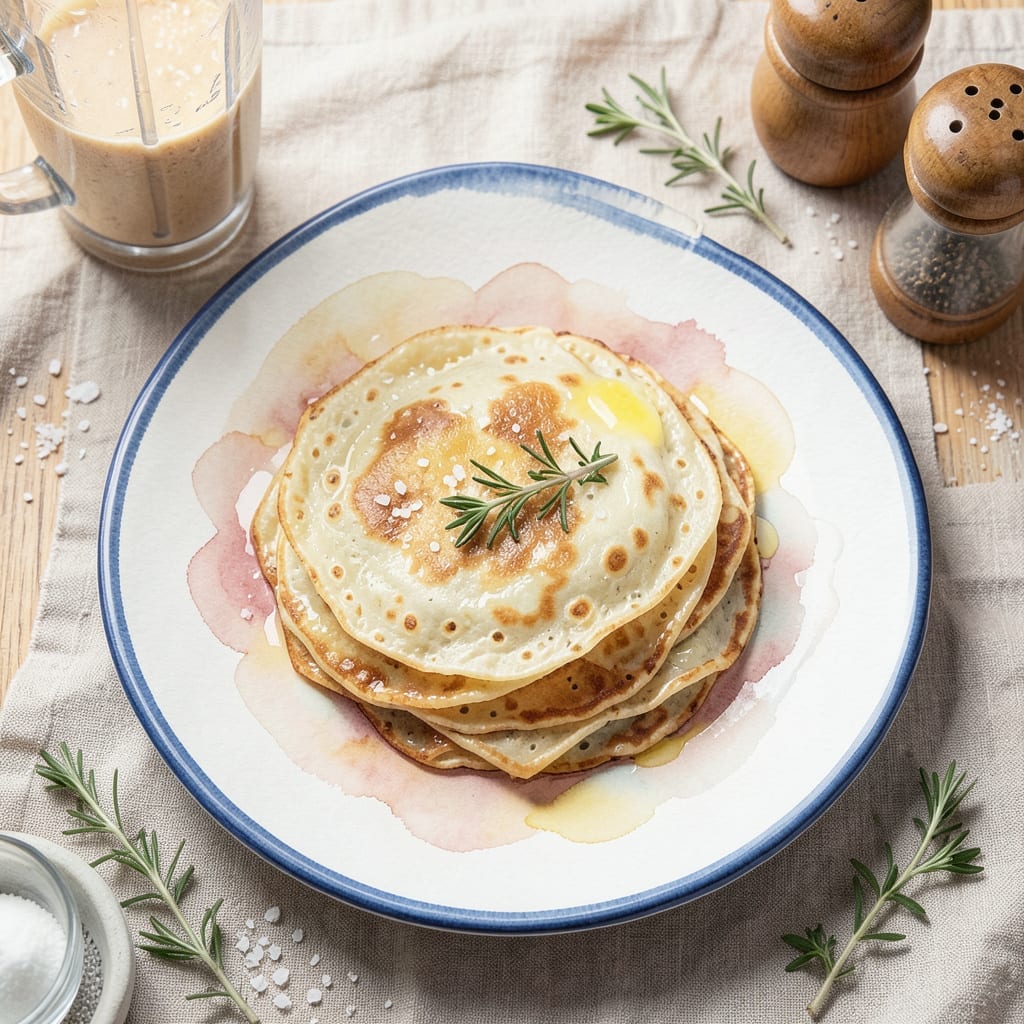
Achieving perfectly thin French crepes at home doesn’t require fancy equipment—just a blender and 5 minutes of prep time. This method guarantees a lump-free batter with the ideal consistency for delicate, golden crepes every time.
The blender does all the work, combining simple pantry staples into a silky-smooth mixture that rests briefly before cooking. No whisking, no clumps, just effortless preparation that even beginners can master on the first try.
Cooked in a hot pan with minimal butter, each crepe develops a lightly crisp edge while staying tender and pliable. The result is restaurant-quality crepes ready for sweet or savory fillings, with no special skills required.
This technique delivers consistent results whether you’re making a quick breakfast or an elegant dessert. The batter keeps well, so you can prepare it ahead for stress-free cooking.
Ingredients for Crepes Recipe Blender
Simple pantry staples blend into a silky batter for delicate French crepes.
| Ingredient | Amount | Notes |
|---|---|---|
| All-Purpose Flour 🌾 | 1 ¼ cups | Sifted for smooth batter |
| Large Eggs 🥚 | 4 whole | Room temperature preferred |
| Whole Milk 🥛 | 1 ½ cups | Full-fat for richness |
| Water 💧 | ½ cup | Cold, for ideal consistency |
| Unsalted Butter 🧈 | 4 tbsp | Melted and cooled |
| Granulated Sugar 🍚 | 2 tbsp | Optional for sweet crepes |
| Vanilla Extract 🌿 | 1 tsp | Pure extract recommended |
| Salt 🧂 | ¼ tsp | Fine grain preferred |
| Vegetable Oil 🫒 | 1 tbsp | For greasing pan |
| Pinch of Cinnamon 🌿 | 1 pinch | Optional for flavor depth |
The flour is the foundation—King Arthur or Bob’s Red Mill all-purpose delivers consistent results. Room temperature eggs blend more smoothly into the batter (cold eggs can create lumps). Whole milk adds richness, but 2% works in a pinch—just avoid skim, which can make the batter too thin. For the best texture, use a high-speed blender to fully incorporate the ingredients.
No whole milk? Half-and-half mixed with water (equal parts) works well. For dairy-free, unsweetened almond or oat milk substitutes beautifully. The vanilla extract can be omitted for savory crepes—replace with 1/4 tsp white pepper for a subtle kick. If you’re out of butter, melted coconut oil adds a light flavor that complements both sweet and savory fillings.
The batter rests best covered in the fridge for up to 24 hours. Leftover crepes stack well between parchment paper and keep in the fridge for 3 days or freeze for 2 months. Reheat gently in a dry skillet to restore pliability.
Why You’ll Love This Recipe
- Blender Magic: No whisking, no lumps—just toss everything in and blend. Honestly, it’s the laziest way to perfect crepes.
- Buttery Perfection: The melted butter in the batter gives them that golden, crisp edge with a tender center. So good.
- Endless Options: Sweet or savory, breakfast or dessert—these crepes work for any craving. My kids love them with Nutella, I prefer ham and cheese.
- Budget Friendly: Flour, eggs, milk, butter—pantry staples that stretch far. I’ll be real: this recipe feeds four for pennies.
Step-by-Step Instructions for Blender Crepes
Master the blender method for achieving thin, delicate crepes with minimal effort and maximum consistency.
Step 1: Blend Wet Ingredients to Smooth Perfection
Add the 4 whole Large Eggs, 1.5 cups Whole Milk, 0.5 cup Water, 4 tbsp Unsalted Butter (melted and cooled), 2 tbsp Granulated Sugar, 1 tsp Vanilla Extract, and 0.25 tsp Salt to your blender jar. The butter must be cooled to prevent cooking the eggs during blending.
Blend on high speed for 20-30 seconds until the mixture is completely smooth and homogeneous. This creates a silky base that ensures even distribution of fat throughout the batter, which is critical for achieving that signature tender texture.
Step 2: Incorporate Dry Ingredients for Ideal Consistency
Remove the blender lid and add the 1.25 cups All-Purpose Flour and 1 pinch Pinch of Cinnamon (if using). Secure the lid and pulse 3-4 times on low speed to begin incorporating the flour, then blend on high speed for 15-20 seconds.
Stop and scrape down the sides with a silicone spatula, then blend for an additional 5-10 seconds. The batter should be thin but still coat the back of a spoon. If it appears too thick, blend in 1-2 tablespoons of additional water—though with these proportions, this shouldn’t be necessary.
Step 3: Rest the Batter for Optimal Texture
Transfer the batter to a large bowl or pitcher and cover with plastic wrap. Let it rest at room temperature for 30 minutes, or refrigerate for up to 24 hours. This resting period allows the flour to fully hydrate and the gluten to relax, which is essential for achieving that delicate, lace-like texture.
You’ll notice the batter thickens slightly during this time. If it thickens too much after refrigeration, whisk in 1-2 tablespoons of water to return it to a thin, pourable consistency. The batter should resemble heavy cream when ready to cook.
Step 4: Cook Thin Crepes with Perfect Browning
Heat an 8-10 inch nonstick skillet over medium-high heat. Add ½ teaspoon Vegetable Oil and swirl to coat the pan evenly. Use a paper towel to wipe away any excess oil—this prevents pooling and ensures even browning.
Pour ¼ cup of batter into the center of the pan, immediately tilting and rotating the pan in a circular motion to spread the batter into a thin, even layer. Cook for 30-45 seconds until the edges begin to lift and the surface appears dry with small bubbles forming.
Step 5: Flip and Finish with Finesse
Use a thin silicone spatula to loosen the edges, then carefully flip the crepe using your fingers or the spatula. Cook for an additional 20-30 seconds until the second side is light golden brown with faint spots. The crepe should be tender, not crisp, and just barely colored.
Transfer to a plate and repeat with the remaining batter, stacking cooked crepes with parchment paper between each to prevent sticking. Adjust the heat as needed between crepes—if they’re browning too quickly, reduce to medium heat. Serve warm with your choice of fillings or toppings.
Pro Tips For Making Crepes Recipe Blender
- Rest the Batter: After blending, let the batter sit for at least 30 minutes at room temperature—this relaxes the gluten and makes the crepes more tender.
- Use Room Temp Eggs: Take your eggs out of the fridge 20 minutes before blending, or soak them in warm water for 5 minutes. Cold eggs can cause the butter to clump.
- Skip the Overmixing: Blend just until the batter is smooth. Overmixing develops too much gluten, and your crepes will turn out tough instead of delicate.
- Swirl, Don’t Spread: Pour the batter into the pan and immediately tilt and swirl to coat the bottom—using a spoon or spatula to spread it just pushes the butter around and creates uneven spots.
Best Sauces and Condiments for This Recipe
Sweet Classics
For traditional sweet crepes, I love a simple lemon juice and sugar combo—squeeze ½ lemon over each crepe and sprinkle with 1 tbsp powdered sugar. This French street-style topping is timeless and lets the crepe shine. 🍋
Fruit Pairings
Fresh sliced strawberries with 1 tbsp Nutella spread thinly creates a perfect balance. I also enjoy banana slices caramelized with 1 tsp brown sugar and a dash of cinnamon for warmth. Both options add natural sweetness without overpowering.
Decadent Indulgences
For special occasions, 2 tbsp whipped cream with 1 tbsp chocolate syrup drizzled over is pure comfort. My personal favorite is salted caramel sauce from Stonewall Kitchen—just 1-2 tbsp transforms the crepe into a gourmet treat.
Savory Options
Skip the sugar for savory fillings like 2 tbsp goat cheese with 1 tsp honey and a sprinkle of thyme. Or try 2 tbsp pesto with shredded rotisserie chicken for a quick lunch. These pairings highlight the crepe’s versatility.
Global Flavors
Take inspiration from other cuisines: 2 tbsp dulce de leche for Argentine style, or 1 tbsp tahini with 1 tsp date syrup for Middle Eastern flair. I discovered these combinations during my travels and they never fail to impress. ✨
Nutrition Facts
Frequently Asked Questions
Do I need a high-speed blender?
Any standard blender works fine for this recipe. A high-speed model just makes the batter smoother slightly faster, but 30 seconds in a regular blender achieves the same silky texture.
Can I make the batter ahead?
Yes! The batter keeps beautifully in the fridge for up to 24 hours. In fact, resting overnight enhances the texture as the flour fully hydrates. Just whisk in 1-2 tbsp water if it thickens too much.
Why are my crepes tearing when I flip them?
This usually means the first side isn’t cooked enough. Wait until edges lift and the surface looks dry with small bubbles before flipping. Also, use medium-high heat and a well-oiled pan.
Can I use a different type of milk?
2% or whole milk work best, but for dairy-free, try unsweetened almond or oat milk. The batter might be slightly thinner, so adjust with 1-2 tbsp flour if needed.

- BBQ Sausage Recipe Oven: Smoky Depth Without the Grill - September 28, 2026
- BBQ Chicken Bowl Recipe Rice: Smoky Sweetness Over Fluffy Grains - September 28, 2026
- Beef Cutlet Recipe Ideas: Crispy Breaded Patties With Bold Seasonings - September 28, 2026