
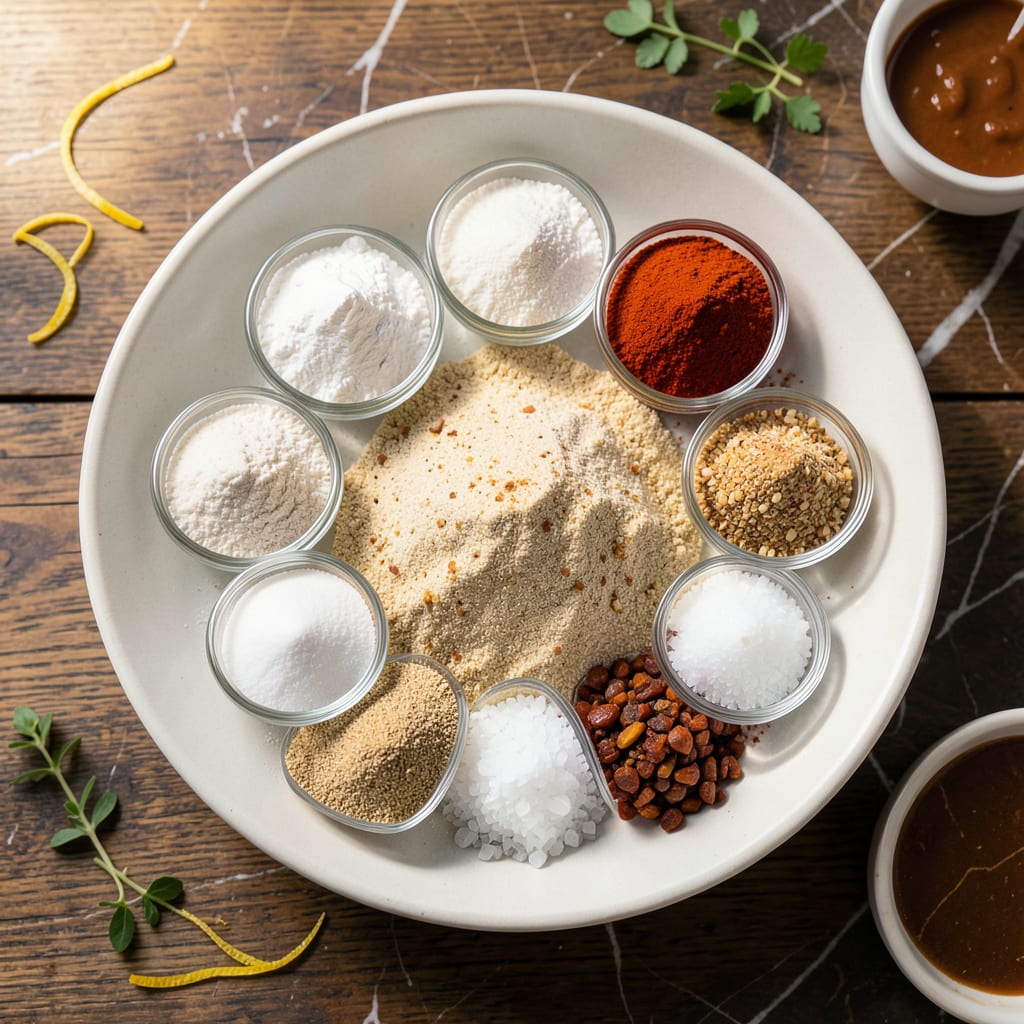
Achieving that signature crispy golden coating at home is entirely possible with this proven method. The batter delivers a light, airy texture that holds up to frying without becoming greasy.
This technique ensures perfect results every time, with fillets that stay moist inside while developing that coveted crunch outside. The key lies in the right flour ratio and proper frying temperature.
Ingredients for Culver’s Fish Batter
Crispy, golden perfection starts with these carefully balanced dry and liquid ingredients.
| Ingredient | Amount | Notes |
|---|---|---|
| All-Purpose Flour 🌾 | 2 cups | Sifted for lighter texture |
| Cornstarch 🌽 | ½ cup | For extra crispiness |
| Baking Powder 🧂 | 2 tsp | Fresh for maximum lift |
| Salt 🧂 | 1 ½ tsp | Fine sea salt preferred |
| Garlic Powder 🧄 | 1 tsp | Enhances savory depth |
| Onion Powder 🧅 | 1 tsp | Balances flavor profile |
| Paprika 🌶️ | 1 tsp | Sweet or smoked variety |
| Ice Cold Club Soda 💧 | 1 ½ cups | Chilled for maximum carbonation |
| Vodka 🍸 | ¼ cup | Optional for extra crisp |
| White Fish Fillets 🐟 | 1 ½ lb | Cod or haddock recommended |
| Vegetable Oil 🫒 | 4 cups | For deep frying |
The flour base is critical for achieving that signature texture. King Arthur all-purpose flour is a reliable choice, but any high-quality brand works. Cornstarch is non-negotiable—it creates that ultra-crisp finish. For baking powder, Clabber Girl is a professional standard. The spices can be found in any well-stocked pantry, but Penzeys offers superior quality for the paprika and garlic powder.
Club soda can be any brand, but chill it thoroughly before mixing. Vodka is optional but adds incredible crispness—use any mid-range brand. For the fish, wild-caught cod or haddock from Whole Foods or a trusted seafood counter yields the best results. If using frozen fillets, thaw completely and pat dry to prevent splattering. The oil should be neutral-flavored with a high smoke point.
The batter works best used immediately after mixing. Store unused oil in a cool, dark place for up to 1 month. Leftover cooked fish keeps in the fridge for 2-3 days, though it’s best enjoyed fresh. Reheat in the oven to maintain some crispness.
Why You’ll Love This Recipe
- Five-Minute Mix: I dump flour, cornstarch, baking powder, salt, and garlic powder in a bowl and it’s ready before the oil’s hot.
- Crispy Garlic Crunch: That garlic powder in the batter gives every bite a savory kick with a shatteringly light crust.
- Fry Night Favorite: I’ve used it for cod, shrimp, even onion rings—always disappears first at our Friday fish fry.
- Pantry Staples Only: Between us, I always have these five ingredients on hand, so crispy fried fish is never more than a whim away.
Step-by-Step Instructions for Crispy Fish Batter
Master this technique for a light, airy coating that stays perfectly crisp through frying.
Step 1: Prepare the Dry Batter Components
In a large mixing bowl, whisk together the 2 cups All-Purpose Flour, 0.5 cup Cornstarch, 2 tsp Baking Powder, 1.5 tsp Salt, 1 tsp Garlic Powder, 1 tsp Onion Powder, and 1 tsp Paprika until fully combined. Sifted flour works best here as it creates a lighter, airier texture in the final batter.
This dry mix forms the structural base of your coating. The cornstarch ensures extra crispiness, while the baking powder provides lift for a delicate, bubbly texture. Make sure there are no visible clumps before proceeding to the next step.
Step 2: Create the Liquid Batter
Slowly pour the 1.5 cups Ice Cold Club Soda into the dry mixture while whisking continuously. The carbonation in the club soda is crucial—it reacts with the baking powder to create tiny air pockets that result in a lighter batter.
Add the 0.25 cup Vodka and whisk until just combined. The vodka helps create a crispier coating by delaying gluten formation and evaporating quickly during frying. The batter should be thin enough to coat the back of a spoon but not runny.
Step 3: Heat the Oil to Optimal Temperature
Pour the 4 cups Vegetable Oil into a deep, heavy-bottomed pot or Dutch oven, filling it no more than halfway. Heat the oil over medium-high heat until it reaches 350-375°F on a deep-fry thermometer. This temperature range ensures the batter crisps quickly without absorbing excess oil.
Maintaining the correct oil temperature is critical. If the oil isn’t hot enough, the batter will absorb too much oil and become greasy. If it’s too hot, the outside will burn before the inside cooks through. Use a thermometer for precision.
Step 4: Coat and Fry the Fish
Pat the 1.5 lb White Fish Fillets completely dry with paper towels—any moisture will cause the batter to slide off. Dip each fillet into the batter, allowing excess to drip off for a few seconds. This creates a thin, even coating that fries to a perfect crisp.
Carefully lower the battered fillets into the hot oil, working in batches to avoid crowding the pot. Fry for 3-4 minutes per side until the coating is golden brown and crisp. The fish should float and cook evenly without sticking to the bottom.
Step 5: Drain and Serve Immediately
Use a slotted spoon or spider strainer to transfer the fried fillets to a wire rack set over a baking sheet or a paper towel-lined plate. This allows air to circulate underneath, preventing the coating from becoming soggy from trapped steam.
Let the fish drain for 1-2 minutes before serving. The internal temperature of the fish should reach 145°F for perfect doneness. Serve immediately while the batter is at its crispiest. The contrast between the hot, crunchy exterior and flaky interior is what makes this dish exceptional.
Pro Tips For Making Culver’S Fish Batter
- Chill the Batter: Let the mixed batter rest in the fridge for 15-20 minutes before using. I learned this the hard way—cold batter fries up lighter and crispier than room-temp stuff.
- Use Ice-Cold Water: Swap warm tap water for ice-cold when mixing the dry ingredients. Sounds weird, but it keeps the baking powder from activating too early and gives that signature Culver’s crunch.
- Skip the Overmixing: Stir just until the flour disappears—lumps are fine. After ruining a batch with tough, gluey batter, I finally realized overmixing develops gluten and kills the crispness.
- Double-Fry for Crunch: Fry once at 350°F for 2-3 minutes, rest on a rack, then hit it again at 375°F for 1 minute. My grandmother swore by this, and she was right: it guarantees that shatteringly crisp coating that stays put.
Make-Ahead Tips for culvers fish batter
Prep Dry Ingredients
Mix all dry components the night before and store in an airtight container at room temperature. This saves time and lets the flavors meld together. I always use King Arthur flour for consistent results. 💡
Chill Liquid Components
Refrigerate the club soda and vodka until ice cold. Cold liquids create maximum carbonation reaction with baking powder. I keep mine in the fridge door for easy access.
Pre-Cut Fish
Portion and dry your 1.5 lb fish fillets up to 24 hours ahead. Store between paper towels in a sealed container. Cod holds up best for make-ahead prep.
Batter Mixing
Combine wet and dry ingredients just before frying. The batter loses its lift if mixed too early. I set out all components 30 minutes before cooking to streamline the process.
Oil Management
Use fresh vegetable oil for each batch. Strain and cool used oil, then store in a dark place for up to 1 month. Never reuse oil that’s darkened or smells off. ❄️
Reheating Tip
Revive leftover fish in a 400°F oven for 8-10 minutes on a wire rack. This restores some crispness better than microwaving. Serve with fresh lemon wedges.
Nutrition Facts
Frequently Asked Questions
Why use club soda in the batter?
The carbonation reacts with baking powder to create air pockets, resulting in a lighter, crispier coating. Ice cold liquid also prevents early gluten formation for maximum crunch.
Can I substitute beer for club soda?
Yes, but use a light lager and reduce salt slightly. Beer adds flavor but may darken the batter. The alcohol content works similarly to vodka for crispness.
How do I prevent the coating from falling off?
Pat fish completely dry before dipping. Ensure oil is at 350-375°F before frying. Avoid overcrowding the pot, which lowers oil temperature.
What’s the best oil for frying?
Use a neutral oil with a high smoke point like vegetable, canola, or peanut oil. These maintain stable temperatures without imparting off-flavors.

- BBQ Sausage Recipe Oven: Smoky Depth Without the Grill - September 28, 2026
- BBQ Chicken Bowl Recipe Rice: Smoky Sweetness Over Fluffy Grains - September 28, 2026
- Beef Cutlet Recipe Ideas: Crispy Breaded Patties With Bold Seasonings - September 28, 2026