
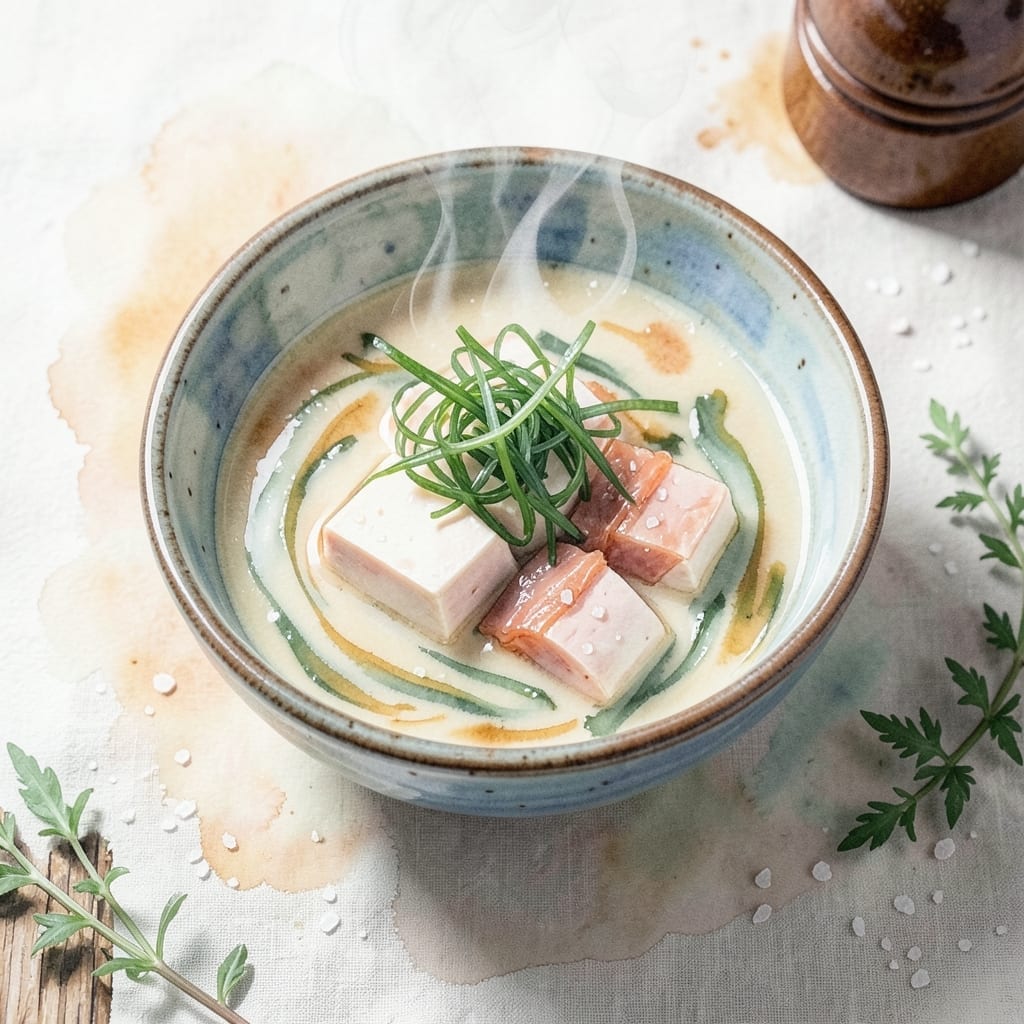
This traditional Japanese broth forms the heart of countless dishes, including the nation’s beloved miso soup. The authentic umami foundation comes together with just a few simple ingredients and minimal effort.
The process combines dried bonito flakes and kelp to create a clear, flavorful liquid that defines Japanese cuisine. This time-honored method has been perfected over centuries, yet remains remarkably straightforward for home cooks.
What emerges is a subtle, savory base that enhances without overpowering. The resulting dashi provides the perfect canvas for miso paste, tofu, and green onions to create a comforting bowl of soup.
Master this fundamental technique and you’ll unlock the secret to authentic Japanese flavors in your own kitchen.
Ingredients for Dashi Recipe for Miso Soup
Simple, authentic ingredients create this traditional Japanese broth base for your miso soup.
| Ingredient | Amount | Notes |
|---|---|---|
| Dried Bonito Flakes 🐟 | 1 cup | Katsuobushi, freshly shaved |
| Dried Kelp 🌊 | 1 piece | Kombu, about 4×6 inches |
| Water 💧 | 4 cups | Filtered preferred for clarity |
| Miso Paste 🥣 | ½ cup | White or red miso variety |
| Silken Tofu 🧈 | 14 oz | Soft or firm, drained and cubed |
| Green Onions 🧅 | 4 whole | Thinly sliced on diagonal |
| Wakame Seaweed 🌿 | ¼ cup | Dried, rehydrated in water |
| Soy Sauce 🫙 | 1 tbsp | Low-sodium or regular |
| Mirin 🍶 | 1 tbsp | Sweet rice cooking wine |
| Sesame Oil 🫒 | ½ tsp | Toasted for finishing |
| Dried Shiitake Mushrooms 🍄 | 2 whole | Optional, for added depth |
The kelp and bonito flakes are non-negotiable for authentic flavor. Japanese markets or Asian grocery stores carry the best quality—look for MITSUBA or MARUKOME brands. Kombu should be thick and slightly sweet-smelling, while katsuobushi should be dry and flaky. Avoid pre-ground bonito as it lacks the fresh shaved texture needed for proper infusion. For the best results, use filtered water to ensure clarity.
No miso paste? White miso at half the amount works in a pinch, though red miso offers deeper flavor. Silken tofu can be swapped for regular firm tofu if preferred. Missing wakame? Fresh spinach or nori strips work as alternatives. For added umami, include dried shiitake mushrooms in the initial steep. The mirin can be replaced with a pinch of sugar plus a splash of rice vinegar.
Store dried ingredients in airtight containers away from light. Prepared dashi keeps 3 days refrigerated or 1 month frozen. Kelp and bonito flakes have 6-12 month shelf life unopened. Always rehydrate wakame before use for best texture.
Why You’ll Love This Recipe
- Ready in 15: I can have this dashi simmering while I slice the tofu—no fancy prep, just water and two ingredients.
- Umami Bomb: The bonito and kelp create this deep, savory base that makes the miso taste even richer.
- Weeknight Staple: Honestly, it’s my go-to when I need something light but satisfying for dinner.
- Pantry Friendly: Between us, I keep bonito and kelp on hand—they last forever and cost pennies per bowl.
Step-by-Step Instructions for Dashi for Miso Soup
Authentic technique delivers deep umami flavor with minimal effort and maximum clarity.
Step 1: Infuse the Water with Kombu
Place the 1 piece Dried Kelp in a clean saucepan with the 4 cups Water. Let it soak at room temperature for 30 minutes to begin the extraction of glutamates. This cold start is crucial—it prevents the kelp from releasing bitter compounds that would occur with immediate heat.
After soaking, heat the water and kelp over medium-low heat until you see tiny bubbles forming at the bottom of the pan. Just before it reaches a full boil (around 160-180°F), remove the kelp. This temperature control ensures you extract pure umami without bitterness.
Step 2: Create Bonito Flake Tea
Bring the kelp-infused water to a full boil, then remove from heat. Add the 1 cup Dried Bonito Flakes all at once. The flakes should float on top, then gradually sink as they steep—this is your visual cue that they’re releasing their savory compounds.
Let the bonito flakes steep for exactly 10 minutes. Any shorter and you’ll miss depth of flavor; any longer risks bitterness. Stir once after 5 minutes to ensure even extraction. The liquid should take on a light amber color and smell deeply aromatic.
Step 3: Strain and Prepare the Base
Line a fine-mesh strainer with cheesecloth or a coffee filter and set it over a clean bowl. Carefully pour the dashi through the strainer. Avoid pressing the bonito flakes or kelp—this would force bitter particles into your broth. The result should be a crystal-clear, golden liquid with a clean, oceanic aroma.
If using the 2 whole Dried Shiitake Mushrooms, add them to the strained dashi while it’s still hot. Let them steep for 15 minutes to add an extra layer of earthy umami. Remove and discard the mushrooms before proceeding.
Step 4: Build the Miso Soup
Return the dashi to the saucepan and heat to a gentle simmer over medium heat. In a small bowl, whisk the 0.5 cup Miso Paste with 2 tablespoons of the hot dashi to create a smooth slurry. This tempering prevents lumps in your final soup.
Add the miso slurry back to the pot, stirring gently. Add the 14 oz Silken Tofu cubes, 0.25 cup Wakame Seaweed, and 4 whole Green Onions. Simmer for 2-3 minutes—just enough to heat through without boiling, which would kill the miso’s beneficial enzymes.
Step 5: Finish and Serve
Remove from heat and stir in the 1 tbsp Soy Sauce, 1 tbsp Mirin, and 0.5 tsp Sesame Oil. Taste and adjust seasoning if needed. The soup should have a balanced savory-sweet profile with a clean finish.
Serve immediately in warmed bowls. The tofu should be silky, the wakame tender, and the broth deeply aromatic. Each component should maintain its distinct texture while contributing to the harmonious whole.
Pro Tips For Making Dashi Recipe For Miso Soup
- Wipe the Kelp: Gently wipe the dried kelp with a damp cloth before using to remove any grit or salt—skipping this leaves your dashi cloudy and bitter.
- Cold Start Dashi: Soak the kelp in cold water for 30 minutes before heating; starting hot makes the dashi harsh instead of smooth and subtle.
- Strain Twice: After the first strain, pour the dashi through a coffee filter to catch the fine bonito flakes—this keeps your miso soup silky, not gritty.
- Skip Boiling Bonito: Remove the dashi from heat before adding bonito flakes, then let them steep off-heat for 10 minutes—boiling turns them bitter and ruins the broth.
Pro Cooking Tips for This Dish
Kombu Cold Start
Always begin with cold water when soaking your kombu—this prevents bitter compounds from leaching out. I soak mine for 30 minutes at room temperature before heating. This gentle start extracts pure glutamate compounds that define authentic dashi flavor. 🌡️
Temperature Precision
Heat your kombu-infused water to just below boiling, around 160-180°F. I use an instant-read thermometer to monitor this. Removing the kombu at this point ensures you capture maximum umami without any harshness.
Bonito Steeping Time
The bonito flakes need exactly 10 minutes to release their full flavor potential. I set a timer and stir once at the 5-minute mark. The flakes will sink as they infuse, signaling proper extraction.
Straining Technique
Use a fine-mesh strainer lined with cheesecloth or coffee filters for crystal-clear dashi. Never press the flakes or kelp—this forces bitter particles into your broth. I gently swirl the strainer to help the liquid pass through.
Miso Tempering
Always create a slurry with 2 tablespoons hot dashi and 0.5 cup miso paste before adding to the pot. This prevents clumping and ensures even distribution. I whisk until completely smooth before incorporating.
Final Simmer
Bring your soup just to a simmer—never boil after adding miso. I maintain medium heat for 2-3 minutes to heat the tofu and wakame without destroying the miso’s enzymes. This preserves both flavor and nutrition.
Nutrition Facts
Frequently Asked Questions
Can I make dashi without bonito flakes?
Yes, kombu-only dashi works well. Simmer 1 piece dried kelp in 4 cups water for 10 minutes on low heat. It will lack the smoky depth but still provides umami. Add dried shiitake for extra flavor.
Why shouldn’t I boil the kombu?
Boiling releases bitter compounds. Keep it at 160-180°F for clean, pure umami. Remove just before boiling for best results.
How long can I store homemade dashi?
Refrigerated dashi stays fresh for 3 days. For longer storage, freeze in ice cube trays for up to 1 month. Thaw only what you need.
What’s the best way to strain dashi?
Use a fine-mesh strainer lined with cheesecloth. Never press the flakes—it makes the broth bitter. Let gravity do the work for crystal-clear results.

- BBQ Sausage Recipe Oven: Smoky Depth Without the Grill - September 28, 2026
- BBQ Chicken Bowl Recipe Rice: Smoky Sweetness Over Fluffy Grains - September 28, 2026
- Beef Cutlet Recipe Ideas: Crispy Breaded Patties With Bold Seasonings - September 28, 2026