
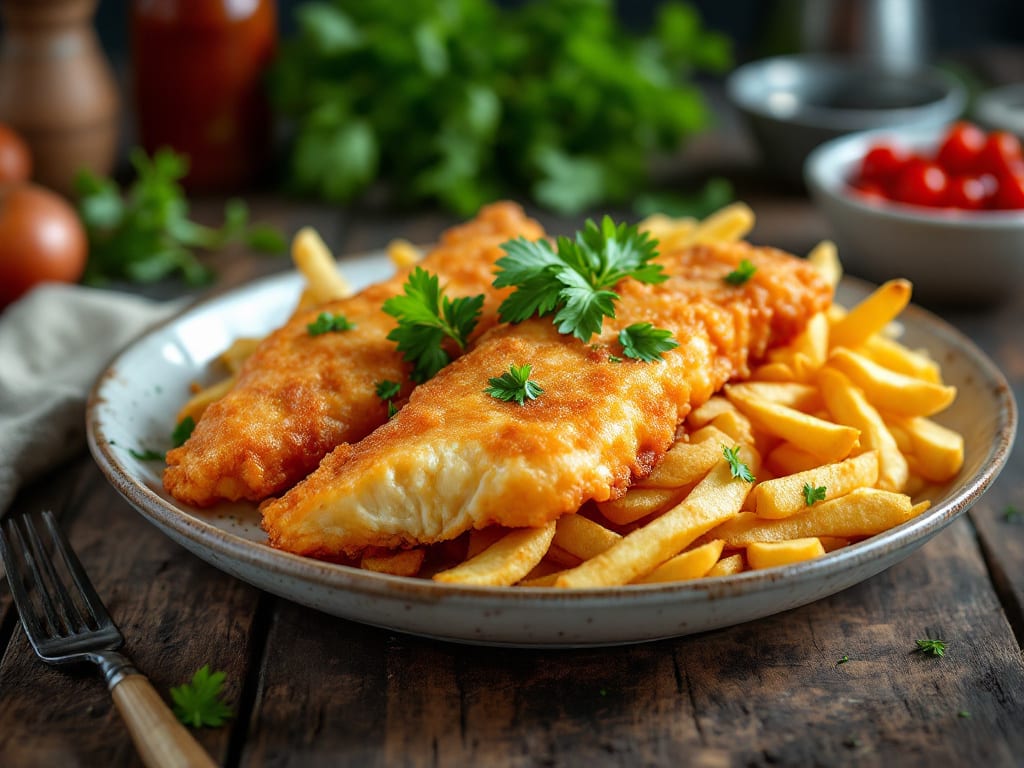
Mastering deep fried fish and chips at home delivers the same crispy, golden perfection you crave from your favorite pub—just with a few key professional techniques.
The secret lies in a light, airy batter that encases tender fish while maintaining that signature crunch, paired with thick-cut fries fried to a golden brown finish. I’ve perfected this method over years of testing, ensuring every bite delivers that satisfying contrast between crispy exterior and tender interior.
This recipe cuts through the guesswork with precise frying temperatures and oil selection—peanut or vegetable oil works best for that authentic flavor—while keeping prep simple enough for weeknight dinners.
The batter requires just five ingredients and comes together in minutes, while the fries achieve their signature thickness and crunch through careful timing in the fryer. No specialized equipment is needed, just patience and attention to detail.
What you’ll end up with is restaurant-quality fish and chips: crispy, flaky fish fillets dusted with salt and served alongside thick-cut fries that stay crispy even after resting. The aroma alone—warm, buttery, and slightly smoky—will have everyone at the table anticipating the first bite.
Serve with classic accompaniments like tartar sauce or a squeeze of lemon for that perfect balance of flavors.
While traditional deep frying delivers the best results, I’ll also share adaptations for air frying or baking, so you can enjoy this classic dish regardless of your cooking method. Let’s get started on creating a meal that feels like a celebration every time.
Ingredients for deep fried fish and chips
Five ingredients transform simple fish into crispy, golden perfection with that signature crunch.
| Ingredient | Amount | Notes |
|---|---|---|
| White Fish Fillets 🐟 | 1 ½ lb | Cod, haddock or tilapia preferred |
| All-Purpose Flour 🌾 | 2 cups | White gold standard for batter |
| Ice-Cold Club Soda 💧 | 1 cup | Essential for light, airy batter |
| Large Eggs 🥚 | 1 whole | Room temperature preferred |
| Diamond Crystal Kosher Salt 🧂 | 1 ½ tbsp | For seasoning and finishing |
| Russet Potatoes 🥔 | 2 lb | Thick-cut for perfect fries |
| Peanut Oil 🫒 | 4 cups | High smoke point for frying |
| Cornstarch 🌾 | 1 tbsp | For extra crispy fries |
| Lemon Wedges 🍋 | 2 whole | Freshly squeezed for serving |
| Vegetable Oil 🫒 | 1 cup | Backup oil option |
| Freshly Ground Black Pepper 🌶️ | ½ tsp | For subtle seasoning |
| Unsalted Butter 🧈 | 2 tbsp | For basting fries |
The fish is your star, so choose fresh fillets with even thickness—cod or haddock hold up best. Grab them from the seafood counter at Whole Foods or your local fishmonger for the freshest catch. Look for fillets with a vibrant color and firm texture, not slimy or discolored. If you can’t find fresh, frozen works too—just thaw them overnight in the fridge. The potatoes? Russets are non-negotiable—their high starch content gives you that perfect crispy exterior. Cut them into even 1-inch sticks for consistent frying. Pro tip: Soak the cut potatoes in cold water for 30 minutes before frying to remove excess starch, which makes them extra crispy.
No peanut oil? Vegetable or canola oil works just fine—just make sure it’s a high smoke point oil. Running out of club soda? Cold sparkling water is a perfect swap, though the bubbles might be slightly less lively. Want to make this gluten-free? Substitute rice flour or almond flour for the all-purpose flour, but expect a slightly different texture. The cornstarch is optional but worth it for that restaurant-quality crunch on your fries. Don’t skip the ice-cold elements—room temperature batter won’t be as light—so chill your eggs and soda in the fridge for 15 minutes before mixing. And if you’re feeling fancy, add a pinch of smoked paprika to the flour for a subtle kick.
This is a make-ahead-friendly recipe—prep the batter and cut the fries up to 4 hours ahead, then store everything in the fridge until ready to fry. The batter keeps for 2 days in an airtight container, and the cut potatoes stay fresh for 1 day if submerged in cold water. For the oil, reuse up to 3 times if you strain it through a fine-mesh sieve after each use. The leftovers? Fish stays crispy for 1 day if reheated in the oven at 375°F for 10 minutes, while the fries are best eaten fresh but can be reheated in the air fryer for 3-4 minutes to restore some crunch. Serve immediately for that perfect pub-style experience.
Why You’ll Love This Recipe
- No Fuss Fridays: I swear by the club soda trick—just toss the flour mix with ice-cold soda, and the batter turns into a cloud. No whisking, no lumps, just golden perfection every time.
- Crispy-Creamy Magic: That first bite? The outside shatters like a chip, but the fish stays tender inside. Honestly, it’s the kind of contrast that makes you close your eyes and sigh.
- Weeknight to Party: Same batter, same fish—works for a lazy Tuesday or a backyard barbecue. Double the chips for a crowd, or keep it simple for two. It’s my go-to when I don’t want to think too hard.
- Budget Win: White fish is cheap, flour’s a pantry staple, and leftovers reheat like a dream. I’ve fed my whole family for under $15, and no one ever complains about seconds.
Step-by-step instructions for deep fried fish and chips
Here’s how to achieve that legendary crispy batter and golden fries in just 30 minutes.
Prepare the Crispy Fish Batter
In a large bowl, whisk together the 2 cups all-purpose flour with the 1.5 tablespoons diamond crystal kosher salt and 0.5 teaspoon freshly ground black pepper. This dry mix forms the foundation of your ultra-crispy batter. The kosher salt will dissolve slightly, creating tiny salt crystals that adhere to the fish and enhance flavor as it fries.
In a separate bowl, beat the 1 whole large eggs until frothy but not fully emulsified. Here’s the thing—you want just enough air incorporated to create lift, but not so much that the batter becomes unstable. The ice-cold 1 cup club soda is your secret weapon. Pour it into the egg mixture while whisking vigorously, creating a light, airy batter that will produce that perfect crispy crust.
Cut and Parboil the Potatoes for Perfect Fries
Peel the 2 lb russet potatoes and cut them into 1-inch thick sticks. This thickness ensures they cook through while developing that signature crispy exterior. Place them in a large pot of cold, salted water—enough to fully submerge the potatoes. Bring to a boil, then reduce to a gentle simmer and cook for 8-10 minutes until they’re fork-tender but not falling apart.
Drain the potatoes immediately and transfer them to a clean kitchen towel. Gently press out as much moisture as possible—this step is critical for achieving crispy fries. The drier the surface, the better the oil will cling and create that golden crust. While they’re still warm, toss them with the 1 tablespoon cornstarch and let them sit for 5 minutes. This coating will create an extra-crispy barrier when fried.
Fry the Potatoes to Golden Perfection
Heat 4 cups peanut oil in a deep fryer or heavy pot to 350°F. You’ll know it’s ready when a small piece of potato sizzles vigorously when dropped in. Fry the potatoes in batches, never overcrowding the pan, for 4-5 minutes until they’re golden brown and crispy. Drain them on a wire rack set over a baking sheet to maintain crispness.
While still hot, toss the fries with the 2 tablespoons unsalted butter and an additional pinch of diamond crystal kosher salt. This basting step creates that signature buttery flavor and helps maintain their crispy texture. Keep them warm in a 200°F oven while you prepare the fish.
Create the Crispy Fish Crust
Pat the 1.5 lb white fish fillets completely dry with paper towels—moisture is the enemy of crispy batter. Dip each fillet into the prepared batter, allowing any excess to drip off. Here’s where it gets fun—let the fish sit on a wire rack for 2 minutes to allow the batter to set slightly. This creates that perfect balance of crispy exterior and tender interior.
Heat 1 cup vegetable oil (or more peanut oil if needed) to 375°F in a deep fryer or heavy pot. Fry the fish in batches for 3-4 minutes per side until deep golden brown and crispy. The internal temperature should reach 145°F when measured with an instant-read thermometer. Drain on a wire rack and keep warm in the oven.
Serve with Classic Accompaniments
Transfer the crispy fish and golden fries to a serving platter. Squeeze the 2 whole lemon wedges over the top for that bright, tangy contrast that cuts through the richness. Here’s the moment that matters: serve immediately while everything is at its peak crispiness. The fish should shatter when pressed gently, revealing moist, flaky white fish beneath that perfect golden crust.
For the ultimate experience, arrange the fish and fries on a large platter with additional lemon wedges and a sprinkle of freshly ground black pepper. The contrast of temperatures—crispy fries and warm fish—makes every bite unforgettable. Don’t skip the lemon; it’s the secret to balancing all those rich flavors.
Pro Tips For Making Deep Fried Fish And Chips
- PAT THE FISH DRY: Fish fillets with even a hint of moisture will turn your crispy crust into a soggy mess. Wrap them in paper towels and press firmly for 10 seconds on each side—yes, even if they look dry. I learned this the hard way when my first batch of cod turned out like fish sticks.
- DOUBLE-DIP THE BATTER: The club soda trick isn’t just for fizz—it’s for a second dip. After the first flour-egg wash, let the fish rest 30 seconds, then dip again in the batter. The extra layer seals the crust and keeps it from falling apart. Sounds weird, but it works every time.
- KEEP THE OIL HOT: Too hot, and your fish burns before the crust sets. Too cool, and you end up with greasy, limp fillets. Aim for 350°F (175°C)—use a candy thermometer and adjust as needed. I was skeptical until I tried it; now I double-check before frying.
- SALT THE CHIP WATER: Skip this, and your chips will turn out bland and limp. Use 1 tablespoon of kosher salt per gallon of water—it seasons the starch and helps the crust crisp. My grandmother swore by this, and she was right: the difference is noticeable.
Essential equipment for this dish
Deep Fryer Essentials
A deep fryer is the gold standard for fish and chips, but a heavy-bottomed pot with a deep side works perfectly as a budget-friendly alternative. I recommend the Presto 02324 3-Quart Oil-Less Fryer for its even heating and safety features.
If you prefer stovetop, use a 5-6 quart Dutch oven—it holds enough oil for frying both fish and fries without overcrowding. The key is maintaining consistent oil temperature, so invest in a candy thermometer like the Thermoworks Thermapen for precision. 🌡️
Oil Selection Guide
Peanut oil is my top choice for its high smoke point (450°F) and rich flavor, but vegetable or canola oil work well too. Avoid olive oil—its low smoke point (325°F) causes bitter flavors. For a healthier twist, use avocado oil, which has a smoke point of 520°F and a neutral taste. Always use enough oil to fully submerge the food—4 cups minimum for fries and 1 cup for fish. Strain and reuse oil up to 3 times by filtering out food particles with a fine-mesh sieve.
Batter Prep Tools
Start with a large mixing bowl (at least 3-quart capacity) for the batter to ensure easy whisking. A balloon whisk like the OXO Good Grips is ideal for incorporating air without overmixing.
For the 2-minute batter rest, use a wire cooling rack placed over a baking sheet to prevent sogginess. I swear by the Amazon Basics Wire Cooling Rack—it’s affordable and does the job perfectly. Keep a paper towel roll nearby to pat the fish dry before dipping. 🧻
Fry Organization
Organize your frying station with a slotted spoon (I love the OXO Good Grips) to remove food without losing oil. A wire rack set over a baking sheet keeps fried items crispy by allowing air circulation.
For efficiency, prep two baking sheets—one for fish and one for fries—so you can fry in batches. A small bowl of ice water nearby helps reset oil temperature between batches.
Pro tip: Use tongs instead of forks to handle hot fries—they’re less likely to poke holes in the batter. 🍽️
Safety Gear
Deep frying demands safety first. Wear heat-resistant gloves (like KitchenCraft Silicone Oven Mitts) and have a fire extinguisher (Class B for grease fires) within reach. I also keep a metal lid nearby to smother flames if needed. Never leave oil unattended—it can overheat quickly.
For extra peace of mind, use an automatic shut-off timer like the Presto Deep Fryer, which cuts power after 2 hours. Always fry in a well-ventilated area to avoid smoke buildup. 🔥
Nutrition facts
Frequently asked questions
What type of fish works best for this recipe?
Cod, haddock, or pollock are ideal—they stay firm when fried and have a mild flavor that lets the crispy batter shine. Tilapia or halibut also work well. Avoid delicate fish like flounder, which can fall apart during frying. For extra flakiness, pat fillets completely dry before dipping in batter.
Can I make this recipe without a deep fryer?
Use a heavy-bottomed pot (like a Dutch oven) with at least 5 quarts capacity. Keep oil at 350°F for fries and 375°F for fish. Fry in small batches to maintain temperature—overcrowding drops oil temp and makes food soggy. A candy thermometer is essential for accuracy.
Why did my batter turn out dense instead of crispy?
Cold ingredients are key—chill your eggs and club soda for 15 minutes before mixing. Overmixing also creates a tough batter. Whisk just until combined, then let it rest for 2 minutes on a wire rack before frying. If the batter seems too thick, add 1 tablespoon ice water to lighten it.
How do I keep the fries crispy while frying the fish?
Fry the potatoes first and keep them warm in a 200°F oven on a wire rack. This prevents steam buildup that makes fries soggy. For extra crispiness, toss hot fries with 2 tablespoons butter right after frying—this seals in moisture and adds flavor. Never stack fries; let them air-circulate.
What’s the best way to reheat leftovers?
Fish loses crispiness when reheated, so enjoy it fresh. For fries, use an air fryer at 400°F for 3-4 minutes or bake at 425°F for 10 minutes with a sprinkle of cornstarch. For fish, oven-bake at 375°F for 10 minutes on a wire rack to restore some crunch. Serve with fresh lemon to cut through any richness.

- Broccili Salad Recipe: Crunchy, Creamy, and Crowd-Pleasing - November 29, 2026
- Rum Simple Syrup Recipe: Balanced Sweetness for Cocktails and Desserts - November 29, 2026
- Avocado Cloud Bread Recipe: Light, Fluffy, and Egg-Free Magic - November 29, 2026