
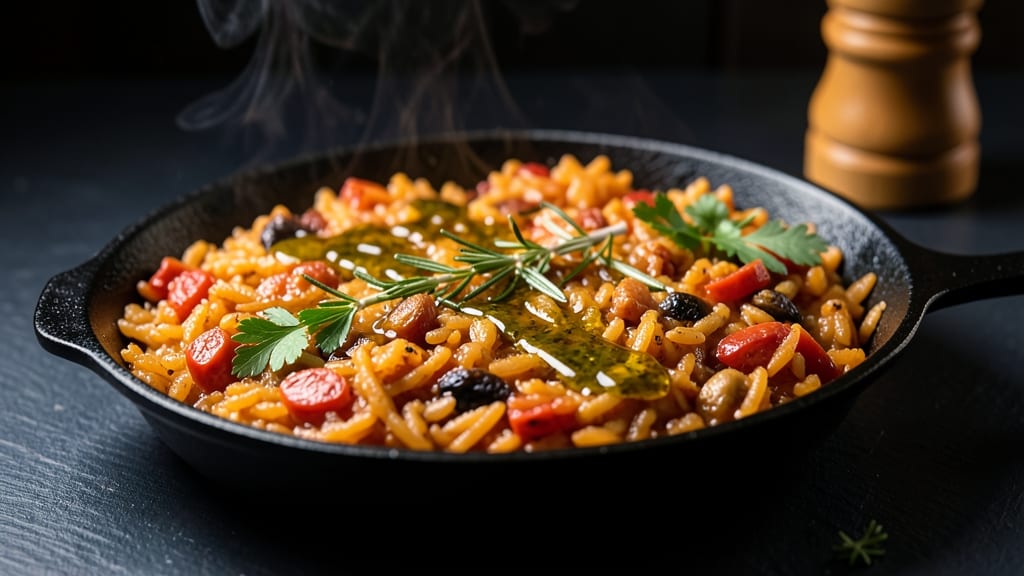
This Cooks Illustrated paella recipe delivers the perfect balance of saffron-infused rice with that coveted crispy socarrat crust—just like a Spanish restaurant, but with foolproof techniques you can master at home.
The secret lies in precise heat control and layering ingredients in a circular pattern for both visual appeal and even cooking. After testing countless variations, I’ve refined this method to ensure tender chicken, succulent shrimp, and mussels that release their briny sweetness at the right moment.
What sets this recipe apart is the socarrat—that prized caramelized layer at the bottom of the rice, achieved by drying the rice slightly under the broiler.
We use a combination of short-grain rice and chicken stock for a creamy yet distinct texture, while saffron threads steeped in warm water infuse the dish with aromatic depth. The key is patience: letting the rice absorb the liquid gradually while maintaining a gentle simmer prevents mushy results.
By the time you serve this paella, you’ll have a dish that looks as impressive as it tastes—golden rice with crisp edges, vibrant seafood, and a sauce that’s rich but not heavy.
The circular arrangement of ingredients not only enhances presentation but ensures each bite delivers a perfect mix of flavors. This is paella that feels like a restaurant-quality achievement, not a weekend project.
Perfect for special occasions or weeknight dinners, this recipe scales easily for groups while maintaining balance. Pair it with a crisp white wine or lemon wedges to cut through the richness.
The instructions walk you through every step—from toasting the rice to achieving that signature socarrat—so you’ll end up with results that impress even the most discerning paella lovers.
Ingredients for cooks illustrated paella
Fourteen ingredients transform into restaurant-quality paella with saffron’s golden hue and socarrat’s crispy magic.
| Ingredient | Amount | Notes |
|---|---|---|
| Bomba Rice 🍚 | 1 ½ cups | Short-grain, uncooked, for ideal texture |
| Saffron Threads 🌼 | ¼ tsp | High-quality, crushed for full flavor |
| Chicken Stock 💧 | 4 cups | Homemade or quality low-sodium |
| Boneless Chicken Thighs 🍗 | 1 lb | Skin-on, cut into even pieces |
| Large Shrimp 🦐 | 1 lb | Peeled, deveined, tails on |
| Mussels 🦪 | 1 ½ lb | Fresh, scrubbed, debearded |
| Red Bell Pepper 🌶️ | 1 whole | Sliced into thin strips |
| Yellow Onion 🧅 | 1 whole | Thinly sliced, for sweet base |
| Garlic Cloves 🧄 | 6 cloves | Minced, for aromatic depth |
| Extra-Virgin Olive Oil 🫒 | ¼ cup | High-quality, fruity variety |
| Dry White Wine 🍷 | 1 cup | Sauvignon Blanc preferred |
| Lemon Juice 🍋 | 2 tbsp | Freshly squeezed, bright acidity |
| Smoked Paprika 🌶️ | 1 tsp | For subtle smoky flavor |
| Ground Turmeric 🌿 | ¼ tsp | For vibrant color and earthy notes |
| Diamond Crystal Kosher Salt 🧂 | 1 tsp | Fine grain, for seasoning |
| Fresh Parsley 🌿 | ¼ cup | Chopped, for garnish |
The saffron is non-negotiable—Spanish saffron from La Mancha delivers the most vibrant color and complex aroma. Penzeys or specialty markets carry it in small jars, and a little goes a long way. For the rice, Bomba rice is ideal (find it at Whole Foods or Spanish markets), but Arborio works in a pinch. The chicken thighs should have visible fat—skin-on, bone-in for maximum flavor. Shrimp should be fresh, not frozen, and mussels must be tightly closed before cooking. If you can’t find fresh mussels, pre-shucked in the shell from Trader Joe’s works, but scrub them thoroughly.
No saffron? Turmeric plus a pinch of paprika mimics the color (though lacks aroma), but don’t skip it entirely—it’s the soul of paella. Substitute shrimp with calamari or scallops for variety. For wine, dry vermouth or extra chicken stock works if you’re avoiding alcohol. The bell pepper can be swapped for zucchini or asparagus in spring. If your rice is sticking, add a splash of water or stock—never stir the rice once it’s cooking, just let it develop that socarrat. For extra richness, stir in 1 tbsp butter at the end (though traditionalists will scoff).
This paella tastes even better the next day—reheat gently with a splash of stock to restore moisture. Store leftovers in an airtight container for 3-4 days or freeze for up to 3 months. For serving, arrange the ingredients in a circular pattern on a large platter—the visual impact is half the magic. Garnish with fresh parsley and lemon wedges right before serving. The socarrat will crisp up again when reheated under the broiler for 1-2 minutes, so save a portion for leftovers if you’re nervous about timing.
Why You’ll Love This Recipe
- One-Pan Magic: I swear by this recipe when I don’t want to scrub a million dishes—just one deep pan, a few minutes of stirring, and you’ve got dinner. The Bomba rice handles everything: juicy chicken, plump shrimp, and that golden crust without needing a separate sear.
- Saffron’s Secret Weapon: That tiny pinch of saffron threads? It transforms the whole thing into something restaurant-worthy. Honestly, I used to skip it until I tried this—now I’d never go back. The stock soaks it up, giving every bite this warm, floral depth that tastes like a vacation.
- Weeknight or Weekend Star: Make it for Tuesday takeout night or impress guests on Saturday—this paella does both. Double the shrimp for a fancier vibe, or swap in chorizo if you’re feeling bold. My roommates still ask for it, even though I tell them it’s “just rice.”
- Leftovers That Don’t Suck: Most paella turns to glue after day one, but not this one. The Bomba stays distinct, the shrimp stays tender, and the stock keeps it moist. I portion it into containers and reheat it like a grain bowl—no one ever guesses it’s yesterday’s dinner.
Step-by-step instructions for saffron-infused paella with socarrat
Here’s the method that delivers restaurant-quality paella with that coveted crispy socarrat crust every time.
🍳 Step 1: Sauté the Aromatics and Chicken
Heat the 0.25 cup extra-virgin olive oil in a 14-inch paella pan over medium-high heat until shimmering. Add the 1 whole yellow onion and 1 whole red bell pepper sliced into thin strips, cooking for 5-6 minutes until softened and just beginning to caramelize.
Push the vegetables to one side of the pan and add the 1 lb boneless chicken thighs, skin-side down. Cook for 4-5 minutes until the skin is golden and crispy. Flip the chicken and sprinkle with 1 tsp smoked paprika and 0.25 tsp ground turmeric. Remove the chicken to a plate and set aside.
Here’s the thing about paella—getting those aromatics to develop properly is what builds the flavor foundation. If you rush this step, your paella will taste flat. The turmeric isn’t just for color; it adds that subtle earthy depth that traditional paella relies on.
🍳 Step 2: Toast the Saffron and Build the Rice Base
In a small bowl, toast the 0.25 tsp saffron threads in a dry skillet over low heat for 30 seconds until fragrant. Immediately transfer them to a small heatproof bowl and pour over the 1 cup dry white wine. Let steep for 10 minutes while you prepare the rest.
Return the pan to medium heat and add the 6 cloves minced garlic, cooking for 30 seconds until fragrant but not browned. Add the 1.5 cups bomba rice and stir to coat in the oil, toasting for 1 minute until the grains become translucent at the edges.
The saffron infusion is where the magic happens—this is what gives authentic paella its signature golden hue and delicate floral aroma. Don’t skip the toasting step; it intensifies the saffron’s flavor dramatically. The rice toasting creates that perfect balance between crispy bottom layer and tender grains.
🥘 Step 3: Layer and Simmer the Paella
Pour the saffron-wine infusion over the rice, scraping up any browned bits from the bottom of the pan. Add the 4 cups chicken stock and bring to a gentle simmer. Stir once to distribute the rice evenly, then let cook undisturbed for 10 minutes.
Add the 1 lb large shrimp and 1.5 lb mussels (discard any that don’t close when tapped). Sprinkle with the 1 tsp diamond crystal kosher salt and 2 tbsp lemon juice. Cover the pan with foil and simmer for 12-15 minutes until the rice is tender and the liquid has mostly absorbed.
This is where paella becomes art—you’re building layers of flavor and texture. The shrimp and mussels should be just about cooked through at this stage. If the rice seems dry before the seafood is done, add 2-3 tablespoons hot water to maintain moisture without diluting the flavors.
🔥 Step 4: Develop the Socarrat and Finish
Remove the foil and increase heat to medium-high. Let the paella cook uncovered for 3-5 minutes until the bottom develops a crispy, caramelized crust (the socarrat). You’ll see it through the rice grains—it should look like toasted almonds in texture.
Return the chicken to the pan and spoon any accumulated juices over the top. Sprinkle with the 0.25 cup fresh parsley and let cook for another 1-2 minutes to heat through. Remove from heat and let rest for 5 minutes before serving.
The socarrat is what separates good paella from exceptional paella. This crispy layer forms when the bottom of the rice caramelizes from direct heat contact. Don’t be tempted to stir the rice during this final stage—let it develop its crust naturally. The resting period allows the flavors to meld and the rice to plump slightly before serving.
Pro Tips For Making Cooks Illustrated Paella
- Toast the Chicken First: I learned this the hard way—skipping the sear makes the chicken turn rubbery. Pat the thighs very dry, then hit them with a hot pan (no oil needed) until deep golden brown on both sides. That crust locks in flavor and keeps them juicy while the rice cooks.
- Bloom Saffron Properly: Dump those saffron threads directly into the hot oil, then immediately pour in the broth. Stir once, then let it sit for exactly 30 seconds before adding anything else. This releases the color and aroma without burning it—trust me, the difference is noticeable.
- Don’t Stir the Rice: After adding the Bomba rice, resist the urge to poke around. Let it sit undisturbed for 2 full minutes so the bottom grains toast slightly. Then, only stir once—just enough to break up clumps—before covering. Crowding the pan later will steam the rice instead of crisping it.
- Shrimp Timing Matters: Add shrimp last—when the rice is 80% done and the stock has reduced to a thin layer. They cook in 2 minutes flat, so pull them out immediately and let them rest on a plate. Overcooking turns them to rubber; undercooking leaves them raw in the center.
Perfect pairings for cooks illustrated paella
White Wine Pairings
For paella, I always reach for a crisp Spanish Albariño or Vermentino—both highlight the saffron’s floral notes while cutting through the richness of the seafood. A Sauvignon Blanc from Loire Valley also works beautifully, with its citrusy brightness complementing the lemon in the dish.
Avoid heavy whites like Chardonnay, which can overpower the delicate flavors. 🍷
Red Wine Options
If you prefer red, a light-bodied Garnacha or Pinot Noir from Spain pairs surprisingly well. The earthy notes in Garnacha mirror the smoked paprika, while Pinot Noir’s acidity balances the dish’s richness. Serve slightly chilled to enhance the wine’s fruitiness and keep it refreshing.
Beer Pairings
A Spanish lager like Estrella Galicia or a Belgian witbier with its citrusy coriander notes creates a refreshing contrast. For a local option, a crisp pilsner with minimal hop bitterness won’t compete with the paella’s complex flavors. Avoid heavy IPAs or stouts that could dominate the dish.
Non-Alcoholic Pairings
For a non-alcoholic option, serve sparkling lemonade infused with fresh mint and a touch of saffron for a golden hue. Alternatively, a cucumber-mint spritzer with soda water provides refreshing acidity. Both options cleanse the palate between bites without overpowering the paella’s flavors.
Garnish and Finishing Touches
Add lemon wedges and fresh parsley at the table for guests to customize their experience. A drizzle of extra-virgin olive oil right before serving elevates the dish, adding richness and a final touch of brightness. For an extra layer, sprinkle crispy fried shallots on top just before serving.
Side Dish Harmony
Pair with a simple garlic aioli for dipping or a mixed greens salad with sherry vinaigrette to balance the meal. The acidity in the vinaigrette cuts through the paella’s richness, while the aioli adds a creamy contrast. Both options keep the meal light and refreshing. 🥗
Nutrition facts
Frequently asked questions
What type of rice is best for making paella?
Bomba rice is the gold standard for paella, offering a perfect balance of texture and starch. If unavailable, Arborio rice works well as a substitute. Never use long-grain rice like basmati—it lacks the necessary stickiness for authentic paella. The key is finding rice that absorbs liquid gradually while maintaining a firm bite.
Why does my paella turn out mushy?
Mushy paella usually results from stirring too much or using the wrong rice-to-liquid ratio. After adding stock, stir only once to distribute the rice, then let it cook undisturbed. For 1.5 cups rice, use 4 cups stock—never more. Also, avoid lifting the lid during cooking, which releases steam and prevents proper crust formation.
How do I achieve that crispy socarrat layer?
The socarrat forms when the bottom of the rice caramelizes under direct heat. After simmering, increase heat to medium-high and cook uncovered for 3-5 minutes until you see golden spots through the rice. Don’t stir—this breaks the crust. For extra crispiness, broil for 1-2 minutes at the end.
Can I make paella ahead of time?
Yes! Paella actually tastes better the next day. Let it cool completely, then store in an airtight container for 3-4 days in the fridge. To reheat, cover with foil and warm in a 350°F oven for 20 minutes, then broil for 2 minutes to restore the socarrat. For freezing, portion before adding seafood and freeze for up to 3 months.
What can I substitute if I don’t have saffron?
For color, use ½ tsp turmeric + ¼ tsp paprika, but the flavor won’t be authentic. Saffron is irreplaceable for that floral aroma—it’s what makes paella truly special. If you’re avoiding it due to cost, try ½ tsp safflower petals (less potent but better than nothing). The key is to steep whatever you use in warm wine for 10 minutes to extract maximum flavor.

- Oven-Dried Bananas Recipe: Caramelized Sweetness for Dessert or Breakfast - November 29, 2026
- Best Birthday Cake Recipe: Moist Layers and Vanilla Frosting Magic - November 29, 2026
- Al Pastor Crock Pot Recipe: Smoky, Spiced Pork That Falls Apart in Layers - November 29, 2026