
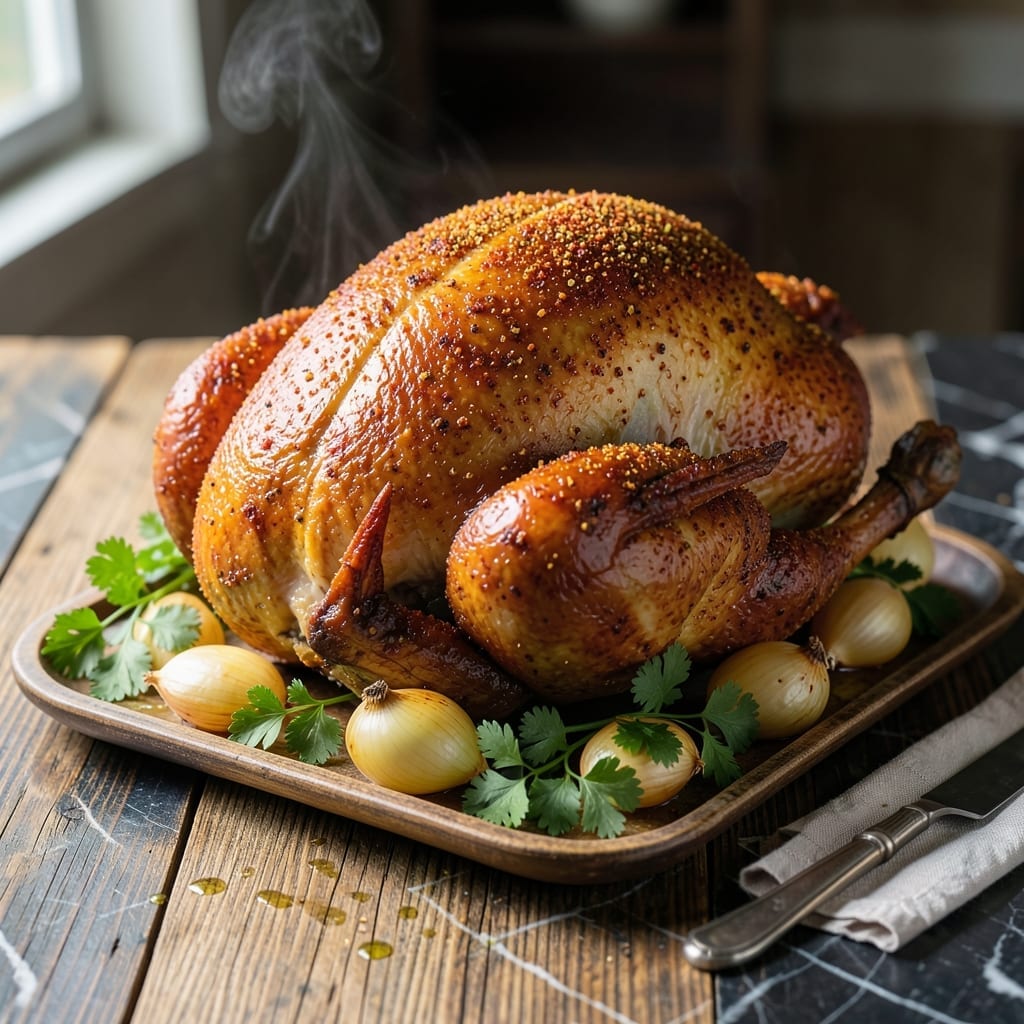
This Cajun deep-fried turkey delivers crispy golden skin and moist meat every time. I developed this method after years of testing to achieve restaurant-level results at home.
The secret is a bold Cajun spice rub applied under and over the skin, infusing flavor deep into the meat. Proper oil temperature and timing ensure the skin crisps perfectly while keeping the interior juicy and tender.
Safety comes first—maintain oil at 350°F and use a reliable thermometer. The result is a centerpiece dish with complex spice layers and texture that impresses at any gathering.
Serve with cornbread, collard greens, or your favorite Southern sides. This technique transforms a whole turkey into a memorable feast.
Ingredients for Deep Fried Turkey Recipe Cajun
A bold spice rub and careful technique create restaurant-quality results at home.
| Ingredient | Amount | Notes |
|---|---|---|
| Whole Turkey 🦃 | 12 lb | Fresh or thawed, patted dry |
| Peanut Oil 🫒 | 4 l | Or vegetable oil, for frying |
| Cajun Seasoning 🌶️ | ½ cup | Store-bought or homemade blend |
| Paprika 🌶️ | 2 tbsp | Smoked or sweet variety |
| Garlic Powder 🧄 | 2 tbsp | Freshly ground preferred |
| Onion Powder 🧅 | 2 tbsp | Fine powder for even coating |
| Dried Thyme 🍃 | 1 tbsp | Rubbed between fingers to release aroma |
| Dried Oregano 🍃 | 1 tbsp | Mediterranean or Mexican variety |
| Cayenne Pepper 🔥 | 1 tbsp | Adjust for heat preference |
| Black Pepper 🌶️ | 1 tbsp | Freshly ground for best flavor |
| Kosher Salt 🧂 | 2 tbsp | Diamond Crystal preferred for even distribution |
| Butter 🧈 | ½ cup | Unsalted, melted for injection (optional) |
| Cajun Hot Sauce 🌶️ | ¼ cup | For spice injection (optional) |
| Yellow Onion 🧅 | 1 whole | Quartered, for cavity aromatics |
| Celery Stalks 🥬 | 2 pieces | Chopped, for cavity aromatics |
The turkey quality is paramount here. Source a fresh, high-quality bird—avoid pre-brined or self-basting varieties as they can affect texture. Kosher turkeys work exceptionally well due to their consistent brining. For the oil, peanut oil is the gold standard for frying due to its high smoke point, but vegetable oil is a suitable substitute. Ensure you have enough to fully submerge the turkey.
For the spice rub, homemade Cajun seasoning offers superior control over heat and flavor, but Tony Chachere’s is a reliable store-bought option. Adjust the cayenne to suit your heat preference—this is where you can tailor the dish. If injecting with butter and hot sauce, use unsalted butter to avoid over-salting. The aromatics in the cavity add subtle depth but can be skipped if unavailable.
Frying oil can be reused 2-3 times if properly strained and stored. Cool completely, strain through a fine-mesh sieve, and store in a sealed container in a cool, dark place. The spice rub keeps for 6 months in an airtight container away from light.
Why You’ll Love This Recipe
- Fuss-Free Frying: I just plop the turkey in hot peanut oil and let the Cajun seasoning do its magic—no basting, no rotating pans.
- Spice-Kissed Crisp: That paprika and garlic powder rub creates a skin so flavorful and crispy, it’s the star of every bite.
- Holiday Hero: Between us, this is my go-to for Thanksgiving, game day, or even a Sunday supper with neighbors.
- Leftovers for Days: Honestly, the turkey stays juicy for sandwiches and tacos all week—no waste, just more flavor.
Step-by-Step Instructions for Deep Fried Cajun Turkey
Master the technique for achieving crispy skin and moist meat with this proven frying method.
Step 1: Prepare and Season the Turkey
Begin by ensuring the 12 lb Whole Turkey is completely thawed and patted dry inside and out. Any moisture will cause the peanut oil to splatter dangerously during frying. I always check the cavity and under the wings where water tends to collect.
In a bowl, combine the 0.5 cup Cajun Seasoning, 2 tbsp Paprika, 2 tbsp Garlic Powder, 2 tbsp Onion Powder, 1 tbsp Dried Thyme, 1 tbsp Dried Oregano, 1 tbsp Cayenne Pepper, 1 tbsp Black Pepper, and 2 tbsp Kosher Salt. Rub this mixture generously over every surface of the turkey, including inside the cavity. For extra flavor, I like to work some of the seasoning under the skin of the breast.
Step 2: Add Aromatics and Optional Injection
Place the 1 whole Yellow Onion (quartered) and 2 pieces Celery Stalks (chopped) into the turkey cavity. These aromatics will infuse the meat with additional flavor as it cooks. If using, melt the 0.5 cup Butter and mix with the 0.25 cup Cajun Hot Sauce.
Using a meat injector, carefully inject this spiced butter mixture into various parts of the turkey, particularly the breasts and thighs. This step ensures the meat stays exceptionally moist while adding an extra layer of Cajun flavor throughout. Distribute the injection evenly for consistent results.
Step 3: Preheat the Oil and Prepare for Frying
Set up your turkey fryer in a safe, outdoor location on a level surface, far from any flammable materials. Pour in the 4 l Peanut Oil—this quantity ensures the turkey will be fully submerged. Heat the oil to 350°F using a candy or deep-fry thermometer for accuracy.
This temperature is critical: too low and you’ll get greasy turkey, too high and the outside will burn before the inside cooks. I maintain a constant watch on the thermometer, as oil temperature can fluctuate with outdoor conditions. While the oil heats, place the turkey on the fryer rack and let it come to room temperature for about 30 minutes.
Step 4: Fry the Turkey to Perfection
Once the oil reaches 350°F, carefully lower the turkey into the pot using the fryer’s hook. Do this slowly to prevent oil from splashing over the sides. The turkey should be fully submerged. Immediately, the oil temperature will drop—this is normal. Maintain the oil temperature between 325-350°F throughout cooking.
Fry the turkey for approximately 3-4 minutes per pound (about 36-48 minutes total for a 12 lb turkey). The turkey is done when it reaches an internal temperature of 165°F in the thickest part of the breast and 175°F in the thickest part of the thigh. I check multiple spots to ensure even cooking.
Step 5: Rest and Serve
Using the fryer hook, carefully remove the turkey from the oil and place it on a clean rack or tray to drain. Tent it loosely with foil and let it rest for at least 20-30 minutes before carving. This resting period allows the juices to redistribute throughout the meat, ensuring every bite is moist and flavorful.
The skin should be a deep, golden brown with a crisp texture that audibly cracks when you cut into it. Carve as you would a roasted turkey, removing the legs and thighs first, then slicing the breast. Serve immediately for the best texture and temperature.
Pro Tips For Making Deep Fried Turkey Recipe Cajun
- Dry the Turkey: Pat the turkey completely dry inside and out before seasoning—any moisture will cause the oil to splatter violently. I learned this the hard way after my first attempt looked like a kitchen fireworks display.
- Mind the Oil Temp: Keep the peanut oil between 325°F and 350°F. After burning two batches at too-high heat, I finally got a thermometer and realized consistency is what gives that perfect golden crust without a bitter taste.
- Season Under the Skin: Rub the Cajun seasoning, paprika, and garlic powder under the skin, not just on top. It’s the only way to guarantee every bite has that deep, spicy flavor—yes, even the white meat.
- Rest Before Carving: Let the turkey rest 20-30 minutes after frying. It’s tempting to dig in right away, but skipping this step means dry meat and a pool of juices on your cutting board.
Serving Suggestions for This Dish
Classic Southern Sides
Cornbread is non-negotiable with this dish—I use Jiffy mix with a dash of honey for sweetness that balances the Cajun heat. Collard greens slow-cooked with smoked ham hocks add a traditional touch that complements the bold spices perfectly.
Fresh and Light
A crisp green salad with buttermilk dressing cuts through the richness. I toss romaine with cherry tomatoes and cucumber slices for color and crunch. The coolness refreshes your palate between bites of spicy turkey.
Starchy Comfort
Mac and cheese with a creamy cheddar-jack blend is my go-to for hearty gatherings. For a Louisiana twist, add ½ cup diced andouille sausage to the cheese sauce. It’s a crowd-pleaser that soaks up the Cajun flavors beautifully.
Pickled Vegetables
Quick-pickled red onions or jalapeños add a tangy crunch that brightens each bite. I slice 1 onion thinly and soak in ½ cup apple cider vinegar with 1 tbsp sugar for just 30 minutes. 💪
Sauces and Condiments
Serve with Cajun comeback sauce for dipping—mix 1 cup mayo, ¼ cup ketchup, and 2 tbsp Cajun hot sauce. The creamy, spicy dip takes the turkey to the next level. Always keep extra hot sauce on the table for heat lovers.
Beverage Pairings
An ice-cold Sweet Tea balances the spice, or offer Abita Amber beer for a local Louisiana touch. For non-alcoholic options, sparkling lemonade with a splash of ginger ale keeps the meal refreshing. 💫
Nutrition Facts
Frequently Asked Questions
What oil works best for frying?
Peanut oil is ideal due to its high smoke point and neutral flavor. Vegetable or canola oil are good substitutes. Always ensure you have enough oil to fully submerge the turkey.
How do I know when the turkey is done?
Use a meat thermometer to check internal temperature. It should read 165°F in the breast and 175°F in the thigh. Never rely on cooking time alone.
Can I reuse the frying oil?
Yes, oil can be reused 2-3 times if properly strained and stored. Cool completely, strain through a fine-mesh sieve, and keep in a sealed container in a cool, dark place.
What safety precautions should I take?
Always fry outdoors on a level surface, far from flammable materials. Use a reliable thermometer to maintain 350°F oil temperature. Never leave the fryer unattended.

- Peach Syrup Recipe for Ice Cream: Sweet and Silky Drizzle for Scoops - October 6, 2026
- Pav Bhaji Recipe Food Lab: Mumbai Street Food Magic at Home - October 6, 2026
- Peach Jelly Recipe Without Pectin: Naturally Set Sweet Spread - October 6, 2026