
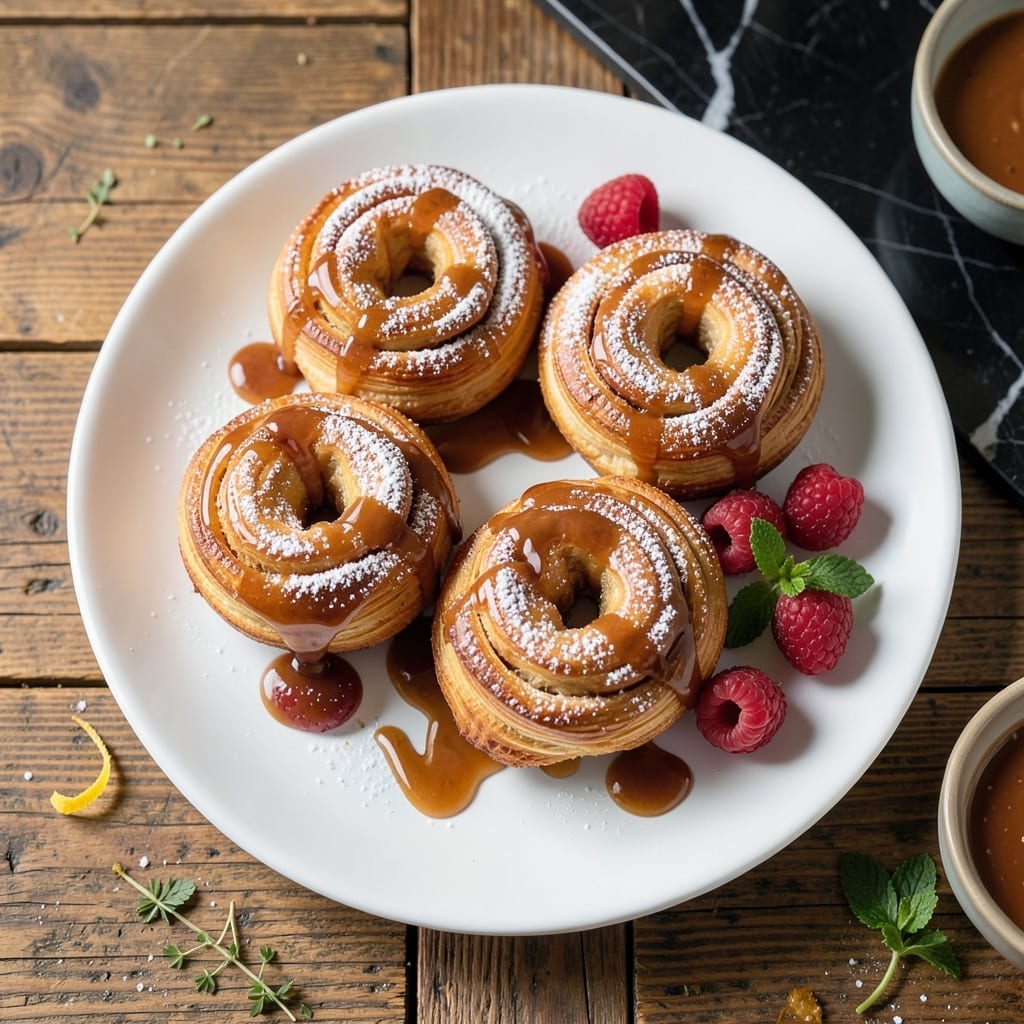
Mastering the cronut requires precision, patience, and a deep respect for laminated dough. This hybrid pastry demands both the artistry of croissants and the indulgence of donuts, creating layers of flaky perfection that shatter at the touch.
I developed this method after studying Dominique Ansel’s original technique, adapting it for home kitchens without professional equipment. The process involves carefully layering butter into dough, then chilling between folds to create dozens of paper-thin strata.
What emerges from the fryer is nothing short of magical—golden, crisp shells giving way to tender, airy interiors. The final glaze adds a glossy finish that makes these pastries as beautiful as they are delicious.
The reward for your effort is a pastry that redefined modern baking, with a texture that must be experienced to be believed. This recipe stays true to the original vision while being achievable at home.
Ingredients for Dominique Ansel Cronut
Precision requires quality ingredients to achieve that signature flaky, laminated magic in every bite.
| Ingredient | Amount | Notes |
|---|---|---|
| All-Purpose Flour 🌾 | 4 cups | Plus extra for dusting work surface |
| Granulated Sugar 🍚 | ¼ cup | Divided for dough and glaze |
| Active Dry Yeast 🍞 | 2 ¼ tsp | One standard packet plus extra |
| Whole Milk 🥛 | 1 cup | Warm, about 110°F |
| Unsalted Butter 🧈 | 1 ½ cups | European-style preferred, chilled |
| Large Eggs 🥚 | 2 whole | Room temperature, for dough |
| Salt 🧂 | 1 tsp | Fine sea salt or table salt |
| Vanilla Extract 🌿 | 1 tsp | Pure, not imitation |
| Neutral Vegetable Oil 🫒 | 4 cups | For frying, like canola or peanut |
| Powdered Sugar ✨ | 2 cups | For glaze, sifted |
| Heavy Cream 🥛 | ¼ cup | For glaze consistency |
| Vanilla Bean 🌱 | 1 whole | Seeds scraped for glaze |
| Rose Water 🌹 | 1 tsp | Optional, for authentic flavor |
The butter is non-negotiable here. European-style butter with higher fat content (82% or more) creates superior lamination. Plugrá or Kerrygold are excellent choices, but any high-quality unsalted butter works. The flour should be all-purpose—avoid bread flour as its higher protein content can make the dough too tough. For the milk, whole milk provides the richness needed to tenderize the layers.
No rose water? Skip it entirely rather than substituting—it’s a delicate flavor that doesn’t translate well. For the glaze, half-and-half can replace heavy cream in a pinch. The yeast must be active—check the expiration date, and test it in warm water with a pinch of sugar if you’re unsure. If you can’t find vanilla bean, double the extract for similar depth of flavor.
The dough requires 2-3 days with multiple chilling periods—plan accordingly. Store fried cronuts unglazed at room temperature for 24 hours, but they’re best consumed fresh. The glaze can be made 1 day ahead and reheated gently before dipping. Always use fresh oil for frying to avoid off flavors.
Why You’ll Love This Recipe
- I’ll be real: they taste just as good the next day, if they last that long.
- No Fancy Tools: I use just a rolling pin and my stand mixer—no special equipment needed.
- Buttery Layers: The flaky, buttery pastry with that hint of sweetness from the sugar and milk? Pure indulgence.
- Brunch Star: Honestly, these Cronuts steal the show at weekend brunches or even a fancy coffee date.
Step-by-Step Instructions for Flaky Croissant-Donut Hybrid
Master the laminated dough technique that creates this signature pastry’s perfect flakiness.
Step 1: Activate the Yeast and Create the Dough Base
In a stand mixer bowl, combine the 1 cup Whole Milk (warmed to 110°F) with the 0.25 cup Granulated Sugar and 2.25 tsp Active Dry Yeast. Let sit for 5-7 minutes until the yeast becomes foamy and active—this visual confirmation ensures your dough will rise properly.
Add the 4 cups All-Purpose Flour, 1 tsp Salt, 2 whole Large Eggs, and 1 tsp Vanilla Extract. Mix on low speed until combined, then increase to medium for 3-4 minutes until the dough becomes smooth and elastic. The dough should pull away from the bowl sides but remain slightly tacky to the touch.
Step 2: Incorporate the Butter for Laminated Layers
Transfer the dough to a lightly floured surface and shape into a 12×8-inch rectangle. Wrap in plastic and chill for 30 minutes. Meanwhile, pound the 1.5 cups Unsalted Butter between parchment paper into an 8×12-inch rectangle matching the dough dimensions—this precise shaping ensures even butter distribution.
Place the chilled dough on a floured surface and position the butter rectangle over two-thirds of it. Fold the dough like a letter, sealing the butter completely inside. This initial fold creates the foundation for your flaky layers. Chill for another 30 minutes to firm up the butter before proceeding.
Step 3: Perform the Turning and Folding Sequence
Roll the chilled dough into a 24×12-inch rectangle, maintaining even thickness throughout. Perform a book fold: fold both sides toward the center, then fold in half like a book. This counts as one turn. The butter should remain visible in streaks—this marbling effect guarantees proper lamination.
Chill for 20 minutes between each turn, repeating this process three more times for a total of four turns. After the final turn, wrap the dough tightly and refrigerate for at least 2 hours or overnight. The extended rest allows the gluten to relax and the butter to firm up, preventing shrinkage during frying.
Step 4: Shape, Proof, and Fry to Golden Perfection
Roll the rested dough to ½-inch thickness and cut into 3-inch rings using a round cutter and a smaller cutter for the center hole. Place on a parchment-lined tray, cover, and proof at room temperature for 1-2 hours until nearly doubled in size—they should spring back slowly when lightly pressed.
Heat the 4 cups Neutral Vegetable Oil to 350°F in a deep pot. Fry the cronuts 2 at a time for 2-3 minutes per side until deep golden brown. The oil temperature will drop when adding the dough, so allow it to return to 350°F between batches. Drain on a wire rack to maintain crispness.
Step 5: Glaze While Warm for Maximum Adherence
While the cronuts are still warm, prepare the glaze by whisking together the 2 cups Powdered Sugar, 0.25 cup Heavy Cream, seeds from the 1 whole Vanilla Bean, and 1 tsp Rose Water until smooth. The glaze should coat the back of a spoon but remain pourable.
Dip the warm cronuts into the glaze, allowing excess to drip off for 10 seconds before placing on a wire rack. The residual heat will set the glaze to a glossy finish. Serve immediately for the optimal combination of flaky layers, crisp exterior, and sweet, fragrant glaze that defines this iconic pastry.
Pro Tips For Making Dominique Ansel Cronut
- Chill the Dough: After laminating, refrigerate the dough for at least 30 minutes between folds—this prevents the butter from melting and ruining the layers.
- Use Cold Butter: Keep your unsalted butter ice-cold when incorporating it into the dough; warm butter will blend in instead of creating those essential flaky layers.
- Proof Properly: Let the dough rise in a warm spot until it’s nearly doubled, about 1-2 hours, or it won’t develop the right texture for frying.
- Fry at 350°F: Maintain a consistent oil temperature of 350°F—any hotter and the outside burns before the inside cooks, any cooler and they absorb too much grease.
Wine and Beer Pairings for These Flavors
Sparkling Wine Pairings
I love serving cronuts with a glass of Prosecco or Cava. The effervescence cuts through the richness of the fried pastry beautifully. A dry sparkling wine with its crisp acidity balances the sweet glaze perfectly. 🍾
Dessert Wine Options
For a more indulgent pairing, try a Moscato d’Asti from Italy. Its light fizz and notes of peach and apricot complement the vanilla and rose water in the glaze. Serve well-chilled at 45-50°F for the best experience.
Craft Beer Selections
A Belgian-style witbier with citrus and coriander notes works surprisingly well. The wheat base and subtle spice enhance the pastry’s layers. I recommend Hoegaarden or Blue Moon for accessibility. 🍺
Coffee Pairings
For non-alcoholic options, a cold brew coffee with a splash of cream mirrors the glaze flavors. The bitterness contrasts nicely with the sweetness. Nitro cold brew adds a creamy texture that’s particularly delightful.
A vanilla latte also pairs wonderfully, echoing the vanilla notes in the cronut while adding a comforting warmth to your morning treat.
Nutrition Facts
Frequently Asked Questions
How long does the dough need to rest between folds?
Chill the dough for 20-30 minutes between each fold to keep the butter firm. After the final fold, refrigerate for at least 2 hours or overnight for best results.
Can I use regular butter instead of European-style?
Regular butter works, but European-style (82% fat) creates superior lamination. If substituting, ensure it’s well-chilled to prevent melting during folding.
Why is my oil temperature dropping too much while frying?
Fry only 2 cronuts at a time in 350°F oil. Adding too many causes temperature drops, leading to greasy results. Let oil recover between batches.
Can I make the glaze ahead of time?
Yes! Prepare the glaze 1 day ahead and store it covered in the fridge. Reheat gently and thin with 1-2 tsp cream if needed before dipping.

- BBQ Oysters Recipe Grill: Smoky Garlic Butter Bliss - September 28, 2026
- Crock Pot Mac and Cheese Recipe Paula Deen: Ultra Creamy Southern-Style Comfort - September 28, 2026
- Beyond Burger Recipe Ideas: Plant-Based Creativity for Every Meal - September 28, 2026