
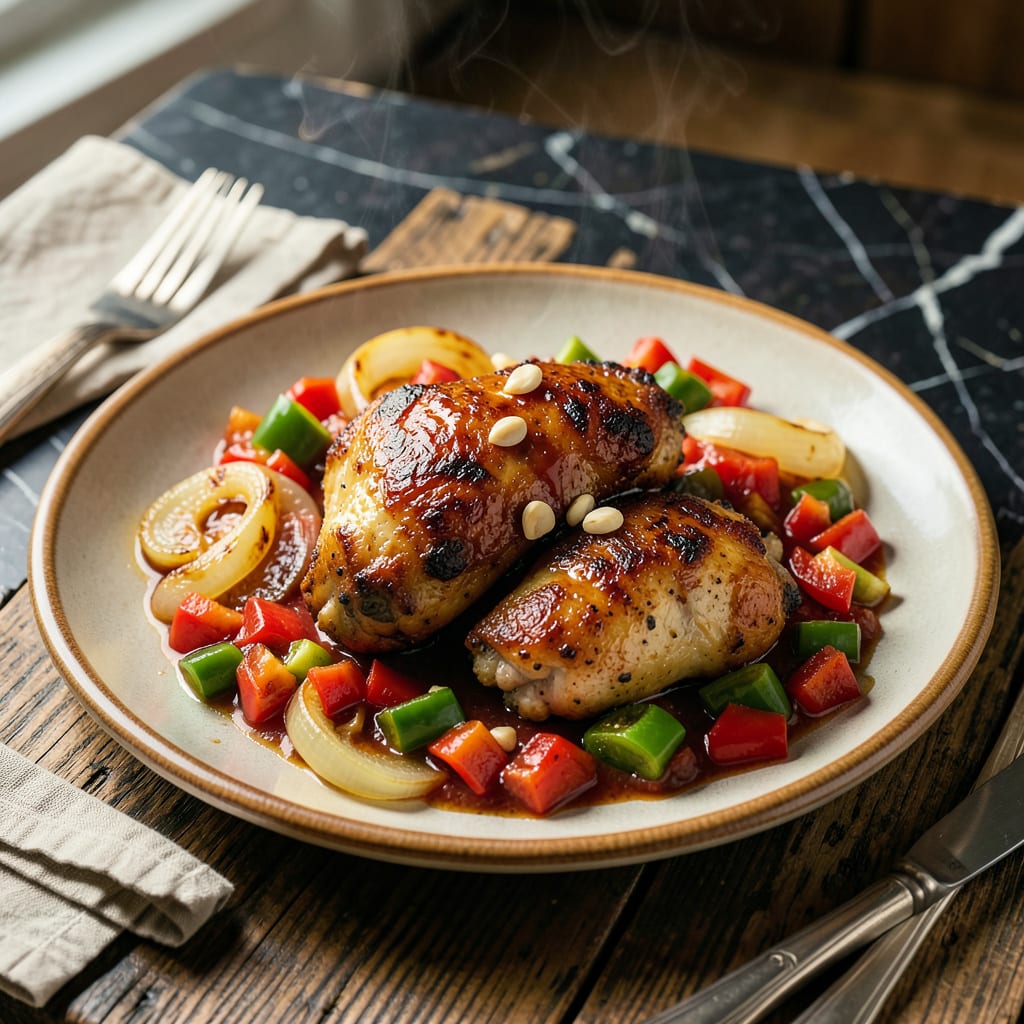
This Creole twist on classic chicken cacciatore brings New Orleans flair to a rustic Italian favorite. The dish combines tender chicken with tomatoes, bell peppers, and a blend of herbs.
What sets it apart is the subtle Creole seasoning that adds depth without overpowering the traditional hunter’s stew profile. It’s hearty, flavorful, and perfect for a comforting meal.
Ingredients for Dooky Chase Chicken Cacciatore
Pantry staples meet bold Creole flair for this hearty hunter’s stew.
| Ingredient | Amount | Notes |
|---|---|---|
| Chicken Thighs 🍗 | 1 ¾ lb | Boneless, skinless, cut into pieces |
| Olive Oil 🫒 | 2 tbsp | Extra-virgin preferred for depth |
| Yellow Onion 🧅 | 1 whole | Medium-sized, finely diced |
| Green Bell Pepper 🌶️ | 1 whole | Cored, seeded, and diced |
| Red Bell Pepper 🌶️ | 1 whole | Cored, seeded, and diced |
| Garlic Cloves 🧄 | 4 cloves | Minced for even flavor distribution |
| Canned Diced Tomatoes 🍅 | 2 cups | With juices for richness |
| Tomato Paste 🍅 | 2 tbsp | For concentrated umami depth |
| Creole Seasoning 🌿 | 1 ½ tsp | Store-bought or homemade blend |
| Dried Oregano 🍃 | 1 tsp | Rubbed between fingers to release oils |
| Dried Thyme 🍃 | 1 tsp | Crushed for maximum flavor |
| Dried Basil 🌿 | 1 tsp | Or substitute fresh at triple quantity |
| Chicken Broth 💧 | 1 cup | Low-sodium preferred for control |
| Dry White Wine 🍷 | ½ cup | Such as Sauvignon Blanc |
| Bay Leaf 🍃 | 1 whole | Remove before serving |
The chicken is key—thighs stay juicier than breasts through the long simmer. Grab bone-in, skin-on if you want even more flavor (just remove the skin before cooking). Dooky Chase herself would tell you to use what’s fresh and local. For the peppers, look for firm, glossy skins at Whole Foods or your neighborhood market. The Creole seasoning? Tony Chachere’s is the gold standard if you’re not making your own.
No white wine? Extra chicken broth with a squeeze of lemon works in a pinch. Fresh herbs can swap in at triple the dried amount (so 1 tbsp fresh basil for that 1 tsp dried). If you’re out of tomato paste, reduce 1/4 cup tomato sauce down to 2 tablespoons. Want more heat? Add a pinch of cayenne to the Creole seasoning. The bay leaf is optional but adds that subtle depth.
This stew tastes even better the next day once flavors meld. Keeps 4-5 days in the fridge, freezes beautifully for 3 months. I like to make a double batch—half for dinner, half for the freezer (worth the extra minute).
Why You’ll Love This Recipe
- One Pan Wonder: I toss everything—chicken thighs, peppers, onions—in one skillet and let it simmer while I set the table.
- Deep Rich Taste: The bell peppers sweat down into this sweet, savory sauce that clings to the chicken like a hug.
- Meal Prep Hero: I make a double batch on Sunday and it reheats beautifully for lunches all week.
- Budget Stretcher: Chicken thighs stay juicy and cost half what breasts do, and a little goes a long way.
Step-by-Step Instructions for Creole-Infused Hunter’s Stew
This method builds layers of flavor that define New Orleans cooking at its finest.
Step 1: Sear the Chicken Thighs to Lock in Juices
Heat the 2 tbsp olive oil in a heavy skillet over medium-high heat until it shimmers. Pat the 1.75 lb chicken thighs dry with paper towels—this ensures a proper sear. Season both sides with half of the 1.5 tsp Creole seasoning.
Working in batches to avoid crowding, add the chicken thighs and sear undisturbed for 4-5 minutes per side until deep golden brown. The fond that forms on the bottom of the pan will become the flavor base for your stew. Transfer the seared chicken to a plate and set aside.
Step 2: Develop the Creole Trinity and Build Flavor
In the same skillet, add the diced yellow onion, green bell pepper, and red bell pepper. Sauté over medium heat for 5-6 minutes until the vegetables soften and the onion becomes translucent.
Add the minced 4 cloves garlic cloves and cook for 30 seconds until fragrant. Stir in the remaining Creole seasoning, 1 tsp dried oregano, 1 tsp dried thyme, and 1 tsp dried basil, toasting the spices for 20 seconds to wake up their aromas.
Step 3: Deglaze and Create the Sauce Foundation
Pour in the 0.5 cup dry white wine to deglaze the pan, scraping up all the browned bits with a wooden spoon. Let it simmer for 2-3 minutes until reduced by half. This step is crucial—it dissolves all that concentrated flavor into your sauce.
Stir in the 2 tbsp tomato paste and cook for 1 minute until it darkens slightly. Then add the 2 cups canned diced tomatoes (with juices), 1 cup chicken broth, and 1 whole bay leaf. Bring to a simmer, then reduce heat to medium-low.
Step 4: Braise the Chicken to Tender Perfection
Return the seared chicken thighs to the skillet along with any accumulated juices. The liquid should mostly cover the chicken—if not, add a splash more broth. Cover and simmer gently for 25-30 minutes, turning the chicken halfway through.
You’ll know it’s done when the chicken is fork-tender and the sauce has thickened to a rich, stew-like consistency. The peppers and onions should be meltingly soft, and the entire kitchen should smell like a New Orleans Sunday supper.
Step 5: Rest and Serve with Pride
Remove the bay leaf and discard. Let the stew rest for 5-10 minutes off heat before serving. This allows the flavors to meld and the sauce to reach its perfect thickness.
Serve this Creole masterpiece hot over rice or with crusty bread to soak up every last bit of that incredible sauce. The chicken should be fall-off-the-bone tender, and each bite should deliver the complex, layered flavors that make this dish legendary.
Pro Tips For Making Dooky Chase Chicken Cacciatore
- Brown the Thighs Well: Sear the chicken thighs in olive oil until deeply golden—about 4-5 minutes per side. I learned this the hard way: under-browning leaves the sauce tasting flat.
- Dice Peppers Evenly: Cut the green and red bell peppers into uniform 1/2-inch pieces so they cook at the same rate as the onion. Sounds fussy, but it actually changes the outcome.
- Skip the Crowding: Cook the chicken in batches if needed—crowding the pan steams the thighs instead of browning them. After burning three batches, I finally figured out the spacing matters.
- Use Thighs With Skin: Bone-in, skin-on thighs stay juicier and add more flavor to the cacciatore. My grandmother swore by this, and she was right.
Essential Equipment for dooky chase chicken cacciatore
Heavy Skillet
I always reach for my 12-inch Lodge cast iron skillet—its even heat distribution and retention are perfect for searing chicken and building deep flavors. A heavy enamel-coated Dutch oven works equally well if you prefer. 🔥
Wooden Spoon
A sturdy wooden spoon is essential for scraping up all those delicious browned bits during deglazing. I keep mine by the stove at all times. Avoid metal utensils with cast iron to protect your seasoning.
Sharp Chef’s Knife
Invest in a quality 8-inch chef’s knife for dicing onions and peppers uniformly. I use Wüsthof—it makes prep faster and safer. A sharp knife is actually safer than a dull one, as it requires less force.
Measuring Tools
Accurate measurements matter for consistent results. I use OXO Good Grips measuring cups and spoons—they’re affordable and durable. For the wine, any liquid measuring cup with clear markings works perfectly.
Tongs
Long 12-inch locking tongs are ideal for turning chicken thighs without piercing them. I prefer OXO or Cuisinox brands. They give you precision control while keeping your hands safe from splatters.
Instant-Read Thermometer
While not strictly necessary, a ThermoWorks Instant Read thermometer ensures your chicken reaches 165°F perfectly every time. I check the thickest piece to confirm doneness before the final rest. 🌡️
Nutrition Facts
Frequently Asked Questions
Can I use chicken breasts instead of thighs?
You can, but thighs stay juicier during the 25-30 minute braise. If using breasts, reduce cooking time to 20 minutes to prevent dryness.
What’s the best wine substitute?
Use 1/2 cup chicken broth with 1 tbsp lemon juice for acidity. The flavor won’t be identical but will still work well.
How do I thicken the sauce?
Simmer uncovered for 5-10 extra minutes or mix 1 tbsp cornstarch with cold water before stirring in.
Can I make this ahead?
The stew tastes even better the next day. Store in the fridge for up to 4-5 days or freeze for 3 months.

- BBQ Sausage Recipe Oven: Smoky Depth Without the Grill - September 28, 2026
- BBQ Chicken Bowl Recipe Rice: Smoky Sweetness Over Fluffy Grains - September 28, 2026
- Beef Cutlet Recipe Ideas: Crispy Breaded Patties With Bold Seasonings - September 28, 2026