
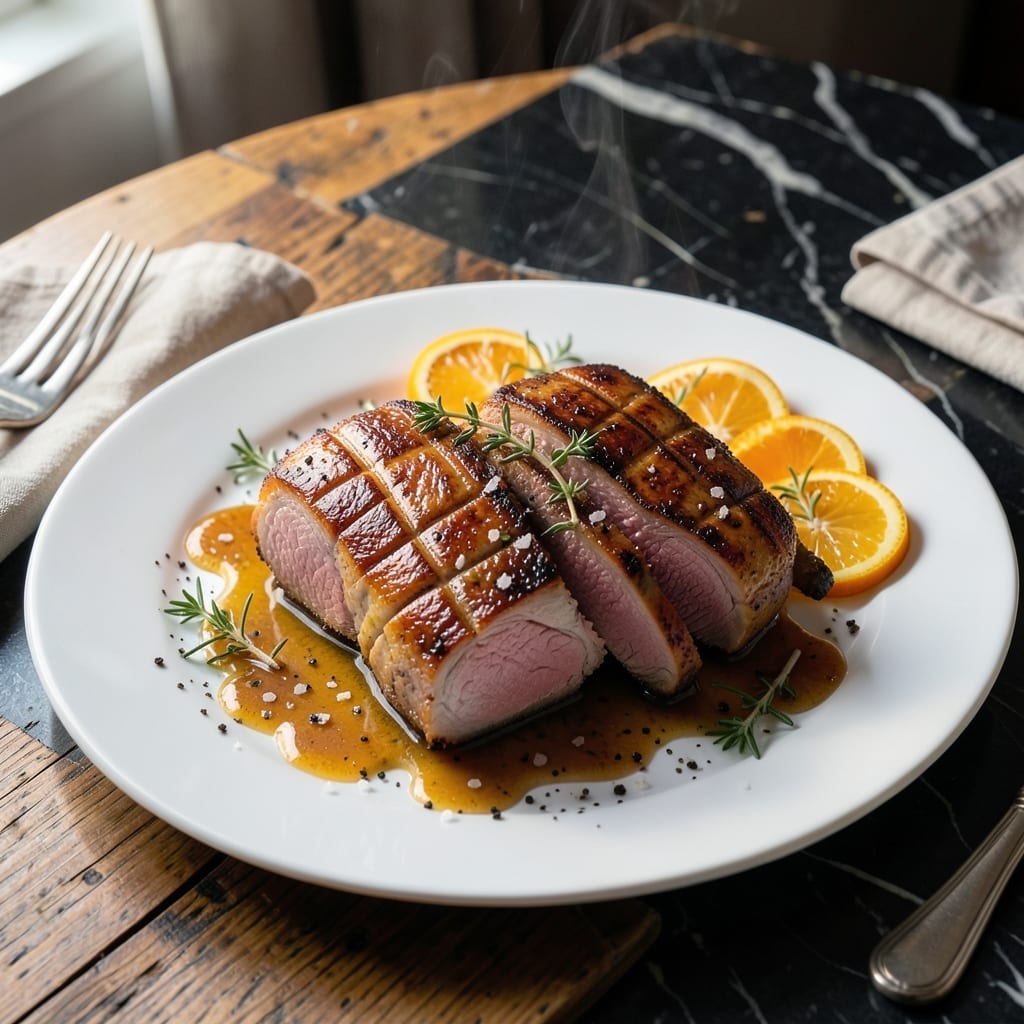
This dish transforms duck into a restaurant-quality masterpiece with a perfect balance of rich meat and bright citrus. The secret lies in rendering the fat slowly to achieve crispy skin while keeping the meat tender.
I’ve refined this method to ensure the orange sauce complements rather than overpowers the duck. A careful reduction of stock, orange juice, and zest creates a glossy glaze that clings to every bite.
The result is a dish that feels special enough for a dinner party but remains approachable for home cooks. Each element builds on the last, from the duck’s golden skin to the sauce’s vibrant finish.
Serve with roasted potatoes or greens to complete the experience. Here’s how to make it.
Ingredients for Duck a L’orange Recipe Gordon Ramsay
Elegant ingredients for a restaurant-worthy dish with citrus depth and crispy skin.
| Ingredient | Amount | Notes |
|---|---|---|
| Duck Breasts 🦆 | 4 whole | Skin-on, about 6-8 oz each |
| Salt 🧂 | 1 ½ tsp | Kosher or sea salt preferred |
| Black Pepper 🌶️ | 1 tsp | Freshly ground for best flavor |
| Fresh Thyme Sprigs 🌿 | 4 whole | For aromatic infusion |
| Navel Oranges 🍊 | 3 whole | Zest plus 1 cup juice |
| Chicken Stock 🍲 | 1 ½ cups | Low-sodium preferred |
| Honey 🍯 | 2 tbsp | For balancing acidity |
| Unsalted Butter 🧈 | 4 tbsp | Cold, cubed for sauce |
| Shallot 🧅 | 1 whole | Finely minced for sauce |
| Red Wine Vinegar 🍷 | 2 tbsp | For bright acidity |
| Grand Marnier 🥃 | ¼ cup | Optional but recommended |
| Olive Oil 🫒 | 1 tbsp | For searing duck |
The duck is everything here. Look for skin-on breasts at a quality butcher or Whole Foods—they should be plump with smooth, unblemished skin. Avoid pre-frozen duck; the texture suffers. Fresh thyme from the produce section (not dried) adds the right aromatic touch. For the oranges, navel varieties are sweeter and seedless, making them ideal for both zest and juice.
No Grand Marnier? Cointreau or triple sec works just as well. Short on thyme? Fresh rosemary at half the amount gives a different but complementary note. If you’re avoiding alcohol entirely, substitute orange juice concentrate—just reduce the stock a bit more. The honey can be swapped for maple syrup if you prefer, though it changes the flavor slightly.
Duck fat can be saved and reused for 3 months in the fridge—it’s liquid gold for roasting potatoes. The finished dish doesn’t store well (the skin loses crispness), but the sauce keeps for 5 days and reheats beautifully. Always bring the duck to room temperature before cooking.
Why You’ll Love This Recipe
- One Pan Wonder: I sear the duck breasts in one pan, then use the same one for the orange sauce—minimal cleanup.
- Sweet and Rich: That sticky orange glaze with the crispy duck skin? Honestly, it’s ridiculous how good it tastes.
- Dinner Party Star: I serve this when I want to impress without stressing—feels fancy but it’s just duck, oranges, and thyme.
- Leftovers Luxe: The flavors deepen overnight, so I love slicing the cold duck for sandwiches the next day.
Step-by-Step Instructions for Duck A L’Orange
Master the technique for restaurant-quality results with this classic preparation.
Step 1: Score and Season the Duck Breasts
Pat the 4 whole Duck Breasts dry with paper towels. Using a sharp knife, score the skin in a crosshatch pattern, being careful not to cut into the meat. This helps render the fat and creates crispy skin.
Season both sides generously with the 1.5 tsp Salt and 1 tsp Black Pepper. Add the 4 whole Fresh Thyme Sprigs to the meat side. Let the duck sit at room temperature for 20-30 minutes to take the chill off before cooking.
Step 2: Sear the Duck to Crispy Perfection
Heat a large skillet over medium-high heat. Add the 1 tbsp Olive Oil and swirl to coat. Place the duck breasts skin-side down in the pan. Cook for 6-8 minutes until the skin is deep golden brown and crispy.
Flip the duck and cook for 3-4 minutes on the meat side until it reaches medium-rare (about 130-135°F internal temperature). Transfer to a plate, skin-side up, and tent loosely with foil to keep warm.
Step 3: Prepare the Orange Sauce Foundation
Pour off all but 1 tablespoon of fat from the skillet. Add the finely minced 1 whole Shallot and cook over medium heat for 1-2 minutes until softened. Stir in the 2 tbsp Red Wine Vinegar and let it reduce by half.
Add the 0.25 cup Grand Marnier and ignite carefully to flambe (or let it reduce by half if not flambeing). Once the flames subside, add the zest and juice from 3 whole Navel Oranges, the 1.5 cups Chicken Stock, and the 2 tbsp Honey.
Step 4: Finish the Sauce and Serve
Increase the heat to medium-high and let the sauce reduce by about half, 8-10 minutes. Reduce the heat to low and whisk in the 4 tbsp Unsalted Butter, one cube at a time, until the sauce is glossy and slightly thickened.
Strain the sauce through a fine-mesh sieve into a clean pan. Slice the duck breasts diagonally and arrange on plates. Spoon the sauce over the duck and serve immediately. The sauce should coat the back of a spoon with a beautiful citrus sheen.
Pro Tips For Making Duck A L’Orange Recipe Gordon Ramsay
- Score the Fat: Make shallow criss-cross cuts in the duck skin—about 1/4 inch apart—to render fat evenly and prevent curling. I learned this the hard way after my first few breasts shrank into sad little hockey pucks.
- Rest the Duck: Let the seared breasts rest 5-10 minutes before slicing—this keeps the juices from pooling on the plate. Sounds obvious, but I still catch myself skipping it when hungry.
- Zest Before Juicing: Grate the orange zest first, then cut the fruit for segments. Once you halve the oranges for juicing, zesting becomes a slippery, frustrating mess.
- Skim the Sauce: After deglazing with orange juice, skim off excess fat from the pan—about 1-2 tablespoons—before reducing. The sauce will cling better to the duck and taste brighter, not greasy.
Pro Cooking Tips for This Dish
Fat Rendering Technique
Start with a cold skillet to render duck fat slowly for maximum crispiness. Place the duck skin-side down, then increase heat to medium. This prevents the skin from curling and ensures even rendering. I use a Lodge cast iron for its heat retention. 🔥
Internal Temperature Control
Use an instant-read thermometer to monitor the duck’s internal temperature. Pull it from the pan at 130°F for medium-rare—it will rise to 135°F while resting. Overcooking even by 5°F can make the meat tough.
Sauce Reduction Timing
Let the sauce reduce by half over medium-high heat before adding butter. This takes about 8-10 minutes. If it reduces too quickly, lower the heat to prevent burning the shallots. The sauce should coat the back of a spoon.
Flambe Safety
When adding Grand Marnier, tilt the pan away from your face and remove it from direct heat before igniting. If flambe feels risky, simply let the alcohol reduce by half. I prefer using a long-handled lighter for better control.
Butter Emulsion Tip
Whisk in cold butter 1 cube at a time off the heat to create a smooth, glossy emulsion. If the sauce breaks, blend with an immersion blender for 10 seconds. This technique works for any pan sauce.
Resting Before Slicing
Let the duck rest for 5-10 minutes before slicing diagonally. This allows juices to redistribute, ensuring each slice stays moist. I tent loosely with foil to keep it warm while finishing the sauce. 💫
Nutrition Facts
Frequently Asked Questions
What’s the best internal temperature for duck?
Pull the duck at 130°F for perfect medium-rare. It’ll rise to 135°F while resting. Avoid overcooking—even 5°F higher can toughen the meat.
Can I skip the Grand Marnier?
Yes! Use Cointreau or triple sec as substitutes. For a non-alcoholic version, reduce orange juice concentrate with the stock. The flavor stays bright and balanced.
Why score the duck skin?
Scoring helps render fat evenly and prevents curling. It also creates crispy, golden skin. Use a sharp knife in a crosshatch pattern without cutting into the meat.
How do I fix a broken sauce?
If the sauce separates, remove it from heat and whisk vigorously. For stubborn breaks, blend with an immersion blender for 10 seconds to re-emulsify.

- BBQ Sausage Recipe Oven: Smoky Depth Without the Grill - September 28, 2026
- BBQ Chicken Bowl Recipe Rice: Smoky Sweetness Over Fluffy Grains - September 28, 2026
- Beef Cutlet Recipe Ideas: Crispy Breaded Patties With Bold Seasonings - September 28, 2026