
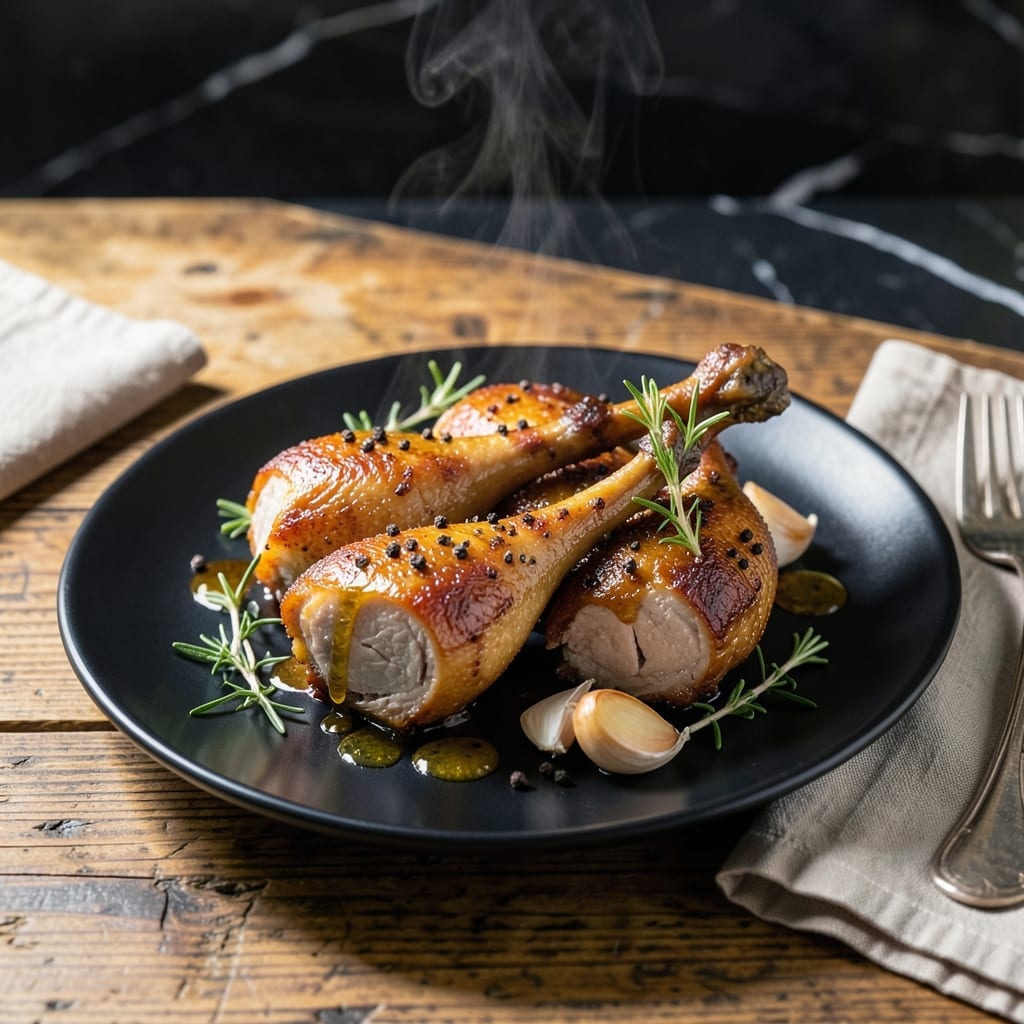
This traditional French method transforms duck legs into tender, fall-off-the-bone perfection through slow cooking in their own rendered fat. The process begins with a simple cure of salt, herbs, and aromatics to enhance flavor and texture.
The duck is then submerged in fat and cooked at a low temperature for several hours, allowing the connective tissue to break down completely. The result is rich, succulent meat with crisp, golden skin that’s impossible to resist.
What makes this dish special is its ability to preserve the duck while intensifying its natural depth of flavor. The confit can be stored in the fat for weeks, improving with age and ready to be crisped up in a pan whenever needed.
Serve with a simple green salad or roasted potatoes to let the duck shine. This is French comfort food at its finest.
Ingredients for Duck Confit Recipe Gordon Ramsay
Classic French ingredients for tender, fall-off-the-bone duck with crisp golden skin.
| Ingredient | Amount | Notes |
|---|---|---|
| Duck Legs 🦆 | 4 whole | Skin-on, excess fat trimmed |
| Kosher Salt 🧂 | ½ cup | Diamond Crystal preferred |
| Fresh Thyme Sprigs 🌿 | 8 pieces | Stems removed, roughly chopped |
| Fresh Rosemary Sprigs 🌿 | 4 pieces | Stems removed, roughly chopped |
| Garlic Cloves 🧄 | 8 cloves | Lightly crushed, peeled |
| Black Peppercorns 🌶️ | 2 tsp | Lightly crushed |
| Bay Leaves 🍃 | 2 pieces | Dried or fresh |
| Duck Fat 💧 | 4 cups | Rendered, or substitute lard |
| Juniper Berries 🫒 | 10 pieces | Lightly crushed |
| Shallots 🧅 | 2 whole | Peeled, halved |
| Fresh Parsley 🌿 | ¼ cup | Chopped, for garnish |
The duck legs are the foundation—look for fresh, high-quality legs with skin intact and even fat distribution. Whole Foods or a specialty butcher will have the best selection. Duck fat is essential for authentic flavor (and can be rendered from the legs themselves). If sourcing pre-rendered fat, D’Artagnan is a trusted brand. Fresh herbs elevate this dish significantly—avoid dried for the cure.
No duck fat? Lard or a mix of olive oil and butter can work, though the flavor won’t be identical. If juniper berries aren’t available, substitute with a pinch of ground allspice. Shallots can be swapped for yellow onions in a pinch. For the herbs, fresh is non-negotiable—dried won’t infuse the same depth during the curing process.
Confit keeps beautifully in its fat. Store in an airtight container in a cool, dark place for up to 4 weeks, or refrigerate for 3 months. The fat will solidify when cold—simply reheat gently to liquefy before using. Always bring duck to room temperature before crisping the skin.
Why You’ll Love This Recipe
- Set and Forget: Mostly hands-off—just salt, herbs, and time do the work while the duck slow-cooks in its own fat.
- Crispy Perfection: The thyme and rosemary infuse every bite, and the skin turns impossibly crispy when seared.
- Fancy Without Fuss: I serve this for dinner parties, but honestly, it’s just as good on a random Tuesday with crusty bread.
- Leftovers Win: The confit keeps for days, so I shred it into salads or tacos—way better than my usual meal prep.
Step-by-Step Instructions for Duck Confit
This traditional method delivers tender, fall-off-the-bone meat with crispy, golden skin.
Step 1: Cure the Duck Legs with Aromatics
Rub the 4 whole Duck Legs with the 0.5 cup Kosher Salt on all sides, ensuring complete coverage. Place them in a dish just large enough to hold them in a single layer.
Add the 8 pieces Fresh Thyme Sprigs, 4 pieces Fresh Rosemary Sprigs, 8 cloves Garlic Cloves, 2 tsp Black Peppercorns, 2 pieces Bay Leaves, and 10 pieces Juniper Berries around and between the duck legs. The salt will draw out moisture while the herbs and spices infuse flavor deep into the meat.
Cover and refrigerate for 12-24 hours. This curing time is essential—it seasons the meat throughout and begins the preservation process that defines confit.
Step 2: Rinse and Dry Thoroughly
Remove the duck legs from the refrigerator and rinse off the salt cure under cold running water. Pat them completely dry with paper towels. This step removes excess salt while ensuring the skin will crisp properly later.
Any remaining moisture on the skin will cause the fat to splatter during cooking. I always double-check each piece, especially around the bone where water tends to collect.
Let the duck legs sit at room temperature for 30 minutes while you prepare the cooking vessel. This takes the chill off the meat, ensuring even cooking.
Step 3: Submerge in Duck Fat and Slow-Cook
Place the duck legs in a deep oven-safe dish or Dutch oven, skin-side down. Add the 2 whole Shallots to the dish. Pour over the 4 cups Duck Fat, ensuring the legs are completely submerged. The fat should cover the meat by at least ½ inch.
Preheat your oven to 300°F. The low temperature is crucial—it gently renders the fat from the duck while cooking the meat to silky tenderness without drying it out.
Cover the dish and cook for 2-2½ hours until the meat is fork-tender. You’ll know it’s ready when the meat easily pulls away from the bone with gentle pressure.
Step 4: Crisp the Skin and Finish
Carefully remove the duck legs from the fat using a slotted spoon. Transfer them to a baking sheet, skin-side up. Increase the oven temperature to 400°F.
Return the duck legs to the oven and bake for 15-20 minutes until the skin is deep golden brown and crispy. Watch them closely during this step—the sugar in the rendered fat can cause the skin to darken quickly.
The contrast between the crispy skin and unctuous meat is what makes confit special. If the skin isn’t crispy enough, broil for 2-3 minutes, but don’t walk away—it can burn in seconds.
Step 5: Serve with Fresh Herbs
Transfer the duck confit to a serving platter. The fat left in the cooking dish can be strained and saved for future cooking—it’s liquid gold for potatoes or vegetables.
Garnish with the 0.25 cup Fresh Parsley just before serving. The bright green color and fresh flavor cut through the richness of the dish beautifully.
Serve the duck confit warm, with some of the cooking fat spooned over the top if desired. The meat should be so tender it nearly falls off the bone, with skin that shatters at the touch of a fork.
Pro Tips For Making Duck Confit Recipe Gordon Ramsay
- Salt Overnight: Rub the duck legs with kosher salt and refrigerate uncovered for at least 12 hours—this draws out moisture and guarantees crisp skin. I learned this the hard way after skipping it once and ending up with soggy confit.
- Submerge Completely: Make sure the duck legs are fully covered in fat during cooking, or the exposed parts will dry out. Sounds obvious, but I’ve ruined a batch by being stingy with the fat.
- Low and Slow: Keep the oven at 150°C (300°F) and let the duck confit cook for 2-3 hours—rushing it with higher heat just toughens the meat. Patience actually changes the outcome here.
- Use Fresh Herbs: Fresh thyme and rosemary sprigs make a real difference in the aroma and flavor, so skip the dried stuff. My grandmother swore by this, and she was right.
Best Sauces and Condiments for This duck confit recipe gordon ramsay
Classic Orange Sauce
Reduce 1 cup fresh orange juice with 2 tbsp red wine vinegar and 1 tbsp honey until syrupy. Add 1 tbsp cold butter off heat for gloss. The acidity cuts through the duck fat beautifully. 🍊
Cherry Port Reduction
Simmer 1 cup frozen cherries, ½ cup port wine, and 1 tbsp balsamic vinegar for 15 minutes. Strain and reduce by half. This sweet-tart sauce pairs perfectly with the rich meat.
Shallot and Red Wine
Sauté 2 minced shallots in duck fat, deglaze with 1 cup dry red wine, and reduce by 75%. Finish with 1 tsp Dijon mustard for depth. The shallots from the confit process work great here.
Herb Butter Glaze
Melt 4 tbsp duck fat with 2 tbsp chopped parsley, 1 tsp thyme leaves, and 1 minced garlic clove. Drizzle over crisped confit just before serving for fresh herb brightness.
Mustard Cream Sauce
Whisk ½ cup crème fraîche with 2 tbsp whole-grain mustard and 1 tsp lemon zest. Thin with a splash of duck fat if needed. This adds a tangy contrast to the rich duck. ✨
Fig and Balsamic
Simmer ½ cup chopped dried figs with ¼ cup balsamic vinegar and 1 tbsp brown sugar until thick. The sweetness complements the duck’s saltiness beautifully.
Nutrition Facts
Frequently Asked Questions
How long does duck confit keep in the fridge?
Properly stored in its fat in an airtight container, duck confit stays fresh for up to 3 months refrigerated. The fat acts as a natural preservative while enhancing flavor over time.
Can I reuse the duck fat?
Yes! Strain and store the fat for future confit or cooking. It develops incredible depth of flavor and can be reused 2-3 times before becoming too dark. Perfect for roasting potatoes.
Why is my duck skin not crispy?
This usually happens if the skin wasn’t fully dried before cooking or if the fat wasn’t hot enough. Pat the duck very dry and ensure a final high-heat oven blast at 400°F for 15-20 minutes.

- BBQ Sausage Recipe Oven: Smoky Depth Without the Grill - September 28, 2026
- BBQ Chicken Bowl Recipe Rice: Smoky Sweetness Over Fluffy Grains - September 28, 2026
- Beef Cutlet Recipe Ideas: Crispy Breaded Patties With Bold Seasonings - September 28, 2026