
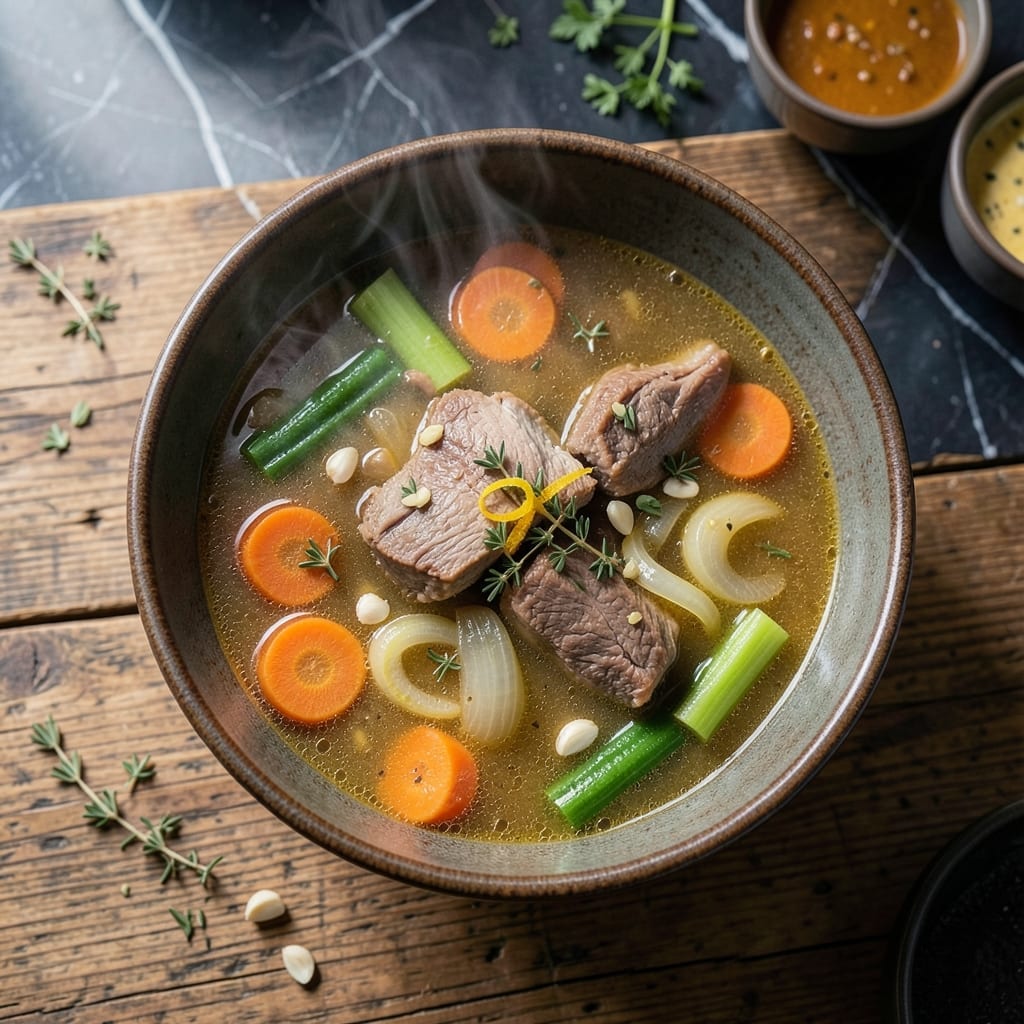
Transform leftover duck bones into a rich, velvety broth that forms the base of this satisfying soup. This method extracts every bit of flavor while honoring the bird with zero waste.
The process begins by simmering the carcass with aromatics to build a deep, complex stock. Once strained, the golden liquid becomes the canvas for hearty vegetables and tender duck meat.
What emerges is a comforting soup that tastes like it simmered for hours. Each spoonful delivers layers of savory depth with minimal effort.
Perfect for chilly evenings or as a base for other dishes. This technique makes the most of your duck from start to finish.
Ingredients for Duck Soup Recipe from Carcass
Transform leftover duck into a soul-warming soup with these simple, flavorful ingredients.
| Ingredient | Amount | Notes |
|---|---|---|
| Duck Carcass 🦆 | 1 whole | From roasted duck, bones and skin |
| Cold Water 💧 | 8 cups | To cover carcass completely |
| Yellow Onion 🧅 | 1 whole | Quartered, skin on for color |
| Carrots 🥕 | 2 whole | Cut into large chunks |
| Celery Stalks 🌿 | 2 whole | Cut into large chunks |
| Garlic Cloves 🧄 | 4 cloves | Smashed, skin on |
| Bay Leaves 🍃 | 2 pieces | Dried, whole leaves |
| Black Peppercorns 🌶️ | 1 tsp | Whole, lightly crushed |
| Fresh Thyme Sprigs 🌿 | 4 pieces | Whole sprigs for infusion |
| Kosher Salt 🧂 | 1 tsp | Diamond Crystal preferred |
| Duck Meat 🦆 | 1 cup | Shredded from carcass |
| Egg Noodles 🍜 | 6 oz | Dried, wide variety |
| Fresh Parsley 🌿 | ¼ cup | Chopped, for garnish |
The duck carcass is non-negotiable for depth of flavor. Source from a reputable butcher or use the remains of a roasted duck—freshly roasted bones yield the richest stock. Look for carcasses with some skin and meat still attached. The vegetables serve as aromatics: organic produce isn’t mandatory, but avoid pre-cut or pre-washed (they lack flavor). Whole Foods often stocks duck bones if you’re not roasting your own.
No duck carcass? Chicken bones work at a 1:1 ratio, though the flavor profile shifts. Fresh thyme can be swapped for dried at one-third the amount. If you lack bay leaves, a pinch of dried oregano provides similar depth. For the noodles, rice noodles or udon are excellent alternatives. The stock can be made without salt if you plan to reduce it later.
Stock keeps 4 days refrigerated or 6 months frozen in airtight containers. Strain and chill the broth before storing, then skim off any solidified fat. The cooked duck meat can be stored separately for up to 3 days. Reheat gently to preserve the velvety texture.
Why You’ll Love This Recipe
- Set It & Forget: I just toss the carcass in cold water with onion, carrots, and celery, then let it simmer—no babysitting required.
- Rich, Deep Broth: The duck bones give this soup a complexity that store-bought stock can’t touch. Honestly, it’s the kind of flavor that makes you close your eyes with the first sip.
- Freezer Friendly: I always make a double batch and freeze half for lazy nights or unexpected guests. Between us, it reheats like a dream.
- Zero Waste Win: Using the leftover carcass means nothing goes to waste, and it costs me almost nothing. I’ll be real: that’s the kind of thrifty cooking I can get behind.
Step-by-Step Instructions for Duck Soup From Carcass
This method extracts maximum flavor from the duck carcass while building a rich, velvety broth.
Step 1: Prepare the Stock Base
Place the 1 whole Duck Carcass in a large stockpot. Add the 8 cups Cold Water, ensuring it completely covers the bones—this prevents any part from drying out during simmering.
Add the 1 whole Yellow Onion, 2 whole Carrots, 2 whole Celery Stalks, 4 cloves Garlic Cloves, 2 pieces Bay Leaves, 1 tsp Black Peppercorns, 4 pieces Fresh Thyme Sprigs, and 1 tsp Kosher Salt. The vegetable skins and herb stems contribute depth to the stock.
Step 2: Simmer for Deep Flavor Extraction
Bring the mixture to a boil over medium-high heat, then immediately reduce to a gentle simmer. Skim off any foam or impurities that rise to the surface during the first 10-15 minutes—this ensures a clean, clear broth.
Partially cover and simmer for 2-3 hours, occasionally skimming fat from the top. The broth should develop a deep amber color and rich aroma, signaling that the collagen and gelatin have fully rendered from the bones. Avoid a rolling boil, which can make the stock cloudy.
Step 3: Strain and Prepare for Finishing
Carefully pour the stock through a fine-mesh strainer into a clean pot, pressing gently on the solids to extract all liquid. Discard the spent Duck Carcass and vegetables. You should have about 6-7 cups of rich, fragrant broth.
Return the strained broth to the stove over medium heat and add the 1 cup Duck Meat. Simmer for 10 minutes to infuse the meat with flavor and warm it through. Taste and adjust seasoning if needed, though the Kosher Salt added earlier should be sufficient.
Step 4: Cook the Egg Noodles and Finish
Add the 6 oz Egg Noodles to the simmering broth. Cook according to package directions, typically 8-10 minutes, until the noodles are tender but still slightly firm. Stir occasionally to prevent sticking.
The noodles will absorb some of the broth, thickening it slightly. Once cooked, remove from heat. The Duck Meat should be tender and the broth should coat the back of a spoon with a velvety texture.
Step 5: Garnish and Serve
Ladle the soup into bowls, ensuring each serving contains a generous portion of noodles and Duck Meat. Garnish with the 0.25 cup Fresh Parsley, finely chopped just before serving to preserve its bright color and fresh flavor.
Serve immediately while hot. The soup should have a rich, savory depth with tender noodles and shreds of duck in every bite. The parsley adds a fresh contrast to the hearty broth.
Pro Tips For Making Duck Soup Recipe From Carcass
- Start With Cold Water: Always cover the duck carcass with cold water, not hot—this helps draw out impurities gradually for a clearer, cleaner broth. I learned this the hard way after ending up with cloudy soup more than once.
- Roast the Carcass First: Toss the duck bones in a 400°F oven for 20-30 minutes until golden. Sounds like an extra step, but it adds a deep, rich flavor that simmering alone just can’t match.
- Skim the Foam: Keep a ladle handy and skim off the frothy scum that rises in the first 30 minutes. Skip this and your soup will taste bitter—I was skeptical until I tried it both ways.
- Use the Pressure Cooker: A pressure cooker cuts the simmering time from hours to about 45 minutes without sacrificing depth. This isn’t the prettiest method, but it’s the most efficient when you’re short on time.
Perfect Pairings for duck soup recipe from carcass
Bread Pairings
A slice of crusty sourdough is perfect for soaking up this rich broth. I recommend warming it and rubbing with a garlic clove for extra flavor. A baguette works equally well if you prefer a lighter texture.
Wine Pairings
A medium-bodied Pinot Noir from Oregon complements the duck’s richness without overpowering it. For whites, try a Chardonnay with balanced oak—its buttery notes mirror the soup’s velvety texture. 🍷
Side Dishes
A simple green salad with a tangy vinaigrette cuts through the soup’s depth. I toss mixed greens with 2 tbsp apple cider vinegar and 3 tbsp olive oil for brightness.
Beer Options
A malty amber ale like Fat Tire enhances the soup’s savory notes. For something lighter, a crisp pilsner cleanses your palate between spoonfuls. 🍺
Finishing Touches
Add a dollop of whole-grain mustard to each bowl for a tangy contrast. A sprinkle of fresh dill also pairs beautifully with the duck’s richness.
Nutrition Facts
Frequently Asked Questions
Can I use a raw duck carcass?
Yes, but roasted bones yield deeper flavor. Simmer raw carcass for 3-4 hours to extract gelatin fully. Roasted carcasses only need 2-3 hours for rich results.
Why did my broth turn cloudy?
This usually happens from boiling too vigorously. Maintain a gentle simmer and skim foam regularly for clear broth. Straining through cheesecloth helps too.
Can I make this in a slow cooker?
Cook on low for 8-10 hours. This hands-off method works well, though stovetop gives you more control over skimming.
How do I store leftover soup?
Cool completely, then refrigerate in airtight containers for up to 4 days. Freeze for longer storage (up to 3 months).

- BBQ Sausage Recipe Oven: Smoky Depth Without the Grill - September 28, 2026
- BBQ Chicken Bowl Recipe Rice: Smoky Sweetness Over Fluffy Grains - September 28, 2026
- Beef Cutlet Recipe Ideas: Crispy Breaded Patties With Bold Seasonings - September 28, 2026