
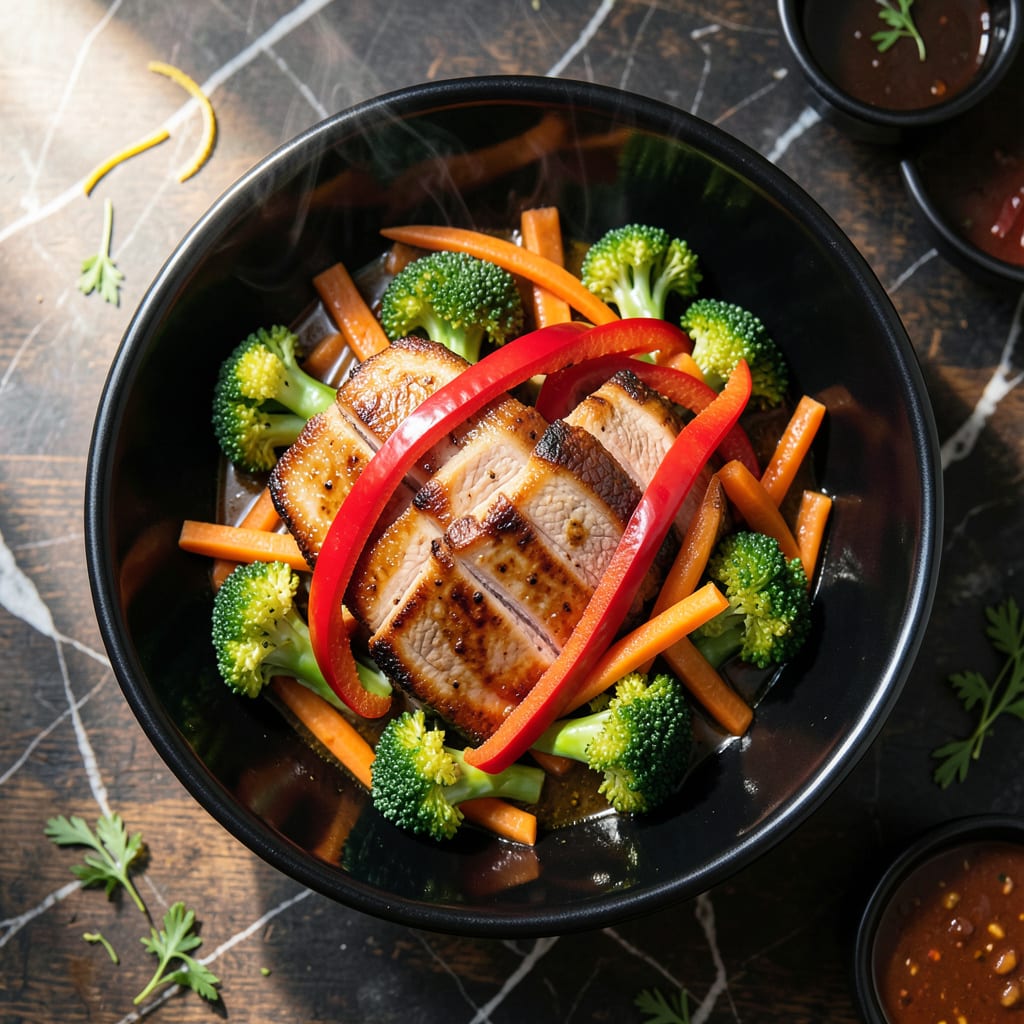
Stir-frying pork at home delivers restaurant-quality results with minimal effort. This method ensures tender meat and crisp vegetables every time.
I’ve refined this technique to be foolproof for home cooks, using high heat and quick cooking to lock in flavor. The key is prepping all ingredients before the wok hits the stove.
Ingredients for Easy Pork Stir Fry
Restaurant-quality stir fry begins with these carefully selected ingredients for maximum flavor and texture.
| Ingredient | Amount | Notes |
|---|---|---|
| Pork Shoulder 🥩 | 1 ½ lb | Thinly sliced against grain |
| Soy Sauce 🫙 | ⅓ cup | Low-sodium preferred for control |
| Bell Peppers 🌶️ | 2 whole | Assorted colors, thinly sliced |
| Broccoli Crowns 🥦 | 3 cups | Cut into small florets |
| Carrots 🥕 | 2 whole | Julienned for even cooking |
| Garlic Cloves 🧄 | 4 cloves | Minced finely for maximum flavor |
| Fresh Ginger 🌿 | 1 tbsp | Peeled and grated |
| Rice Vinegar 💧 | 2 tbsp | For bright acidity balance |
| Brown Sugar 🍚 | 1 tbsp | Light or dark variety |
| Sesame Oil 🫒 | 1 tbsp | Toasted for nutty aroma |
| Vegetable Oil 🛢️ | 3 tbsp | High smoke point essential |
| Cornstarch 🌾 | 1 tbsp | For velveting pork slices |
| Green Onions 🧅 | 4 whole | Thinly sliced for garnish |
| Red Pepper Flakes 🌶️ | ½ tsp | Adjust to heat preference |
| Sesame Seeds 🌰 | 1 tsp | Toasted for garnish |
[recipeingredientscaler]
The pork is the foundation—pork shoulder offers the ideal fat-to-meat ratio for tender results. Whole Foods or Costco carry excellent pre-cut options, but ask your butcher for 1/4-inch slices against the grain. Fresh ginger and garlic are non-negotiable; pre-minced jars lack the vibrant punch needed. For vegetables, seek firm, unblemished specimens to maintain that promised crispness through cooking.
No pork shoulder? Pork tenderloin works but requires 10-minute marinating to prevent dryness. Swap bell peppers for snap peas or mushrooms. Low-sodium soy sauce can be replaced with tamari for gluten-free. The rice vinegar is essential for balance, but apple cider vinegar in a pinch. Skip the sesame oil if allergic—substitute with neutral oil plus a dash of toasted sesame seeds for similar aroma.
Prepped ingredients keep 2 days refrigerated in airtight containers. Cooked stir fry stores 3-4 days and reheats best via stovetop with a splash of water. For meal prep, store components separately—sauce, pork, and vegetables—to maintain crisp textures when reheated.
Why You’ll Love This Recipe
- One Pan Wonder: I toss the pork, bell peppers, and broccoli in one pan—dinner with minimal cleanup.
- Umami Bomb: The soy sauce caramelizes with the pork shoulder for that deep, crave-worthy flavor.
- Weeknight Hero: Honestly, it’s my go-to for busy evenings when I need food fast.
- Stretches Far: Leftovers taste even better the next day, and it feeds my family for two meals.
Step-by-Step Instructions for Wok-Seared Pork With Vegetables
Here’s the method. Straightforward, tested, works every time.
Step 1: Velvet the Pork for Maximum Tenderness
Slice the 1.5 lb Pork Shoulder thinly against the grain into ¼-inch strips. In a bowl, combine the pork with 1 tbsp Cornstarch and 2 tbsp Soy Sauce from the 0.33 cup Soy Sauce. Mix until every piece is evenly coated—this velveting technique ensures the meat stays juicy and tender during high-heat cooking.
Let the pork marinate for 15 minutes while you prepare the remaining ingredients. This brief rest allows the cornstarch to adhere properly, creating that signature silky texture in the final dish. Don’t skip this step; it’s the secret to restaurant-quality results.
Step 2: Stir-Fry Aromatics and Pork
Heat 2 tbsp Vegetable Oil from the 3 tbsp Vegetable Oil in a wok or large skillet over high heat until it shimmers. Add the marinated pork in a single layer, working in batches if necessary to avoid overcrowding. Cook undisturbed for 60-90 seconds until the edges become opaque and lightly browned.
Add the minced 4 cloves Garlic Cloves and grated 1 tbsp Fresh Ginger to the wok. Stir-fry for 30 seconds until fragrant, then transfer the pork to a clean bowl. The garlic and ginger should be golden but not browned—burnt aromatics will make the dish bitter.
Step 3: Cook Vegetables to Crisp-Tender Perfection
In the same wok, add the remaining 1 tbsp Vegetable Oil and heat over high heat. Add the 2 whole Carrots (julienned) and stir-fry for 2 minutes until slightly softened. Then add the 2 whole Bell Peppers (thinly sliced) and 3 cups Broccoli Crowns. Cook for 3-4 minutes until the vegetables are crisp-tender and the broccoli turns bright green.
The key here is constant motion—keep the vegetables moving to prevent burning while allowing them to develop color. The carrots should still have a slight bite, and the bell peppers should remain vibrant. This preserves their texture and nutrients.
Step 4: Combine and Finish with Sauce
Return the pork to the wok along with any accumulated juices. Add the remaining 0.13 cup Soy Sauce, 2 tbsp Rice Vinegar, 1 tbsp Brown Sugar, 1 tbsp Sesame Oil, and 0.5 tsp Red Pepper Flakes. Stir everything together and cook for 1-2 minutes until the sauce thickens slightly and coats all the ingredients evenly.
The sauce should be glossy and just thick enough to cling to the pork and vegetables. Taste and adjust seasoning if needed, though the soy sauce provides most of the saltiness. The rice vinegar adds a subtle tang that balances the richness.
Step 5: Garnish and Serve Immediately
Transfer the stir-fry to a serving platter. Garnish with the thinly sliced 4 whole Green Onions and toasted 1 tsp Sesame Seeds. The green onions add a fresh, sharp contrast to the savory dish, while the sesame seeds provide a nutty crunch.
Serve immediately while hot—the pork should be tender and juicy, the vegetables crisp yet cooked through, and the sauce should glaze every component. This dish comes together quickly, so have your serving bowls ready before you start cooking.
Pro Tips For Making Easy Pork Stir Fry
- Slice Pork Thin: Cut the pork shoulder into 1/4-inch strips—any thicker and it won’t cook through before the veggies turn to mush. I learned this the hard way after pulling chewy pork out of my first few stir-fries.
- Prep Veggies First: Chop all your bell peppers, broccoli, and carrots before you start cooking. Once the pork hits the pan, everything moves fast, and you won’t have time to slice while stirring.
- Skip the Crowding: Cook the pork in batches if your pan isn’t huge. Overloading it steams the meat instead of searing, and nobody wants soggy stir fry.
- Cornstarch Coat: Toss the pork strips in 1 tablespoon of cornstarch before cooking. Sounds weird, but it works—gives the meat that restaurant-style tender crispness.
Common Mistakes When Making Perfect Results
Overcrowding the Wok
This is the most common mistake I see. Adding too much pork or vegetables at once lowers the wok’s temperature, causing everything to steam instead of sear. Work in 2-3 batches if needed, using 1-2 tbsp oil per batch. Trust me, the extra 5 minutes makes all the difference. 🔥
Skipping the Velveting Step
That cornstarch coating isn’t optional—it’s what gives the pork its silky texture. Mix 1 tbsp cornstarch with 2 tbsp soy sauce and let the pork rest for 15 minutes. Without this, you’ll get tough, chewy meat instead of melt-in-your-mouth tenderness.
Underheating the Oil
Your oil must be shimmering hot before adding ingredients. If it’s not, the pork will absorb oil and become greasy. I test mine by flicking a drop of water in—it should sizzle violently. Use high smoke point oil like vegetable or peanut oil.
Overcooking the Vegetables
Stir-fry vegetables should retain a slight crunch. Cook bell peppers and broccoli for just 3-4 minutes total. The moment they lose their bright color, they’re done. Remember, they’ll continue cooking slightly after you remove them from heat.
Forgetting to Prep Everything First
Stir-frying moves fast—you won’t have time to chop while cooking. Have all ingredients measured, sliced, and within reach before heating the wok. I arrange everything in small bowls in order of use. This mise en place approach prevents burnt garlic or overcooked pork. 💡
Using the Wrong Cut
Pork shoulder’s marbling keeps it juicy during high-heat cooking. Lean cuts like tenderloin dry out quickly. If substituting, slice pork tenderloin thinly and marinate for 10 minutes to compensate. The fat content in shoulder is non-negotiable for authentic texture.
Nutrition Facts
Frequently Asked Questions
What’s the best cut of pork for stir frying?
Pork shoulder is ideal due to its marbling, which keeps the meat juicy during high-heat cooking. For a leaner option, use pork tenderloin but marinate it for 10 minutes first.
Can I make this ahead of time?
Prepped ingredients can be stored in the fridge for 2 days before cooking. Cooked stir fry keeps for 3-4 days but reheats best on the stovetop with a splash of water to refresh the sauce.
Why is my pork chewy instead of tender?
This usually happens if you skip the velveting step with cornstarch or overcook the meat. Slice against the grain and cook in batches to avoid steaming.
How do I adjust the heat level?
Control spiciness by adding 0.5 tsp red pepper flakes or less. For extra heat, include sliced chili peppers or a dash of sriracha in the sauce.

- BBQ Sausage Recipe Oven: Smoky Depth Without the Grill - September 28, 2026
- BBQ Chicken Bowl Recipe Rice: Smoky Sweetness Over Fluffy Grains - September 28, 2026
- Beef Cutlet Recipe Ideas: Crispy Breaded Patties With Bold Seasonings - September 28, 2026