
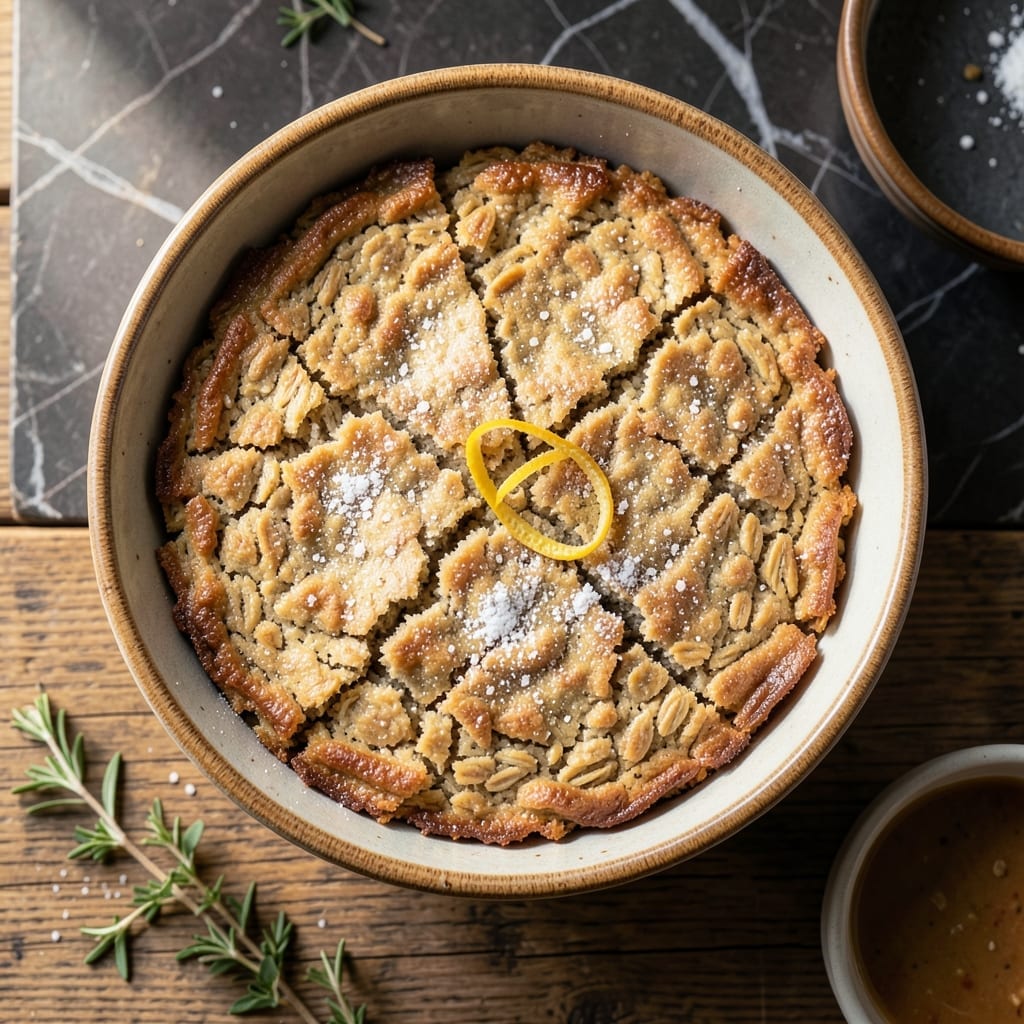
There’s a timeless appeal to traditional Scottish oatcakes that goes beyond their simple ingredients. This recipe captures that rustic charm with a buttery texture and subtle sweetness that makes them irresistible.
I’ve refined this version to stay true to its roots while ensuring consistent results every time. The key is using fine oatmeal for the right texture and giving the dough proper resting time before rolling.
What emerges from the oven are golden rounds with a tender crumb and crisp edges. They’re equally at home with afternoon tea or as an elegant accompaniment to cheese.
Perfect for baking in batches and storing for unexpected guests. Here’s how to make them.
Ingredients for Effies Oatcake
Fine oatmeal and cold butter create that signature crumb. Nothing complicated here.
| Ingredient | Amount | Notes |
|---|---|---|
| Fine Oatmeal 🌾 | 2 cups | Scottish-style pinhead preferred |
| All-Purpose Flour 🌾 | 1 cup | Plus extra for dusting |
| Granulated Sugar 🧈 | ¼ cup | For subtle sweetness |
| Salt 🧂 | ½ tsp | Fine sea salt preferred |
| Unsalted Butter 🧈 | ¾ cup | Cold and cubed |
| Baking Soda 🧂 | ½ tsp | For slight rise |
| Hot Water 💧 | 2 tbsp | To activate baking soda |
| Egg 🥚 | 1 whole | Large, beaten for binding |
The oatmeal is everything here. Bob’s Red Mill carries Scottish pinhead oatmeal online if your local store doesn’t stock it. Regular oats will work (pulse them in a food processor first) but the texture won’t be quite the same. For the butter, Plugrá or Kerrygold give that rich, authentic flavor. Always use unsalted so you control the seasoning. The flour is just for structure—any all-purpose brand works fine.
No pinhead oatmeal? Quick oats pulsed to a coarse flour get you close enough. Out of baking soda? Baking powder at the same amount works, though the flavor will be slightly different. For a richer version, replace 2 tbsp of the butter with lard (traditional in some Scottish recipes). The sugar can be reduced to 2 tbsp if you prefer a more savory cake.
Dough rests 30 minutes before rolling—don’t skip this. Baked oatcakes keep in an airtight container for 1 week at room temperature, or freeze for 3 months. Perfect for making ahead, which is good because they disappear fast.
Why You’ll Love This Recipe
- One Bowl Wonder: I just dump the oatmeal, flour, sugar, and butter in a single bowl—no fancy gadgets, no fuss.
- Buttery Crunch: The melted butter and fine oatmeal create this crisp, golden edge that gives way to a tender center. Honestly, it’s the texture I crave.
- Breakfast to Dessert: I’ve served these warm with jam at breakfast and crumbled over ice cream for dessert. Between us, they work for both.
- Budget Stretcher: A handful of pantry staples makes a big batch, and leftovers keep well for days. I’ll be real: it’s my go-to when the grocery budget’s tight.
Step-by-Step Instructions for Effies Oatcake
Follow this method precisely and you’ll achieve the authentic texture and rich flavor of traditional Scottish oatcake.
Step 1: Prepare the Dry Ingredients
In a large mixing bowl, combine the 2 cups Fine Oatmeal, 1 cup All-Purpose Flour, 0.25 cup Granulated Sugar, and 0.5 tsp Salt. Whisk these together thoroughly until the mixture appears uniform in color and texture.
This step ensures even distribution of the leavening agents and seasonings throughout the dough. The fine oatmeal provides the characteristic texture, while the all-purpose flour adds structure. Make sure to break up any lumps in the flour as you whisk.
Step 2: Activate the Baking Soda and Mix Wet Ingredients
In a small bowl, dissolve the 0.5 tsp Baking Soda in the 2 tbsp Hot Water. This activation step is crucial as it creates the chemical reaction needed for the oatcakes to rise slightly during baking.
In a separate medium bowl, beat the 1 whole Egg lightly. Then, add the dissolved baking soda mixture to the beaten egg and stir to combine. This wet mixture will help bind the dry ingredients together while adding moisture to the dough.
Step 3: Incorporate the Butter and Form the Dough
Cut the 0.75 cup Unsalted Butter into small cubes and add them to the dry ingredient mixture. Using your fingertips, rub the butter into the dry ingredients until the mixture resembles coarse breadcrumbs with some larger pea-sized butter pieces remaining.
Create a well in the center of the mixture and pour in the egg and baking soda mixture. Use a wooden spoon or your hands to bring the dough together. It should be slightly sticky but manageable. If it’s too wet, add a touch more all-purpose flour; if too dry, a splash of cold water can help.
Step 4: Shape, Chill, and Preheat
Turn the dough out onto a lightly floured surface and knead gently for about 1 minute until smooth. Divide the dough into 4 equal portions and shape each into a round about ½-inch thick. These will spread slightly during baking.
Place the rounds on a parchment-lined baking sheet and refrigerate for 20-30 minutes while you preheat your oven to 350°F. Chilling helps the butter firm up, which prevents excessive spreading and ensures a tender crumb.
Step 5: Bake to Golden Perfection
Once the oven is fully preheated, bake the oatcakes on the middle rack for 20-25 minutes or until the edges are golden brown and the centers look set. Rotate the baking sheet halfway through for even browning.
Remove from the oven and let the oatcakes cool on the baking sheet for 5 minutes before transferring to a wire rack. They should have a lightly crisp exterior with a soft, buttery interior. Serve warm or at room temperature for the best texture.
Pro Tips For Making Effies Oatcake
- Chill the Dough: After mixing, let the dough rest in the fridge for at least 30 minutes—this prevents the butter from melting too quickly and helps the oatcakes hold their shape when baking.
- Use Fine Oatmeal: Skip the coarse or steel-cut oats; fine oatmeal gives the right texture and ensures the oatcakes aren’t gritty or crumbly.
- Roll Thinly: I learned this the hard way—roll the dough no thicker than ¼ inch, or the centers won’t cook through before the edges burn.
- Prick with a Fork: Before baking, dock the dough all over with a fork to let steam escape and prevent puffing—sounds tedious, but it actually changes the outcome.
Serving Suggestions for This Recipe
Tea Time Classics
These oatcakes pair beautifully with a hot cup of Earl Grey tea. The bergamot notes complement the buttery richness perfectly. I serve them slightly warm with a thin spread of clotted cream for an authentic Scottish experience. 💛
Cheese Board Star
Create an impressive cheese board by serving with aged cheddar, Stilton, or smoked gouda. The oatcakes’ subtle sweetness balances sharp cheeses beautifully. Add a drizzle of honey for extra flair.
Breakfast Treat
For a hearty breakfast, serve with Greek yogurt and fresh berries. The oatcakes’ texture holds up well to toppings. I love adding a sprinkle of cinnamon for warmth.
Dessert Option
Transform them into dessert by serving with vanilla ice cream and caramel sauce. The contrast of warm oatcake and cold ice cream is divine. A dusting of powdered sugar adds elegance.
Savory Twist
For a savory option, top with smoked salmon and cream cheese. This works especially well for brunch gatherings. The salty fish cuts through the buttery richness.
Gift Presentation
Stack cooled oatcakes in a cellophane bag tied with ribbon for a homemade gift. They keep well at room temperature for 1 week, making them perfect for sharing. 💫
Nutrition Facts
Frequently Asked Questions
What is the best oatmeal type to use?
Scottish pinhead oatmeal gives authentic texture. For substitutes, pulse quick oats into a coarse flour. Bob’s Red Mill carries the real thing online.
Can I make these gluten-free?
Yes, swap all-purpose flour for a 1:1 gluten-free blend. The texture may differ slightly but results are still delicious. Let the dough rest 10 minutes longer for best results.
Why do my oatcakes spread too much?
Chilling the dough is crucial. If skipped, warm butter causes spreading. Ensure your oven is fully preheated to 350°F before baking.
How can I store leftovers?
Keep in an airtight container at room temperature for up to 1 week. For longer storage, freeze for up to 3 months. Reheat briefly in the oven to restore crispness.

- BBQ Sausage Recipe Oven: Smoky Depth Without the Grill - September 28, 2026
- BBQ Chicken Bowl Recipe Rice: Smoky Sweetness Over Fluffy Grains - September 28, 2026
- Beef Cutlet Recipe Ideas: Crispy Breaded Patties With Bold Seasonings - September 28, 2026