
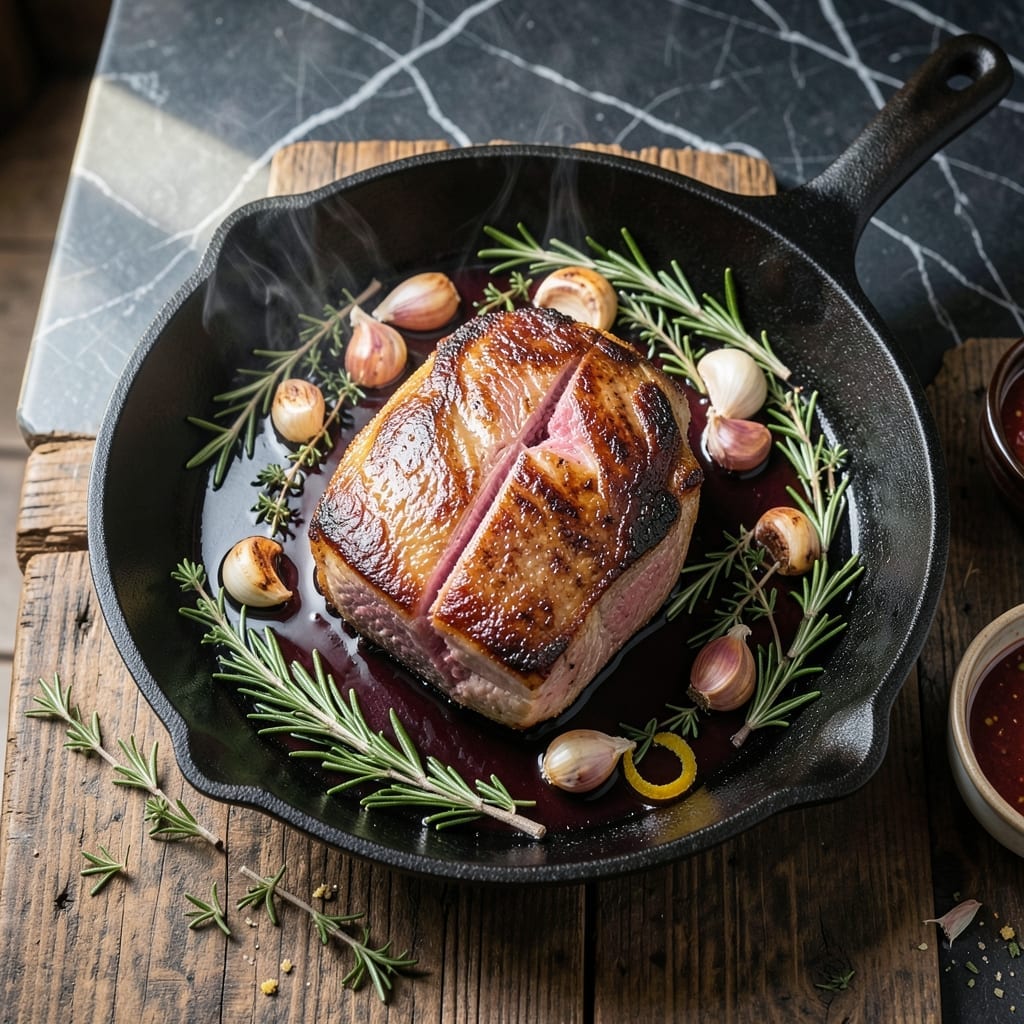
This oven-roasted elk recipe transforms lean wild game into fork-tender perfection with a fragrant herb crust. The low and slow method ensures the meat stays moist while developing deep, rich flavors.
I’ve tested multiple approaches, and the key is a 325°F oven with a flavorful marinade to counteract elk’s natural leanness. A blend of rosemary, thyme, and garlic creates a crust that seals in juices.
By the time it’s done, you’ll have a roast with a golden-brown exterior and a juicy, tender interior that rivals any fine dining experience. The aroma alone will have everyone gathering in the kitchen.
Serve with roasted root vegetables or a hearty red wine reduction to complete the meal. Let’s get started.
Ingredients for Elk Roast Recipe Oven
Lean wild game transformed with herbs and slow heat. Simple, refined, unforgettable.
| Ingredient | Amount | Notes |
|---|---|---|
| Elk Roast 🦌 | 2 ½ lb | Boneless, from hindquarter preferred |
| Fresh Rosemary 🌿 | 2 tbsp | Chopped, stems discarded |
| Fresh Thyme 🍃 | 2 tbsp | Leaves only, chopped |
| Garlic Cloves 🧄 | 6 cloves | Minced finely for marinade |
| Olive Oil 🫒 | ½ cup | Extra-virgin for richness |
| Red Wine 🍷 | 1 cup | Dry, bold variety preferred |
| Dijon Mustard 🟡 | 2 tbsp | Smooth, no seeds |
| Kosher Salt 🧂 | 1 ½ tsp | Diamond Crystal brand preferred |
| Black Pepper 🌶️ | 1 tsp | Freshly cracked for best flavor |
| Carrots 🥕 | 3 whole | Peeled, cut into chunks |
| Yellow Onion 🧅 | 1 whole | Large, quartered |
| Beef Broth 🥘 | 1 cup | Low-sodium for control |
| All-Purpose Flour 🌾 | ¼ cup | For thickening optional pan sauce |
| Unsalted Butter 🧈 | 2 tbsp | For finishing pan sauce |
The elk is everything here. Hindquarter roasts have the best marbling for oven cooking, though shoulder works in a pinch. Source from reputable wild game suppliers like Fossil Farms or Broken Arrow Ranch if local butchers don’t carry it. Look for deep red color with no graying—freshness is non-negotiable. Ask for the roast to be deboned and trimmed of silver skin to save prep time.
No fresh rosemary or thyme? Dried herbs at one-third the amount work, but toast them first to wake up the flavors. Substitute sage for thyme if that’s what’s growing in your garden. For the wine, any dry red like Cabernet or Merlot is perfect—skip the cooking wine. If avoiding alcohol, use 1 cup beef broth plus 1 tbsp balsamic vinegar for similar depth.
Elk freezes beautifully raw for up to 12 months. Once cooked, slice and store in airtight containers with some juices for 4-5 days. Pan sauce can be made ahead and reheated gently—don’t boil or it’ll break. Always bring elk to room temperature before reheating to prevent drying out.
Why You’ll Love This Recipe
- I’ll be real: the flavors taste even better the next day in sandwiches or stews.
- One Pan Meal: Honestly, it’s just rub, roast, and relax—no complicated steps or extra dishes.
- Herb-Infused Richness: That combo of rosemary, thyme, and garlic makes the elk taste like it slow-cooked all day.
- Feeds a Crowd: Between us, it’s my go-to for Sunday dinners or when the in-laws drop by unannounced.
Step-by-Step Instructions for Elk Roast Oven
Master this technique for a perfectly tender roast with a fragrant herb crust every time.
Step 1: Prepare the Herb Marinade
In a bowl, combine the 0.5 cup olive oil, 1 cup red wine, 2 tbsp Dijon mustard, 2 tbsp fresh rosemary, 2 tbsp fresh thyme, 6 cloves garlic cloves, 1.5 tsp kosher salt, and 1 tsp black pepper. Whisk until the herbs and garlic are evenly distributed throughout the liquid.
This marinade not only tenderizes the 2.5 lb elk roast but also infuses it with deep, aromatic flavors. The acidity from the wine and mustard helps break down the wild game’s fibers, ensuring a melt-in-your-mouth texture. Let the flavors meld for 10 minutes before using.
Step 2: Sear and Marinate the Elk Roast
Pat the 2.5 lb elk roast dry with paper towels to ensure a good sear. Sear the roast in a hot Dutch oven with a splash of the marinade until all sides are deep brown. This step develops a flavorful crust and enhances the roast’s appearance.
Transfer the seared roast to a shallow dish and pour the remaining marinade over it. Let it marinate at room temperature for 2 hours, turning occasionally to ensure even coating. This marination time allows the flavors to penetrate deeply into the meat.
Step 3: Roast with Vegetables
Preheat your oven to 325°F. Place the marinated 2.5 lb elk roast in the Dutch oven along with the 3 whole carrots and 1 whole yellow onion. Pour 1 cup beef broth around the roast to create a moist cooking environment.
Cover and roast for 2 to 2.5 hours, basting occasionally with the pan juices. The roast is done when an instant-read thermometer inserted into the thickest part reads 145°F for medium-rare. The vegetables will be tender and infused with the roast’s rich flavors.
Step 4: Prepare the Optional Pan Sauce
Remove the roast and vegetables to a serving platter and tent with foil. Place the Dutch oven on the stovetop over medium heat. Whisk the 0.25 cup all-purpose flour into the pan drippings until smooth.
Cook for 2 minutes, stirring constantly, then gradually whisk in any remaining beef broth. Simmer until the sauce thickens, about 5 minutes. Finish by whisking in the 2 tbsp unsalted butter for a glossy, velvety texture. Strain the sauce if desired, then serve over the sliced roast.
Pro Tips For Making Elk Roast Recipe Oven
- Sear First, Roast Later: I learned this the hard way—searing the elk roast in a hot pan with olive oil before ovens roasting locks in juices and adds a deep flavor that plain roasting misses. About 2-3 minutes per side on high heat does the trick.
- Crush the Herbs: Sounds weird, but it works: lightly crushing the fresh rosemary and thyme with the flat side of your knife releases their oils, making the flavor actually penetrate the meat instead of just sitting on the surface.
- Don’t Overcook It: Elk is leaner than beef, so it dries out fast. Pull it from the oven at 130-135°F internal temp—it’ll rise to a perfect medium-rare as it rests.
- Slice Against Grain: After resting, slice the roast against the grain to shorten the muscle fibers. My grandmother swore by this, and she was right: it makes each bite noticeably more tender.
Common Mistakes When Making elk roast recipe oven
Overcooking the Elk
Elk is leaner than beef, so it dries out quickly if cooked past 145°F internal temperature. Use a meat thermometer—I swear by my ThermoWorks MK4—and pull it from the oven as soon as it hits that mark. The temperature will rise 5-10 degrees while resting. 🌡️
Skipping the Sear
Searing creates the Maillard reaction, which builds deep flavor in the crust. Don’t rush this step—spend 2-3 minutes per side in a hot Dutch oven until you see that rich brown color. This also helps seal in juices for a moister roast.
Insufficient Marinating Time
The 2-hour marinade isn’t just for flavor—it tenderizes the meat. If you’re short on time, at least do 30 minutes. The acidity in the wine and mustard breaks down tough fibers, especially important for wild game like elk.
Neglecting to Baste
Basting every 30-45 minutes keeps the roast moist and builds layers of flavor. I use the pan juices mixed with the beef broth. Skip this, and you’ll end up with a dry exterior and uneven cooking.
Using Cold Elk
Always let your 2.5 lb elk roast sit at room temperature for 1 hour before cooking. Cold meat seizes up in the oven, leading to uneven doneness. Take it out of the fridge while you prep the marinade and vegetables.
Ignoring the Rest
Resting for 15-20 minutes after cooking lets juices redistribute. If you slice too soon, they’ll spill out onto the cutting board. Tent it loosely with foil to keep it warm while you finish the pan sauce. 💡
Nutrition Facts
Frequently Asked Questions
What temperature should the oven be set to?
Set your oven to 325°F for even cooking. This low and slow method prevents drying out while ensuring the meat becomes fork-tender.
Can I substitute beef broth for red wine?
Yes! Use 1 cup beef broth plus 1 tbsp balsamic vinegar for similar depth. This maintains the acidity needed to tenderize the wild game.
How long should the roast rest before slicing?
Let it rest for 15-20 minutes after removing from the oven. This allows juices to redistribute, ensuring a moist, flavorful result.
What’s the best way to store leftovers?
Slice and store in an airtight container with some juices for 4-5 days in the fridge. Reheat gently to avoid drying out.

- BBQ Sausage Recipe Oven: Smoky Depth Without the Grill - September 28, 2026
- BBQ Chicken Bowl Recipe Rice: Smoky Sweetness Over Fluffy Grains - September 28, 2026
- Beef Cutlet Recipe Ideas: Crispy Breaded Patties With Bold Seasonings - September 28, 2026