
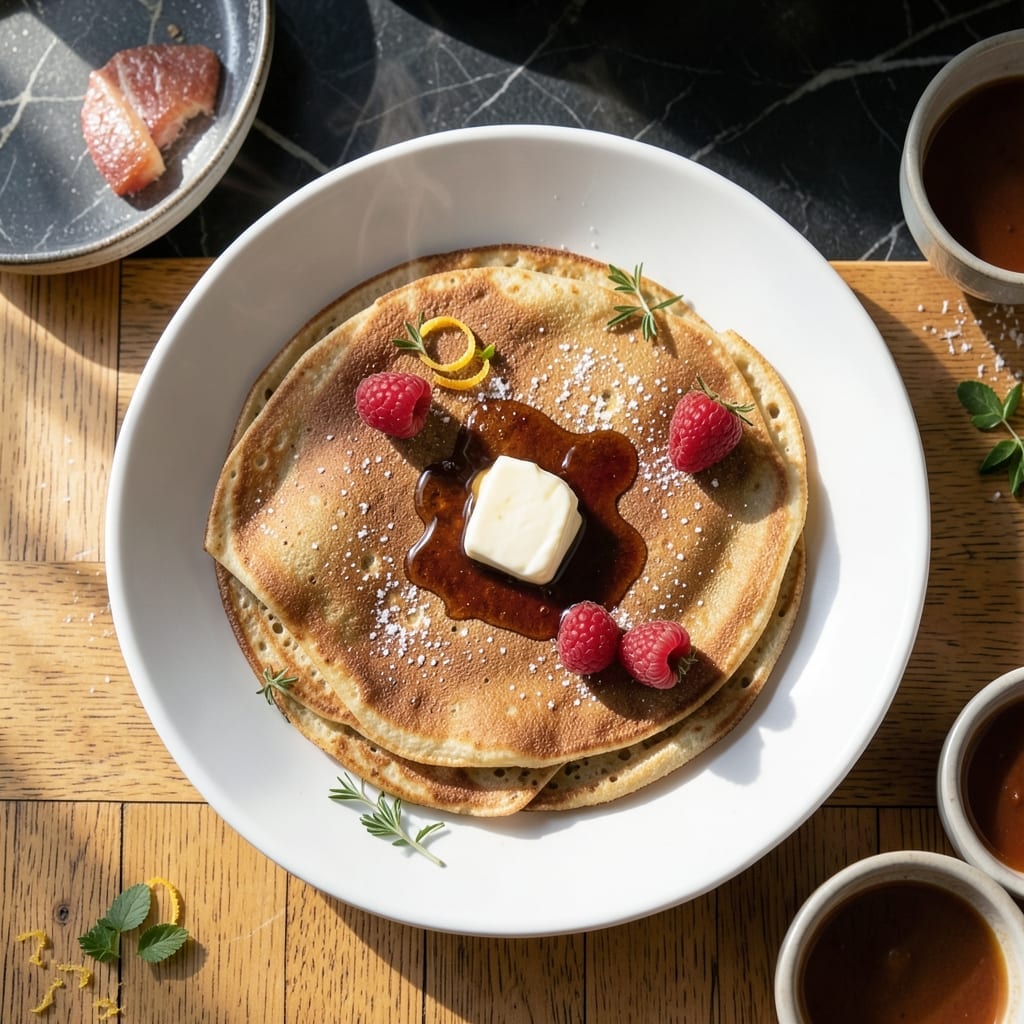
There’s something satisfying about making a perfect English pancake just for yourself. This single-serve version delivers a thin, delicate crepe-style pancake with a golden finish in under 10 minutes. No leftovers, no waste—just a fresh, warm breakfast made exactly how you like it.
The batter comes together with simple pantry staples, requiring no special equipment. A quick whisk and a hot pan are all it takes to achieve that signature tender texture. The process is foolproof, even for beginners, and adapts easily to your preferred sweet or savory toppings.
What you’ll get is a light, slightly crisp-edged pancake that’s versatile enough for jam, lemon, or even a sprinkle of sugar. It’s the kind of breakfast that feels indulgent but is effortlessly practical for one.
Perfect for busy mornings or a quiet weekend treat. Let’s begin.
Ingredients for English Pancake Recipe for One
Simple pantry staples create this delicate, golden breakfast for two in minutes.
| Ingredient | Amount | Notes |
|---|---|---|
| All-Purpose Flour 🌾 | ½ cup | Sifted for smooth batter |
| Large Egg 🥚 | 1 whole | Room temperature preferred |
| Whole Milk 🥛 | ¾ cup | Or substitute plant-based milk |
| Water 💧 | ¼ cup | Cold, for thin batter |
| Unsalted Butter 🧈 | 1 tbsp | Melted, plus extra for pan |
| Granulated Sugar 🍚 | 1 tbsp | Optional, for sweet version |
| Salt 🧂 | ¼ tsp | Fine sea salt preferred |
| Vanilla Extract 🌿 | ½ tsp | Pure extract for best flavor |
| Vegetable Oil 🫒 | ½ tsp | For greasing pan (optional) |
The flour is your foundation—King Arthur or Gold Medal all-purpose both work beautifully. Use room temperature eggs for smoother batter (cold ones can make it lumpy). Whole milk gives the richest texture, but oat milk or almond milk work if you’re out. The water thins it to that perfect crepe-like consistency, so don’t skip it.
No milk? Equal parts water plus 1 tbsp melted butter per cup works in a pinch. For a savory version, omit the sugar and vanilla—just salt and a pinch of black pepper. The butter for the pan can be swapped with coconut oil or vegetable oil. If you’ve got it, a splash of sparkling water makes it extra light (trust me on this one).
Batter keeps in the fridge for 24 hours if you make extra. pancakes are best fresh but leftover batter works fine. Store cooked pancakes stacked with parchment between layers—they’ll keep for 2-3 days in the fridge.
Why You’ll Love This Recipe
- One Bowl Wonder: I just dump flour, egg, milk, and water in a single bowl—whisk and done. No fuss, no extra dishes.
- Buttery Perfection: The melted butter in the batter gives each bite that rich, golden flavor I crave for breakfast.
- Solo Satisfaction: Honestly, it’s my ideal single-serving brunch when I’m cooking just for me on lazy Sundays.
- Pantry Staples: All-purpose flour, milk, egg—I always have these on hand, so it’s a last-minute lifesaver.
Step-by-Step Instructions for English Pancakes
Here’s how to make them perfectly every time with this simple method.
Step 1: Create the Batter Base
In a medium bowl, whisk together the 0.5 cup all-purpose flour with the 0.25 tsp salt and 1 tbsp granulated sugar. I always sift my flour first to prevent lumps in the final batter. The sugar adds just enough sweetness to balance the richness.
Create a well in the center of the dry ingredients. This traditional technique helps incorporate the wet ingredients gradually. You’ll see the flour mixture look light and airy after whisking—this ensures even distribution of the leavening agents.
Step 2: Incorporate Wet Ingredients
Crack the 1 whole large egg into the well, then add the 0.75 cup whole milk, 0.25 cup water, 1 tbsp unsalted butter (melted and cooled), and 0.5 tsp vanilla extract. Starting with room temperature egg helps create a smooth emulsion.
Gradually whisk from the center outward, drawing in the flour mixture until just combined. The batter should be thin, about the consistency of heavy cream. A few small lumps are fine—overmixing develops gluten and makes tough pancakes. The water helps achieve that signature thin texture that distinguishes English pancakes.
Step 3: Rest the Batter Briefly
Let the batter rest for 5-10 minutes at room temperature. This brief rest allows the flour to fully hydrate and the gluten to relax, resulting in more tender pancakes. You’ll notice the batter thickens slightly during this time.
While waiting, this is the perfect moment to heat your pan. I use a nonstick skillet for easy flipping, but a well-seasoned cast iron works beautifully too. The rest period also gives the flavors a chance to meld together.
Step 4: Cook to Golden Perfection
Heat a 10-inch skillet over medium heat and add just enough vegetable oil to lightly coat the bottom—about 0.5 tsp. The pan is ready when a drop of water sizzles and evaporates immediately. I prefer using a paper towel to spread the oil evenly and remove any excess.
Ladle about ¼ cup of batter into the pan, swirling immediately to coat the bottom evenly. Cook for 1-2 minutes until the edges pull away from the pan and the surface looks set with small bubbles. The first pancake is always the test—adjust your heat if it browns too quickly.
Step 5: Flip and Finish
Carefully flip the pancake using a thin spatula. Cook for another 30-60 seconds on the second side until light golden brown. English pancakes cook quickly because they’re so thin, so keep an eye on them to prevent over-browning.
Transfer to a plate and repeat with the remaining batter, adding more oil as needed between batches. For the best results, serve immediately while still warm. The pancakes should be delicate and slightly lacy at the edges, with a tender, almost crepe-like texture that’s perfect for rolling up with your favorite fillings.
Pro Tips For Making English Pancake Recipe For One
- Heat the Pan First: Crank your pan to medium-high and let it sit empty for 2-3 minutes before adding butter. I learned this the hard way—pancakes cooked on a lukewarm surface turn out pale and gummy instead of golden.
- Whisk the Batter Hard: Beat that single egg into the milk and water until it’s fully homogenous, then vigorously whisk in the flour. After burning three batches, I finally figured out that lumps in the batter lead to uneven cooking.
- Skip Overmixing: Stir just until the flour disappears—small lumps are fine and will dissolve as the pancake cooks. My grandmother swore by this, and she was right: overworking the batter makes it tough.
- Use Cold Butter: Drop a tiny knob of cold unsalted butter into the hot pan right before pouring the batter. Sounds weird, but it works: it sizzles instantly, creating that perfect nonstick surface without burning.
Dietary Considerations for english pancake recipe for one
Gluten-Free Option
Swap the all-purpose flour for a 1:1 gluten-free baking blend like King Arthur Measure for Measure. The texture will be slightly more delicate, so let the batter rest for an extra 5 minutes to help bind the alternative flours. 🌾
Dairy-Free Version
Use oat milk or almond milk instead of whole milk, and replace the butter with coconut oil or vegetable oil. The flavor remains excellent, though you might notice a slight coconut undertone if using coconut oil.
Vegan Adaptation
Replace the egg with 1 tbsp ground flaxseed mixed with 3 tbsp water. Let it sit for 5 minutes to thicken before adding to the batter. The pancakes will be slightly denser but still delicious with maple syrup or fruit. 💪
Lower Sugar
Omit the granulated sugar entirely or reduce it to 1 tsp for a more neutral base. This works especially well if you plan to serve savory toppings like herbs, cheese, or smoked salmon.
Nut Allergy Friendly
Ensure all ingredients, especially milk substitutes, are nut-free. Soy milk or rice milk are safe alternatives. Always check labels for cross-contamination warnings if allergies are severe.
Egg-Free Alternative
For an egg-free version, use ¼ cup unsweetened applesauce instead of the egg. The pancake will be slightly denser but still light and tender. This works best with a nonstick pan to prevent sticking.
Nutrition Facts
Frequently Asked Questions
Can I make these without resting the batter?
You can, but resting for 5-10 minutes improves texture. It lets the flour fully hydrate for tender pancakes. Skipping this may result in slightly tougher results.
Why is my batter too thick?
Add a splash more water or milk until it reaches heavy cream consistency. Thick batter won’t spread properly in the pan.
How do I store leftovers?
Stack cooked pancakes with parchment between layers. They’ll keep in the fridge for 2-3 days. Reheat briefly in a dry pan.
Can I use a blender for the batter?
Blending ensures a perfectly smooth batter. Just pulse until combined—don’t overmix.

- Peach Syrup Recipe for Ice Cream: Sweet and Silky Drizzle for Scoops - October 6, 2026
- Pav Bhaji Recipe Food Lab: Mumbai Street Food Magic at Home - October 6, 2026
- Peach Jelly Recipe Without Pectin: Naturally Set Sweet Spread - October 6, 2026