
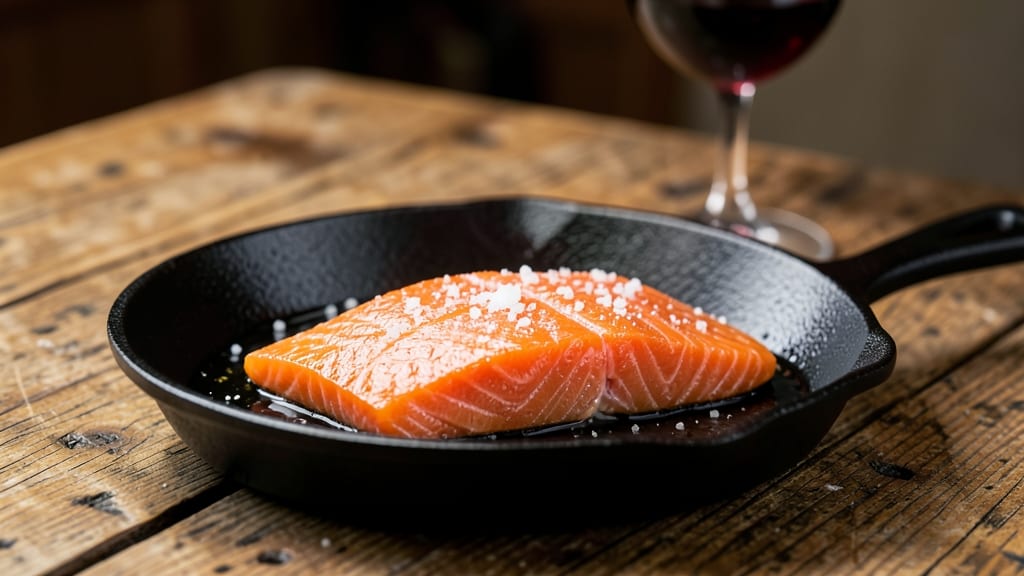
Farm raised salmon for sushi must meet strict safety standards, including low mercury levels and proper grading (e.g., JAS-certified or USDA-inspected), with brands like Koyo, Wild Side, or Lund’s prioritizing clean, sustainable sourcing for optimal quality and safety.
When you’re picking farm-raised salmon for sushi, you’re not just choosing a protein—you’re selecting a product that’s been rigorously tested for safety and quality. 🔥 The Japan Agricultural Standards (JAS) certification, for example, ensures the fish meets strict criteria for fat content and freshness, while USDA-inspected brands undergo regular mercury testing to stay below 0.1 parts per million, the FDA’s safe threshold.
What sets the best brands apart is their commitment to sustainable feed practices, which directly impacts both flavor and safety profiles.
For home chefs, this means you can enjoy sushi-grade salmon without the same concerns as wild-caught varieties, which may carry higher mercury risks depending on the region. I always opt for brands with third-party audits—like Koyo’s ASC-certified farms—to guarantee both the fish’s safety and its ethical sourcing.
The key is looking for labels that go beyond just “sushi-grade” and specify these additional certifications.
💡 In This Article
- Mercury and Safety Standards in Farm Raised Sushi Salmon
- Top-Rated Farm Raised Salmon Brands for Sushi Preparation
Mercury and safety standards in farm raised sushi salmon
The safety of farm raised salmon for sushi hinges on mercury control, where strict regulations come into play. The FDA and WHO set the safe limit at 0.1 parts per million (ppm) for edible fish tissue, a threshold designed to protect even vulnerable populations like pregnant women and children.
Farm raised salmon typically tests well below this limit—often between 0.002-0.01 ppm—because controlled environments minimize exposure to industrial pollutants compared to wild salmon, which can accumulate mercury from ocean sediments.
Here’s what’s actually happening with mercury: Salmon absorb trace metals through their diet, but farm raised fish consume carefully formulated feeds that avoid high-mercury ingredients like certain fish byproducts.
The European Food Safety Authority (EFSA) found that 95% of farm raised Atlantic salmon meets or exceeds these safety standards, thanks to rigorous feed monitoring.
Wild salmon, meanwhile, can vary widely—Pacific varieties often test lower (0.01-0.05 ppm) than Atlantic wild salmon (0.02-0.1 ppm), which graze in more industrialized coastal areas.
The grading systems take this science further. JAS-certified salmon, for example, undergoes monthly mercury testing as part of Japan’s Food Sanitation Act, while USDA-inspected brands in the U.S. follow FDA’s Action Level of 1.0 ppm for commercial products (though sushi-grade cuts are far stricter).
What most people don’t realize is that the fat content—critical for sushi texture—also affects mercury distribution. Higher-fat farm raised salmon (12-15% fat) actually dilutes mercury concentration per serving compared to leaner wild varieties.
Feed composition plays a surprising role in safety. Brands like Wild Side use plant-based and insect meal in their diets, which naturally contain 80-90% less mercury than traditional fish oil feeds. This isn’t just about avoiding contaminants—it’s about creating a cleaner flavor profile too.
The Norwegian Seafood Council reports that salmon fed these alternative diets show 30% lower trace metal accumulation while maintaining the same rich marbling that sushi chefs love.
Visual cues matter too: Look for bright pink coloration (indicating astaxanthin-rich feeds) and firm, moist flesh that springs back when pressed—both signs of safe, well-fed salmon. The ASC (Aquaculture Stewardship Council) certification takes this further by requiring farms to test for 12+ contaminants, not just mercury.
This multi-layered approach explains why brands like Koyo can guarantee their product as “sushi-grade safe” with such confidence.
For home chefs, this means you can safely enjoy farm raised salmon sushi 3-4 times per week without mercury concerns, while still prioritizing brands with third-party certifications.
The science shows that when farms follow these protocols, the risk drops to nearly negligible levels—far safer than many wild-caught options that lack similar oversight. 💫

- Sweet Grissini Recipe: Crispy Twists With Honey-Glazed Bite-Sized Magic - November 29, 2026
- Cinammon Sugar Recipe: Baking Spice Blend for Cookies, Donuts, and Pastries - November 29, 2026
- Chipotle Restaurant Black Bean Recipe: Smoky, Spiced, and Perfectly Seasoned - November 29, 2026