
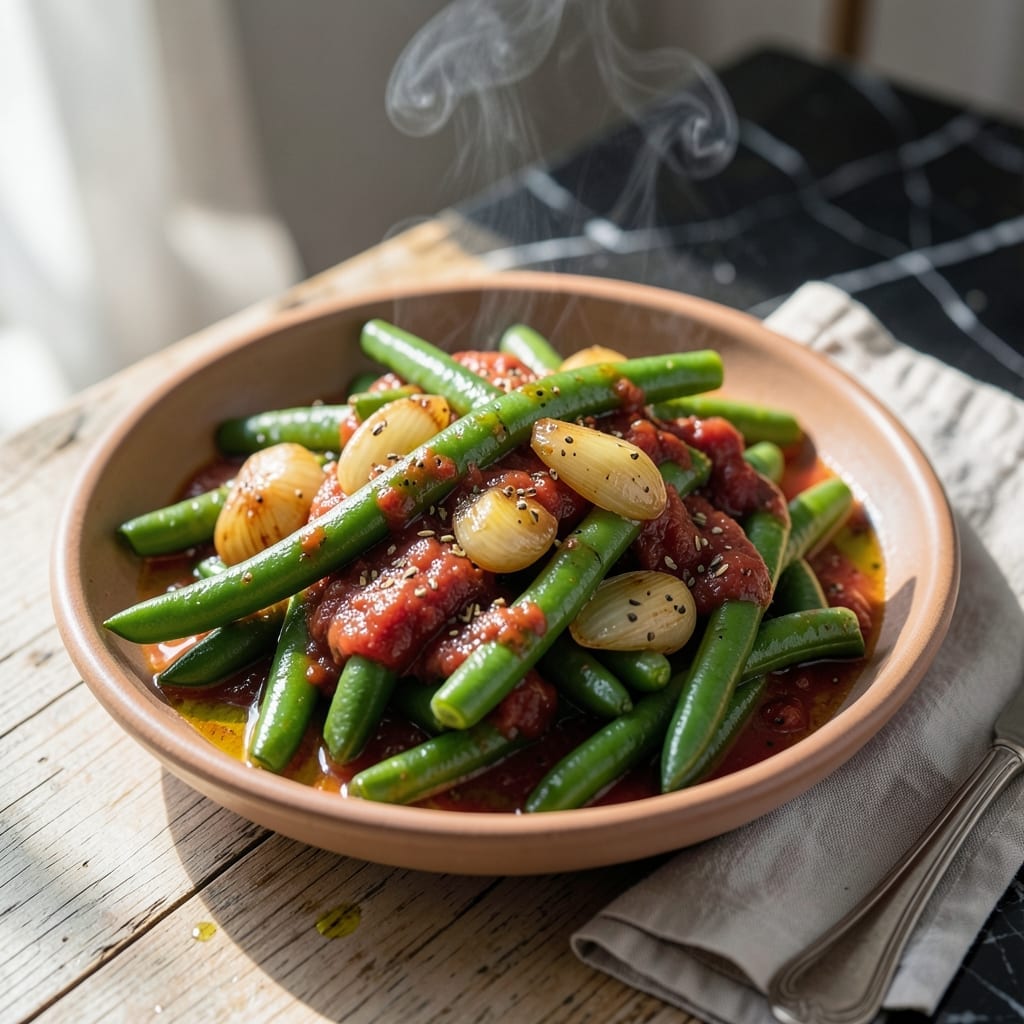
This traditional Lebanese dish transforms humble green beans into a rich, flavorful meal that’s both comforting and deeply satisfying. The slow-cooked tomato sauce infuses every bite with warmth and depth, making it a staple in Middle Eastern homes.
I’ve perfected this method to ensure the beans stay tender yet retain their shape, while the sauce develops a perfectly balanced sweetness and tang. It’s a one-pot wonder that requires minimal effort but delivers maximum reward.
The aroma of simmering garlic, onions, and tomatoes signals that something special is coming together. Serve it with rice or warm bread to soak up every last drop of the savory sauce.
This dish proves that simple ingredients, when treated with care, can create a meal worth celebrating.
Ingredients for Fasolia Recipe Lebanese
Transform humble ingredients into a deeply satisfying Lebanese classic with rich tomato sauce.
| Ingredient | Amount | Notes |
|---|---|---|
| Fresh Green Beans 🌿 | 1 ½ lb | Trimmed, cut into 2-inch pieces |
| Extra-Virgin Olive Oil 🫒 | ¼ cup | For sautéing aromatics |
| Yellow Onion 🧅 | 1 whole | Finely diced for base flavor |
| Garlic Cloves 🧄 | 6 cloves | Minced for depth of flavor |
| Canned Crushed Tomatoes 🍅 | 28 oz | San Marzano preferred for quality |
| Tomato Paste 🍅 | 2 tbsp | For concentrated tomato flavor |
| Vegetable Broth 💧 | 1 cup | Low-sodium preferred for control |
| Ground Cumin 🌿 | 1 tsp | Toasted for warmth and depth |
| Ground Coriander 🌿 | 1 tsp | For citrusy brightness in sauce |
| Paprika 🌶️ | 1 tsp | Sweet variety for color and flavor |
| Sea Salt 🧂 | 1 ½ tsp | Adjust to taste during cooking |
| Black Pepper 🌶️ | ½ tsp | Freshly ground for best flavor |
| Fresh Cilantro 🌿 | ¼ cup | Chopped, for garnish and brightness |
| Lemon Juice 🍋 | 1 tbsp | Freshly squeezed for acidity |
The green beans are the foundation, so choose firm, vibrant pods without blemishes. Farmers markets often have the freshest, but most grocery stores carry decent options. For the tomatoes, San Marzano cans from Italian brands like Mutti or La Valle provide the best balance of sweetness and acidity. The olive oil should be a quality extra-virgin—California Olive Ranch or Cobram Estate are reliable choices.
No fresh cilantro? Fresh parsley works as a substitute with a slightly different profile. Out of cumin? Ground caraway at half the amount offers a similar earthiness. For a smokier note, swap sweet paprika for smoked paprika. The vegetable broth can be homemade or store-bought—Imagine or Pacific Foods make solid vegan options. If using canned beans (not recommended), reduce cooking time significantly.
This dish tastes even better the next day as flavors meld. Store in an airtight container in the fridge for up to 5 days or freeze for 3 months. Reheat gently on the stove, adding a splash of water if needed. Always garnish with fresh herbs just before serving for the best presentation.
Why You’ll Love This Recipe
- One-Pot Magic: I toss everything in a single pan—green beans, tomatoes, garlic—and let the stove do the work.
- Garlic-Kissed Goodness: The slow-simmered garlic and olive oil turn simple green beans into something rich and deeply satisfying.
- Meal Prep MVP: I make a double batch on Sunday and it tastes even better reheated for lunch all week.
- Budget Stretcher: Fresh green beans and canned tomatoes keep this dish hearty yet light on the wallet.
Step-by-Step Instructions for Fasolia
Master the technique for this traditional dish with precise timing and layered flavors.
Step 1: Prepare and Sauté the Aromatics
Heat the 0.25 cup extra-virgin olive oil in a large pot or deep skillet over medium heat. Add the finely diced yellow onion and cook for 5-6 minutes until translucent and fragrant, stirring occasionally to prevent browning.
Once the onion softens, add the 6 cloves minced garlic cloves and sauté for an additional 30-45 seconds until just golden. Be careful not to let the garlic burn, as it will turn bitter and overpower the dish.
Step 2: Build the Flavor Base with Spices and Tomato
Stir in the 2 tbsp tomato paste, 1 tsp ground cumin, 1 tsp ground coriander, 1 tsp paprika, 1.5 tsp sea salt, and 0.5 tsp black pepper. Cook for 1-2 minutes, stirring constantly, until the tomato paste darkens slightly and the spices become aromatic.
This step develops the depth of flavor in the sauce. The tomato paste should turn a deeper red, and the mixture will start to stick slightly to the bottom of the pot, which is normal. Add the 28 oz canned crushed tomatoes and stir well to combine, scraping up any browned bits from the bottom.
Step 3: Simmer the Green Beans in the Sauce
Add the 1.5 lb trimmed green beans to the pot, stirring to coat them in the tomato-spice mixture. Pour in the 1 cup vegetable broth, ensuring the green beans are mostly submerged. Bring the mixture to a gentle simmer.
Reduce the heat to medium-low, cover the pot, and let it cook for 30-35 minutes, stirring occasionally. The green beans should become tender but still firm, and the sauce will thicken as the liquid reduces. If the mixture becomes too thick, add a splash of water or broth to maintain the desired consistency.
Step 4: Finish with Fresh Herbs and Acidity
Once the green beans are cooked to your liking, remove the pot from heat. Stir in the 0.25 cup chopped fresh cilantro and the 1 tbsp lemon juice. This final step brightens the dish with fresh, citrusy notes.
Taste and adjust the seasoning if needed, though the sea salt and spices should already be well-balanced. Let the fasolia rest for 5-10 minutes before serving to allow the flavors to meld. The sauce will thicken slightly as it cools.
Pro Tips For Making Fasolia Recipe Lebanese
- Trim the Beans: Cut the ends off the green beans and snap them into 2-inch pieces—this ensures even cooking and better texture in the final dish.
- Sauté Onions Slowly: Cook the yellow onions on medium-low heat until soft and translucent, about 8-10 minutes. I learned this the hard way—rushing this step leaves them raw and harsh.
- Use Quality Olive Oil: Splurge on good extra-virgin olive oil here. My grandmother swore by this, and she was right: it adds depth the cheap stuff just can’t.
- Simmer Uncovered: After adding the tomatoes, let it simmer uncovered for 20-25 minutes—this thickens the sauce naturally without watery results.
Wine and Beer Pairings for This Recipe
Lebanese Wine Pairings
A crisp Lebanese white wine like Château Musar Blanc complements the dish beautifully with its citrus and floral notes. The acidity cuts through the richness of the tomato sauce while enhancing the earthy spices. I always keep a bottle on hand for this exact purpose. 🍷
Red Wine Options
For red wine lovers, try a light-bodied Lebanese Cinsault from Ixsir or Château Ksara. Its bright red fruit flavors and subtle spice notes pair wonderfully with the cumin and coriander in the fasolia. Serve slightly chilled for best results.
Beer Pairings
A refreshing Lebanese blonde ale like Almaza Beer offers a clean, crisp contrast to the hearty stew. The light malt sweetness balances the dish’s tangy tomato base perfectly. I find it especially satisfying on warm evenings. 🍺
Non-Alcoholic Choices
For a non-alcoholic option, mint lemonade is a classic Lebanese pairing. The cool mint and citrus brighten each bite, while ayran (yogurt drink) offers a creamy, tangy contrast. Both are easy to make at home with fresh ingredients.
Regional Favorites
In Lebanon, many serve this dish with arrack, a traditional anise-flavored spirit. Dilute it with water and ice for a refreshing anise-forward drink that cleanses the palate between bites. It’s a cultural staple worth trying. ✨
Nutrition Facts
Frequently Asked Questions
Can I use canned green beans instead of fresh?
Fresh beans are ideal, but canned can work in a pinch. Drain and rinse them well, then reduce simmering time to 10-15 minutes to prevent mushiness. The texture won’t be as firm, but the flavors will still shine.
Why does my sauce taste bitter?
This usually happens if the tomato paste or garlic burns during sautéing. Cook them over medium heat and stir constantly. A pinch of sugar can balance bitterness if it’s already occurred.
How do I make it spicier?
Add 1/2 tsp cayenne pepper with the other spices, or stir in 1 chopped fresh chili when cooking the aromatics. For heat without changing flavor, a dash of hot sauce at the end works too.
Can I freeze leftovers?
Yes! Cool completely, then store in an airtight container for up to 3 months. Thaw overnight in the fridge and reheat gently on the stove with a splash of water.

- BBQ Sausage Recipe Oven: Smoky Depth Without the Grill - September 28, 2026
- BBQ Chicken Bowl Recipe Rice: Smoky Sweetness Over Fluffy Grains - September 28, 2026
- Beef Cutlet Recipe Ideas: Crispy Breaded Patties With Bold Seasonings - September 28, 2026