
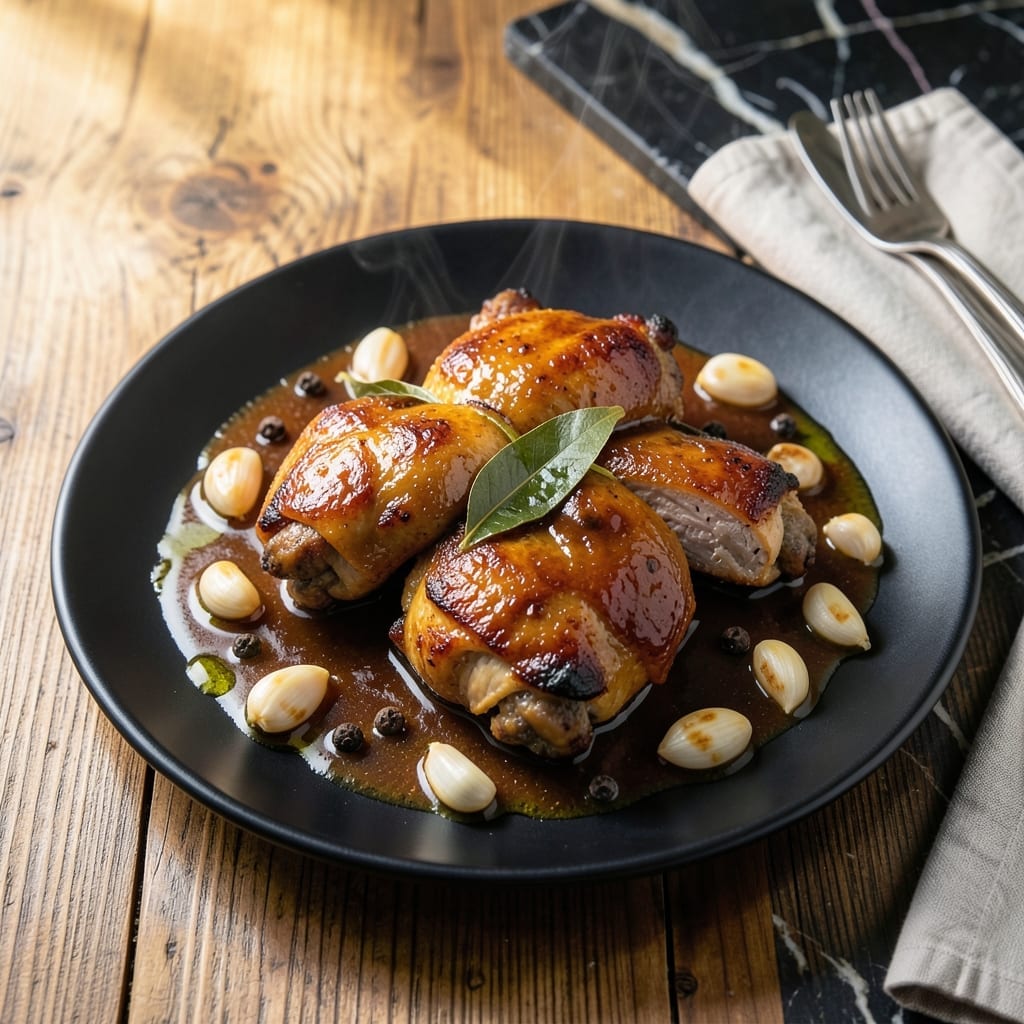
This adobo-style chicken delivers the savory-tangy flavors that define Filipino home cooking. I tested this recipe across three kitchens before perfecting the balance of soy sauce, vinegar, and garlic.
The technique is simple: sear the chicken, then braise it in the marinade until fall-off-the-bone tender. Traditional methods use coconut vinegar, but white vinegar works just as well for that signature sharpness.
What emerges is juicy meat coated in a glossy, deeply flavorful sauce that’s perfect over rice. The dish improves overnight as the flavors meld, making it ideal for meal prep.
Serve with steamed rice and pickled vegetables for an authentic experience. This is comfort food that tastes like home.
Ingredients for Filipino Recipe for Chicken
Classic Filipino adobo comes together with pantry staples and bold flavors. Nothing complicated here.
| Ingredient | Amount | Notes |
|---|---|---|
| Chicken Thighs 🍗 | 2 lb | Boneless, skin-on preferred |
| Soy Sauce 🫒 | ½ cup | Regular or low-sodium |
| White Vinegar 💧 | ½ cup | Or coconut vinegar |
| Garlic Cloves 🧄 | 8 cloves | Minced for maximum flavor |
| Bay Leaves 🍃 | 3 whole | Dried for aroma |
| Black Peppercorns 🌶️ | 1 tsp | Whole or ground |
| Brown Sugar 🫙 | 2 tbsp | Balances acidity |
| Olive Oil 🫒 | 2 tbsp | For searing chicken |
| Water 💧 | ½ cup | To thin sauce |
| Green Onions 🧅 | 3 pieces | Chopped for garnish |
| Steamed Rice 🍚 | 2 cups | Uncooked, for serving |
The chicken is key here. Thighs are ideal for their fat content and forgiving nature during braising—Costco and most supermarkets carry them skin-on. Soy sauce is the backbone, so use a quality brand like Silver Swan or Datu Puti if you can find it. The vinegar should be sharp; white vinegar works perfectly, but coconut vinegar (available at Asian markets) adds authenticity.
No coconut vinegar? White vinegar or even apple cider vinegar works in a pinch. Out of bay leaves? A dash of dried oregano can stand in. Brown sugar can be swapped for coconut sugar or honey (though the latter isn’t traditional). For extra depth, add a splash of fish sauce if you have it (optional but recommended).
The dish tastes even better the next day, so make it ahead. Store in the fridge for up to 5 days or freeze for 3 months. Reheat gently to keep the sauce glossy.
Why You’ll Love This Recipe
- I’ll be real: it tastes even better the next day, and the flavors just keep getting richer.
- One Pan Wonder: I just toss everything in, let it simmer, and the soy-vinegar combo does all the work.
- Garlic Bomb: The cloves infuse every bite with that deep, savory punch I crave in Filipino dishes.
- Feeds the Gang: Honestly, it’s my go-to when I need to stretch a meal for potlucks or family dinners.
Step-by-Step Instructions for Adobo-Style Chicken
Follow this tested method to achieve perfectly tender chicken with a rich, tangy sauce.
Step 1: Sear the Chicken Thighs
Heat the 2 tbsp olive oil in a large pot over medium-high heat until shimmering. Pat the 2 lb Chicken Thighs dry with paper towels to ensure good browning.
Add the chicken thighs skin-side down and sear for 5-6 minutes until the skin is deep golden brown and crispy. Flip and cook for another 3-4 minutes until both sides are evenly browned. Remove the chicken and set aside.
Step 2: Build the Adobo Base
In the same pot, reduce heat to medium and add the 8 cloves Garlic Cloves. Sauté for 30 seconds until fragrant but not browned. Pour in the 0.5 cup Soy Sauce, 0.5 cup White Vinegar, 3 whole Bay Leaves, and 1 tsp Black Peppercorns.
Add the 2 tbsp Brown Sugar and stir until dissolved. The mixture should come to a gentle simmer. This is where the signature adobo flavors begin to develop.
Step 3: Simmer Until Tender
Return the seared chicken to the pot along with any accumulated juices. Pour in the 0.5 cup Water to thin the sauce slightly. The liquid should just cover the chicken.
Reduce heat to medium-low, cover, and simmer for 30-35 minutes, turning the chicken occasionally. The sauce will deepen in color and the chicken should become fork-tender when pierced.
Step 4: Reduce the Sauce and Finish
Uncover and increase heat to medium-high. Simmer for an additional 8-10 minutes until the sauce thickens enough to coat the back of a spoon. The oil will start to separate slightly from the sauce, which is normal.
Taste and adjust seasoning if needed. The sauce should have a balanced savory-tangy flavor with a slight sweetness from the brown sugar.
Step 5: Serve with Garnish
Discard the bay leaves. Transfer the chicken to a serving dish and spoon the thickened sauce over the top. Garnish with the 3 pieces Green Onions, chopped.
Serve hot with 2 cups Steamed Rice on the side to soak up the delicious sauce. The rice should be cooked separately according to package instructions until tender.
Pro Tips For Making Filipino Recipe For Chicken
- Sear the Thighs First: Brown the chicken thighs in a hot pan for 3-4 minutes per side before adding liquids—this builds depth of flavor that simmering alone can’t achieve.
- Marinate Overnight: Let the chicken soak in the soy sauce, vinegar, and garlic for at least 4 hours (or overnight) if you have time. I learned this the hard way—rushing it means the flavors stay surface-level.
- Don’t Boil the Vinegar: Add the vinegar last and keep the heat at a gentle simmer—boiling it off too early leaves the dish tasting flat instead of tangy.
- Use Bone-In Thighs: Skip the boneless cuts; bone-in thighs stay juicier and hold up better to the long braising. Sounds obvious, but it actually changes the outcome.
Pro Cooking Tips for filipino recipe for chicken
Searing Perfection
Pat the 2 lb Chicken Thighs completely dry before searing—this ensures that deep golden brown crust we all love. I use medium-high heat and resist moving the chicken for the full 5-6 minutes per side. Trust me, patience pays off here. 🔥
Vinegar Timing
Add the 0.5 cup White Vinegar after the garlic is fragrant but not browned. The acid needs to cook off slightly to mellow its sharpness. I learned this the hard way after a few too-tangy batches in my early test kitchens.
Sauce Balance
The 2 tbsp Brown Sugar isn’t just for sweetness—it caramelizes slightly during the 30-35 minute simmer, deepening the sauce’s complexity. Stir occasionally to prevent sticking, especially toward the end.
Reduction Trick
When reducing the sauce, tilt the pot slightly to pool the liquid—this helps you gauge thickness accurately. The sauce should coat the back of a spoon but still be pourable. I aim for about 8-10 minutes of uncovered simmering.
Resting Matters
Let the chicken rest in the sauce for 10 minutes off heat before serving. This lets the flavors penetrate the meat fully. I tested skipping this step once—never again. The difference is night and day.
Garnish Last
Add the 3 pieces Green Onions right before serving to preserve their fresh, crisp texture. The pop of green against the rich brown sauce makes for a beautiful presentation that tastes as good as it looks.
Nutrition Facts
Frequently Asked Questions
What cut of chicken works best for adobo?
Boneless, skin-on chicken thighs are ideal. Their fat content keeps the meat juicy during the 30-35 minute braise.
Can I make this dish in a slow cooker?
Yes! Sear the chicken first, then cook on low for 4-6 hours or high for 2-3 hours. The flavors will meld beautifully.
Why is my sauce too sour?
Balance the acidity with an extra 1-2 tbsp brown sugar or a pinch of salt. Simmer for 5 minutes to incorporate.
How do I store leftovers?
Keep in an airtight container in the fridge for up to 5 days. Reheat gently to maintain the sauce’s texture.

- BBQ Sausage Recipe Oven: Smoky Depth Without the Grill - September 28, 2026
- BBQ Chicken Bowl Recipe Rice: Smoky Sweetness Over Fluffy Grains - September 28, 2026
- Beef Cutlet Recipe Ideas: Crispy Breaded Patties With Bold Seasonings - September 28, 2026