
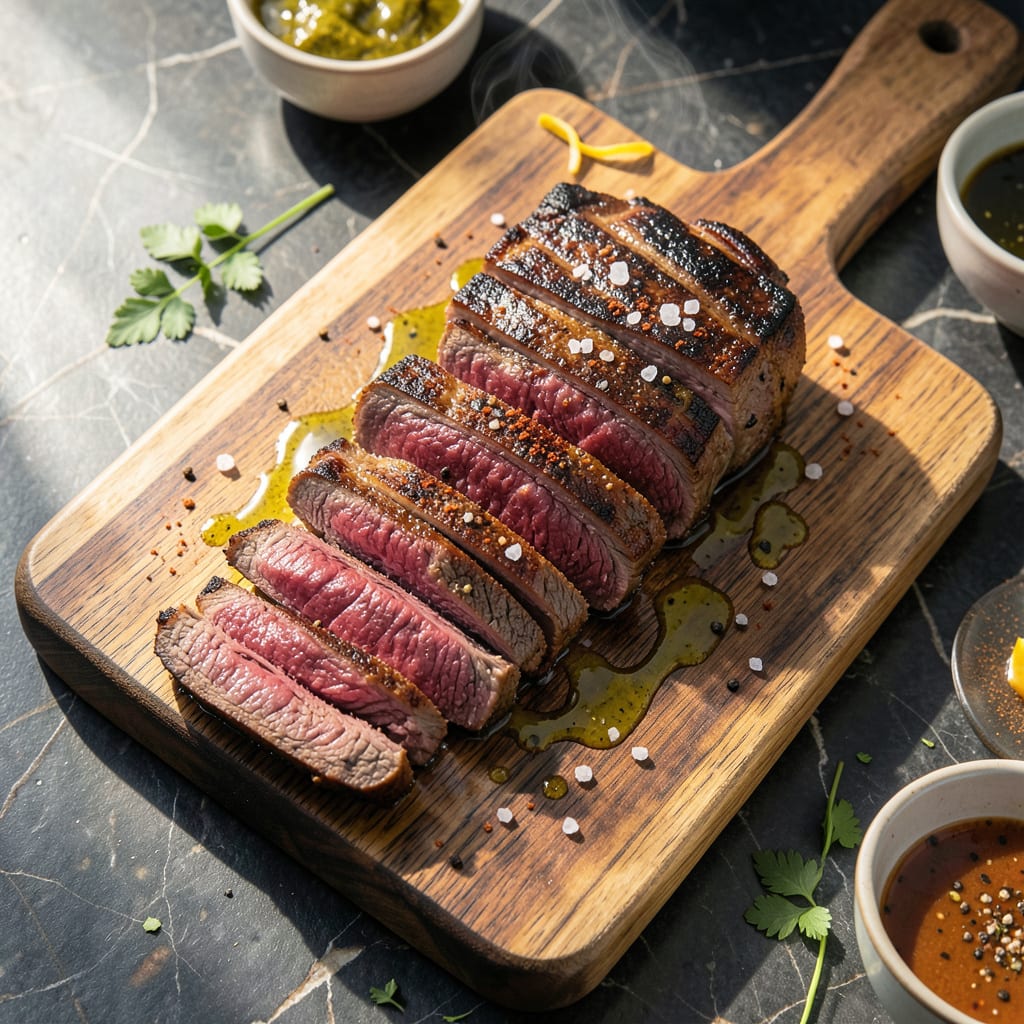
This flat iron steak delivers steakhouse-quality results at home with Bobby Flay’s signature bold char and juicy tenderness.
The secret lies in a high-heat sear and proper resting time, creating a perfectly caramelized crust while keeping the interior tender and flavorful. This method works every time.
Ingredients for Flat Iron Steak Recipe Bobby Flay
Quality steak and bold seasonings create that signature steakhouse experience at home.
| Ingredient | Amount | Notes |
|---|---|---|
| Flat Iron Steak 🥩 | 2 lb | About 1-inch thick, well-marbled |
| Kosher Salt 🧂 | 2 tsp | Diamond Crystal preferred for even seasoning |
| Freshly Ground Black Pepper 🌶️ | 1 ½ tsp | Coarse grind for texture |
| Garlic Powder 🧄 | 1 tsp | For depth in dry rub |
| Smoked Paprika 🌶️ | 1 tsp | Adds signature Bobby Flay char flavor |
| Olive Oil 🫒 | 2 tbsp | High smoke point for searing |
| Unsalted Butter 🧈 | 2 tbsp | For basting during cooking |
| Fresh Rosemary Sprigs 🌿 | 2 whole | For aromatic basting |
| Fresh Thyme Sprigs 🌿 | 2 whole | Complements rosemary in basting |
| Garlic Cloves 🧄 | 3 cloves | Smashed for basting infusion |
| Canola Oil 🫒 | 1 tbsp | High smoke point alternative for searing |
The flat iron steak is non-negotiable here. Look for well-marbled pieces—this ensures tenderness and flavor. Whole Foods or Costco have excellent quality, but any butcher worth their salt can hook you up. The thickness matters too: 1-inch is ideal for even cooking without overcharring the exterior before the interior reaches perfect medium-rare.
No flat iron? Flank or skirt steak work in a pinch, but reduce cooking time by 25%—they’re leaner and cook faster. Smoked paprika is key for that signature char; skip it and you lose the Bobby Flay touch. For the butter, European-style has higher fat content and better browning (Plugrá or Kerrygold are top picks).
Let the steak rest 10 minutes before slicing—this redistributes juices for maximum tenderness. Leftovers? Rare for steak, but they keep 3-4 days refrigerated. Slice against the grain for serving, and save any resting juices to drizzle over the top.
Why You’ll Love This Recipe
- Minimal Effort: I just rub the steak with salt, pepper, garlic powder, and smoked paprika—no marinade, no fuss.
- Smoky Depth: That smoked paprika gives it this rich, almost barbecue-like flavor without firing up the grill.
- Weeknight Hero: It’s my go-to for quick dinners, but fancy enough for date night. (Yes, even on a Tuesday night)
- Leftovers Win: Honestly, the sliced steak tastes even better the next day in tacos or salads.
Step-by-Step Instructions for Flat Iron Steak
Master the technique for a restaurant-quality sear and bold, smoky crust every time.
Step 1: Season the Steak for Maximum Flavor
Pat the 2 lb flat iron steak completely dry with paper towels—moisture prevents proper searing. In a small bowl, combine the 2 tsp kosher salt, 1.5 tsp freshly ground black pepper, 1 tsp garlic powder, and 1 tsp smoked paprika until evenly mixed.
Rub the seasoning blend aggressively over all surfaces of the steak, pressing it into the meat to ensure full coverage. This dry rub creates the signature charred crust. Let the seasoned steak sit at room temperature for 30-45 minutes to allow the salt to penetrate and the meat to cook more evenly.
Step 2: Preheat the Pan and Add High-Smoke-Point Oil
Place a heavy skillet (cast iron preferred) over medium-high heat until it’s screaming hot—you should see the surface shimmer when you hold your hand 6 inches above it. Add the 1 tbsp canola oil and swirl to coat the pan evenly.
The canola oil’s high smoke point ensures it won’t burn during the high-heat sear. Tilt the pan slightly to pool the oil, then lay the steak in the pan away from you to avoid splatters. The steak should sizzle immediately upon contact—if it doesn’t, the pan isn’t hot enough.
Step 3: Sear and Baste for a Signature Crust
Sear the steak undisturbed for 4-5 minutes on the first side until a deep, mahogany crust forms. Use tongs to flip it—never a fork, as piercing releases precious juices. Add the 2 tbsp olive oil, 2 tbsp unsalted butter, 2 whole fresh rosemary sprigs, 2 whole fresh thyme sprigs, and 3 cloves garlic cloves (lightly smashed) to the pan.
Tilt the pan and use a spoon to baste the steak continuously with the melted butter and aromatic oils for the remaining 3-4 minutes of cooking. Baste until the steak reaches an internal temperature of 130-135°F for medium-rare. The herbs will infuse the butter, adding layers of aroma to the crust.
Step 4: Rest and Slice Against the Grain
Transfer the steak to a cutting board and let it rest for 10 minutes before slicing. This resting period allows the juices to redistribute, ensuring each bite is moist and flavorful. Tent loosely with foil to keep it warm, but don’t seal it completely—you want the steam to escape to preserve the crust.
Slice the steak thinly against the grain for maximum tenderness. The flat iron steak has a pronounced grain running lengthwise—cut perpendicular to these fibers to shorten them, making each piece easier to chew. Serve immediately while still warm, with any pan drippings spooned over the top.
Pro Tips For Making Flat Iron Steak Recipe Bobby Flay
- Dry the Steak First: Pat the flat iron steak completely dry with paper towels before seasoning—any moisture will steam it instead of searing. I learned this the hard way after wondering why my crust was always weak.
- Season Generously: Don’t be shy with the kosher salt and smoked paprika; flat iron can handle bold seasoning. Use about 1 teaspoon of each per pound, plus a heavy crack of black pepper.
- Let It Rest: After cooking, tent the steak with foil and give it a solid 5-10 minutes to rest. Skipping this makes all the juices run out when you slice it—I’ve ruined a few dinners by rushing.
- Slice Against the Grain: Flat iron has a noticeable grain—cut across it, not with it, for tender slices. Sounds simple, but I used to ignore this and chew through tough bites.
Health Benefits of These Flavors
High-Protein Powerhouse
A 6-ounce serving of flat iron steak delivers about 40 grams of protein, supporting muscle growth and repair. This lean cut provides all nine essential amino acids your body needs, making it a complete protein source. I notice it keeps me full for hours. 💪
Iron and Zinc Boost
This steak is rich in heme iron, which your body absorbs more easily than plant-based iron. A serving provides about 20% of your daily iron needs and 40% of your daily zinc, crucial for immune function and metabolism.
B Vitamin Complex
Flat iron steak is packed with B vitamins, including B12, niacin, and riboflavin. These nutrients help convert food into energy and support brain health. Just one serving covers a significant portion of your daily B vitamin requirements.
Low in Saturated Fat
Compared to other cuts, flat iron steak is relatively low in saturated fat, with about 6 grams per serving. This makes it a heart-healthier choice for red meat lovers. I appreciate that it fits into a balanced diet without guilt.
Rich in Selenium
You’ll get about 50% of your daily selenium needs from a single serving. This powerful antioxidant protects cells from damage and supports thyroid function. It’s one of the most nutrient-dense cuts you can choose.
Energy-Sustaining Nutrients
The combination of protein, iron, and B vitamins in this dish provides steady energy throughout your day. Unlike processed meats, this natural source of nutrients keeps blood sugar stable and prevents energy crashes. 🥩
Nutrition Facts
Frequently Asked Questions
What temperature should the steak reach for medium-rare?
Aim for an internal temperature of 130-135°F for perfect medium-rare. Use a meat thermometer for accuracy, as visual cues can be misleading.
Can I use a different pan if I don’t have cast iron?
Yes, a heavy stainless steel skillet works well too. Avoid nonstick pans, as they can’t withstand the high heat needed for a proper sear.
How do I know when to flip the steak?
Flip after 4-5 minutes when a deep crust forms. The steak should release easily from the pan—if it sticks, it’s not ready.
Why is resting the steak so important?
Resting for 10 minutes allows juices to redistribute, ensuring a tender, juicy bite. Skipping this step can leave your steak dry.

- BBQ Sausage Recipe Oven: Smoky Depth Without the Grill - September 28, 2026
- BBQ Chicken Bowl Recipe Rice: Smoky Sweetness Over Fluffy Grains - September 28, 2026
- Beef Cutlet Recipe Ideas: Crispy Breaded Patties With Bold Seasonings - September 28, 2026