
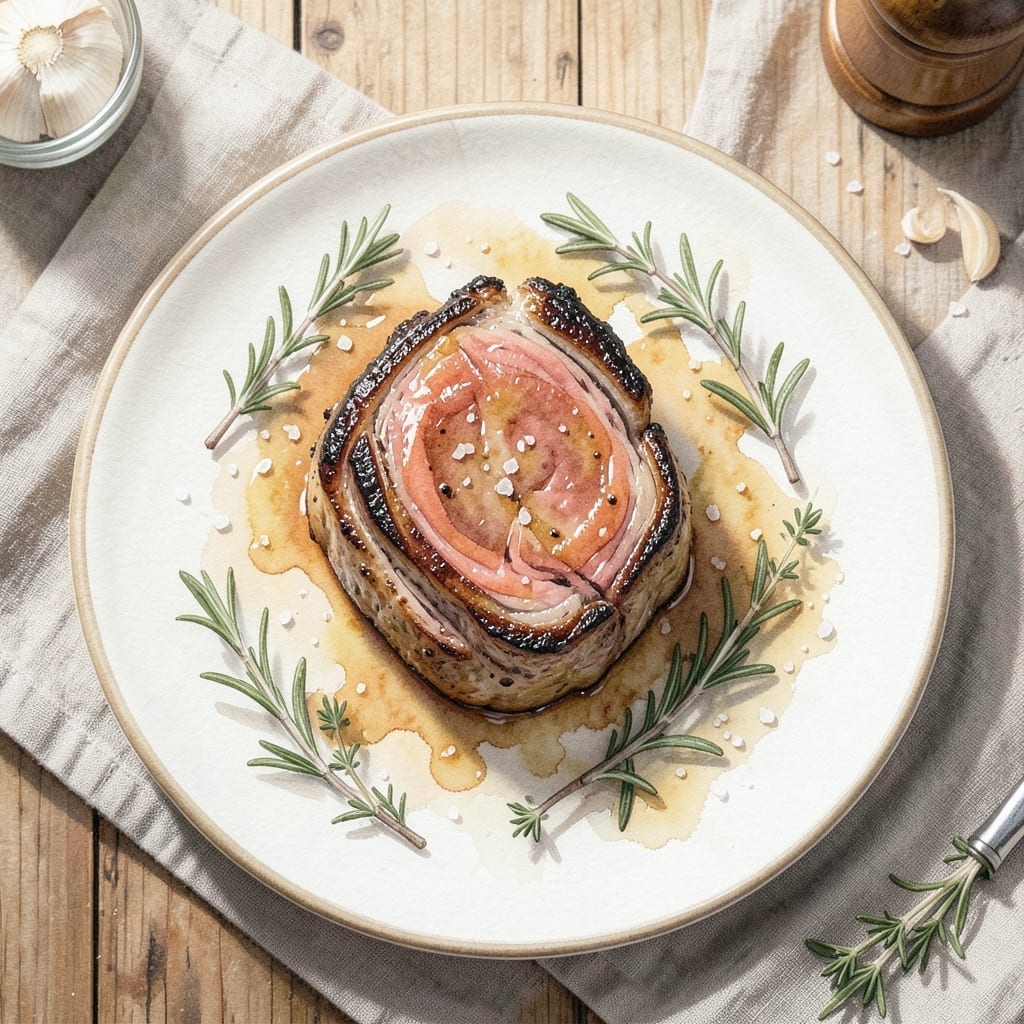
This oven method delivers juicy flat iron steak with a perfectly seared crust every time. I developed this technique after years of trial and error in my tiny Boston kitchen.
No fancy equipment needed—just a hot oven, simple seasonings, and about 20 minutes. The herb crust adds depth without overpowering the beef’s natural flavor.
Ingredients for Flat Iron Steak Recipe Oven
Simple seasonings and fresh herbs transform flat iron steak into a restaurant-worthy dish with minimal effort.
| Ingredient | Amount | Notes |
|---|---|---|
| Flat Iron Steak 🥩 | 2 lb | About 1 inch thick, trimmed |
| Kosher Salt 🧂 | 1 ½ tsp | Diamond Crystal preferred for even seasoning |
| Freshly Ground Black Pepper 🌶️ | 1 tsp | Coarse grind for texture |
| Fresh Rosemary 🌿 | 2 tbsp | Finely chopped, stems discarded |
| Fresh Thyme Leaves 🍃 | 2 tbsp | Stripped from stems |
| Garlic Cloves 🧄 | 4 cloves | Minced for herb crust |
| Extra-Virgin Olive Oil 🫒 | 3 tbsp | Divided for searing and crust |
| Unsalted Butter 🧈 | 2 tbsp | For basting during oven finish |
| Dijon Mustard 🟡 | 1 tbsp | For herb crust adhesion |
| Shallot 🧅 | 1 whole | Finely minced for depth |
The steak quality is non-negotiable here. Flat iron from a trusted butcher or Whole Foods delivers consistent marbling and tenderness. Look for pieces about 1 inch thick—thinner cuts overcook easily. The herbs should be vibrant and aromatic; if your rosemary or thyme smells faint, it’s past its prime. For the butter, Plugrá or Kerrygold provide the rich finish this method demands.
No flat iron? Flank or skirt steak work but require slicing against the grain. Out of fresh herbs? Dried at one-third the amount, though the flavor won’t be as bright. Shallots can be swapped for red onion in a pinch. For the mustard, whole-grain works too—just avoid sweet varieties. The olive oil should be high-quality but not overly peppery, which can dominate the beef.
Cook immediately after seasoning for best results. Leftovers (if any) keep 3-4 days refrigerated, though this is best served fresh. The herb crust mixture can be prepped 1 day ahead and stored covered in the fridge. Always bring steak to room temperature before cooking for even doneness.
Why You’ll Love This Recipe
- One Pan Meal: I love that this comes together with just a sheet pan and the steak does all the work in the oven.
- Herb-Crusted Perfection: The rosemary and thyme create this insane aroma while baking, and the flavor seeps right into the meat.
- Weeknight Winner: Honestly, it’s my go-to for busy evenings—fancy enough for guests but simple enough for a Tuesday.
- Leftovers? Yes Please: Cold slices make the best sandwiches the next day, and it reheats beautifully for meal prep.
Step-by-Step Instructions for Flat Iron Steak Oven
Achieve perfect medium-rare with a fragrant herb crust using this proven method.
Step 1: Prepare the Herb Crust and Season the Steak
Finely mince the 1 whole Shallot and 4 cloves Garlic Cloves. In a small bowl, combine the minced shallot, garlic, 1.5 tsp Kosher Salt, 1 tsp Freshly Ground Black Pepper, 2 tbsp Fresh Rosemary, 2 tbsp Fresh Thyme Leaves, 1 tbsp Dijon Mustard, and 2 tbsp Extra-Virgin Olive Oil. This creates a paste that will form the flavorful crust.
Pat the 2 lb Flat Iron Steak dry with paper towels to ensure a good sear. Rub the herb paste evenly over all surfaces of the steak, pressing it in gently. Let it sit at room temperature for 30 minutes to allow the flavors to penetrate.
Step 2: Sear the Steak on the Stovetop
Heat a large oven-safe skillet (cast iron preferred) over medium-high heat. Add the remaining 1 tbsp Extra-Virgin Olive Oil and swirl to coat the pan. When the oil shimmers and is nearly smoking, carefully place the steak in the pan.
Sear the steak for 3-4 minutes per side until a deep, golden-brown crust forms. Use tongs to hold the steak and sear the edges as well. The steak should release easily from the pan when it’s time to flip—don’t force it.
Step 3: Finish in the Oven with Butter Basting
Preheat your oven to 400°F. Once the steak is seared on both sides, add the 2 tbsp Unsalted Butter to the skillet. Tilt the pan slightly and use a spoon to baste the steak with the melted butter continuously for 1 minute.
Transfer the skillet to the preheated oven and cook for 6-8 minutes for medium-rare. Use an instant-read thermometer to check the internal temperature—it should read 130-135°F when removed from the oven. The temperature will rise an additional 5°F during resting.
Step 4: Rest and Slice Against the Grain
Transfer the steak to a cutting board and tent loosely with foil. Let it rest for 10 minutes to allow the juices to redistribute throughout the meat. This step is crucial for maintaining the steak’s juiciness.
Slice the steak thinly against the grain. The flat iron has a distinct grain pattern running lengthwise—cut perpendicular to these lines for the most tender bites. Serve immediately with any accumulated juices from the cutting board spooned over the top.
Pro Tips For Making Flat Iron Steak Recipe Oven
- Preheat the Pan: Get your oven-safe skillet screaming hot—at least 5 minutes at 450°F—before adding the steak. I learned this the hard way after too many gray, sad steaks from a lukewarm start.
- Pat It Dry: Blot the flat iron steak with paper towels until it’s bone-dry. Even a little moisture steams the meat instead of searing it, and you’ll miss that crust.
- Skip the Cold Steak: Pull the steak out of the fridge 30-45 minutes before cooking. A cold center means uneven cooking, and nobody wants a steak that’s burnt outside but raw inside.
- Crush the Herbs: Lightly crush the rosemary and thyme with your palm before sprinkling them on. Sounds weird, but it works: it releases the oils and actually changes the outcome of the flavor.
Essential Equipment for This Recipe
Oven-Safe Skillet
An oven-safe skillet is non-negotiable for this method. I use my Lodge 12-inch cast iron—it goes from stovetop to oven seamlessly and retains heat beautifully. If you’re in a tiny Boston kitchen like mine, a stainless steel skillet with oven-safe handle works too. 🔥
Instant-Read Thermometer
Don’t guess with steak—use an instant-read thermometer. My ThermoWorks Thermapen gives accurate readings in 2-3 seconds. Aim for 130-135°F internal temp for perfect medium-rare. The temperature will rise 5°F while resting.
Tongs for Flipping
Use 12-inch locking tongs for precise control when searing and basting. I prefer OXO Good Grips—they don’t slip even with buttery hands. Avoid forks that pierce the meat and release precious juices.
Heat-Resistant Spatula
A metal spatula helps press the herb crust onto the steak’s surface. Look for one with a thin, flexible edge to get under the steak easily. I keep a fish spatula in my drawer for this exact purpose.
Cooling Rack
After resting, place your steak on a wire cooling rack set over a plate to keep the crust crisp. This prevents sogginess from accumulated juices. A stainless steel rack is easy to clean and lasts forever.
Cutting Board
Use a large wooden cutting board for slicing—it provides a stable surface and won’t dull your knife. My Boos Block has seen years of service. Always slice against the grain for maximum tenderness.
Nutrition Facts
Frequently Asked Questions
What oven temperature works best?
Use 400°F for even cooking without drying out the meat. This temperature allows the steak to develop a crust while maintaining a juicy interior.
How long should I rest the steak?
Always rest for 10 minutes before slicing. This lets juices redistribute, ensuring each bite stays tender and flavorful.
Can I use a different cut?
Yes, but choose similar thickness. Flank or skirt steak work well, though they may require slightly less time.
Why slice against the grain?
Slicing against the grain shortens muscle fibers, making the steak more tender. Look for the lines running through the meat and cut perpendicular to them.

- BBQ Sausage Recipe Oven: Smoky Depth Without the Grill - September 28, 2026
- BBQ Chicken Bowl Recipe Rice: Smoky Sweetness Over Fluffy Grains - September 28, 2026
- Beef Cutlet Recipe Ideas: Crispy Breaded Patties With Bold Seasonings - September 28, 2026