
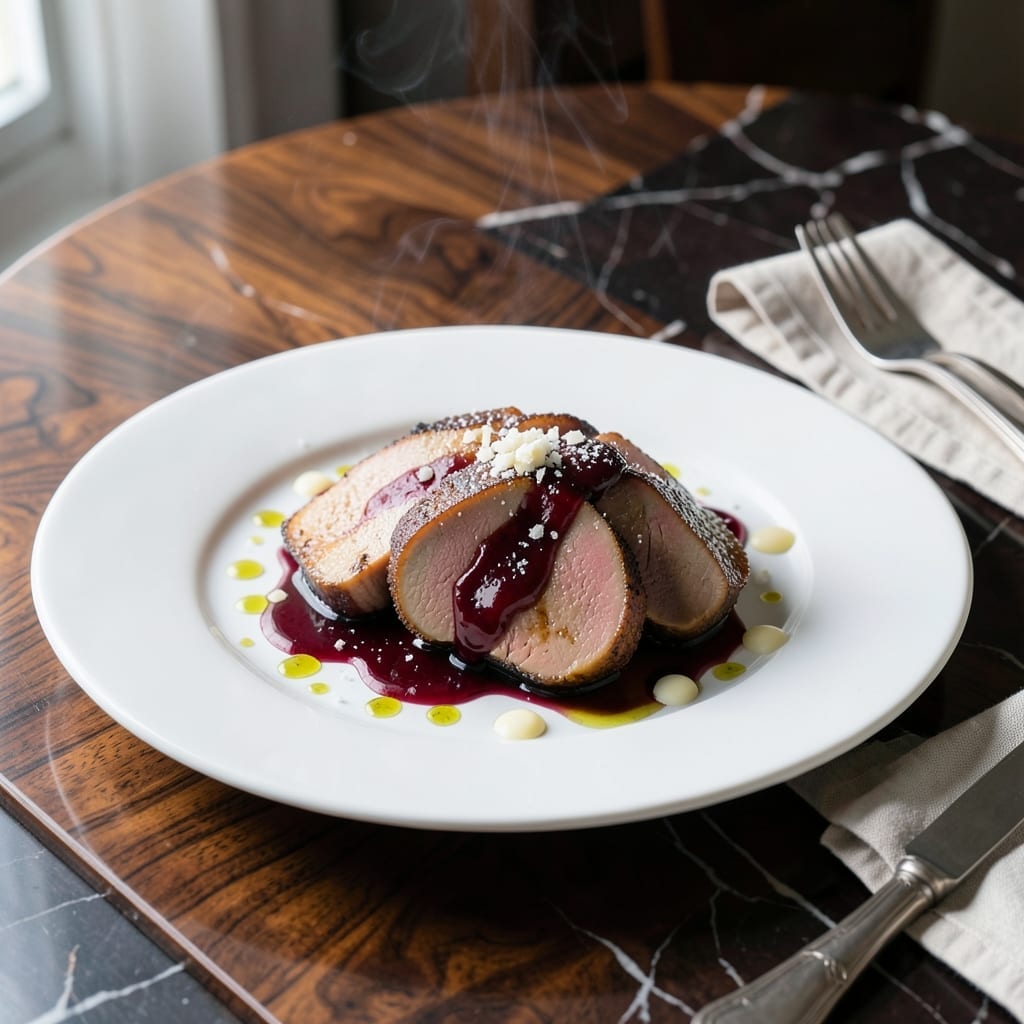
This recipe elevates foie gras to its most luxurious form, delivering a velvet-smooth texture that melts on contact. The process requires precision and respect for the ingredient’s delicate nature.
Proper preparation is key. A gentle sear at the right temperature ensures a crisp exterior while maintaining the silky interior that defines this dish. The contrast between the two textures creates an unforgettable experience.
What emerges is a dish that embodies refinement. The rich, buttery flavor of the foie gras shines through, enhanced by minimal seasoning that allows its natural qualities to take center stage.
Serve immediately for the best presentation and flavor. This is cooking at its most elegant.
Ingredients for Foie Gras
Elevated ingredients for a dish that embodies luxury and refinement in every bite.
| Ingredient | Amount | Notes |
|---|---|---|
| Foie Gras Lobe 🧈 | 1 ½ lb | Grade A, veins removed |
| Kosher Salt 🧂 | 1 tsp | Diamond Crystal preferred |
| White Pepper 🌶️ | ½ tsp | Freshly ground |
| Granulated Sugar 🍚 | ½ tsp | For balancing richness |
| Port Wine 🍷 | ¼ cup | For deglazing pan |
| Unsalted Butter 🧈 | 2 tbsp | For finishing sauce |
| Shallots 🧅 | 2 whole | Finely minced |
| Fresh Thyme Sprigs 🌿 | 4 sprigs | Leaves stripped |
| Brioche Bread 🍞 | 8 slices | Lightly toasted for serving |
| Black Truffle Salt 🍄 | ¼ tsp | Optional garnish |
| Champagne Vinegar 🍾 | 1 tsp | For acidity balance |
| Fig Jam 🍇 | ¼ cup | High-quality for accompaniment |
Sourcing the foie gras is paramount. Grade A lobes from D’Artagnan or Hudson Valley Foie Gras are industry standards for their consistent quality and ethical sourcing. The lobe should feel firm yet slightly yielding, with an even ivory color throughout. Avoid any with greenish tints or strong odors. Specialty butchers or high-end grocers like Whole Foods Market typically carry it fresh or frozen.
For substitutions, duck liver pâté won’t replicate the texture but offers similar richness. The port wine can be swapped with Sauternes or a late-harvest Riesling for sweetness, though the flavor profile will shift. If avoiding alcohol, use reduced black currant juice with a splash of balsamic. The brioche is non-negotiable—its buttery softness complements the foie gras perfectly.
Foie gras must be kept ice-cold until cooking. Store unopened lobes in the coldest part of your fridge for up to 5 days. Once seared, serve immediately—it degrades rapidly. Leftover cooked portions (rare) can be chilled and gently reheated in a warm water bath for 10 minutes.
Why You’ll Love This Recipe
- Minimal Effort: I just season, sear, and pour port wine—no fancy techniques required.
- Rich Decadence: That buttery foie gras with the sweet-savory port reduction? Pure indulgence in every bite.
- Dinner Party Star: It feels luxurious, but honestly, it’s my secret for impressive holiday appetizers.
- Leftovers Luxury: The extra lobe stays perfect in the fridge—great for a fancy brunch the next day.
Step-by-Step Instructions for Foie Gras
Master the technique and timing for a restaurant-quality preparation with velvety texture.
Step 1: Prepare and Season the Foie Gras Lobe
Begin by carefully separating the 1.5 lb Foie Gras Lobe into individual lobes if still connected. Gently pull apart the lobes along their natural seams, taking care not to tear the delicate flesh. With a sharp paring knife, remove any visible veins or blood spots, keeping the surface as intact as possible.
Season all sides uniformly with the 1 tsp Kosher Salt, 0.5 tsp White Pepper, and 0.5 tsp Granulated Sugar. The sugar balances the richness while the salt and pepper enhance the natural depth of flavor. Allow the seasoned lobes to rest at room temperature for 30 minutes to temper evenly.
Step 2: Sear the Foie Gras to Perfection
Place a cold skillet over medium-low heat and add the 2 tbsp Unsalted Butter. The low starting temperature prevents the exterior from burning before the interior warms through. Once the butter melts and the foaming subsides, position the lobes in the pan, ensuring they do not touch each other.
Sear for 1-2 minutes per side until the exterior develops a deep golden-brown crust while the center remains slightly pink and velvety. Watch for the edges to appear slightly translucent—this indicates the ideal doneness. Transfer the seared lobes to a warm plate and tent loosely with foil to retain heat.
Step 3: Create the Port Wine Reduction
In the same skillet, add the 2 whole Shallots (finely minced) and sauté over medium heat for 1-2 minutes until softened and fragrant. Pour in the 0.25 cup Port Wine and the stripped leaves from the 4 sprigs Fresh Thyme Sprigs, scraping up any browned bits from the pan to incorporate rich, caramelized flavors.
Simmer the mixture for 3-4 minutes until the liquid reduces by half and develops a syrupy consistency. Remove from heat and stir in the 1 tsp Champagne Vinegar to add a bright, balancing acidity. Strain the reduction through a fine-mesh sieve to achieve a smooth, elegant sauce.
Step 4: Plate and Garnish
Slice the rested foie gras lobes into ½-inch thick medallions. Arrange two or three pieces on each of four warm plates, slightly overlapping for an elegant presentation. Drizzle the port wine reduction generously over the slices, allowing it to pool slightly on the plate.
Serve immediately with the 8 slices Brioche Bread (lightly toasted) on the side and a small dollop of 0.25 cup Fig Jam for contrast. For a final touch, sprinkle a pinch of the 0.25 tsp Black Truffle Salt over each serving to enhance the luxurious experience with its earthy aroma.
Pro Tips For Making Foie Gras
- Chill the Lobe: I learned this the hard way—soak the foie gras lobe in cold water for 1-2 hours before prep to soften the veins and make cleaning easier. It also prevents the fat from melting too fast during cooking.
- Score the Surface: Use a sharp knife to lightly score the foie gras in a crosshatch pattern before searing. This helps render the fat evenly and gives you that perfect crispy exterior.
- Skip the Overcrowding: After burning my first batch, I finally figured out that searing too many pieces at once lowers the pan temperature. Cook in batches with enough space between lobes for proper browning.
- Deglaze with Port: Sounds weird, but it works: after searing, pour in a splash of port wine to deglaze the pan and create a quick, luxurious sauce. Reduce it by half for a glossy finish.
Essential Equipment for This Dish
Precision Knives
I use a Wüsthof 8-inch chef’s knife for separating lobes and a paring knife for vein removal. The sharpness prevents tearing the delicate flesh. Keep a honing steel nearby to maintain the edge throughout prep.
Cold Skillet
A heavy-bottomed stainless steel pan like All-Clad distributes heat evenly. Start cold to prevent burning the exterior before the interior warms. Avoid non-stick as it can’t reach the necessary searing temperature.
Instant-Read Thermometer
While not for the foie gras itself, a ThermoWorks ThermaPen helps monitor pan temperature. Aim for medium-low heat (around 275°F) to achieve that perfect golden crust without overcooking. 🌡️
Fine-Mesh Sieve
Straining the port reduction requires a fine-mesh sieve to remove shallot pieces. I prefer RSVP Endurance for its durability. Press gently with a spoon to extract maximum flavor from the solids.
Warm Plates
Pre-warming your serving plates in a 200°F oven for 5 minutes ensures the foie gras stays at ideal temperature. Use bone china or similar heat-retaining materials for best results.
Portioning Tools
A bench scraper helps create clean ½-inch slices without squashing the delicate texture. I also keep tweezers handy for any final vein removal before serving.
Nutrition Facts
Frequently Asked Questions
How should I store it before cooking?
Keep the lobe ice-cold until ready to use. Store in the coldest part of your fridge for up to 5 days. Avoid freezing as it can alter the texture.
Why use port wine in the reduction?
Port wine’s sweetness balances the richness and adds depth. Its bold flavor complements the foie gras without overpowering it. A Sauternes works as a substitute.
Can I cook it on high heat?
Never! High heat will burn the exterior before the center warms. Stick to medium-low heat (275°F) for an even sear and creamy interior.
What if my sauce is too thin?
Simmer it longer to reduce further. The ideal consistency coats the back of a spoon. If it’s too thick, add a splash of water or wine.

- BBQ Sausage Recipe Oven: Smoky Depth Without the Grill - September 28, 2026
- BBQ Chicken Bowl Recipe Rice: Smoky Sweetness Over Fluffy Grains - September 28, 2026
- Beef Cutlet Recipe Ideas: Crispy Breaded Patties With Bold Seasonings - September 28, 2026