
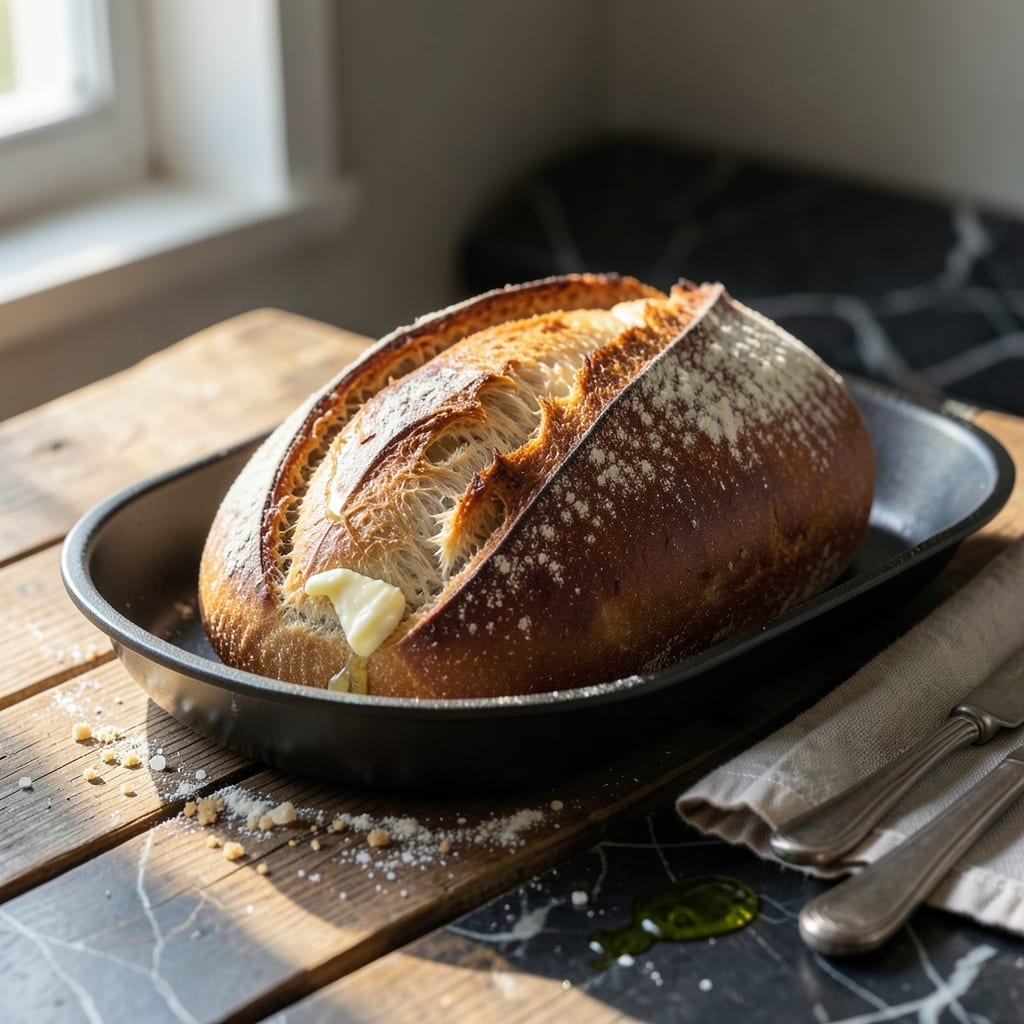
This bread maker method delivers a crusty French loaf with minimal effort and maximum flavor. The machine handles the mixing, kneading, and rising, while a final bake in the oven ensures a golden exterior.
You’ll achieve bakery-style results at home with precise settings and simple ingredients. The process is nearly hands-off, yet the outcome is anything but ordinary.
Ingredients for French Bread Recipe Bread Maker
Simple ingredients yield bakery-style crusty golden loaves with your bread maker.
| Ingredient | Amount | Notes |
|---|---|---|
| Bread Flour 🌾 | 3 ½ cups | High-protein for structure |
| Active Dry Yeast 🍞 | 2 ¼ tsp | Or one packet, proofed |
| Warm Water 💧 | 1 ¼ cups | 110-115°F for activation |
| Kosher Salt 🧂 | 2 tsp | Diamond Crystal preferred |
| Granulated Sugar 🍚 | 1 tbsp | Feeds yeast for rise |
| Unsalted Butter 🧈 | 2 tbsp | Softened for dough |
| Vital Wheat Gluten 🌾 | 1 tbsp | Optional for extra chew |
| Cornmeal 🌽 | 2 tbsp | For dusting pan |
| All-Purpose Flour 🌾 | ½ cup | For dusting surface |
| Egg White 🥚 | 1 whole | For golden wash |
| Water 💧 | 1 tbsp | For egg wash thinning |
The bread flour is non-negotiable—King Arthur or Bob’s Red Mill deliver consistent protein levels for that essential chew and rise. Yeast freshness matters more than brand; check the expiration date and store unopened packets in the freezer. Warm water should feel like bathwater on your wrist (not hot, not cold). Diamond Crystal kosher salt dissolves cleanly, but any fine salt works.
No bread flour? All-purpose in a pinch—but reduce water by 1-2 tbsp since it absorbs less liquid. Out of yeast? This recipe won’t work without it—grab a packet from Whole Foods or the baking aisle. Vital wheat gluten can be omitted, but it gives that authentic French bread texture. For a vegan wash, swap egg white for 1 tbsp plant milk.
Store flour and yeast in airtight containers in a cool, dark place for 6-12 months. The dough can rest overnight in the fridge if needed. Baked loaves keep 3-4 days at room temperature, or freeze for 3 months.
Why You’ll Love This Recipe
- Set and Forget: I toss the flour, yeast, water, salt, and sugar into the bread maker, press start, and walk away—no kneading, no watching, just perfect French bread hours later.
- Crispy Golden Crust: The bread maker bakes it just right: a shatteringly crisp crust giving way to that soft, airy inside, with a hint of sweetness from the sugar balancing the salt.
- My Weekly Staple: I slice it thick for sandwiches, tear off chunks for soup, or toast it for breakfast—this loaf works for everything from school lunches to dinner parties.
- Pocketbook Friendly: Bread flour and yeast are cheap, and one batch makes a loaf that would cost twice as much at the bakery. Honestly, it’s my little way of saving without sacrificing quality.
Step-by-Step Instructions for French Bread in a Bread Maker
Master the machine process for a bakery-style loaf with minimal hands-on effort.
Step 1: Prepare the Bread Maker Pan
Lightly grease your bread maker pan with unsalted butter or nonstick spray. Even though nonstick pans are standard, this prevents any sticking, especially at the corners where dough can climb.
Sprinkle the bottom with 2 tbsp Cornmeal. This creates a textured base that mimics the rustic crust of traditional French bread and prevents the loaf from sticking during the bake cycle.
Step 2: Layer Wet and Dry Ingredients Strategically
Add 1.25 cups Warm Water to the pan first, ensuring it’s between 110-115°F—too hot and you’ll kill the yeast, too cold and it won’t activate properly. The water should pool slightly in the center of the pan.
Next, add 2 tbsp Unsalted Butter to the water. It will float, which is fine. Then, measure 3.5 cups Bread Flour, 0.5 cup All-Purpose Flour, 1 tbsp Vital Wheat Gluten, 1 tbsp Granulated Sugar, 2 tsp Kosher Salt, and 2.25 tsp Active Dry Yeast into the pan in that exact order. This layering ensures the yeast activates at the right time during the machine’s kneading cycle.
Step 3: Select the French Bread Setting
Secure the pan in your bread maker and select the French bread or basic white bread setting with a medium crust. Most machines have a 3-4 hour cycle for this type of dough, which includes kneading, rising, and baking phases.
Press start and let the machine handle the mixing and kneading. During the first 10-15 minutes, check that the dough forms a smooth, elastic ball. If it appears too dry, add 1 tsp of additional warm water; if too sticky, sprinkle in 1 tsp All-Purpose Flour. However, resist the urge to intervene unless absolutely necessary—the machine is calibrated for precise hydration.
Step 4: Apply the Egg Wash for Golden Crust
When the machine signals the end of the final rise (usually with a beep or indicator light, about 2 hours into the cycle), quickly open the lid. Whisk together 1 whole Egg White and 1 tbsp Water until frothy and evenly brush the top of the dough with a pastry brush.
This wash creates the signature golden-brown, glossy crust characteristic of French bread. Close the lid immediately to allow the baking phase to continue undisturbed. The egg wash will set within the first 10 minutes of baking.
Step 5: Cool Completely Before Slicing
Once the cycle completes, use oven mitts to remove the pan from the machine. Turn the loaf out onto a wire rack immediately—leaving it in the pan can cause the crust to steam and soften.
Let the bread cool for at least 1 hour before slicing. This cooling period allows the interior structure to set, preventing a gummy texture. The finished loaf should have a crisp, golden crust and an airy, open crumb. Slice with a serrated knife for clean cuts without compressing the loaf.
Pro Tips For Making French Bread Recipe Bread Maker
- Test the Yeast: Always bloom your active dry yeast in the warm water with a pinch of sugar first—I learned this the hard way after wasting a batch on dead yeast. If it doesn’t foam within 5 minutes, start over.
- Use Bread Flour: Skip all-purpose flour; bread flour’s higher protein content gives that chewy French bread texture. My first loaf with all-purpose was dense and sad.
- Watch the Water Temp: Warm water should feel like a baby’s bath, around 110°F. Any hotter and you’ll kill the yeast; colder and it won’t activate.
- Let It Cool: After baking, resist the urge to slice immediately—wait at least 20 minutes so the crumb sets and doesn’t turn gummy. Yes, it’s torture, but worth it.
Make-Ahead Tips for french bread recipe bread maker
Overnight Dough Prep
Prepare the dough in your bread maker on the dough-only setting, then transfer to the fridge after kneading. Let it rise overnight for up to 12 hours. This slow fermentation enhances flavor and creates a more open crumb structure. 💡
Morning Bake Option
After overnight rising, shape the dough into a baguette or boule, then let it proof at room temperature for 30-45 minutes. Bake at 425°F for 20-25 minutes with steam for a professional finish. The crust will be extra crispy.
Freeze the Dough
After the kneading cycle, shape the dough, wrap it tightly in plastic, and freeze for up to 1 month. Thaw overnight in the fridge before proofing and baking. This is perfect for last-minute fresh bread.
Pre-Bake Storage
Once shaped but before final rise, store dough in the fridge for up to 24 hours. I use a lightly oiled bowl with plastic wrap. This pause lets flavors deepen while keeping your schedule flexible.
Baked Loaf Freezing
Cool completely, slice if desired, then wrap in foil and place in freezer bags. Freeze for up to 3 months. To refresh, wrap in foil and warm at 375°F for 10-15 minutes. ❄️
Room Temperature Storage
Keep baked loaves in a paper bag at room temperature for 2-3 days. Avoid plastic, which traps moisture and softens the crust. For longer freshness, store with the cut side down on a wooden board.
Frequently Asked Questions
Can I use all-purpose flour instead of bread flour?
Yes, but reduce water by 1-2 tbsp since all-purpose absorbs less liquid. Bread flour’s higher protein gives better structure and chew, but all-purpose works in a pinch.
Why did my loaf turn out dense?
Dense bread usually means the yeast didn’t activate properly. Check your water temperature—it should be 110-115°F. Also, ensure your yeast isn’t expired and the dough rose adequately before baking.
How do I get a crispier crust?
For extra crunch, transfer the dough to the oven after the bread maker’s kneading cycle. Bake at 425°F with steam for 20-25 minutes. This mimics bakery conditions.
Can I make this recipe gluten-free?
Not with this recipe—it relies on gluten for structure. For gluten-free French-style bread, you’d need a specialized mix with xanthan gum and a different hydration ratio.
Nutrition Facts

- BBQ Sausage Recipe Oven: Smoky Depth Without the Grill - September 28, 2026
- BBQ Chicken Bowl Recipe Rice: Smoky Sweetness Over Fluffy Grains - September 28, 2026
- Beef Cutlet Recipe Ideas: Crispy Breaded Patties With Bold Seasonings - September 28, 2026