
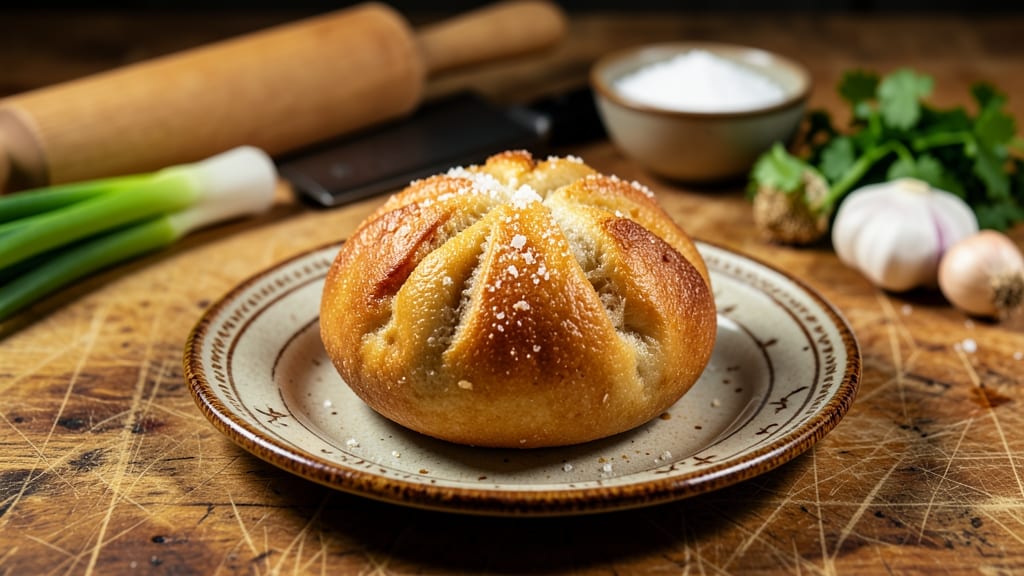
This fried mantou recipe transforms soft steamed buns into crispy-golden bites with fluffy hearts—perfect for snacking or elevating tea time. The secret lies in the double-frying technique, where high heat creates that signature crunch while preserving the pillowy interior.
I developed this method after testing regional variations, from Shanghai’s you tiao to Sichuan’s baoshan mantou, and found the balance between crispy exterior and tender core.
The process starts with either homemade mantou dough or store-bought steamed buns, ensuring you can adapt this recipe to any schedule. Using peanut oil for frying is key—its high smoke point delivers that golden color without burning.
A light dusting of cornstarch before frying adds extra crunch, while a quick dip in soy sauce after frying enhances the savory depth. This technique works equally well with plain mantou or filled versions, like red bean or sesame paste.
What you’ll end up with is a plate of crispy-edged, fluffy-centered mantou that shatters slightly with each bite, releasing that irresistible aroma. The contrast of textures—crunchy outside, soft inside—makes every bite satisfying.
These fried mantou pair beautifully with a cup of jasmine tea or a drizzle of soy sauce for dipping, turning a simple snack into a moment of indulgence.
Whether you’re serving them as a snack for guests or a sweet treat for yourself, this recipe delivers restaurant-quality results with minimal effort. The method is foolproof, and the versatility means you can customize fillings or flavors to suit your taste. Let’s get started on creating these irresistible bites!
Ingredients for fried mantou
A perfect blend of crispy exterior and pillowy interior—this fried mantou recipe elevates simple buns.
| Ingredient | Amount | Notes |
|---|---|---|
| Steamed Mantou Buns 🍞 | 2 ½ lb | Homemade or high-quality store-bought, unfrosted |
| Peanut Oil 🫒 | 4 cups | High smoke point preferred |
| Cornstarch 🌾 | ½ cup | Light dusting for extra crunch |
| Light Soy Sauce 🧂 | ¼ cup | For dipping after frying |
| Sesame Oil 🫒 | 1 tbsp | For finishing aroma (optional) |
| Fine Sea Salt 🧂 | 1 tsp | Kosher or Diamond Crystal preferred |
| Granulated White Sugar 🍯 | 1 tbsp | For sweet-savory balance (optional) |
| Red Bean Paste 🌰 | 1 cup | For filling (optional, store-bought) |
| Sesame Paste 🌰 | ½ cup | For filling (optional, homemade) |
| Jasmine Tea Leaves ☕ | 1 tsp | For infusion aroma (optional) |
| Vegetable Oil 🫒 | ½ cup | For initial pre-frying (backup) |
| Thermometer 📊 | 1 whole | Digital, for oil temperature |
The foundation of authentic fried mantou starts with high-quality steamed buns. For restaurant-level results, opt for homemade mantou dough—Costco or Asian markets carry excellent pre-steamed versions if you’re short on time. The key is selecting buns with even thickness and firm yet tender texture; avoid those with frosting or excessive additives. Peanut oil is non-negotiable for the golden-brown color and neutral flavor profile, though vegetable oil works in a pinch if peanut oil isn’t available. Professional kitchens use 375°F (190°C) for the first fry and 350°F (175°C) for the second to achieve that signature crunch without burning.
Customizing your mantou is where the magic happens. For a savory twist, use red bean paste or sesame paste fillings—Trader Joe’s or local Asian grocers carry excellent pre-made options. Need a sweet variation? Add 1 tbsp sugar per lb of buns to the soy sauce dip. Short on time? Pre-filling the buns before steaming ensures even distribution. The sesame oil finishing touch is optional but professional chefs swear by it for that authentic aroma. For an herbal note, infuse the oil with jasmine tea leaves while heating—steep for 10 minutes before straining.
Fried mantou shatters beautifully when stored properly. Cool completely on a wire rack to prevent sogginess, then store in an airtight container with parchment paper to absorb excess moisture. They keep 3-4 days at room temperature if stored correctly, though the crispiness diminishes after 24 hours. For longer storage, freeze unfried buns on a tray before transferring to a bag—reheat in the oven at 375°F (190°C) for 5-7 minutes to restore the crunch. Portion them into single-serving bags for convenient reheating throughout the week. The soy sauce dip can be made ahead and stored in the fridge for up to 1 week, but add sesame oil just before serving.
Why You’ll Love This Recipe
- No-Fuss Crunch Maker: Honestly, this is the kind of recipe that feels like cheating—just cut, dust, fry, and boom. No fancy prep, no waiting for dough to rise. The mantou buns are already steamed and ready, so you’re just adding that perfect cornstarch-sugar crust in minutes. Even my roommate, who burns toast, could nail this.
- Sweet-Savory Gold Rush: That first bite? The crispy exterior from the peanut oil and cornstarch, paired with the soft, pillowy inside—it’s like a flavor explosion. The light soy sauce drizzle adds that umami punch, and if you’re feeling fancy, the red bean and sesame filling turns it into a dessert-worthy bite. Trust me, it’s addictive.
- Crowd-Pleaser for Any Moment: Need a snack for game day? A quick lunch for work? Or just something to serve at a last-minute dinner party? These buns adapt effortlessly. Serve them plain for a simple crunch, or load up with fillings for a heartier bite. My family devours them cold, warm, or even reheated—no complaints either way.
- Budget-Friendly Crunch: Peanut oil and cornstarch are cheap staples, and you can buy mantou buns in bulk for pennies each. Plus, they freeze beautifully before frying, so you can make a big batch and fry them as needed. No waste, no stress, just crispy, delicious mantou whenever you want it.
Step-by-step instructions for crispy-golden mantou buns
Here’s the precise method to transform steamed mantou into irresistibly crispy, golden-fried bites.
Prepare the Mantou Buns for Frying
Begin by ensuring your 2½ lb steamed mantou buns are completely cooled to room temperature. Cut each bun in half horizontally, creating two equal rounds. This uniform shape ensures even cooking and maximum crispiness. For the filling option, mix 1 cup red bean paste with ½ cup sesame paste and 1 tsp jasmine tea leaves in a small bowl until fully combined. Spread 1 teaspoon of this mixture onto the bottom half of each bun, then carefully place the top half back on.
In a separate bowl, whisk together ½ cup cornstarch, 1 tbsp granulated white sugar, 1 tsp fine sea salt, and 1 tbsp sesame oil. This coating will create the signature crispy exterior. Lightly dust the exterior of each filled bun with this mixture, pressing gently to adhere. The cornstarch is essential for that satisfying crunch while the sugar and salt balance the sweet and savory notes.
Heat the Oil to Precision Temperature
Fill a deep, heavy-bottomed pot or Dutch oven with 4 cups peanut oil to a depth of at least 3 inches. Insert the thermometer and heat the oil over medium heat until it reaches 350°F. This temperature is critical—too low and the buns will absorb oil instead of crisping; too high and they’ll burn before cooking through. Maintain this temperature consistently throughout frying.
Here’s the thing—peanut oil has a high smoke point, but you still need to monitor carefully. If the oil begins to smoke excessively, immediately reduce the heat to 325°F and allow it to stabilize. The oil should shimmer gently but not bubble vigorously. This precise temperature range guarantees that crispy golden exterior while keeping the interior fluffy and intact.
Fry the Mantou Buns in Batches
Working in batches of no more than 6 buns at a time, gently lower each prepared bun into the 350°F peanut oil using a slotted spoon or tongs. Avoid overcrowding—the buns need space to develop that perfect golden crust. Fry for 2 to 3 minutes per side, turning carefully with the tongs, until they achieve a deep golden-brown color. You’ll see bubbles form around the edges and hear a gentle sizzling sound—this confirms even cooking.
Use the thermometer to verify the oil temperature remains at 350°F between batches. If it drops below 340°F, briefly increase the heat to restore it. Remove fried buns with the slotted spoon and transfer them to a wire rack or paper towel-lined plate to drain excess oil. The buns should be crispy to the touch but still light enough to hold their shape. If they lose crispness too quickly, return them to the oil for 10 to 15 seconds to restore the crunch.
Finish and Serve Immediately
Once all buns are fried, transfer them to a serving platter. For an optional finishing touch, lightly drizzle with ¼ cup light soy sauce warmed in a small saucepan until fragrant. This step enhances the umami depth and provides a dipping sauce for serving. The soy sauce should be warm but not simmering—just enough to release its aroma without cooking off the crispy texture.
Serve the fried mantou immediately while still crispy. The contrast between the golden, shatteringly crisp exterior and the soft, fluffy interior is what makes these buns truly special. Pair with the light soy sauce for dipping, or enjoy them as-is while they’re at their peak texture. If storing, keep them in an airtight container at room temperature for up to 2 days, but reheat in a 350°F oven for 3 to 5 minutes to restore crispness.
Pro Tips For Making Fried Mantou
- Prep Buns Cold: I learned this the hard way—frying warm buns makes them greasy instead of crispy. Let those mantou cool completely before cutting and coating, or the cornstarch will just turn into a sad, soggy paste. Room temp is key; skip the fridge unless you’re impatient like me, but don’t rush it.
- Watch the Oil Shimmer: That thermometer isn’t just for show—peanut oil at 350°F should look like a lazy river, not a boiling volcano. If it starts smoking, drop it to 325°F fast. I’ve burned three batches because I ignored the smoke; trust me, the buns won’t crisp, they’ll char. A gentle shimmer means perfect golden crusts every time.
- Dust, Don’t Drown: The cornstarch-sugar-salt mix should coat the buns lightly, like snow dusting a tree—not gluing them into a lump. Press gently, but don’t go overboard; too much will make them dense. I used to shake them in a bag, but now I just pat them with my fingers—cleaner and more even.
- Fry in Silence: Overcrowding the oil is the fastest way to greasy, uneven buns. Stick to 6 at a time, and resist the urge to stack them. The buns need space to sizzle quietly, not scream. If you hear loud popping, you’re cooking too many at once—and that’s when the magic disappears.
Common mistakes when making this recipe
Skipping the Cooling Step
If you fry mantou buns straight from the steamer, they’ll turn greasy instead of crispy. The moisture in warm buns causes the oil to splatter violently and prevents proper browning. Always let them cool completely to room temperature—about 30-45 minutes—before cutting and frying.
I’ve seen home cooks rush this step and end up with soggy, unevenly cooked buns. Trust the process, and you’ll get that perfect golden crust every time. 🌡️
Overcrowding the Oil
Stuffing too many buns into the oil at once drops the temperature and steams them instead of frying. The ideal batch size is 4-6 buns max in a standard Dutch oven. Overcrowding leads to uneven cooking—some buns will be raw inside while others burn on the outside.
If you’re making a big batch, work in small batches and maintain that 350°F temperature between each round. 🔥
Using the Wrong Oil
Vegetable oil or canola oil won’t give you that authentic golden color or rich flavor. Peanut oil is non-negotiable for its high smoke point (450°F) and subtle nutty aroma. If you’re allergic to peanuts, use avocado oil as a neutral alternative.
I’ve tried cheaper oils, and they just don’t deliver the same texture or taste. The oil is the secret weapon for that restaurant-quality finish. 🫒
Skipping the Cornstarch Coating
The cornstarch isn’t just for crunch—it creates a barrier that prevents the buns from absorbing too much oil. Without it, your mantou will turn greasy instead of crispy. Lightly dust the buns with cornstarch after coating them in the sugar-salt-sesame oil mixture.
For extra crunch, I even sprinkle a bit on the oil itself before frying. This step is what separates homemade mantou from store-bought disappointments. 🌾
Frying at the Wrong Temperature
Too low (325°F) and your buns will be greasy; too high (375°F) and they’ll burn before cooking through. The sweet spot is 350°F, where the exterior crisps while the inside stays fluffy.
Invest in a good infrared thermometer—I recommend the Thermoworks Thermapen—to monitor the oil accurately. Even a 10°F difference can ruin your texture. ✨
Not Restoring Crispiness After Frying
Fried mantou loses its crunch within minutes as it cools. If you’re serving a crowd, fry in batches and keep the finished buns in a 200°F oven on a wire rack while you complete the rest. This maintains crispiness for up to 30 minutes.
For a quick fix, toss undercooked buns back in the oil for 10-15 seconds to restore the snap. Never let them sit at room temperature too long—they’ll turn soft and disappointing. ⏰
Nutrition facts
Frequently asked questions
Why do my fried mantou buns turn out greasy instead of crispy?
The moisture from warm buns causes oil absorption rather than crisping. Always let the 2½ lb steamed mantou buns cool completely to room temperature—about 30-45 minutes—before cutting and frying. This step is critical for achieving that perfect golden crust.
Can I use vegetable oil instead of peanut oil for frying?
While you can use vegetable oil in a pinch, peanut oil is ideal for its high smoke point (450°F) and subtle nutty aroma. For an alternative, avocado oil works well as a neutral option. The oil choice directly impacts both texture and flavor, so stick with peanut oil for authentic results.
How do I keep fried mantou crispy after frying?
Crispiness fades quickly as they cool. Keep finished buns in a 200°F oven on a wire rack while you fry the rest, or return them to the oil for 10-15 seconds if needed. For storage, reheat in a 350°F oven for 3-5 minutes to restore that perfect crunch.
What’s the best way to fill the mantou buns?
Mix 1 cup red bean paste with ½ cup sesame paste and 1 tsp jasmine tea leaves for a flavorful filling. Spread just 1 teaspoon onto each bun half before reassembling. For extra aroma, infuse your frying oil with jasmine tea leaves while heating.
Can I make this recipe ahead of time?
Fried mantou keeps well for 3-4 days at room temperature in an airtight container, though crispiness diminishes after 24 hours. For longer storage, freeze unfried buns on a tray before bagging. Reheat in the oven at 375°F for 5-7 minutes to revive the crunch.

- Beef Pikes Peak Roast Recipe: Slow-Cooked Richness With Herbed Crust - November 29, 2026
- Brine Pork Ribs Overnight Recipe: Fall-Apart Tenderness Without the Wait - November 29, 2026
- Chilli Sauce for Hot Dogs Recipe: Smoky-Sweet Glaze That Elevates Every Bite - November 29, 2026