
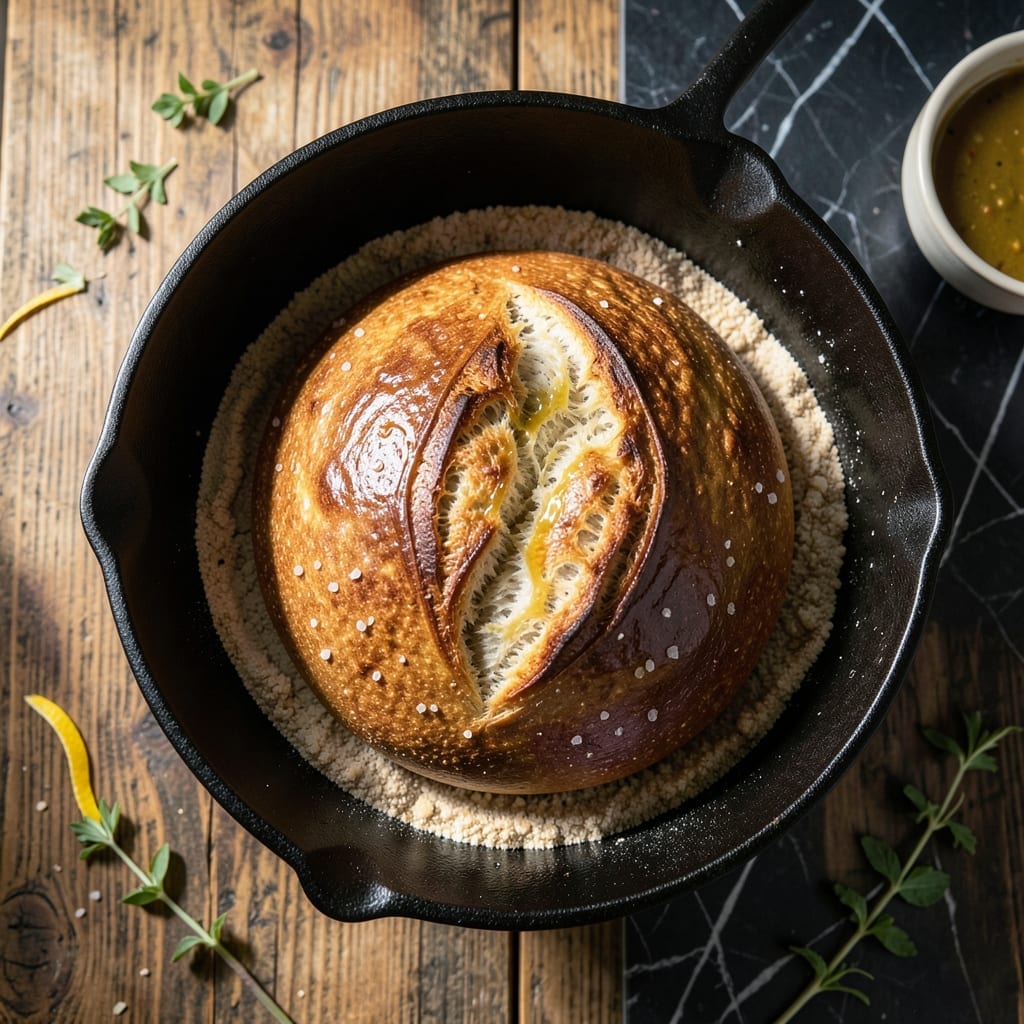
There’s something special about pulling a loaf of rustic bread from a Dutch oven, its crust crackling as it cools. I learned this method years ago, adapting my grandmother’s Sicilian techniques for modern kitchens.
This approach uses minimal ingredients and simple steps to create a golden, crispy crust with a soft, airy interior. The Dutch oven traps steam, mimicking professional bread ovens without the complexity.
What emerges is a loaf that looks and tastes like it came from an artisan bakery, yet requires no special skills. The process rewards patience more than technique, with most of the time spent on rising.
The result is a versatile bread perfect for sandwiches, soups, or simply slathered with butter. This is bread-making at its most satisfying.
Ingredients for Peasant Bread Recipe Dutch Oven
Minimal ingredients yield rustic, bakery-quality bread with golden crust and airy interior.
| Ingredient | Amount | Notes |
|---|---|---|
| Bread Flour 🌾 | 3 ½ cups | All-purpose works in a pinch |
| Active Dry Yeast 🍞 | 2 ¼ tsp | One packet, proofed in warm water |
| Kosher Salt 🧂 | 1 ½ tsp | Diamond Crystal preferred |
| Warm Water 💧 | 1 ½ cups | 110°F, for activating yeast |
| Olive Oil 🫒 | 1 tbsp | For bowl greasing |
| Cornmeal 🌽 | 2 tbsp | For dusting Dutch oven |
| Honey 🍯 | 1 tbsp | Optional, feeds the yeast |
| Whole Milk 🥛 | ¼ cup | Warmed, for richer dough |
| Unsalted Butter 🧈 | 1 tbsp | Melted, for brushing crust |
| Sugar 🍚 | 1 tsp | For yeast activation |
The flour is foundational—King Arthur Bread Flour is ideal for its high protein content, which develops the chewy texture. Bob’s Red Mill offers a solid alternative. Yeast must be fresh; check the expiration date and store it in the freezer to extend shelf life. Diamond Crystal kosher salt dissolves evenly, avoiding the clumping of finer table salts.
No bread flour? All-purpose flour plus 1 tbsp vital wheat gluten per cup mimics the protein content. Out of honey? Sugar or maple syrup can substitute for yeast feeding. The milk adds richness but can be replaced with water for a leaner crust. Skip the butter if avoiding dairy—just brush with olive oil for a crisp finish.
Store flour in an airtight container for up to 6 months. Yeast keeps in the freezer for 1 year. Dough can be refrigerated overnight for a slower rise, enhancing flavor development. Baked loaves stay fresh for 3 days wrapped in a towel.
Why You’ll Love This Recipe
- No-Knead Magic: I just mix flour, yeast, salt, and water—no fancy techniques, and the Dutch oven does all the work.
- Crust Perfection: That golden, crackly exterior with a soft, airy center? The olive oil and Dutch oven make it happen every time.
- Feeds a Crowd: Honestly, it’s my go-to for dinner parties or Sunday soups—one loaf never lasts long.
Step-by-Step Instructions for Peasant Bread Dutch Oven
This method ensures a rustic, artisan crust with minimal hands-on time and maximum flavor.
Step 1: Activate the Yeast and Mix the Dough
In a small bowl, combine the 2.25 tsp Active Dry Yeast, 1 tsp Sugar, and 1.5 cups Warm Water. Let it sit for 5-7 minutes until foamy and fragrant—this confirms the yeast is active and ready to work its magic.
In a large mixing bowl, whisk together the 3.5 cups Bread Flour and 1.5 tsp Kosher Salt. Make a well in the center and pour in the yeast mixture, 0.25 cup Whole Milk, 1 tbsp Honey, and 1 tbsp Olive Oil. Stir with a wooden spoon until a shaggy dough forms and no dry flour remains.
Step 2: First Rise for Developed Flavor
Lightly grease a clean bowl with a bit of olive oil, then transfer the dough into it. Cover with a damp kitchen towel or plastic wrap. Let the dough rise in a warm, draft-free spot for 1-2 hours, or until it has doubled in volume.
The dough should look puffy and jiggle slightly when the bowl is gently shaken. This first rise allows the gluten to develop and the yeast to ferment, creating complex flavors in the bread.
Step 3: Shape and Second Rise
Turn the risen dough out onto a lightly floured surface and gently shape it into a round loaf. Avoid overworking the dough—just fold the edges under to create surface tension. Place the shaped dough seam-side down onto a piece of parchment paper.
Dust the top lightly with 1 tbsp Bread Flour from your measured amount, then cover and let it rise again for 30-45 minutes until slightly puffed. Preheat your Dutch oven (with lid) in a 450°F oven during the last 20 minutes of this rise.
Step 4: Bake for Crust Perfection
Carefully remove the hot Dutch oven from the oven. Sprinkle the 2 tbsp Cornmeal evenly across the bottom to prevent sticking and add a rustic texture. Transfer the dough (still on parchment) into the pot, then score the top with a sharp knife.
Bake covered for 30 minutes, then remove the lid and bake for another 15-20 minutes until the crust is a deep golden brown and the internal temperature reaches 205-210°F.
Step 5: Cool and Finish
Transfer the bread to a wire rack and let it cool for at least 30 minutes before slicing. This resting period allows the crumb structure to set—cutting too soon results in a gummy texture.
Once cooled, brush the crust with 1 tbsp Unsalted Butter (melted) for added shine and richness. The finished loaf should have a crisp, crackling crust and an open, airy interior with a slightly chewy texture.
Pro Tips For Making Peasant Bread Recipe Dutch Oven
- Preheat the Dutch Oven: Pop it in the oven for at least 30 minutes at 450°F before adding the dough—I learned this the hard way after pulling out a loaf with a pale, sad bottom.
- Use Room-Temp Water: Warm water straight from the tap can shock the yeast; let it sit for 5-10 minutes until it feels lukewarm, like a baby’s bath.
- Skip the Over-Flouring: Dusting too much flour on the dough before baking can create a thick, pasty crust—just a light touch is all you need.
- Add Olive Oil Last: Swirl about 1 tablespoon of olive oil into the Dutch Oven just before adding the dough; it prevents sticking and gives the crust a subtle sheen.
Wine and Beer Pairings for This peasant bread recipe dutch oven
Italian Wine Pairings
For a true Sicilian experience, pair this bread with a Nero d’Avola from my grandmother’s homeland. Its bold fruit and spice complement the rustic crust beautifully. A Chianti Classico works equally well, with earthy notes that enhance the bread’s simplicity.
Light White Options
A crisp Vermentino from Sardinia offers citrus brightness that cuts through the richness. I love how its mineral notes contrast with the warm, yeasty flavors of fresh-baked bread. Serve slightly chilled for best results. 🍷
Beer Pairings
An Italian-style pilsner like Peroni or Moretti provides a clean, refreshing contrast. For craft lovers, try a Belgian saison—its peppery notes and dry finish make it an excellent match for the crust’s depth.
Non-Alcoholic Choices
Sparkling water with a squeeze of lemon cleanses the palate between bites. I also enjoy a blood orange soda from my local Italian deli—its sweetness balances the bread’s rustic character perfectly. ✨
Cheese Pairing Tip
For a simple appetizer, serve warm slices with aged pecorino and a drizzle of honey. The salty cheese and sweet honey create a perfect bite that honors the bread’s Sicilian roots.
Nutrition Facts
Frequently Asked Questions
Why preheat the Dutch oven?
Preheating ensures an even, hot surface for immediate rise. This mimics professional bread ovens, creating steam inside for a crisp crust while the bread bakes. Skipping this step can lead to uneven cooking.
Can I use all-purpose flour instead of bread flour?
Yes! Add 1 tbsp vital wheat gluten per cup of all-purpose flour to boost protein. The texture will be slightly less chewy but still delicious. Bread flour gives the best structure and rise.
How do I know when the bread is done?
Look for a deep golden brown crust and an internal temperature of 205-210°F. The loaf should sound hollow when tapped on the bottom. Avoid underbaking, which causes a gummy center.
What if my dough doesn’t rise?
Check your yeast freshness and water temperature—it should be 110°F. If the room is cold, place the dough in a slightly warmed oven (turned off) to encourage rising. Old yeast is the most common culprit.

- Pina Colada Dip Recipe Red Lobster: Tropical Creaminess With Toasted Coconut - October 12, 2026
- Pickled Sweet Cherry Peppers Recipe Canning: Tangy Heat for Pantry Staples - October 12, 2026
- Peppercorn Sauce Recipe Vegan: Rich Umami Depth Without Cream - October 12, 2026