
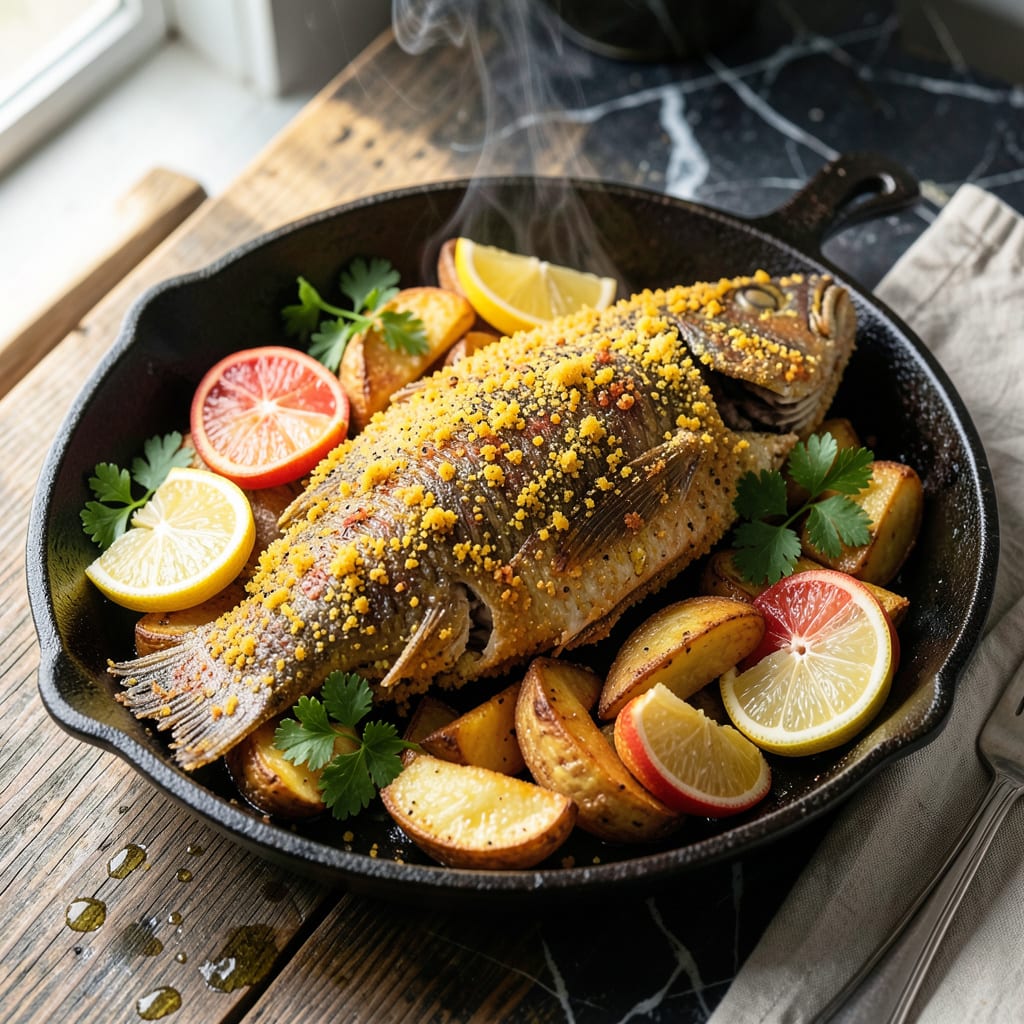
This Southern-style fried whole catfish delivers that signature crispy coating and tender meat that falls off the bone. The secret lies in a well-seasoned cornmeal blend and precise frying temperature.
With just a few simple ingredients and 20 minutes of cooking time, you’ll achieve a golden, crunchy exterior that gives way to perfectly cooked fish. Serve with lemon wedges and hot sauce for the full experience.
Ingredients for Fried Whole Catfish
Pantry staples and fresh catfish create this Southern classic with minimal effort.
| Ingredient | Amount | Notes |
|---|---|---|
| Whole Catfish 🐟 | 4 whole | Cleaned, head-on or off |
| Yellow Cornmeal 🌽 | 2 cups | Fine or medium grind |
| All-Purpose Flour 🌾 | 1 cup | For dredging base |
| Kosher Salt 🧂 | 2 tbsp | Diamond Crystal preferred |
| Black Pepper 🌶️ | 1 tbsp | Freshly ground for best flavor |
| Paprika 🌶️ | 1 tbsp | Sweet or smoked variety |
| Garlic Powder 🧄 | 1 tsp | Not garlic salt |
| Onion Powder 🧅 | 1 tsp | Fresh ground preferred |
| Cayenne Pepper 🔥 | ½ tsp | Adjust for heat preference |
| Buttermilk 🥛 | 2 cups | For soaking fish |
| Vegetable Oil 🫒 | 4 cups | For frying, high smoke point |
| Lemon Wedges 🍋 | 1 whole | For serving, cut into 8 wedges |
| Hot Sauce 🌶️ | ½ cup | For serving, optional |
The catfish is the star here—fresh, whole fish from a trusted seafood counter (or frozen, thawed overnight) yields the best texture. Yellow cornmeal provides that signature crunch; avoid fine corn flour. For the buttermilk, full-fat delivers superior tenderness. Most supermarkets carry all these, but Whole Foods often has the freshest fish selection.
No buttermilk? Whole milk plus 1 tbsp vinegar or lemon juice works in a pinch. Swap cornmeal for fine corn flour if needed, though texture may differ. Peanut oil can replace vegetable oil for frying—higher smoke point, same result. The spice blend is flexible: add 1 tsp dried thyme or reduce cayenne for milder heat.
Fry in batches to avoid crowding—keeps the oil hot and the coating crisp. Leftovers? 2-3 days in the fridge, though they’re best fresh. Reheat in a toaster oven to revive crunch. The buttermilk marinade can be prepped overnight for deeper flavor.
Why You’ll Love This Recipe
- One Pan Meal: I love that it only dirties a single skillet and a plate for draining.
- Crispy Cornmeal Crust: That yellow cornmeal gives it the most satisfying crunch with every bite.
- Feeds a Crowd: A whole catfish stretches easily for family dinners or weekend gatherings.
Step-by-Step Instructions for Fried Whole Catfish
This method delivers crispy, golden fish with a flavorful crust that stays crunchy until the last bite.
Step 1: Prepare the Seasoned Dredge
In a large, shallow dish, combine the 2 cups yellow cornmeal, 1 cup all-purpose flour, 2 tbsp kosher salt, 1 tbsp black pepper, 1 tbsp paprika, 1 tsp garlic powder, 1 tsp onion powder, and 0.5 tsp cayenne pepper. Whisk thoroughly until the mixture is uniform in color and texture.
This blend creates a coating that’s both crispy and packed with Southern-style flavor. The cornmeal provides the signature crunch, while the spices infuse every bite with warmth and depth. Set the dish aside—you’ll use it immediately after soaking the fish.
Step 2: Soak the Catfish in Buttermilk
Place the 4 whole whole catfish in a large bowl or deep dish and pour the 2 cups buttermilk over them, ensuring each piece is fully submerged. Let them soak for 15-20 minutes at room temperature.
The buttermilk tenderizes the fish while adding a subtle tang that balances the richness of the fried crust. Don’t skip this step—it’s what keeps the meat moist and prevents the coating from drying out. Gently pat each catfish dry with paper towels just before dredging to help the coating adhere better.
Step 3: Dredge and Coat Evenly
Working one piece at a time, lift a catfish from the buttermilk, allowing any excess to drip off. Dredge it in the cornmeal mixture, pressing firmly to ensure an even, thick coating on all sides, including the cavity if the fish is whole. Shake off any loose excess.
Place the coated catfish on a wire rack set over a baking sheet. This setup allows air to circulate, preventing the coating from becoming soggy while you finish preparing the rest. The coating should look uniformly textured and slightly damp—perfect for achieving that shatteringly crisp finish.
Step 4: Fry to Golden Perfection
In a large, heavy-bottomed pot or deep skillet, heat the 4 cups vegetable oil to 350°F over medium-high heat. Use a deep-fry or candy thermometer to monitor the temperature accurately. Carefully lower one or two catfish into the hot oil, depending on the size of your pot—avoid overcrowding, which lowers the oil temperature.
Fry for 6-8 minutes per side until the coating is deep golden brown and crisp. The fish should float easily and the crust should audibly sizzle. Use a slotted spatula to transfer the fried catfish to a paper towel-lined plate to drain excess oil.
Step 5: Serve with Classic Accompaniments
Arrange the fried catfish on a platter and serve immediately while hot and crispy. Offer the lemon wedges and 0.5 cup hot sauce on the side for squeezing and dipping. The bright acidity of the lemon cuts through the richness, while the hot sauce adds a spicy kick for those who want it.
Real talk: the crust will soften as it sits, so encourage everyone to dig in right away. Each bite should deliver a satisfying crunch followed by tender, flaky fish inside—this is Southern frying at its finest.
Pro Tips For Making Fried Whole Catfish
- Heat the Oil High: Get that oil to 375°F before the catfish hits the pan—I learned this the hard way after too many soggy batches. The cornmeal needs that initial sizzle to crisp up right.
- Pat Fish Dry: After rinsing the catfish, blot it with paper towels until it’s bone-dry. My grandmother swore by this, and she was right: moisture is the enemy of a good crust.
- Skip Overcrowding: Fry one or two fish at a time, even if it takes longer. After burning three batches, I finally figured out that crowding drops the oil temp and turns the coating gummy.
- Season the Meal: Mix salt and pepper right into the cornmeal and flour before dredging. Sounds weird, but it works: every bite gets seasoned, not just the surface.
Dietary Considerations for These Flavors
Gluten-Free Adaptation
Swap the all-purpose flour for 1 cup rice flour or a gluten-free blend like Bob’s Red Mill 1-to-1. The cornmeal already provides great texture, so the change is seamless. Ensure your spice blends are certified gluten-free to avoid cross-contamination.
Dairy-Free Option
Replace buttermilk with 2 cups unsweetened almond milk mixed with 2 tbsp apple cider vinegar. Let it sit for 10 minutes to curdle. The acidity mimics buttermilk’s tenderizing effect, keeping the fish moist and flavorful.
Lower-Sodium Version
Reduce kosher salt to 1 tbsp and omit added salt in the spice mix. Boost flavor with 1 tsp smoked paprika and ½ tsp lemon zest. You’ll still get a well-seasoned crust without the sodium overload. 💡
Pescatarian-Friendly
This dish naturally fits a pescatarian diet, as catfish is the sole protein. Just confirm your vegetable oil and spices contain no animal-derived additives. Serve with plant-based sides like coleslaw or roasted vegetables.
Allergen Awareness
For nut allergies, verify your vegetable oil isn’t processed in facilities handling nuts. Cornmeal is typically safe, but check labels for cross-contamination warnings. Always fry in fresh oil to avoid allergen transfer.
Keto Modifications
Replace cornmeal with 2 cups crushed pork rinds and ½ cup almond flour. The pork rinds add crunch while keeping carbs low. Fry in avocado oil for a higher smoke point and keto-friendly fat profile. 🔥
Nutrition Facts
Frequently Asked Questions
What’s the ideal oil temperature for frying?
Maintain 350°F for perfect crispiness. Use a thermometer to check, as oil that’s too cool makes greasy fish, while too hot burns the coating before the fish cooks through.
Can I use frozen catfish?
Yes, but thaw it overnight in the fridge first. Pat it completely dry before soaking to ensure the coating sticks properly. Never fry frozen fish directly.
Why is my coating falling off?
This usually happens if the fish wasn’t dry before dredging or if the oil temperature was too low. Press the coating firmly onto the fish and ensure the oil is at 350°F before frying.
How do I keep it crispy after cooking?
Place fried fish on a wire rack, not paper towels, to prevent steam from softening the crust. Serve immediately, as the coating loses crispness as it cools.

- BBQ Sausage Recipe Oven: Smoky Depth Without the Grill - September 28, 2026
- BBQ Chicken Bowl Recipe Rice: Smoky Sweetness Over Fluffy Grains - September 28, 2026
- Beef Cutlet Recipe Ideas: Crispy Breaded Patties With Bold Seasonings - September 28, 2026