
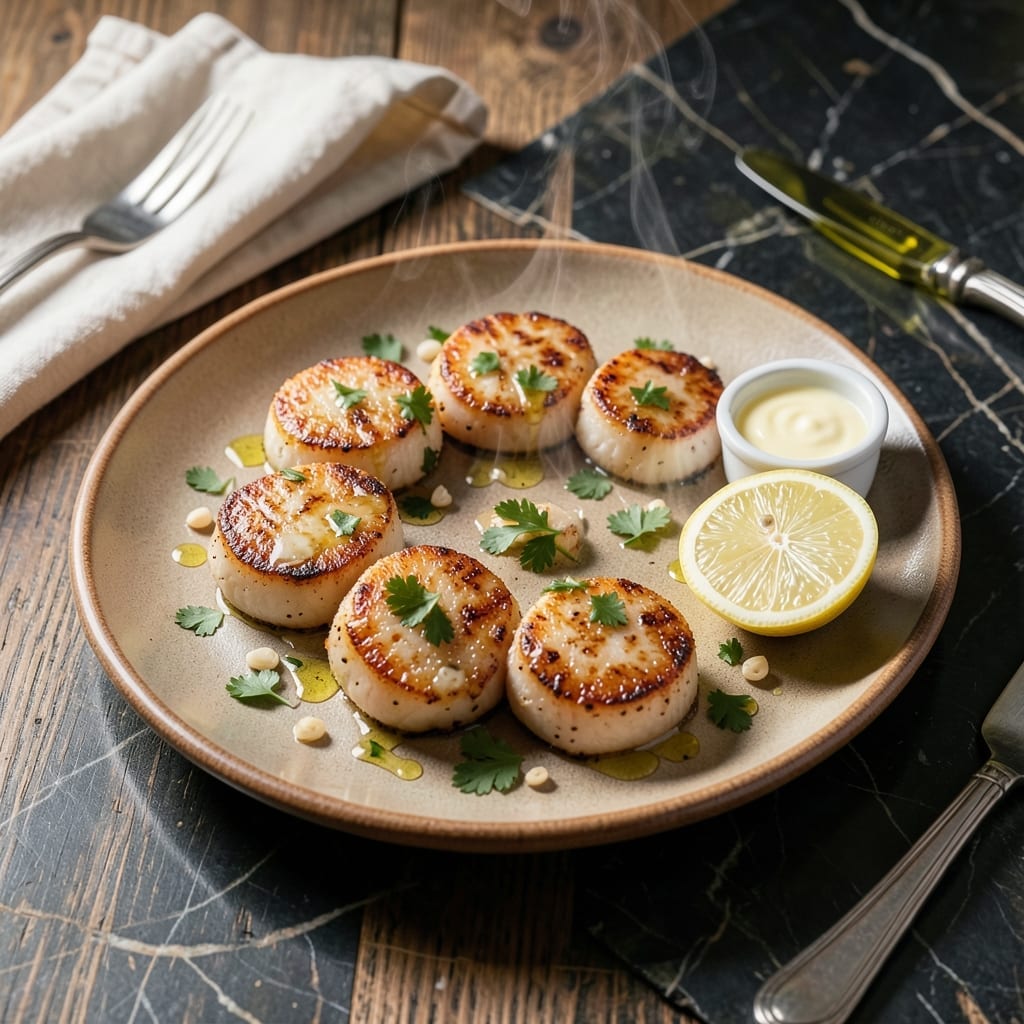
Achieving restaurant-quality scallops from frozen is absolutely possible with the right technique. This method ensures a golden crust and tender interior every time.
The secret lies in proper thawing and high-heat searing. Frozen scallops require careful handling to prevent excess moisture, which can ruin the perfect sear.
Pat them completely dry before cooking, then use a screaming hot pan with a touch of oil and butter. The result is scallops with a caramelized exterior and silky center.
Ready in 20 minutes, this dish proves frozen seafood can be just as impressive as fresh when prepared with care.
Ingredients for Frozen Scallops
Quality seafood and careful preparation yield perfect pan-seared scallops from frozen every time.
| Ingredient | Amount | Notes |
|---|---|---|
| Frozen Scallops 🦪 | 1 ½ lb | Large dry-packed preferred, thawed |
| Unsalted Butter 🧈 | 3 tbsp | Divided for searing and basting |
| Neutral Oil 🫒 | 2 tbsp | High smoke point like avocado or grapeseed |
| Garlic Cloves 🧄 | 3 cloves | Minced for aromatic base |
| Fresh Lemon 🍋 | 1 whole | For bright finishing acid |
| Fresh Parsley 🌿 | ¼ cup | Finely chopped for garnish |
| Kosher Salt 🧂 | 1 ½ tsp | Diamond Crystal preferred for even seasoning |
| Freshly Ground Black Pepper 🌶️ | ¾ tsp | Coarse grind for texture |
| Dry White Wine 🍷 | ¼ cup | For deglazing the pan |
| Shallot 🧅 | 1 whole | Finely diced for subtle onion flavor |
| Fresh Thyme Sprigs 🌿 | 4 pieces | Optional for aromatic garnish |
The scallops are the star here. Dry-packed frozen scallops from reputable brands like Trader Joe’s or Wild Fork work best—they don’t release as much moisture during thawing. Avoid wet-packed varieties, which can make achieving that golden crust nearly impossible. Look for scallops labeled as U10 or U12 (under 10 or 12 per pound) for the best texture. Thaw overnight in the fridge for optimal results.
No dry-packed scallops? Drain wet-packed ones thoroughly and press between paper towels for 10 minutes to remove excess moisture. Substitute ghee for butter if avoiding dairy, though the flavor profile will shift slightly. The white wine can be replaced with seafood stock or even water in a pinch. For a richer finish, swap the neutral oil for clarified butter, but keep the heat slightly lower to prevent burning.
Cooked scallops are best served immediately, but leftovers keep for 2 days in the fridge. Reheat gently in a skillet with a splash of water or butter to prevent drying out. Never refreeze thawed scallops—this degrades texture and compromises safety. Fresh herbs can be prepped a day ahead and stored in damp paper towels.
Why You’ll Love This Recipe
- Minimal Chopping Required: I just mince a few garlic cloves and slice a lemon—no prep marathon here.
- Buttery Lemon Bliss: That combo of melted butter, garlic, and fresh lemon juice makes every scallop ridiculously good.
- Weeknight Friendly: Honestly, it’s my go-to when I need something fancy-feeling without the fuss.
- Budget Stretch: Frozen scallops cost less than fresh, but the taste? Spot-on with this method.
Step-by-Step Instructions for Pan-Seared Scallops
Master the technique for achieving a perfect golden crust while keeping the scallops tender inside.
Step 1: Thaw and Pat the Scallops Completely Dry
Begin by thawing the 1.5 lb frozen scallops in the refrigerator overnight or under cold running water for 15-20 minutes. Once thawed, pat each scallop meticulously dry with paper towels. Any residual moisture will steam the scallops instead of searing them, preventing that coveted crust.
This step is non-negotiable—you should see no visible moisture on the surface. Season both sides evenly with 1.5 tsp kosher salt and 0.75 tsp freshly ground black pepper, pressing the seasoning gently into the flesh to ensure it adheres during cooking.
Step 2: Sear the Scallops in Hot Oil and Butter
Heat a large, heavy skillet (preferably stainless steel) over medium-high heat until very hot. Add 2 tbsp neutral oil and swirl to coat the pan evenly. The oil should shimmer but not smoke. Immediately add the scallops in a single layer, leaving space between each to prevent steaming.
Sear undisturbed for 2-3 minutes until a deep golden crust forms on the bottom. Resist the urge to move them—this is when the Maillard reaction creates the flavorful browning. Flip and add 1 tbsp unsalted butter, then cook for another 1-2 minutes until the second side is equally browned and the centers are just opaque.
Step 3: Build the Aromatic Pan Sauce
Transfer the scallops to a warm plate and tent with foil. Reduce heat to medium and add the remaining 2 tbsp unsalted butter to the skillet. Once melted, add the finely diced shallot and cook for 1 minute until softened. Stir in the minced garlic cloves and cook for 30 seconds until fragrant but not browned.
Deglaze the pan with 0.25 cup dry white wine, scraping up all the browned bits from the bottom with a wooden spoon. Let the wine simmer for 2-3 minutes until reduced by half, then remove from heat.
Step 4: Finish and Serve with Fresh Herbs
Return the scallops to the skillet and spoon the sauce over them to coat evenly. Squeeze the juice from 1 whole fresh lemon over the scallops and stir in 0.25 cup finely chopped fresh parsley. The acidity from the lemon will brighten the rich buttery sauce.
Garnish with the fresh thyme sprigs and serve immediately. The scallops should have a crisp, golden exterior with a tender, slightly translucent center. Each bite should deliver the sweetness of the scallops balanced by the tangy, herbed pan sauce.
Pro Tips For Making Frozen Scallops
- Thaw Completely First: I learned this the hard way—partially frozen scallops release too much water and steam instead of searing. Let them sit in the fridge overnight or under cold running water for 15-20 minutes.
- Pat Them Bone Dry: Sounds weird, but it works: after thawing, press the scallops between paper towels until they’re desert-dry. This guarantees that golden crust instead of a soggy boil.
- Sear Hot, Don’t Crowd: Crank the pan to medium-high and give each scallop at least an inch of space—any closer and they’ll steam instead of caramelize. Two minutes per side, no peeking.
- Warm the Lemon: Roll the whole lemon on the counter for 10 seconds before juicing, then microwave it for 10 seconds. You’ll get twice the juice with half the effort, and it brightens the buttery garlic sauce.
Wine and Beer Pairings for This Dish
White Wine Pairings
A crisp Chablis from Burgundy cuts through the buttery richness beautifully with its bright acidity and mineral notes. I love how the flinty character complements the scallops’ natural sweetness. For a budget option, Kim Crawford Sauvignon Blanc offers citrusy vibrancy that works wonders. 🍷
Rich White Options
If you prefer a fuller-bodied white, try a California Chardonnay like Rombauer—its creamy texture and subtle oak enhance the dish’s richness. Just ensure it’s not too oaky, or it may overpower the delicate scallop flavor.
Light Beer Choices
A Belgian witbier such as Hoegaarden brings citrus and spice notes that pair surprisingly well with the lemon and herbs in the dish. The effervescence cleanses your palate between bites. 🍺
Crisp Lager Alternatives
For beer lovers who prefer clean, simple flavors, a German pilsner like Warsteiner provides the perfect crisp contrast to the rich, buttery scallops without competing for attention.
Its light body and subtle bitterness balance the dish beautifully.
Nutrition Facts
Frequently Asked Questions
How long should I thaw frozen scallops before cooking?
Thaw overnight in the fridge for best results, or use the cold water method for 15-20 minutes. Never thaw at room temperature, as this can promote bacterial growth and affect texture.
Can I cook scallops straight from frozen?
It’s not recommended. Cooking from frozen can lead to uneven cooking and excess moisture, which prevents a good sear. Always thaw and pat completely dry first.
Why are my scallops rubbery instead of tender?
Overcooking is the most common cause. Scallops need only 2-3 minutes per side on medium-high heat. Remove them just as the centers turn opaque.
What’s the best way to prevent sticking?
Use a hot, heavy skillet (like stainless steel) and ensure scallops are very dry before adding to the pan. The oil should shimmer but not smoke before adding them.

- BBQ Sausage Recipe Oven: Smoky Depth Without the Grill - September 28, 2026
- BBQ Chicken Bowl Recipe Rice: Smoky Sweetness Over Fluffy Grains - September 28, 2026
- Beef Cutlet Recipe Ideas: Crispy Breaded Patties With Bold Seasonings - September 28, 2026