
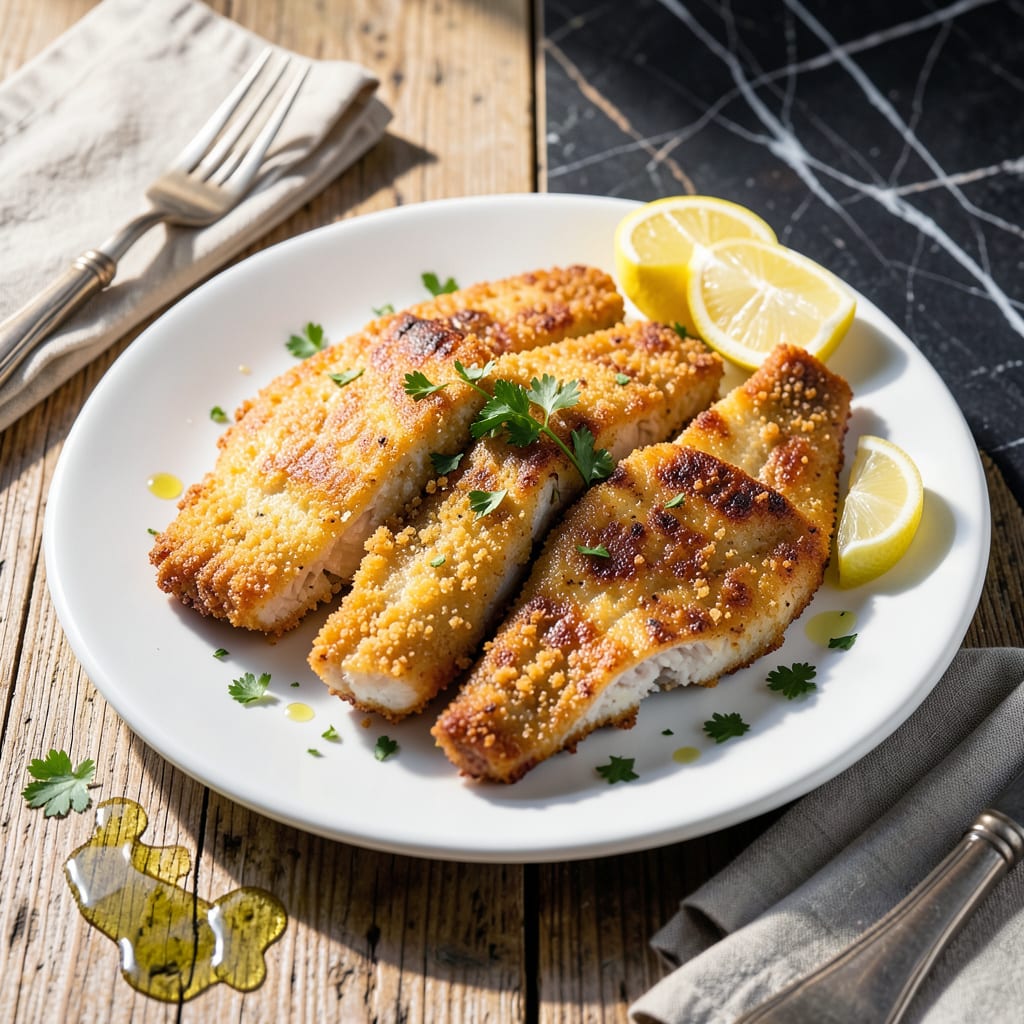
Achieve crispy, golden cod fillets with this straightforward frying method. The key lies in proper preparation and precise heat control to ensure even cooking without over-browning.
This technique delivers perfectly flaky fish inside with a satisfying crunch outside. Serve immediately for the best texture and flavor.
Ingredients for Fry Cod Fish
Fresh cod, a crisp coating, and simple seasonings create these golden fillets.
| Ingredient | Amount | Notes |
|---|---|---|
| Cod Fillets 🐟 | 1 ½ lb | Fresh or thawed, skinless, boneless |
| All-Purpose Flour 🌾 | ¾ cup | For dredging fish |
| Cornstarch 🌾 | ¼ cup | For extra crispiness |
| Baking Powder 🧂 | 1 tsp | Makes coating lighter |
| Salt 🧂 | 1 ½ tsp | Diamond Crystal preferred |
| Black Pepper 🌶️ | ½ tsp | Freshly ground preferred |
| Paprika 🌶️ | 1 tsp | Sweet or smoked variety |
| Garlic Powder 🧄 | 1 tsp | Not garlic salt |
| Lemon Zest 🍋 | 1 tbsp | Freshly grated for brightness |
| Vegetable Oil 🫒 | 2 cups | High smoke point for frying |
| Buttermilk 🥛 | ½ cup | For soaking fish |
| Fresh Parsley 🌿 | ¼ cup | Chopped, for garnish |
| Lemon Wedges 🍋 | 4 pieces | For serving |
The cod is non-negotiable here. Fresh, firm fillets with a mild scent (not fishy) are essential—Whole Foods or a trusted fishmonger is ideal. For thawed, ensure it’s fully defrosted and patted dry. The cornstarch in the dredge is the secret to that shatteringly crisp crust. Bob’s Red Mill is a reliable brand for consistent results.
No buttermilk? Whole milk with a splash of vinegar (let sit 5 minutes) works in a pinch. Swap cornstarch for arrowroot powder at equal amounts. Short on paprika? Cayenne for heat or omit entirely. The oil must be high smoke point—peanut or canola oil are solid alternatives. Fresh parsley can be swapped for dill or chives.
Fry and serve immediately—this doesn’t hold well. Leftovers keep in the fridge for 1-2 days but lose crispness. Reheat in a 375°F oven for best results. The dredge mix can be prepped ahead and stored in an airtight container for 1 month.
Why You’ll Love This Recipe
- Minimal Effort: I just mix flour, cornstarch, and baking powder, dip the cod, and fry—no fancy steps.
- Crispy Perfection: That cornstarch and baking powder combo gives it a light, airy crunch every time.
- Feeds Everyone: It’s my go-to for picky eaters and dinner parties alike. Honestly, it never fails.
- Budget Friendly: Cod fillets stretch far with this simple coating, and leftovers taste just as good the next day.
Step-by-Step Instructions for Crispy Fried Cod
Master the technique for achieving perfectly crispy, golden fillets with a tender interior every time.
Step 1: Prepare the Seasoned Coating
In a shallow dish, whisk together the 0.75 cup all-purpose flour, 0.25 cup cornstarch, 1 tsp baking powder, 1.5 tsp salt, 0.5 tsp black pepper, 1 tsp paprika, 1 tsp garlic powder, and 1 tbsp lemon zest until thoroughly combined. The cornstarch creates extra crispiness, while the baking powder makes the coating lighter.
The mixture should look uniformly speckled with the spices. This dry blend will form the outer crust that gives the fillets their signature crunch. Set this aside while you prepare the cod.
Step 2: Soak and Dredge the Cod Fillets
Pat the 1.5 lb cod fillets completely dry with paper towels—this ensures the coating adheres properly. Pour the 0.5 cup buttermilk into a separate shallow dish and submerge each fillet for 30 seconds to 1 minute per side. The buttermilk’s acidity tenderizes the fish while adding moisture.
Lift each fillet from the buttermilk, letting excess drip off, then dredge through the seasoned flour mixture. Press gently to ensure complete coverage. The coating should look evenly distributed with no bare spots. Place the dredged fillets on a wire rack to rest for 5 minutes—this helps the coating set and adhere better during frying.
Step 3: Heat the Oil and Fry to Golden Perfection
Pour the 2 cups vegetable oil into a deep, heavy-bottomed skillet or Dutch oven, ensuring it’s at least 1 inch deep. Heat over medium-high heat until the oil reaches 350-365°F. Use a deep-fry thermometer for accuracy—proper temperature is crucial for crispy results without overcooking the fish.
Carefully lower 1-2 fillets into the hot oil using tongs, being careful not to overcrowd the pan. Fry for 3-4 minutes per side until the coating is deep golden brown and the fish flakes easily with a fork. The fillets are done when they float to the surface and the internal temperature reaches 145°F. Transfer to a paper towel-lined plate to drain.
Step 4: Serve Immediately with Fresh Garnishes
Sprinkle the fried cod with a pinch of the remaining 1.5 tsp salt if needed. Arrange the fillets on a serving platter and garnish with the 0.25 cup fresh parsley and 4 pieces lemon wedges. The parsley adds a pop of color and freshness, while the lemon wedges provide a bright citrus note that complements the richness of the fried fish.
Serve immediately while hot and crispy. The contrast between the crunchy exterior and the flaky, tender interior is at its peak right out of the oil. For best results, don’t let the fried fillets sit for more than 5 minutes before serving.
Pro Tips For Making Fry Cod Fish
- Dry the Cod: Pat the fillets with paper towels until they’re bone-dry—water is the enemy of a crispy crust. I learned this the hard way after my first few batches turned soggy.
- Heat the Oil: Use a deep skillet with oil at 350-375°F (a wooden chopstick should sizzle when dipped). Too cool, and the fish absorbs grease; too hot, and the outside burns before the inside cooks.
- Skip the Overcrowding: Fry in batches if needed—cod releases moisture, and too many pieces at once drops the oil temp, giving you a steamed, gummy mess instead of golden perfection.
- Add Baking Powder: Mix 1 teaspoon baking powder into your flour/cornstarch dredge for an extra-light, crispy coating. Sounds weird, but it works: the tiny bubbles create little air pockets that stay crunchy.
Dietary Considerations for This Recipe
Gluten-Free Option
Swap the 0.75 cup all-purpose flour for 1:1 gluten-free flour blend—I recommend King Arthur Measure for Measure. Add 1 tsp xanthan gum to help the coating hold together during frying.
Dairy-Free Modification
Replace the 0.5 cup buttermilk with unsweetened almond milk mixed with 1 tbsp vinegar. Let it sit for 5 minutes to curdle. This maintains the acidity needed for tenderizing the fish.
Low-Carb Alternative
For a keto-friendly version, use 1 cup crushed pork rinds mixed with 0.25 cup cornstarch and all the seasonings. The pork rinds create an incredibly crispy coating without the carbs.
This works best with thicker fillets to prevent burning during frying.
Pescatarian Note
This dish fits perfectly into a pescatarian diet, providing high-quality protein and omega-3s. Cod is a sustainable choice when sourced from well-managed fisheries.
Allergen Awareness
The recipe contains dairy (buttermilk) and gluten (flour). For nut allergies, ensure your frying oil hasn’t been cross-contaminated with other nut products. 💪
Nutrition Facts
Frequently Asked Questions
What’s the ideal oil temperature for frying?
Heat the oil to 350-365°F for perfect results. This temperature ensures the coating crisps quickly while cooking the fish through without over-browning. Use a thermometer for accuracy.
Can I use frozen cod fillets?
Yes, but thaw completely in the fridge overnight first. Pat them very dry before dredging to prevent the coating from falling off during frying. Never fry from frozen.
How do I keep the coating from falling off?
Dredge dry fillets, let them rest 5 minutes after coating, and maintain proper oil temperature. Avoid moving the fish too much while frying to preserve the crispy layer.
What’s the best way to reheat leftovers?
Place on a wire rack in a 375°F oven for 5-8 minutes. This revives some crispiness, though fresh is always best. Avoid microwaving as it makes the coating soggy.

- BBQ Sausage Recipe Oven: Smoky Depth Without the Grill - September 28, 2026
- BBQ Chicken Bowl Recipe Rice: Smoky Sweetness Over Fluffy Grains - September 28, 2026
- Beef Cutlet Recipe Ideas: Crispy Breaded Patties With Bold Seasonings - September 28, 2026