
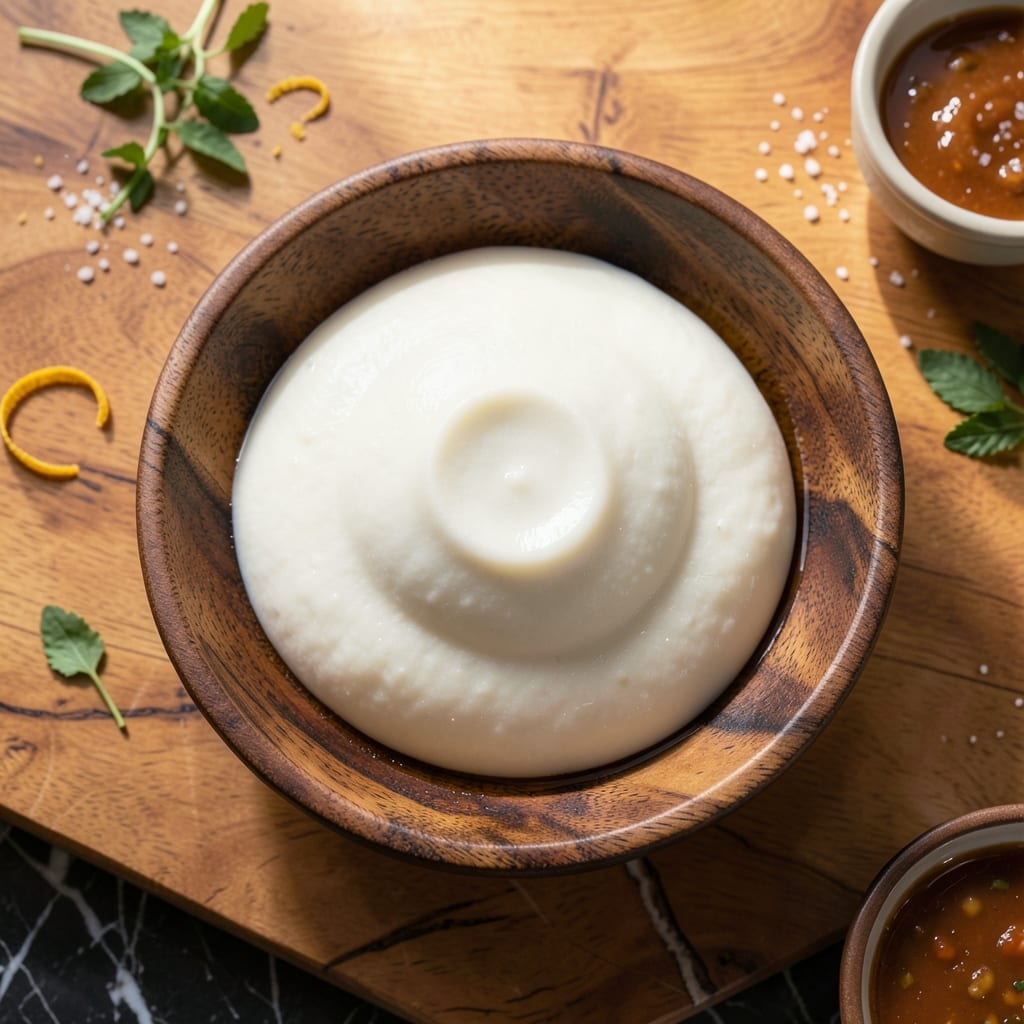
This traditional West African staple brings the authentic taste of fufu to your kitchen using an accessible ingredient. Cassava flour creates the same smooth, stretchy texture you expect without the need for fresh cassava.
The process requires patience as you gradually incorporate boiling water into the flour, then knead until perfectly elastic. Proper hydration and technique ensure the dough achieves its signature pillowy consistency.
What emerges is a neutral-flavored accompaniment that pairs beautifully with soups and stews. The dough should be firm yet pliable, ready to soak up every bit of flavor from your favorite dishes.
This method delivers restaurant-quality results with minimal ingredients and no specialized equipment. The key lies in the kneading process and getting the water ratio just right.
Ingredients for Fufu Recipe with Cassava Flour
Just five simple components to make this authentic West African staple at home.
| Ingredient | Amount | Notes |
|---|---|---|
| Cassava Flour 🌾 | 2 cups | Fine, white variety preferred |
| Boiling Water 💧 | 1 ½ cups | Freshly boiled for activation |
| Salt 🧂 | ½ tsp | Fine sea salt preferred |
| Neutral Oil 🫒 | 1 tbsp | For greasing hands and bowl |
| Warm Water 💧 | ½ cup | As needed for adjustment |
The cassava flour is everything here. Bob’s Red Mill is widely available and reliable, but I’ve also had luck with Otto’s brand (just check the label for 100% cassava). The texture should be fine and powdery—lumpy or coarse flour won’t give you that silky finish. African markets often carry it too if you want to support local businesses.
No cassava flour? Don’t bother with substitutes—tapioca or regular flour won’t work. The boiling water must be rolling boil when you add it, or the dough won’t set properly. Salt can be adjusted to taste, but don’t skip it entirely. If the dough feels too stiff, the warm water is your lifeline—add it slowly, a tablespoon at a time.
Fufu is best served fresh, but leftovers keep wrapped tightly in plastic for 2 days at room temperature. Reheat by steaming for 5 minutes to restore the stretch. Don’t refrigerate—it’ll harden and lose that pillowy texture (trust me on this one).
Why You’ll Love This Recipe
- No-Fuss Mixing: Honestly, it’s just cassava flour and hot water—no kneading, no resting, just stir and shape.
- Pillowy Texture: That smooth, stretchy bite with a hint of salt? It soaks up stews like a dream.
- Weeknight Ready: I throw it together while the soup simmers—dinner’s on the table in under 20 minutes.
- Budget Stretch: A bag of cassava flour makes multiple batches, and leftovers reheat beautifully for lunch the next day.
Step-by-Step Instructions for Fufu With Cassava Flour
Here’s the method that delivers perfectly smooth, stretchy fufu every time without fail.
Step 1: Activate the Cassava Flour with Boiling Water
In a large heatproof bowl, combine the 2 cups Cassava Flour and 0.5 tsp Salt. I always use fine white cassava flour for the smoothest texture—coarser varieties can leave your fufu grainy.
Create a well in the center and pour in all 1.5 cups Boiling Water at once. Let it sit undisturbed for 30 seconds to allow the flour to begin hydrating. You’ll see the mixture steam and start to thicken immediately.
Using a wooden spoon, begin stirring from the center outward in a circular motion. The dough will transform from a dry powder to a thick, sticky paste. Work quickly but carefully—the steam is hot. Keep stirring until no dry spots remain and the mixture pulls away from the sides of the bowl.
Step 2: Knead the Dough to Develop Texture
Rub the 1 tbsp Neutral Oil on your hands to prevent sticking—this is essential. Transfer the dough to a clean, lightly oiled surface. The dough will be very hot at first, so let it cool for 2-3 minutes until it’s comfortable to handle.
Begin kneading by folding the dough over itself and pressing down with the heel of your hand. I’ve found that kneading for 8-10 minutes develops the stretchy, elastic texture that defines good fufu. The dough should become smooth, slightly glossy, and pull apart cleanly when stretched.
If the dough feels too stiff, add the 0.5 cup Warm Water 1 tablespoon at a time as you knead. You might not need all of it—the right consistency is soft but not sticky. The dough should spring back slightly when pressed.
Step 3: Shape and Rest the Fufu
Once kneaded to perfection, divide the dough into 4 equal portions (since this makes 4 servings). Roll each portion between your palms to form smooth balls. Here’s the thing—fresh fufu should have a slightly tacky surface but not stick to your hands.
Place each ball on a lightly oiled plate or in a bowl. Cover with a damp towel and let rest for 5-10 minutes. This resting period allows the cassava flour to fully absorb the liquid and the gluten-like structure to set.
You’ll know it’s ready when the surface looks smooth and the dough holds its shape without spreading. The resting time also makes the fufu easier to handle when serving.
Step 4: Serve Warm with Your Favorite Sauce
Fufu is best served immediately while still warm. The texture should be soft, slightly chewy, and stretchy when pulled apart. I like to serve mine in a bowl with a small indentation in the center to hold the sauce.
Traditionally, fufu is eaten with the hands—pinch off a small piece, roll it into a ball, dip it into sauce, and enjoy. The dough should be smooth enough that it doesn’t crumble but stretchy enough to pull apart easily.
If the fufu cools and becomes too firm, you can gently reheat it by wrapping in a damp towel and microwaving for 20-30 seconds. Just be careful not to overheat, or it may become dry.
Pro Tips For Making Fufu Recipe With Cassava Flour
- Boil Water First: Always have your water at a rolling boil before adding cassava flour—I learned this the hard way after ending up with lumpy, undercooked fufu.
- Sift the Flour: Sifting the cassava flour before mixing breaks up clumps and gives you a smoother, more consistent texture.
- Avoid Cold Water: Using cold water instead of warm for the final kneading stage makes the dough stiff and hard to work with—stick to warm, about 110°F.
- Oil Your Hands: Rub a little neutral oil on your hands before shaping the fufu to prevent sticking and make the dough easier to handle.
Best Sauces and Condiments for This fufu recipe with cassava flour
Classic Egusi Soup
The ultimate pairing for fufu is a rich, nutty Egusi soup made with ground melon seeds. I simmer 1 cup egusi paste with 2 cups spinach, 1 lb smoked fish, and 1 tsp crayfish powder for depth. The thick texture clings perfectly to the dough. 💫
Spicy Peanut Stew
West African peanut stew offers a creamy, fiery contrast. Blend ½ cup peanut butter with 1 can diced tomatoes, 1 chopped onion, and 1 tbsp ginger. Add 1 tsp cayenne for heat—the smooth sauce soaks beautifully into your meal.
Light Tomato Sauce
For a simpler option, blend 4 fresh tomatoes, 1 red bell pepper, and 1 scotch bonnet. Simmer with 1 tbsp palm oil and 1 tsp dried shrimp. The bright acidity cuts through the fufu’s density.
Coconut Curry
Try a coconut-based curry with 1 can coconut milk, 2 tbsp curry powder, and 1 lb chicken. The creamy, fragrant sauce creates an exciting flavor combination. I always add 1 tsp turmeric for color.
Palm Nut Soup
This Ghanaian favorite uses 1 cup palm nut pulp blended with 2 cups water. Add 1 smoked turkey leg and 1 cup okra. The thick, orange soup has a unique earthy taste that complements the dough perfectly.
Nutrition Facts
Frequently Asked Questions
Can I use regular flour instead of cassava?
No, regular flour won’t work. Cassava flour has unique properties that create the stretchy texture. Substitutes like tapioca or wheat flour will give you a completely different result.
Why does my dough crack while kneading?
This usually means it’s too dry. Add 1 tablespoon of warm water at a time until smooth. The dough should be soft but not sticky when properly hydrated.
How do I store leftovers?
Wrap tightly in plastic and keep at room temperature for 2 days. Reheat by steaming for 5 minutes to restore the texture. Avoid refrigeration as it becomes hard.
Can I make this in advance?
It’s best fresh, but you can prepare the dough 1 hour ahead. Keep it covered with a damp towel to prevent drying. Re-knead briefly before serving if needed.

- Peach Syrup Recipe for Ice Cream: Sweet and Silky Drizzle for Scoops - October 6, 2026
- Pav Bhaji Recipe Food Lab: Mumbai Street Food Magic at Home - October 6, 2026
- Peach Jelly Recipe Without Pectin: Naturally Set Sweet Spread - October 6, 2026