
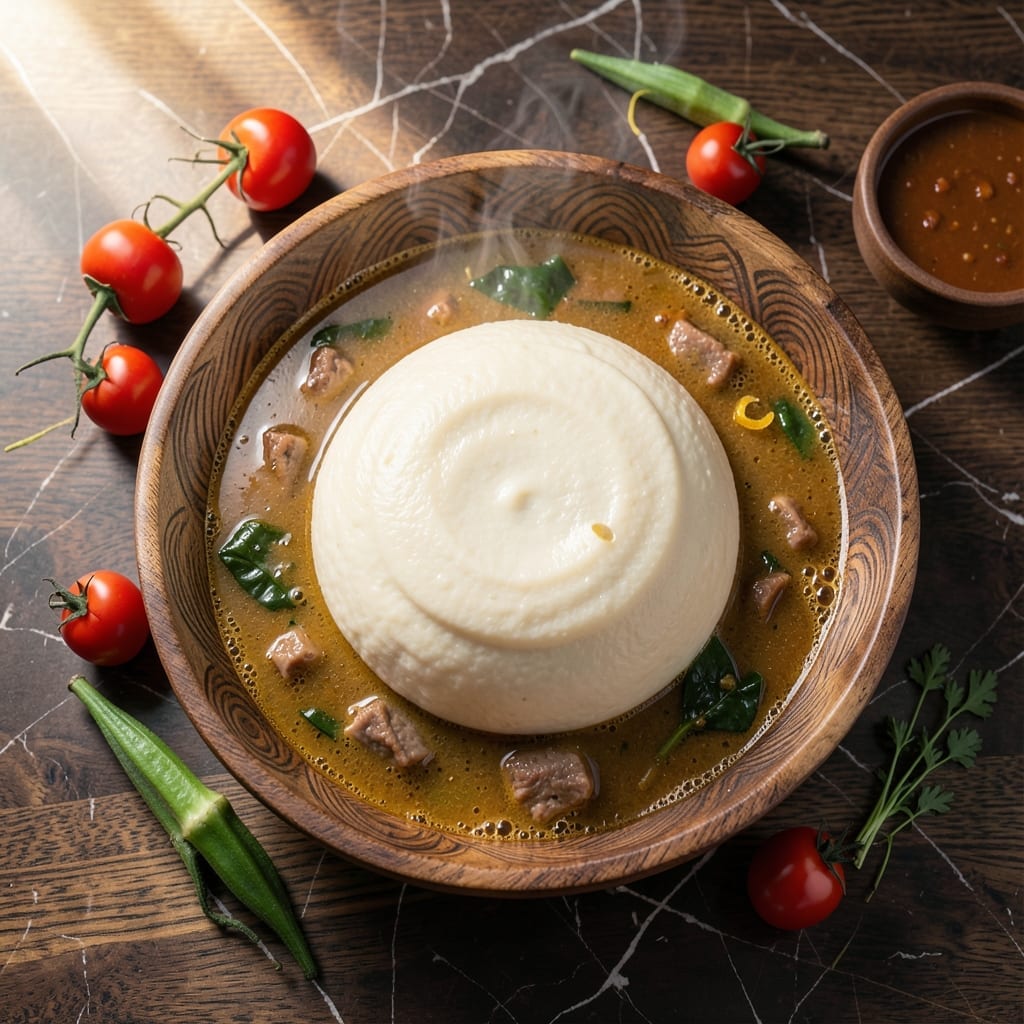
There’s a smarter way to make fufu that skips the labor of pounding while keeping its signature smooth, stretchy texture. This method uses flour and water to achieve the same satisfying consistency without the effort.
With just a few simple ingredients and a little patience, you can create a smooth, elastic dough that pairs perfectly with soups and stews. It’s a modern take on a classic staple.
Ingredients for Fufu Recipe with Flour
Seven simple ingredients transform into a silky, stretchy dough with modern ease.
| Ingredient | Amount | Notes |
|---|---|---|
| All-Purpose Flour 🌾 | 2 cups | Sifted for smooth texture |
| Water 💧 | 1 ½ cups | Warm, divided for mixing |
| Salt 🧂 | 1 tsp | Fine sea salt preferred |
| Neutral Oil 🫒 | 1 tbsp | For dough elasticity |
| Cornstarch 🌽 | ¼ cup | Optional for stretchiness |
| Baking Powder ⛽ | ½ tsp | For slight lift |
| Plant-Based Milk 🥛 | ¼ cup | Unsweetened for consistency |
The flour quality matters most here. King Arthur or Bob’s Red Mill all-purpose gives the smoothest results (avoid bread flour—too much gluten). Warm water activates the starches better than cold, so heat it to about 110°F (not boiling). A pinch of fine sea salt enhances the neutral base without overpowering. Most grocery stores carry these—no specialty shops needed for this version.
No all-purpose flour? Cassava flour at a 1:1 ratio works surprisingly well. Out of cornstarch? Skip it—the dough will still come together, just slightly less stretchy. Plant-based milk can be any unsweetened variety (almond or oat are my go-tos). The oil is flexible too—avocado or light olive oil both work. Just avoid coconut oil; it solidifies when cool.
The dough keeps fresh for 2 days wrapped tightly in plastic at room temperature. For longer storage, refrigerate up to 5 days or freeze portions for 1 month. Reheat steamed portions briefly to restore that signature smooth texture.
Why You’ll Love This Recipe
- 5-Minute Mix: I just stir flour, water, and a pinch of salt—no kneading, no resting, ready before the soup even simmers.
- Pillowy Perfection: The cornstarch gives it that stretchy, smooth texture that soaks up stews like a dream.
- Pairs with Anything: Honestly, I serve it with peanut soup one night and egusi the next—it never clashes.
- Penny-Wise Portions: A cup of flour and a few cents’ worth of oil make enough to fill four bowls.
Step-by-Step Instructions for Fufu With Flour
This method delivers traditionally smooth fufu texture with modern convenience.
Step 1: Combine Dry Ingredients
In a large mixing bowl, whisk together the 2 cups All-Purpose Flour, 0.25 cup Cornstarch, 0.5 tsp Baking Powder, and 1 tsp Salt. I sift these together to ensure even distribution of the leavening agent and prevent clumping.
The cornstarch modifies the flour’s protein structure, creating that signature stretchy texture fufu is known for. The baking powder adds subtle lift without altering the traditional taste. Make sure your bowl is large enough to accommodate the liquid additions later.
Step 2: Create the Liquid Mixture
In a separate bowl, combine the 1.5 cups Water and 0.25 cup Plant-Based Milk. I use warm water here to activate the baking powder immediately upon mixing. The plant-based milk adds richness while keeping the mixture dairy-free.
Add the 1 tbsp Neutral Oil to this liquid mixture and whisk until fully emulsified. The oil creates a more pliable dough that’s easier to work with and mimics the slight fat content found in traditional pounded yam fufu. You should see small bubbles forming on the surface when properly combined.
Step 3: Form and Knead the Dough
Pour the wet ingredients into the dry ingredients all at once. Stir with a wooden spoon until a shaggy dough forms. You’ll notice it comes together quickly – this is the baking powder reacting with the liquids.
Turn the dough onto a clean surface and knead for 8-10 minutes until smooth and elastic. The dough should be slightly tacky but not sticky. If it sticks to your hands, dust lightly with some of the reserved flour. Proper kneading develops the gluten network that gives fufu its characteristic chewy texture.
Step 4: Shape and Rest the Dough
Divide the dough into 4 equal portions and shape each into a smooth ball. Place these on a clean surface, cover with a damp towel, and let rest for 15-20 minutes. This resting period allows the gluten to relax and the dough to hydrate fully.
You’ll know it’s ready when you press a finger into the dough and it springs back slowly. The surface should appear slightly glossy from the oil in the mixture. This step ensures your fufu will have that perfect smooth, stretchy consistency when cooked.
Step 5: Cook the Dough Balls
Bring a large pot of water to a rolling boil. Gently drop in the dough balls one at a time. They should sink initially then float to the surface within 2-3 minutes. Let them cook for an additional 8-10 minutes after floating.
Use a slotted spoon to remove the cooked fufu from the water. The finished balls should be firm to the touch with a smooth, slightly glossy surface. For the most authentic texture, immediately transfer them to a bowl of cold water to stop the cooking process and enhance the chewiness.
Pro Tips For Making Fufu Recipe With Flour
- Knead While Warm: Work the dough while it’s still warm from the water—about 5 minutes of vigorous kneading gives it that smooth, stretchy texture. I learned this the hard way after my first few attempts turned out dense and gummy.
- Use Lukewarm Water: Skip the cold tap water; lukewarm (around 110°F) blends better with the flour and activates the starches without overcooking the cornstarch. Sounds picky, but it actually changes the outcome.
- Don’t Over-Flour: Resist the urge to dust your hands with too much flour—just a light coating prevents sticking without making the fufu dry or crumbly. My grandmother swore by this, and she was right.
- Rest Before Rolling: Let the dough rest for 10 minutes under a damp towel after kneading—it relaxes the gluten and makes rolling into balls way easier. I skip this when I’m lazy, but the texture suffers every time.
Make-Ahead Tips for This Dish
Room Temperature Storage
After cooking, let your fufu cool completely. Store in an airtight container at room temperature for up to 2 days. I keep mine in a glass bowl covered tightly with plastic wrap. 💡
Refrigerator Storage
For longer freshness, refrigerate the cooled fufu in sealed containers for up to 5 days. The texture may firm up slightly, but it softens when reheated. I recommend portioning into individual servings before chilling.
Freezing Method
Freeze cooked fufu balls in a single layer on a tray first, then transfer to freezer bags. This prevents sticking and allows you to grab just what you need. They keep well for 1 month at 0°F. ❄️
Reheating Steamed
Steam frozen or refrigerated fufu for 5-7 minutes to restore its soft, stretchy texture. Add 2 tbsp water to the steamer to prevent drying. This method works best for maintaining authenticity.
Microwave Option
Place a portion on a microwave-safe plate with a damp paper towel. Heat on 50% power for 1-2 minutes, flipping halfway. The towel adds moisture to prevent rubberiness.
Reviving Texture
If your stored fufu feels dense, knead it briefly with 1 tsp warm water before reheating. This simple trick brings back the signature elasticity. I do this when using leftovers for soups.
Frequently Asked Questions
Can I use whole wheat flour instead?
Yes, but the texture will be denser. Replace up to 50% of all-purpose with whole wheat for a nuttier flavor while keeping some lightness.
Why did my dough turn out sticky?
This usually means too much liquid. Add 1-2 tbsp more flour while kneading until it reaches a smooth, elastic consistency. Avoid adding all at once.
How do I know when it’s fully cooked?
The balls will float to the surface and feel firm when pressed. They should cook for 8-10 minutes after floating for perfect texture.
Can I make this without cornstarch?
Skip it entirely—the dough will still form, though it may be slightly less stretchy. The baking powder helps maintain softness.
Nutrition Facts

- BBQ Sausage Recipe Oven: Smoky Depth Without the Grill - September 28, 2026
- BBQ Chicken Bowl Recipe Rice: Smoky Sweetness Over Fluffy Grains - September 28, 2026
- Beef Cutlet Recipe Ideas: Crispy Breaded Patties With Bold Seasonings - September 28, 2026