
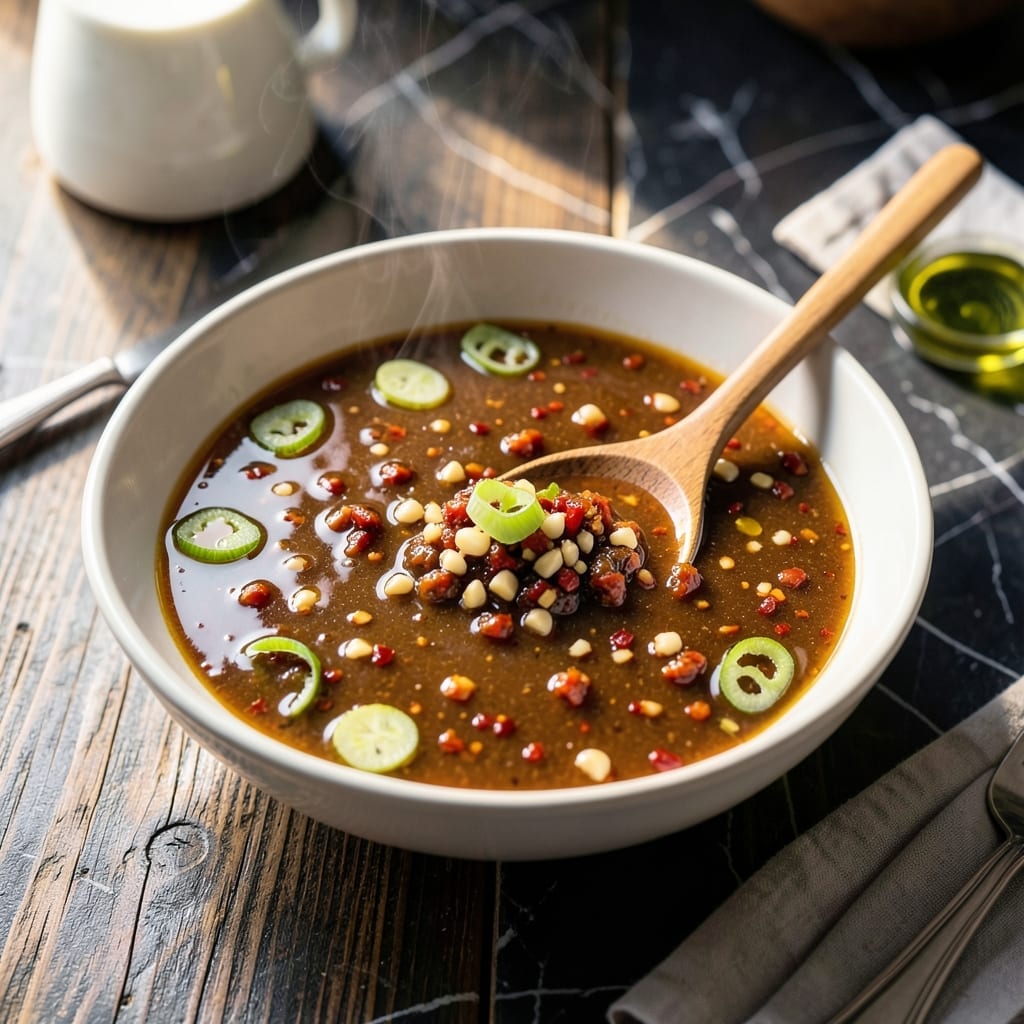
This easy sauce transforms basic takeout into restaurant-quality dishes with minimal effort. I developed this version using only pantry staples, proving that bold Asian flavors don’t require specialty ingredients.
The key lies in balancing sweet and spicy elements through a precise combination of soy sauce, rice vinegar, and chili paste. A quick simmer thickens the mixture into a glossy glaze that clings perfectly to proteins or vegetables.
What results is a versatile sauce that works with chicken, tofu, or as a stir-fry finish. It keeps well in the fridge for up to two weeks, making it ideal for quick meals.
No complicated techniques—just stir, simmer, and enjoy the flavor boost this brings to your cooking.
Ingredients for General Tso Sauce Recipe Easy
Nine pantry staples create this bold sweet-spicy glaze for takeout transformation.
| Ingredient | Amount | Notes |
|---|---|---|
| Soy Sauce 🥫 | ½ cup | Low-sodium preferred for balance |
| Rice Vinegar 🍚 | ¼ cup | Unseasoned variety works best |
| Brown Sugar 🍚 | ¼ cup | Packed for sweetness depth |
| Chili Paste 🌶️ | 2 tbsp | Sambal oelek or gochujang |
| Minced Garlic 🧄 | 2 tbsp | Fresh or jarred both fine |
| Fresh Ginger 🌿 | 1 tbsp | Grated or finely minced |
| Cornstarch 🌾 | 1 tbsp | For glossy thickening power |
| Water 💧 | ¼ cup | To thin the sauce |
| Sesame Oil 🫒 | 1 tsp | Toasted for nutty aroma |
The chili paste is non-negotiable for that signature heat. Huy Fong or Sambal Oelek are easy to find at most grocery stores (look in the Asian aisle). Fresh ginger and garlic add brightness—jarred minced works in a pinch (I keep both on hand). Soy sauce brands matter less, but Kikkoman or La Choy are reliable. Brown sugar gives depth—light or dark both work here.
No chili paste? Sriracha at half the amount gets you close (add a pinch of sugar to balance). Swap rice vinegar for apple cider in a bind. Cornstarch can be replaced with arrowroot at one-for-one. For extra depth, a splash of hoisin sauce (if you have it) boosts the umami. The sesame oil is for finishing—don’t cook with it or it’ll turn bitter.
This keeps beautifully in a sealed jar for 2 weeks in the fridge. Thin with water if it thickens too much. Freezes for 3 months (portion into ice cube trays for easy use). Always give it a stir before using—the flavors meld more over time.
Why You’ll Love This Recipe
- One-Pot Wonder: I toss everything in a saucepan—soy sauce, vinegar, sugar, chili paste, garlic—and 10 minutes later it’s done.
- Sweet Heat Balance: The brown sugar caramelizes just enough to mellow the chili paste’s kick, while garlic adds that savory depth I crave.
- Weeknight Hero: I drizzle this over chicken, tofu, or even roasted veggies when I need dinner fast. (Yes, even on a Tuesday night)
- Budget Stretcher: A batch costs pennies and keeps for a week in the fridge, so I always have a flavor boost ready.
Step-by-Step Instructions for General Tso Sauce
Here’s the simple method I use to create this sweet-spicy sauce in minutes.
Step 1: Combine the Sauce Base Ingredients
In a medium saucepan, whisk together the 0.5 cup Soy Sauce, 0.25 cup Rice Vinegar, and 0.25 cup Brown Sugar. I like to use a whisk to ensure the brown sugar dissolves completely, especially if it’s packed.
Place the saucepan over medium heat and stir occasionally. You’ll notice the mixture start to simmer gently at the edges—that’s your cue that the sugar has fully dissolved and the flavors are beginning to meld together.
Step 2: Add Aromatics and Chili Paste
Once the base is simmering, stir in the 2 tbsp Chili Paste, 2 tbsp Minced Garlic, and 1 tbsp Fresh Ginger. The garlic and ginger will release their fragrance immediately, filling your kitchen with that unmistakable Asian-inspired aroma.
Let this mixture simmer for 2-3 minutes, stirring frequently. You want the garlic to soften slightly but not brown—browned garlic can turn bitter. The chili paste will deepen in color as it cooks, signaling that its flavors are infusing into the sauce.
Step 3: Create the Cornstarch Slurry
In a small bowl, combine the 1 tbsp Cornstarch with the 0.25 cup Water. Stir until completely smooth—there should be no lumps. I’ve found that using cold water helps prevent clumping more effectively than warm.
This slurry is what will transform your thin, flavorful liquid into a glossy, clingy sauce perfect for coating chicken or vegetables. The cornstarch needs to be fully dissolved before adding to the hot mixture to prevent lumps in your final sauce.
Step 4: Thicken and Finish the Sauce
Slowly pour the cornstarch slurry into the simmering sauce while stirring constantly. The mixture will begin to thicken immediately—watch for it to turn from a thin liquid to a glossy, syrup-like consistency that coats the back of a spoon.
Once thickened, remove from heat and stir in the 1 tsp Sesame Oil. This final touch adds a nutty depth that rounds out the sweet, spicy, and tangy flavors. The sauce should be thick enough to drizzle but still pourable.
Let it cool for 2-3 minutes before using—the sauce will thicken slightly more as it cools.
Pro Tips For Making General Tso Sauce Recipe Easy
- Bloom the Garlic: Cook minced garlic in oil for 30 seconds before adding other ingredients—I learned this the hard way after tasting raw garlic bits in my sauce.
- Balance the Sweet: Brown sugar can overpower, so start with 1 tablespoon less than the recipe calls for, then adjust to taste at the end.
- Simmer the Sauce: Let it bubble for 2-3 minutes after combining all ingredients to thicken properly and meld the flavors.
- Use Fresh Chili Paste: That old jar in your fridge loses its punch—fresh chili paste makes a real difference in both heat and color.
Storing and Reheating Leftovers
Refrigerator Storage
Let the sauce cool completely at room temperature for no more than 2 hours. Transfer to a clean, airtight container—I prefer glass jars with tight lids. Store in the fridge at 40°F or below for up to 2 weeks. 🥫
Freezer Storage
For longer storage, portion into ice cube trays or small freezer-safe containers. Leave ½ inch headspace to prevent expansion cracks. Freeze for up to 3 months without quality loss. I label mine with the date to track freshness.
Thawing Method
Transfer frozen portions to the fridge and thaw overnight for best results. For quick use, place the sealed container in a bowl of cold water, changing the water every 30 minutes. Never thaw at room temperature.
Reheating on Stovetop
Pour desired amount into a small saucepan and heat over low-medium heat. Add 1-2 tsp water if it’s too thick. Stir frequently for 3-5 minutes until warmed through. Watch closely—sauces can burn easily.
Microwave Reheating
Use 15-second intervals at 50% power, stirring between each, until just warm. This prevents scorching. Cover with a damp paper towel to retain moisture. The sauce will loosen as it heats.
Usage Tip
Always give it a good stir before using—the flavors meld more over time. If separation occurs, just whisk vigorously to recombine. This sauce actually tastes better the next day as the spices deepen. ✨
Nutrition Facts
Frequently Asked Questions
Can I use regular sugar instead of brown?
Yes, but brown sugar adds molasses depth. For white sugar, add 1 tsp molasses or 1 extra tbsp soy sauce to compensate. The difference is subtle but noticeable.
What if I don’t have chili paste?
Substitute 1 tbsp Sriracha plus 1 tsp sugar, or ½ tsp red pepper flakes steeped in hot oil. Adjust heat to taste. Sambal oelek is the closest direct replacement.
How do I fix sauce that’s too thin?
Mix ½ tbsp cornstarch with 1 tbsp water, then stir into simmering sauce. Repeat as needed. Avoid over-thickening—it tightens as it cools.
Can this sauce be made ahead?
It keeps 2 weeks refrigerated and 3 months frozen. Flavors deepen overnight. Thaw in fridge before reheating.

- BBQ Sausage Recipe Oven: Smoky Depth Without the Grill - September 28, 2026
- BBQ Chicken Bowl Recipe Rice: Smoky Sweetness Over Fluffy Grains - September 28, 2026
- Beef Cutlet Recipe Ideas: Crispy Breaded Patties With Bold Seasonings - September 28, 2026