
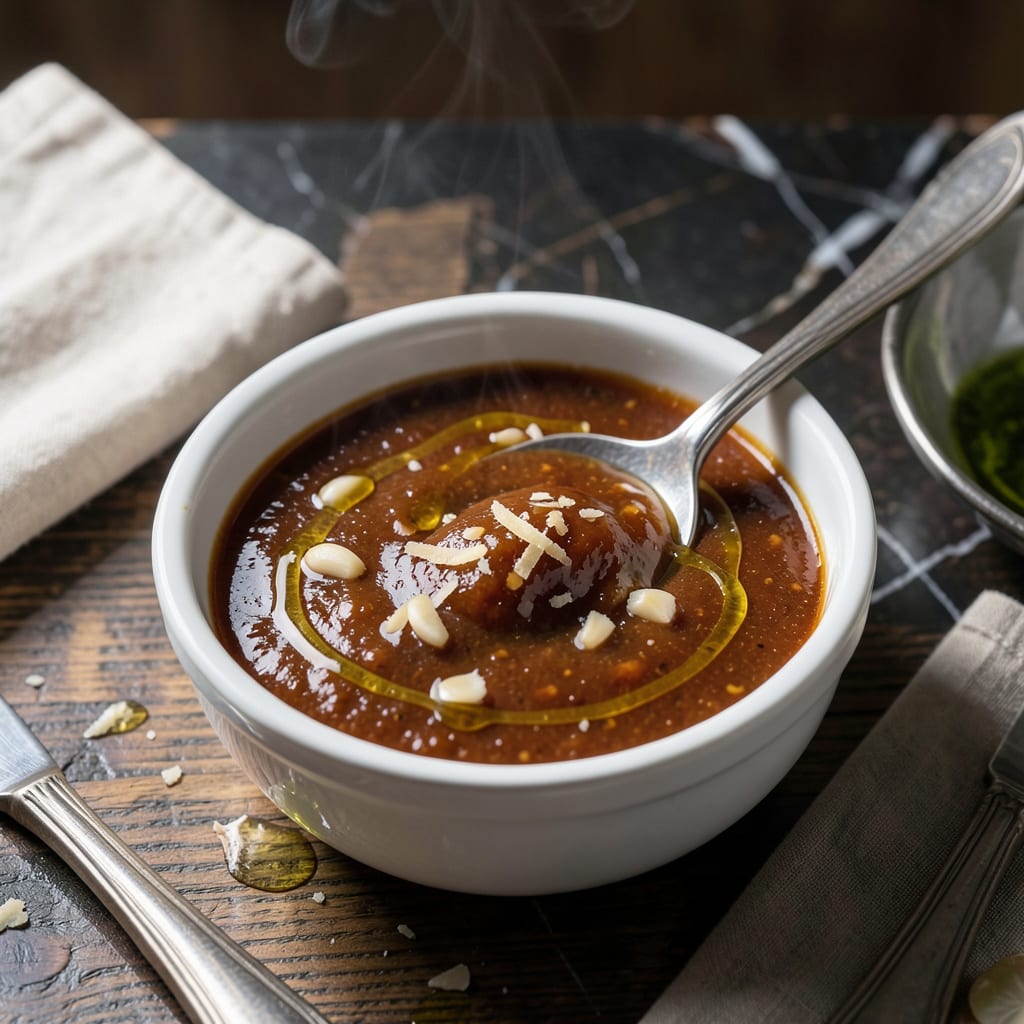
This takeout-style glaze delivers the perfect balance of sweet, spicy, and tangy flavors that define classic General Tso dishes. The sauce comes together in 10 minutes with simple pantry staples.
With its glossy finish and bold taste, this versatile sauce elevates chicken, tofu, or vegetables. Store leftovers in the fridge for up to 5 days to add quick flavor to any meal.
Ingredients for General Tso Sauce
Ten pantry staples create this glossy, bold takeout-style glaze with iconic sweet-spicy balance.
| Ingredient | Amount | Notes |
|---|---|---|
| Soy Sauce 🥫 | ½ cup | Low-sodium preferred for balance |
| Rice Vinegar 🍶 | ¼ cup | Provides essential tanginess |
| Hoisin Sauce 🫕 | 3 tbsp | Adds depth and sweetness |
| Brown Sugar 🍚 | ¼ cup | Packed, for caramelization |
| Honey 🍯 | 2 tbsp | For natural sweetness |
| Garlic Cloves 🧄 | 4 cloves | Minced for aromatic base |
| Fresh Ginger 🌿 | 1 tbsp | Grated, for zesty kick |
| Red Pepper Flakes 🌶️ | 1 tsp | Adjust for heat preference |
| Sesame Oil 🫒 | 1 tsp | Toasted, for nutty aroma |
| Cornstarch 🌾 | 1 tbsp | Slurry with water to thicken |
The soy sauce is non-negotiable—Kikkoman or San-J for consistent quality. Hoisin sauce adds that signature depth; look for it in the Asian aisle at Kroger or Walmart. Fresh ginger and garlic are essential (the jarred stuff lacks punch). For the best texture, use light brown sugar—it dissolves more evenly than granulated.
No hoisin? Substitute 2 tbsp soy sauce + 1 tbsp molasses + 1 tsp rice vinegar. Red pepper flakes can be swapped for Sriracha at half the amount. Honey is vegetarian-friendly here (unlike some strict vegan versions). Want it thicker? Increase cornstarch to 1.5 tbsp. For extra umami, a splash of oyster sauce (vegetarian version) works wonders.
This sauce keeps beautifully. Refrigerate in an airtight container for up to 5 days. For longer storage, freeze in ice cube trays for 3 months. The cornstarch may separate slightly—just whisk before reheating. Always bring to a simmer when reheating to restore the gloss.
Why You’ll Love This Recipe
- 5-Minute Mix: I just dump soy sauce, vinegar, hoisin, and sugars in a pot—no chopping, no fuss.
- Sticky Sweet Heat: The honey and brown sugar caramelize into this glossy, finger-licking glaze that clings to every bite.
- Takeout, Remixed: I toss it with chicken one night, drizzle it on tofu the next, and it still feels fresh.
- Fridge Lifesaver: Leftovers keep for a week, so I can make a double batch and have quick dinners ready to go.
Step-by-Step Instructions for General Tso Sauce
Master this takeout classic with precision and technique for restaurant-quality results at home.
Step 1: Bloom Aromatics in Sesame Oil
Heat a medium saucepan over medium heat and add the 1 tsp Sesame Oil. Once it shimmers, add the 4 cloves Garlic Cloves (minced) and 1 tbsp Fresh Ginger (grated). Stir constantly for 30-45 seconds until the mixture becomes fragrant and the garlic turns just slightly golden at the edges.
This blooming process releases the essential oils from the garlic and ginger, creating the aromatic foundation of the sauce. Be careful not to let the garlic brown too much, as it can turn bitter and overpower the other flavors in this dish.
Step 2: Combine Liquid Ingredients and Sweeteners
Add the 0.5 cup Soy Sauce, 0.25 cup Rice Vinegar, 3 tbsp Hoisin Sauce, 0.25 cup Brown Sugar (packed), and 2 tbsp Honey to the saucepan. Stir well to dissolve the brown sugar completely, which should take about 1-2 minutes over medium heat.
The hoisin sauce provides depth and umami, while the brown sugar and honey balance the saltiness of the soy sauce with sweetness. The rice vinegar adds the necessary tang that defines this takeout-style glaze. Bring the mixture to a gentle simmer, stirring occasionally to prevent scorching.
Step 3: Add Heat and Simmer
Sprinkle in the 1 tsp Red Pepper Flakes and stir to distribute evenly. Allow the mixture to simmer for 5-7 minutes until the sauce has thickened slightly and the flavors have begun to meld together. The red pepper flakes will infuse the sauce with a subtle heat that builds as it cooks.
Taste the sauce at this point and adjust the heat level if needed. For a milder sauce, you can reduce the red pepper flakes or remove some with a spoon. The sauce should be balanced—sweet, tangy, and slightly spicy, with a rich umami depth from the hoisin and soy.
Step 4: Thicken to Glossy Perfection
In a small bowl, mix the 1 tbsp Cornstarch with 2 tablespoons of cold water to create a slurry. Slowly pour the slurry into the simmering sauce while whisking constantly to prevent lumps from forming. Continue to cook for an additional 2-3 minutes until the sauce thickens to a glossy, syrup-like consistency that coats the back of a spoon.
The cornstarch slurry is essential for achieving the signature thick, clingy texture of General Tso sauce. If the sauce becomes too thick, you can thin it with a splash of water. If it’s too thin, mix another ½ tsp of cornstarch with water and repeat the process.
Pro Tips For Making General Tso Sauce
- Simmer Gently: Keep the heat at a low simmer once all ingredients are combined—boiling hard will make the sugars in the honey and brown sugar caramelize too fast and turn the sauce bitter.
- Measure the Hoisin: Hoisin is salty and strong, so I learned the hard way to measure it exactly instead of eyeballing; a little extra can overpower the sweet-tangy balance.
- Bloom the Aromatics: If your recipe includes garlic or ginger, cook them in a little oil for 30 seconds before adding the liquids—this wakes up their flavor and makes the sauce taste deeper.
- Thin with Water: If the sauce thickens too much while reducing, stir in a tablespoon of warm water at a time to loosen it without diluting the flavor.
Regional Styles of These Flavors
Classic Chinese Takeout
The original version from Hunan province uses dried red chilies instead of flakes for a deeper, more complex heat. I always add 1 star anise pod while simmering for authentic five-spice undertones. Remove it before thickening. 🗺️
Americanized Version
Most US restaurants sweeten theirs more heavily—try adding an extra 2 tbsp brown sugar. They also often use ketchup (2 tbsp) for tang and color. This adaptation became popular in New York in the 1970s.
Sichuan Style
For numbing spice, add ½ tsp Sichuan peppercorns to the oil with garlic and ginger. The tingling sensation pairs perfectly with the heat. I toast the peppercorns first to enhance their aroma.
Thai Fusion
Incorporate 1 tbsp fish sauce and 1 stalk lemongrass (bruised) for a Southeast Asian twist. The fish sauce adds umami depth while lemongrass brings citrusy brightness. 💛
Vegetarian Adaptation
Replace honey with maple syrup and ensure hoisin is vegan—some brands contain fish. Add 1 tbsp mushroom oyster sauce for extra umami without animal products.
Korean Gochujang
Stir in 1 tbsp gochujang paste at the end for fermented chili complexity. Reduce red pepper flakes to ½ tsp to balance the heat. This version works beautifully with fried tofu. 🔥
Nutrition Facts
Frequently Asked Questions
Can I make this sauce ahead of time?
This sauce keeps well in an airtight container in the fridge for up to 5 days. Reheat gently on the stove, adding a splash of water if it thickens too much.
What can I use instead of hoisin sauce?
Mix 2 tbsp soy sauce with 1 tbsp molasses and 1 tsp rice vinegar for a quick substitute. This maintains the sweet-savory balance the recipe needs.
How do I adjust the spice level?
Start with ½ tsp red pepper flakes for mild heat. For more kick, add up to 1½ tsp. Remove some flakes after simmering if the flavor becomes too intense.
Why did my sauce turn out thin?
Ensure the cornstarch slurry simmers for 2-3 minutes to activate. If still thin, mix another ½ tsp cornstarch with water and repeat the process.

- BBQ Sausage Recipe Oven: Smoky Depth Without the Grill - September 28, 2026
- BBQ Chicken Bowl Recipe Rice: Smoky Sweetness Over Fluffy Grains - September 28, 2026
- Beef Cutlet Recipe Ideas: Crispy Breaded Patties With Bold Seasonings - September 28, 2026