
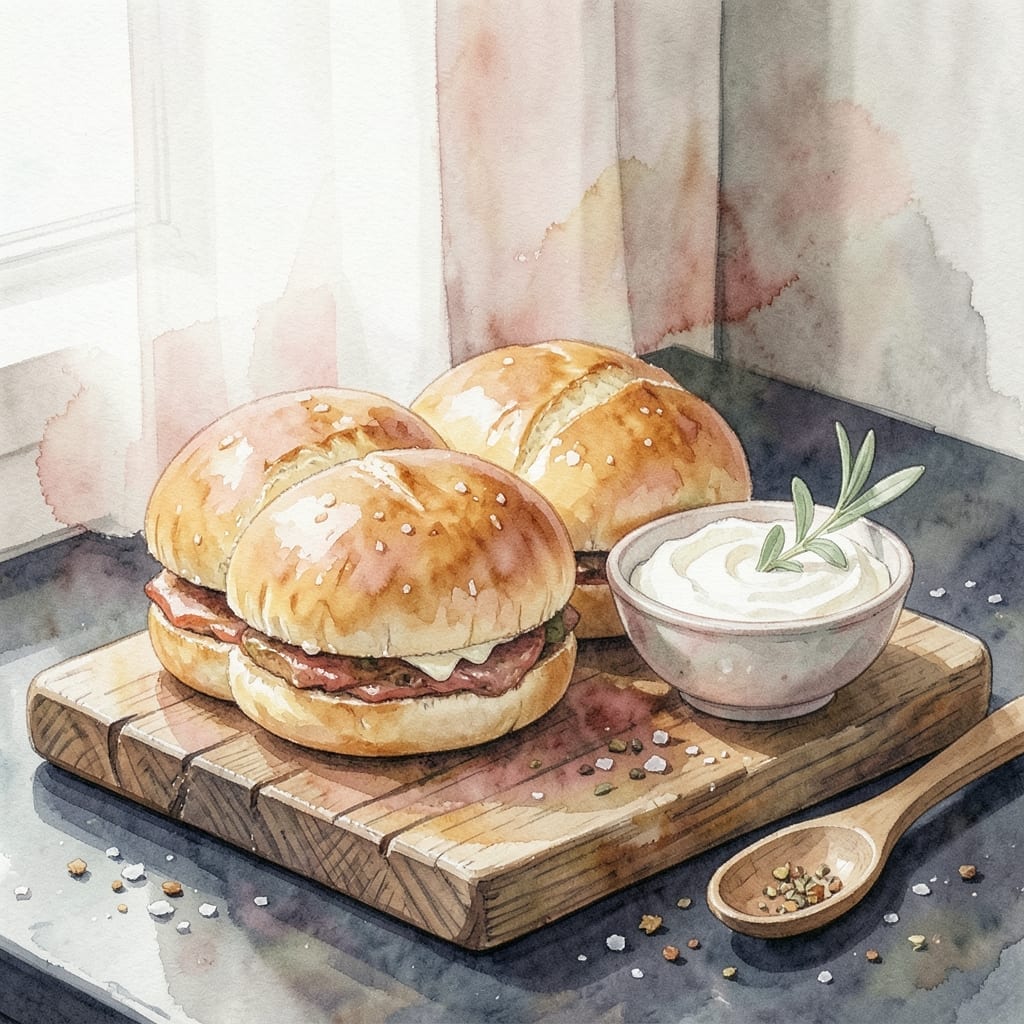
I’ve spent years perfecting gluten-free baking, and these no-yeast hamburger buns are the result of countless trials. They deliver soft, chewy texture without the wait or complexity of traditional recipes.
This method uses a simple mix of gluten-free flours and baking powder for lift, creating buns that hold up to juicy burgers and toppings. No special equipment is needed—just a bowl, a spoon, and an oven.
The dough comes together in minutes, bakes in under 20 minutes, and produces buns with a tender crumb and golden crust. They’re sturdy enough for grilling season but light enough for sandwiches year-round.
Best of all, they taste like the real deal—no gummy or dense results here. Let’s get started.
Ingredients for Gluten Free Hamburger Buns Recipe No Yeast
Simple gluten-free flours and pantry staples create these soft, chewy buns with ease.
| Ingredient | Amount | Notes |
|---|---|---|
| Gluten-Free All-Purpose Flour 🌾 | 2 cups | Plus extra for dusting |
| Baking Powder 🧂 | 2 tsp | Ensures proper rise |
| Xanthan Gum 🧪 | ½ tsp | Omit if blend contains it |
| Large Eggs 🥚 | 2 whole | Room temperature preferred |
| Greek Yogurt 🥛 | ½ cup | Plain, full-fat for richness |
| Unsalted Butter 🧈 | 4 tbsp | Melted and cooled |
| Granulated Sugar 🍚 | 2 tbsp | Balances acidity in yogurt |
| Apple Cider Vinegar 🍏 | 1 tbsp | Activates baking powder |
| Salt 🧂 | ½ tsp | Fine sea salt preferred |
| Sesame Seeds 🌰 | 1 tbsp | Optional, for topping |
| Milk 🥛 | ¼ cup | Any kind, adjust for consistency |
The gluten-free flour blend is critical here. King Arthur Measure for Measure or Bob’s Red Mill 1-to-1 work perfectly without grittiness. Check your blend—if it already has xanthan gum, skip the extra. For best texture, weigh your flour (240g per 2 cups) since gluten-free blends can vary. Whole Foods and Sprouts carry these in bulk if you want to test small batches first.
No Greek yogurt? Sour cream at the same quantity keeps the tang and moisture. Out of apple cider vinegar? White vinegar or lemon juice works in a pinch. For dairy-free, swap butter for coconut oil and milk for almond milk. The eggs are tougher to replace—flax eggs (2 tbsp ground flax + 6 tbsp water) work but may yield a denser crumb.
Baked buns keep 3 days at room temperature in an airtight container. Freeze for up to 1 month—slice before freezing for easy toasting later. Warm briefly before serving to restore that soft, chewy texture (don’t skip this part).
Why You’ll Love This Recipe
- No Yeast Needed: I skip the waiting around for dough to rise—just mix, shape, and bake.
- Soft and Fluffy: The Greek yogurt keeps them tender, while the eggs add that perfect richness.
- Weeknight Hero: I throw these together for burgers, sliders, or even sandwiches when gluten-free options are scarce.
- Budget Stretcher: One batch makes eight buns, and the ingredients are pantry staples I already keep on hand.
Step-by-Step Instructions for Gluten Free Hamburger Buns No Yeast
This method delivers tender, bakery-style buns with minimal effort and precise technique.
Step 1: Prepare the Dry Ingredients and Activate Leavening
In a medium bowl, whisk together the 2 cups Gluten-Free All-Purpose Flour, 2 tsp Baking Powder, 0.5 tsp Xanthan Gum, and 0.5 tsp Salt until fully combined. The xanthan gum is crucial for structure in gluten-free baking, so ensure it’s evenly distributed throughout the flour mixture.
In a small bowl, combine the 0.25 cup Milk and 1 tbsp Apple Cider Vinegar. Let this mixture sit for 5 minutes to create a dairy-buttermilk substitute. You’ll notice the milk begin to curdle slightly—that’s the vinegar activating, which will help tenderize the buns and enhance the rise.
Step 2: Combine Wet Ingredients for a Smooth Batter
In a separate large bowl, whisk the 2 whole Large Eggs and 2 tbsp Granulated Sugar until pale and slightly thickened, about 1-2 minutes. Add the 0.5 cup Greek Yogurt and 4 tbsp Unsalted Butter (melted and cooled to room temperature), mixing until smooth and fully emulsified.
The butter should be cool enough that it doesn’t cook the eggs but still liquid. If it starts to solidify, warm it slightly to maintain a pourable consistency. This wet mixture forms the rich, moist base of your buns.
Step 3: Fold in Dry Ingredients and Adjust Consistency
Gradually add the dry ingredients to the wet mixture, folding gently with a spatula until just combined. Avoid overmixing—gluten-free batters can become gummy if worked too much. The batter should be thick but still pourable, similar to pancake batter.
If the mixture seems too stiff, add an additional 1-2 tbsp Milk to reach the right consistency. Conversely, if it’s too runny, sprinkle in 1-2 tbsp Gluten-Free All-Purpose Flour. The goal is a smooth, cohesive batter that holds its shape when scooped.
Step 4: Shape and Bake to Golden Perfection
Preheat your oven to 375°F and line a baking sheet with parchment paper. Lightly dust the parchment with extra gluten-free flour to prevent sticking. Scoop the batter into 4 equal portions (about ⅓ cup each) and place them on the prepared sheet, spacing them 2 inches apart.
Smooth the tops with a wet spatula to create even, domed buns. Sprinkle the 1 tbsp Sesame Seeds evenly over the tops, pressing gently so they adhere. Bake for 18-22 minutes until the buns are golden brown and a toothpick inserted into the center comes out clean. The internal temperature should reach 200°F for full doneness.
Step 5: Cool and Serve for Optimal Texture
Remove the buns from the oven and let them cool on the baking sheet for 5 minutes. This brief rest allows them to set and prevents crumbling. Then transfer them to a wire rack to cool completely, about 30 minutes.
Serve warm or at room temperature. For the best texture, slice them just before serving to preserve moisture. These buns are sturdy enough for juicy burgers but tender enough to enjoy on their own, with a subtle tang from the yogurt and vinegar.
Pro Tips For Making Gluten Free Hamburger Buns Recipe No Yeast
- Preheat the Oven: Crank it to 375°F and give it a full 15 minutes—gluten-free flours need steady heat to rise properly, and I learned this the hard way with dense, flat buns.
- Chill the Dough: After mixing, pop the dough in the fridge for 20 minutes; this prevents the xanthan gum from getting gummy and makes the buns easier to shape.
- Skip Overmixing: Stir just until the flour disappears—overworking the batter makes the buns tough, and after burning three batches, I finally figured out the texture depends on this.
- Use Room-Temp Eggs: Sounds weird, but it works: cold eggs can make the batter seize up, so let them sit out for 10 minutes before mixing.
Common Mistakes When Making Perfect Results
Skipping Xanthan Gum
I see many bakers omit xanthan gum thinking it’s optional, but without it, your buns will crumble apart. The 0.5 tsp binds the gluten-free flours, mimicking gluten’s elasticity. If your blend includes it, skip the extra, but verify the package. 💡
Overmixing the Batter
Gluten-free batters turn gummy fast with too much stirring. Fold dry ingredients just until combined—10-12 strokes max. A few lumps are fine; they’ll dissolve during baking. Trust me, less is more here.
Wrong Oven Temp
Baking at too low a temperature yields dense, flat buns. Stick to 375°F for proper rise and golden crust. I check my oven with a thermometer to ensure accuracy—home ovens often run 25°F off.
Underbaking the Centers
Don’t pull them out too soon! The toothpick test is key—18-22 minutes ensures the centers set. If unsure, use an instant-read thermometer for 200°F internal temp. Underbaked buns collapse when cooled.
Skipping the Cooling Step
Cutting into hot buns makes them gummy. Let them cool on the sheet for 5 minutes, then transfer to a rack. This prevents steam from making the crust soggy. Patience pays off with perfect texture. 🔥
Incorrect Liquid Ratios
Too much milk makes batter runny; too little creates dry, dense buns. Start with ¼ cup, then adjust in 1 tbsp increments. The batter should be thick but pourable, like pancake batter.
Nutrition Facts
Frequently Asked Questions
What can I use instead of Greek yogurt?
Sour cream works perfectly as a 1:1 substitute. For dairy-free options, use coconut yogurt or add 1 tbsp vinegar to ½ cup dairy-free milk to mimic the tang.
Why do my buns spread too much while baking?
This usually means the batter was too thin. Add 1-2 tbsp extra flour next time. Also, ensure your baking powder is fresh—old leaveners lose potency and affect rise.
Can I make these ahead for a cookout?
Yes! Bake them the day before, cool completely, then store in an airtight container. Warm briefly before serving to restore softness. They’ll keep 3 days at room temperature.
What’s the best way to reheat them?
Wrap in foil and warm at 300°F for 5-10 minutes. For a crispier crust, toast sliced buns in a dry skillet over medium heat for 1-2 minutes per side.

- BBQ Sausage Recipe Oven: Smoky Depth Without the Grill - September 28, 2026
- BBQ Chicken Bowl Recipe Rice: Smoky Sweetness Over Fluffy Grains - September 28, 2026
- Beef Cutlet Recipe Ideas: Crispy Breaded Patties With Bold Seasonings - September 28, 2026