
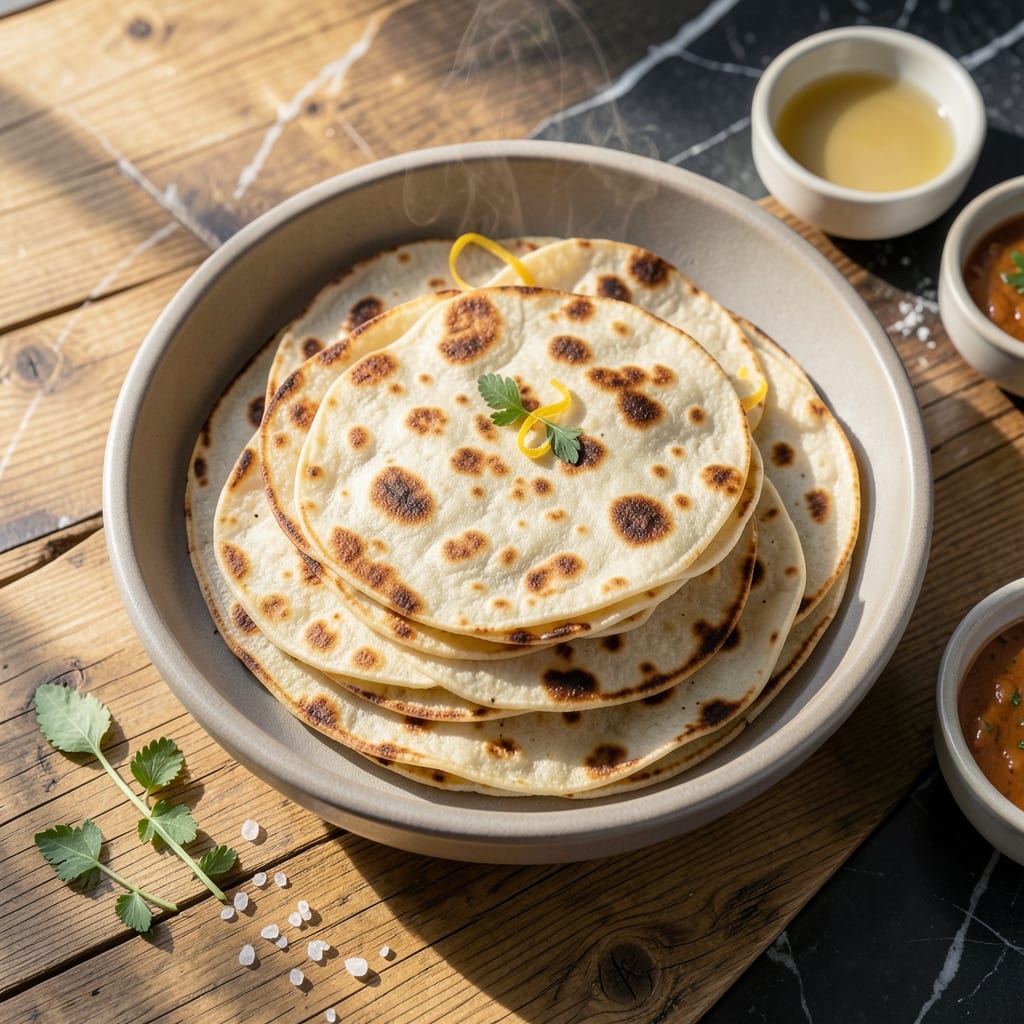
Making gluten-free tortillas at home just got simpler with this proven technique. I’ve tested countless blends to perfect a wrap that bends without breaking, using only four pantry staples.
The key is the right flour combination and precise resting time. Warm water activates the dough, while a short rest ensures flexibility. Roll them thin for the best texture.
Each tortilla cooks in 30 seconds per side, puffing slightly for that authentic touch. They stay soft and pliable, perfect for tacos, burritos, or sandwiches.
David confirmed these pass the taste test—no crumbly mess, just restaurant-quality results every time.
Ingredients for Gluten Free Tortilla Recipe Easy
Six ingredients, zero gluten, all the flexibility you crave in a wrap.
| Ingredient | Amount | Notes |
|---|---|---|
| Gluten-Free All-Purpose Flour 🌾 | 2 cups | Plus extra for dusting |
| Tapioca Starch 🌾 | ¼ cup | For elasticity and chew |
| Xanthan Gum 🧪 | ½ tsp | Omit if blend contains it |
| Warm Water 💧 | ¾ cup | About 110°F, not boiling |
| Sea Salt 🧂 | ½ tsp | Fine grain preferred |
| Neutral Oil 🫒 | 1 tbsp | For dough softness |
The flour blend is everything here. Bob’s Red Mill 1-to-1 Gluten-Free works perfectly out of the bag (it already has xanthan gum, so skip the extra). If you’re mixing your own, rice flour plus tapioca starch gives the best chew. I get mine in bulk at Sprouts—fresher than the dusty bags at regular supermarkets (worth the extra stop).
No tapioca starch? Arrowroot powder works at the same ratio. Xanthan gum can be substituted with psyllium husk at twice the amount—just let the dough rest 5 minutes longer. For oil, avocado or refined coconut oil are my go-tos (no strong flavor). The salt can be skipped if you’re watching sodium, but I don’t recommend it.
Dough rests 20 minutes at room temp (don’t rush this). Cooked tortillas keep in an airtight container for 3 days, or freeze with parchment between layers for 1 month. Reheat in a dry skillet for 10 seconds per side to refresh.
Why You’ll Love This Recipe
- No Fuss Mixing: I just stir the gluten-free flour, tapioca starch, and xanthan gum with warm water and salt—no resting, no rolling pins.
- Soft and Flexible: That tapioca starch gives them a bendy texture, not crumbly like some store-bought gluten-free ones.
- Taco Night Hero: We use them for tacos, quesadillas, even wraps for tomorrow’s lunch. Honestly, they hold up better than my old corn tortillas.
- Budget Stretcher: A bag of gluten-free flour makes a stack of these for pennies compared to buying them pre-made. I’ll be real: it’s a game of savings.
Step-by-Step Instructions for Gluten Free Tortillas
You’ll love how simple and foolproof this process is—perfect wraps every time.
Step 1: Combine Dry Ingredients for Structure
In a large mixing bowl, whisk together the 2 cups Gluten-Free All-Purpose Flour, 0.25 cup Tapioca Starch, 0.5 tsp Xanthan Gum, and 0.5 tsp Sea Salt until fully integrated. The tapioca starch adds that essential elasticity that gluten-free flours often lack, while the xanthan gum binds everything together.
I always sift my dry ingredients first to prevent lumps in the dough. You’ll notice the mixture looks slightly coarse—that’s normal. The fine grain sea salt ensures even distribution throughout the tortillas without any gritty texture.
Step 2: Create a Smooth, Workable Dough
Make a well in the center of your dry ingredients and pour in the 0.75 cup Warm Water and 1 tbsp Neutral Oil. The water should be about 110°F—warm enough to activate the starches but not so hot it would cook the dough prematurely.
Using a wooden spoon, stir the mixture until it begins to come together into a shaggy dough. Then, switch to your hands and knead gently for 2-3 minutes until the dough becomes smooth and slightly tacky. If it feels too sticky, resist the urge to add more flour—let it rest first.
The neutral oil keeps the tortillas tender and pliable. You’ll know the dough is ready when it springs back slightly when pressed with your finger.
Step 3: Rest the Dough for Optimal Texture
Shape the dough into a ball, cover the bowl with a damp towel, and let it rest at room temperature for 20-30 minutes. This resting period allows the gluten-free flours to fully hydrate and the starches to gel properly.
I’ve found that this step is non-negotiable for achieving that perfect, flexible texture. Without it, the tortillas tend to crack when you try to roll them out. The dough will relax and become much easier to work with after this brief pause.
Step 4: Roll and Cook the Tortillas
Divide the rested dough into 4 equal portions (about 100g each) and roll each between two sheets of parchment paper to ⅛-inch thickness. Dust lightly with extra gluten-free flour if needed to prevent sticking, but use a light touch—too much flour makes them dry.
Heat a dry skillet over medium-high heat. When hot, carefully transfer a rolled tortilla to the pan (peel off the parchment first). Cook for 1-2 minutes per side until light golden spots appear and the tortilla starts to puff slightly in places.
Here’s the thing—these cook faster than traditional tortillas, so watch them closely. The edges should look dry and the surface should have those characteristic bubbles before you flip.
Step 5: Keep Warm and Serve Immediately
Transfer each cooked tortilla to a clean kitchen towel and fold the towel over to keep them warm and soft while you cook the remaining portions. The steam trapped in the towel prevents them from drying out.
These are best served fresh off the griddle while still warm and pliable. If you need to store them, let them cool completely before transferring to an airtight container. To revive, simply warm briefly in a dry skillet or wrap in a damp towel and microwave for 10-15 seconds.
Each tortilla should be soft, flexible, and just sturdy enough to hold your favorite fillings without tearing. The slight chew from the tapioca starch makes them particularly satisfying!
Pro Tips For Making Gluten Free Tortilla Recipe Easy
- Rest the Dough: After mixing, let the dough sit for 10-15 minutes—this gives the tapioca starch and xanthan gum time to hydrate fully, making the tortillas easier to roll and less likely to crack.
- Use Warm Water: I learned this the hard way—cold water makes the dough stiff and hard to work with. Warm water (about 110°F) blends better with the gluten-free flour and creates a smoother texture.
- Roll Between Parchment: Skip the floured surface and roll the dough between two sheets of parchment paper instead. This prevents sticking and saves the hassle of scraping dried dough off your counter.
- Cook on Medium: High heat burns gluten-free tortillas before they cook through. Medium heat for 1-2 minutes per side gives them time to develop those little brown spots without turning brittle.
Essential Equipment for This Recipe
Skillet Selection
I always reach for my 10-inch cast iron skillet for these tortillas—it retains heat beautifully and gives that perfect golden speckle. A well-seasoned Lodge pan is my go-to, but any heavy-bottomed skillet will work. Avoid nonstick if you can; the high heat needed can damage the coating over time. 🔥
Rolling Essentials
A French rolling pin without handles gives me the most control for rolling thin, even sheets. I keep two pieces of parchment paper on hand for rolling between layers—this prevents sticking without adding extra flour. The ⅛-inch thickness is key for pliable wraps.
Dough Resting Setup
For the resting phase, I use a damp lint-free towel to cover the bowl. This keeps the surface from drying out while allowing the dough to breathe. A 20-minute timer ensures I don’t forget this crucial step—David can attest I’ve ruined batches by skipping it.
Temperature Control
An instant-read thermometer helps me verify my water is exactly 110°F before mixing. For the skillet, I test the heat by flicking a drop of water on the surface—it should dance and evaporate immediately. A medium-high setting on my gas stove hits this sweet spot perfectly.
Storage Solutions
Once cooled, I stack tortillas with parchment paper between each in an airtight container. For longer storage, I vacuum-seal with my FoodSaver—they’ll keep for 1 month in the freezer. Reheating in a dry skillet for 10 seconds brings them back to life.
Nutrition Facts
Frequently Asked Questions
Can I substitute almond flour for the gluten-free blend?
Almond flour lacks the elasticity needed for flexible wraps. Stick with a 1-to-1 gluten-free blend plus tapioca for best results.
Why does my dough crack when rolling?
It likely needs more rest time. Let it sit covered for the full 20-30 minutes to hydrate properly. Too much flour can also dry it out.
How do I prevent them from drying out?
Store cooled tortillas in an airtight container with parchment between layers. Reheat briefly in a dry skillet to restore softness.
Can I make these without xanthan gum?
Yes, but use psyllium husk at twice the amount and rest the dough 5 minutes longer. Texture may vary slightly.

- Peach Syrup Recipe for Ice Cream: Sweet and Silky Drizzle for Scoops - October 6, 2026
- Pav Bhaji Recipe Food Lab: Mumbai Street Food Magic at Home - October 6, 2026
- Peach Jelly Recipe Without Pectin: Naturally Set Sweet Spread - October 6, 2026